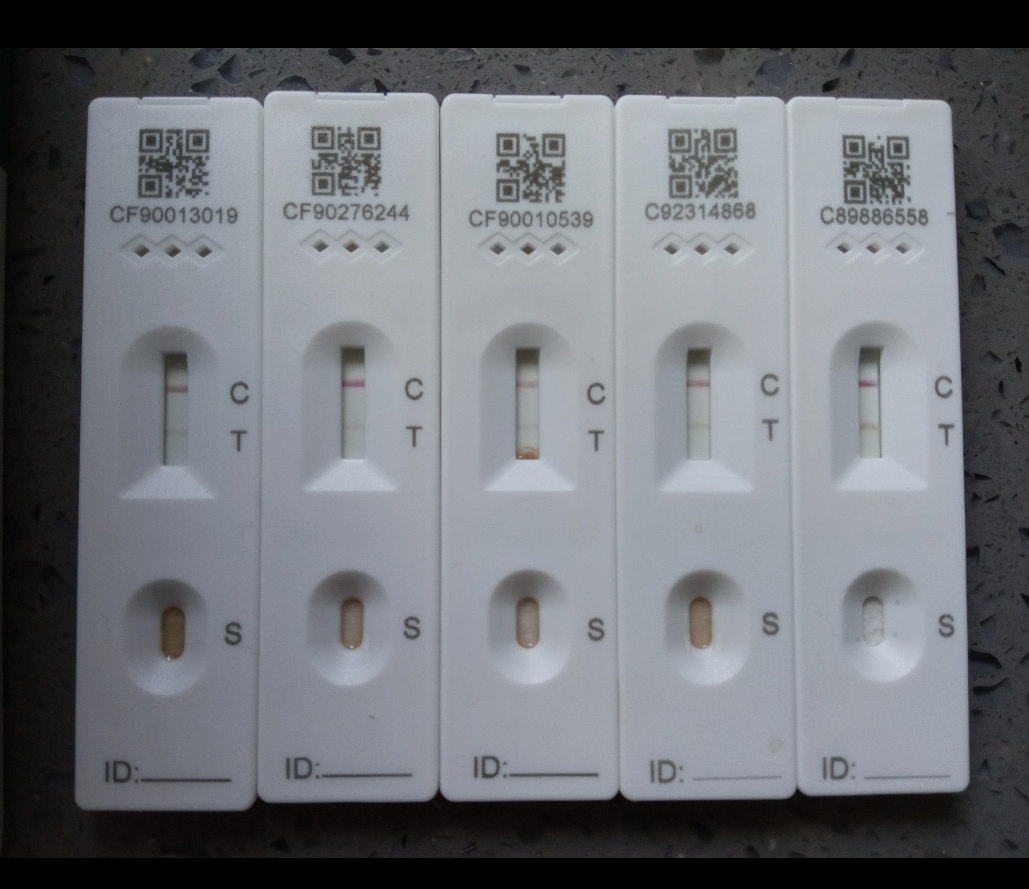
The concern in the video is about children being tested twice a week at schools with equipment that has been sterilised in Ethylene Oxide.
Below was a question put forward to the Department of Education. (In the UK)
www.whatdotheyknow.com/request/ethylene_oxide_in_connecti...
Ethylene oxide in connection with lateral flow tests
Molly Kingsley made this Freedom of Information request to Department for Education
We're waiting for Molly Kingsley to read recent responses and update the status.
Quote:
Molly Kingsley 15 March 2021
Delivered
Dear Department for Education,
This request is in relation to the use of the Innova lateral flow test (the “LFT”) being used across schools in the UK.
We are in receipt of correspondence from Innova confirming that the swab used in the LFTs is sterilised by ethylene oxide. Given the known toxicity and potential carcinogenicity of ethylene oxide, we are concerned by this.
Under the ‘Freedom of Information Act 2000’, we request disclosure of the following:
- information as to what, if any, independent tests have been carried out to check for any residues of ethylene oxide on a random sample of swabs;
- information as to what, if any, assessments have been conducted to ensure that the invasive use of these swabs for children is safe?
I understand that, under the Act, I am entitled to a response within 20 working days of your receipt of this request.
Some parts of the request may be easier to answer than others. Should this be the case, I request that you release information as soon as possible as it becomes available. If my request is denied in whole, or in part, I ask that you justify all decisions to deny disclosure by reference to specific exemptions of the Act.
I will expect you to disclose all non-exempt material that is within the scope of this request. I reserve the right to appeal your decision to withhold any information or to charge excessive fees.
I would prefer to receive the information electronically at the email address submitted to you as part of this request.
Yours faithfully
Molly Kingsley,
UsforThem
Delivered
Dear Department for Education,
This request is in relation to the use of the Innova lateral flow test (the “LFT”) being used across schools in the UK.
We are in receipt of correspondence from Innova confirming that the swab used in the LFTs is sterilised by ethylene oxide. Given the known toxicity and potential carcinogenicity of ethylene oxide, we are concerned by this.
Under the ‘Freedom of Information Act 2000’, we request disclosure of the following:
- information as to what, if any, independent tests have been carried out to check for any residues of ethylene oxide on a random sample of swabs;
- information as to what, if any, assessments have been conducted to ensure that the invasive use of these swabs for children is safe?
I understand that, under the Act, I am entitled to a response within 20 working days of your receipt of this request.
Some parts of the request may be easier to answer than others. Should this be the case, I request that you release information as soon as possible as it becomes available. If my request is denied in whole, or in part, I ask that you justify all decisions to deny disclosure by reference to specific exemptions of the Act.
I will expect you to disclose all non-exempt material that is within the scope of this request. I reserve the right to appeal your decision to withhold any information or to charge excessive fees.
I would prefer to receive the information electronically at the email address submitted to you as part of this request.
Yours faithfully
Molly Kingsley,
UsforThem
ACCOUNT, Unmonitored, Department for Education 24 March 2021
Quote:
Dear Molly Kingsley
Thank you for your request for information, which was received on 15
March. You requested information as to what, if any, independent tests have been carried out to check for any residues of ethylene oxide on a random sample of swabs; and information as to what, if any, assessments have been conducted to ensure that the invasive use of these swabs for children is safe. I have dealt with your request under the Freedom of
Information Act 2000.
Following a search of the Department’s paper and electronic records, I
have established that the information you requested is not held by this Department. It is possible that the information you are seeking may be held by the Medicines and Healthcare products Regulatory Agency or the Department of Health and Social Care.
If you have any queries about this letter, please contact me. Please remember to quote the reference number above in any future communications.
If you are unhappy with the way your request has been handled, you should
make a complaint to the Department by writing to me within two calendar
months of the date of this letter. Your complaint will be considered by an
independent review panel, which were not involved in the original consideration of your request.
If you are not content with the outcome of your complaint to the Department, you may then contact the Information Commissioner’s Office.
Yours sincerely,
Mariam Orme
Thank you for your request for information, which was received on 15
March. You requested information as to what, if any, independent tests have been carried out to check for any residues of ethylene oxide on a random sample of swabs; and information as to what, if any, assessments have been conducted to ensure that the invasive use of these swabs for children is safe. I have dealt with your request under the Freedom of
Information Act 2000.
Following a search of the Department’s paper and electronic records, I
have established that the information you requested is not held by this Department. It is possible that the information you are seeking may be held by the Medicines and Healthcare products Regulatory Agency or the Department of Health and Social Care.
If you have any queries about this letter, please contact me. Please remember to quote the reference number above in any future communications.
If you are unhappy with the way your request has been handled, you should
make a complaint to the Department by writing to me within two calendar
months of the date of this letter. Your complaint will be considered by an
independent review panel, which were not involved in the original consideration of your request.
If you are not content with the outcome of your complaint to the Department, you may then contact the Information Commissioner’s Office.
Yours sincerely,
Mariam Orme
So the department of education cannot answer or verify. :(
A bit of homework by those making the video is pushing others to look into this too :)
So, let's see what we find.
www.ccohs.ca/oshanswers/chemicals/chem_profiles/ethylene_...
What are the potential health effects of ethylene oxide?
Main Routes of Exposure: Inhalation.
Inhalation: VERY TOXIC. Can cause severe irritation of the nose and throat. Can harm the nervous system. Symptoms may include headache, nausea, dizziness, drowsiness and confusion. A severe exposure can cause unconsciousness.
Skin Contact: CORROSIVE. The gas irritates the skin. Direct contact with the liquefied gas can chill or freeze the skin (frostbite). Symptoms of mild frostbite include numbness, prickling and itching.
Eye Contact: CORROSIVE. The gas irritates the eyes. Direct contact with the liquefied gas can freeze the eye. Permanent eye damage or blindness can result.
Ingestion: Not a relevant route of exposure (gas).
Effects of Long-Term (Chronic) Exposure: Can cause dry, red, cracked skin (dermatitis) following skin contact. May harm the nervous system. In severe cases, symptoms may include muscle weakness, loss of feeling or prickly sensation in the hands, feet, arms or legs, clumsiness and paralysis. May cause an allergic skin reaction in some people. May cause asthma or an asthma-like reaction in some people.
Carcinogenicity: CARCINOGEN. May cause cancer. Has been associated with: cancer of the blood or blood system.
International Agency for Research on Cancer (IARC): Group 1 - Carcinogenic to humans.
American Conference for Governmental Industrial Hygienists (ACGIH): A2 - Suspected human carcinogen.
Teratogenicity / Embryotoxicity: May harm the unborn child. Conclusions cannot be drawn from the limited studies available.
Reproductive Toxicity: REPRODUCTIVE HAZARD. May cause reproductive effects in men and women based on animal information. Known to cause: reduced fertility.
Mutagenicity: MUTAGEN. May cause genetic damage. Exposure of the parent may cause effects in children.
What are the most important things to know about ethylene oxide in an emergency?
Emergency Overview: Colourless gas. Sweet odour. DANGEROUSLY REACTIVE. Polymerizes vigorously. EXTREMELY FLAMMABLE GAS. Distant ignition and flashback are possible. COMPRESSED GAS. Contains gas under pressure. May explode if heated. VERY TOXIC. Fatal if inhaled. May cause respiratory irritation. May cause drowsiness and dizziness. CORROSIVE. Causes severe skin burns and eye damage. CANCER HAZARD. May cause cancer. REPRODUCTIVE HAZARD. May damage fertility. MUTAGEN. May cause genetic defects.
And what does the gov know about this very old and widely used chemical?
www.cancer.gov/about-cancer/causes-prevention/risk/substa...
What is ethylene oxide?
At room temperature, ethylene oxide is a flammable colorless gas with a sweet odor. It is used primarily to produce other chemicals, including antifreeze. In smaller amounts, ethylene oxide is used as a pesticide and a sterilizing agent. The ability of ethylene oxide to damage DNA makes it an effective sterilizing agent but also accounts for its cancer-causing activity.
How are people exposed to ethylene oxide?
The primary routes of human exposure to ethylene oxide are inhalation and ingestion, which may occur through occupational, consumer, or environmental exposure. Because ethylene oxide is highly explosive and reactive, the equipment used for its processing generally consists of tightly closed and highly automated systems, which decreases the risk of occupational exposure.
Despite these precautions, workers and people who live near industrial facilities that produce or use ethylene oxide may be exposed to ethylene oxide through uncontrolled industrial emissions. The general population may also be exposed through tobacco smoke and the use of products that have been sterilized with ethylene oxide, such as medical products, cosmetics, and beekeeping equipment.
Which cancers are associated with exposure to ethylene oxide?
Lymphoma and leukemia are the cancers most frequently reported to be associated with occupational exposure to ethylene oxide. Stomach and breast cancers may also be associated with ethylene oxide exposure.
How can exposures be reduced?
The U.S. Occupational Safety and Health Administration has information about limiting occupational exposure to ethylene oxide.
This is a short video about it which also mentiones how EO is used and apparently removed too....some particles still remain!
How Ethylene Oxide Works in Sterilization of Critical Medical Supplies
m.youtube.com/watch?v=M3ZICe3Vwj8
So, what you think? Will you risk sticking this stuff up your nose and down your throat?