Forum Menu - Click/Swipe to open
 

Ayat 205 of Surat A'araf And Zikr.

You have contributed 0.0% of this topic

Thread Tools
Appreciate
Topic Appreciation
abu mohammed, the fake shaykh
Rank Image
Abu Fauzi's avatar
Offline
Unspecified
219
Brother
272
Abu Fauzi's avatar
#1 [Permalink] Posted on 10th August 2014 22:00
Assalam alaykum,
In Ayat 205 of Surat A'araf of the Holy Qur'an (7:205), Allah, Subhanahu Wa Ta'ala, says:--

"AND REMEMBER YOUR LORD BY YOUR TONGUE AND WITHIN YOURSELF,
HUMBLY AND IN REVERENCE, WITHOUT LOUDNESS IN WORDS, IN THE
MORNINGS AND EVENINGS; AND BE NOT AMONG THE NEGLECTFUL."

The ,Messenger of Allah, Sallallahu alaihi Wasallam, said: "He who remembers his Lord and he who does not remember his Lord are like the living and the dead."-(Bukhari).

Abdullah Ibn Busr, may Allah be pleased with him, said that a man asked the Messenger of Allah, Peace be upon him, "O Messenger of Allah! Verily the sanctions of Islam have become too numerous for me (to perform them all). Inform me of something [simple] that I may adhere to." The Messenger of Allah, Peace be upon him, said:- "Let your tongue always be moist with Remembrance of Allah." [Tirmidhi 5/458, Ibn Majah 2/1246].
report post quote code quick quote reply
No post ratings
back to top
Rank Image
abu mohammed's avatar
London
27,572
Brother
9,601
abu mohammed's avatar
#2 [Permalink] Posted on 10th August 2014 23:12
report post quote code quick quote reply
No post ratings
back to top
Rank Image
abu mohammed's avatar
London
27,572
Brother
9,601
abu mohammed's avatar
#3 [Permalink] Posted on 11th August 2014 00:11

Category: Misc. Fiqh
Fatwa#: 23819
Asked Country: India
Answered Date: Dec 30,2012
Title: Loud Zikr
Question
Kindly comment on the different forms of zikr, loud, soft, collective, individual in the majid and elsewhere. Is it a bidah and what is the definition of bidah? Explain it contextually. 
Answer
General loud dhikr is clearly proven from many Ahadith.

See the following Hadith:

إِنَّ لِلَّهِ مَلاَئِكَةً يَطُوفُونَ فِي الطُّرُقِ يَلْتَمِسُونَ أَهْلَ الذِّكْرِ، فَإِذَا وَجَدُوا قَوْمًا يَذْكُرُونَ اللَّهَ تَنَادَوْا: هَلُمُّوا إِلَى حَاجَتِكُمْ " قَالَ: «فَيَحُفُّونَهُمْ بِأَجْنِحَتِهِمْ إِلَى السَّمَاءِ الدُّنْيَا» قَالَ: " فَيَسْأَلُهُمْ رَبُّهُمْ، وَهُوَ أَعْلَمُ مِنْهُمْ، مَا يَقُولُ عِبَادِي؟ قَالُوا: يَقُولُونَ: يُسَبِّحُونَكَ وَيُكَبِّرُونَكَ وَيَحْمَدُونَكَ وَيُمَجِّدُونَكَ..... 

“Verily there are angels who roam around in the streets in search for people who perform zikr. When they come across a group of people who are engaged in zikr, they call upon (to other angels), “Come forth unto your sustenance!” They spread their wings upon them until the skies. Their lord asks them (the angels) while He is more aware (of the situation of the people of zikr), “What are my servants saying?” The angels reply, “They are glorifying, exalting, and praising you.”……[1]

In another Hadith, it is stated:

«إِذَا مَرَرْتُمْ بِرِيَاضِ الجَنَّةِ فَارْتَعُوا» قَالُوا: وَمَا رِيَاضُ الجَنَّةِ؟ قَالَ: «حِلَقُ الذِّكْرِ»

“When you come across the gardens of Jannah, receive a portion from it.” The people asked, “What is the garden of Jannah?” He (Prophet) replied, “The gatherings of Zikr.” [2] 

In Mirqaat Al-Mafaateeh under the explanation of this Hadith, Mulla Ali Qari Rahmatullahi Alaih quotes with reference to Imam Nawawi Rahmatullahi Alaih:

قَالَ النَّوَوِيُّ رَحِمَهُ اللَّهُ: وَاعْلَمْ أَنَّهُ كَمَا يُسْتَحَبُّ الذِّكْرُ يُسْتَحَبُّ الْجُلُوسُ فِي حَلَقِ أَهْلِهِ، وَهُوَ قَدْ يَكُونُ بِالْقَلْبِ، وَقَدْ يَكُونُ بِاللِّسَانِ، وَأَفْضَلُ مِنْهُمَا مَا كَانَ بِالْقَلْبِ وَاللِّسَانِ جَمِيعًا، فَإِنِ اقْتُصِرَ عَلَى أَحَدِهِمَا، فَالْقَلْبُ أَفْضَلُ

“Imam Nawawi Rahmatullahi Alaih mentions: As performing zikr is regarded to be preferable, accompanying the gatherings in which zikr takes place is also preferable. Zikr may be performed with the heart or with the tongue. It is better to perform zikr together with the heart and the tongue. However, if one restricts zikr to only the heart or tongue, then doing zikr with the heart is more preferable.”[3] 

It is possible that you are referring to some specific form of loud dhikr being bidah. It is therefore important to understand the definition of bidah to be able to make the correct conclusion on the various forms of dhikr.

The educational system of Daul Ulooms and madrasas as found today were not existent at the time of Rasullullah Sallallahu Alaihi Wa Sallam. In order to be able to understand the Quran and Ahadith, the Arabic language with Sarf (etymology), Nahw (grammar), Fasahat and Balagah (rhetoric) are taught. Fiqh and Usool-ul-Fiqh, Tafseer and Usool-ut-Tafseer, Hadith and Usool-ul-Hadith are taught in order to be regarded as an Alim of Deen and having authority on Deen. The knowledge of these subjects is regarded to be compulsory yet no body regards studying these subjects as bidah and prohibits it. This was not the system at the time of Rasullullah Sallallahu Alaihi Wa Sallam. [4]

According to Shariah, bidah is defined as follows:

وَالْمُرَادُ بِالْبِدْعَةِ: مَا أُحْدِثَ مِمَّا لَا أَصْلَ لَهُ فِي الشَّرِيعَةِ يَدُلُّ عَلَيْهِ، فَأَمَّا مَا كَانَ لَهُ أَصْلٌ مِنَ الشَّرْعِ يَدُلُّ عَلَيْهِ، فَلَيْسَ بِبِدْعَةٍ شَرْعًا، وَإِنْ كَانَ بِدْعَةً لُغَةً

“And the meaning of bidah is: that act which has no origin in Shariah that indicates to the origin. If the new act has an origin in Shariah, then it will not be considered as bidah in terms of Shariah even if it may be considered bidah in its literal sense.” [5] [6]
 

The above definition means that if a person innovates something in Shariah which does not have any origin in Shariah and there is no indication in the new aspect to the origin, then that will be bidah. However, if there is an origin for the new aspect in Shariah and the new aspect indicates to the origin, then it will not be considered bidah.

In order to expound on this, the following example will make the point clear. If one wants to become an Alim of Deen and be an authority on Deen, he has to learn all the sciences of Deen as previously indicated, Sarf, Nahw, Usool etc. The study of all these subjects is new but has its roots in its origin that is educating oneself in Shariah (taleem) which is one of the 3 missions of Rasullullah Sallallahu Alaihi Wa Sallam. These subjects are subsidiaries to the origin and preserves to compliment the original, educating oneself in Shariah. Hence, studying the different subjects is not bidah. Furthermore, these subjects are not principle requirements, Fardh, Wajib or Sunnah in Deen. They are administrative issues serving to support and fulfill an origin in Shariah.

In the same light as the above, tazkiyyah (purifying oneself) is Fardh like taleem (education). Both, taleem and tazkiyyah are clearly mentioned in the Quran and Ahadith. The different forms of Zikr which are not specifically stated in the Quran and Ahadith, for example, muraqabah of certain verses of the Quran like الم يعلم بان الله يري generally practiced by the Naqshbandiyyah followers or the famous 12 tasbeehaat prescribed by the Chistiyyah Mashaaikh with a specific head movement are aimed to achieve tazkiyyah. These means are tried, tested and proven to be beneficial in obtaining tazkiyyah. Muraqabah with its different forms and zikr with its different forms compliment tazkiyyah and are not regarded as fundamental principles like Fardh, Wajib etc. in Shariah. They are administrative issues to achieve the objective. Hence, these new acts point towards its origin in Shariah which is tazkiyyah. To further elaborate on this, an example of a physically sick person may be appropriate.

When a person is ill, he takes medications which are prescribed to him by a doctor to cure his sickness. Similarly, doing the dhikr of Allah is a spiritual treatment and cure for the heart. When a person does the dhikr of Allah, it removes the spiritual sicknesses and the diseases from the heart.

Tazkiyyah (purifying the soul), is Fardh upon every individual. It has been mentioned in the Quran:

كَمَا أَرْسَلْنَا فِيكُمْ رَسُولًا مِنْكُمْ يَتْلُو عَلَيْكُمْ آيَاتِنَا وَيُزَكِّيكُمْ وَيُعَلِّمُكُمُ الْكِتَابَ وَالْحِكْمَةَ وَيُعَلِّمُكُمْ مَا لَمْ تَكُونُوا تَعْلَمُونَ

(القرآن 2:151)

Just as We have sent among you a messenger from yourselves reciting to you Our verses and purifying you and teaching you the Book and wisdom and teaching you that which you did not know. (Quran 2:151)
 

A special form of dhikr prescribed by a spiritual guide has been tested and found to be efficient by many scholars of the past as a spiritual remedy. It has been recorded to treat many diseases of the heart such as anger, hatred, jealousy, pride love for the money, love for the world etc.

It is agreed that if a person performs dhikr loudly with the intention that it is Fardh, Wajib or Sunnah, then such an act will be considered Bidah. However, if a person does loud dhikr with the intention that it is a spiritual remedy for the sicknesses of the heart, then there is no harm in performing such dhikr performed in a particular way and with a prescribed amount as that is merely a means to attain tazkiyyah similar to learning the Arabic language and the different subjects to educate oneself on Shariah.

Learning Arabic has its roots in educating oneself in Shariah. Likewise, the different forms of zikr have its roots and origin in tazkiyyah. Just as Arabic is a ladder to learning Shariah, the different forms of zikr are also a ladder to tazkiyyah.

It is however important to confine the different means of taleem and tazkiyyah to its position and not regard them to be the actual purpose or to be Sunnah or compulsory in Shariah. If one regards the means to be compulsory in Shariah, it will now be an act of bidah.

Hereunder are at least three relevant fatwaas from our Aslaaf (pious predecessors).

1.      Allamah Tahtawi Rahmatullahi Alahi, a very reliable Hanafi jurist states in Hashiyah At-Tahtaawi Ala Maraaqi Al-Falah with the reference of Allamah She’raani:

ونص الشعراني في ذكر الذاكر للمذكور والشاكر للمشكور ما لفظه وأجمع العلماء سلفا وخلفا على استحباب ذكر الله تعالى جماعة في المساجد وغيرها من غير نكير إلا أن يشوش جهرهم بالذكر على نائم أو مصل أو قارىء قرآن كما هو مقرر في كتب الفقه (حاشية الطحطاوي على مراقي الفلاح شرح نور الإيضاح، ص318، دار الكتب العلمية)
Translation: “Allamah She’raani Rahmatullahi Alahi states in his book Zikr Az-Zaakir Lil Mazkoor Wa As-Shakir Lil Mashkoor, that the former and the latter Ulama have unanimously permitted doing zikr in a gathering in a Masjid as well as anywhere else other than the Masjid without prohibiting them except that if their loud zikr cause disturbance to a sleeping person or to a person performing Salah or to the one reciting Quran as this has been established in the books of Fiqh.” (Hashiyah At-Tahtaawi Ala Maraaqi Al-Falah, Pg.318, Dar Al-Kutub Al-Ilmiyyah) [7]

2.      Hadhrat Moulana Ashraf Ali Thanvi Rahmatullahi Alaih states in Imdaadul Fatawa:

...وفي تفسير الاحمدي في بحث الجهر و الاخفاء وهذا بحث مختلف فيه بين الانام في زماننا ولا طائل تحته اذا المقصود بكل الوصول الي الله باي طريق كان-

پس ثابت ہوا کہ جہر ہر طور سے جائز ہے، کسی کو کسی طور سے منع نہ کریں، یہی ارجح واوضح ہے، بلکہ اگر عدم مشروعیت کو بھی ترجیح دی جاوے تو تب بھی عوام کو منع نہ کریں، کہ اسی بھانہ سے کچھ خیر کر گزرتے ہیں، چنانچہ خود مانعین نے اس امر کی تصریح کر دی-  (امداد الفتاوي،ج5 ص169، مكتبة دار العلوم كراتشي)

Translation: “…It has been mentioned in Tafseer-e-Ahmadi under the discussion of audible and inaudible. There is a difference of opinion amongst the Ulama regarding this discussion in our time. It does not matter beyond that as the purpose is to reach Allah in any way.

This proves the fact that performing loud zikr is permissible in every way. No person shall be prohibited in any way. And this opinion is the most authentic and preferred one. In fact, even if the opinion which prohibits (performing loud zikr) is given preference to, the laymen should not be prohibited from performing loud zikr. With this, the laymen will accomplish some rewards. Hence, the ones prohibiting (from performing loud zikr) themselves have stated this.” (Imdaad Al-Fataawa, Vol.5 Pg.169, Maktabah Darul Uloom Karachi)

3.      Hadhrat Mufti Mahmood Al-Hasan Al-Gangohi Rahmatullahi Alahi states in Fatawa Mahmoodiyyah:

جو علماے احناف ذکر دواز دہ تسبیح وغیرہ کو بالجہر فرماتے ہیں وہ درحقیقت علاجا ہے کہ اس سے قلب پر ضرب لگتی ہے اور حرارت پیدا ہوتی ہے جو کہ اس راہ میں معین ہے….. - (فتاوي محموديه، ج4 ص434، ادارة القرآن)

Translation: “Those Hanafi scholars who permit performing zikr audibly are in fact permitting it as a remedy from which the heart is rejuvenated. This facilitates traversing this path of tazkiyyah.”


And Allah Ta’āla Knows Best

Abdul Hannan Nizami,
Student Darul Iftaa
Chicago, USA

Checked and Approved by,
Mufti Ebrahim Desai.


)[1] صحيح البخاري، ج8ص 87، دار طوق النجاة)
(Sahih Al-Bukhari, Vol.8 Pg.87, Dar Tauq An-Najah)
[2] سنن الترمذي، ج5ص532، شركة مكتبة)
(Sunan At-Tirmidhi, Vol.5 Pg.532, Shirkatu Maktabah)
[3] مرقاة المفاتيح شرح مشكاة المصابيح، ج4ص1553، دار الفكر)
(Mirqaat Al-Mafateeh Sharah Mishkat Al-Masabeeh, Vol.4 Pg.1553, Dar Al-Fikr)
[4] قَالَ النَّوَوِيُّ: الْبِدْعَةُ كُلُّ شَيْءٍ عُمِلَ عَلَى غَيْرِ مِثَالٍ سَبَقَ، وَفِي الشَّرْعِ إِحْدَاثُ مَا لَمْ يَكُنْ فِي عَهْدِ رَسُولِ اللَّهِ - صَلَّى اللَّهُ عَلَيْهِ وَسَلَّمَ - وَقَوْلُهُ: " كُلَّ بِدْعَةٍ ضَلَالَةٌ " عَامٌ مَخْصُوصٌ. قَالَ الشَّيْخُ عِزُّ الدِّينِ بْنُ عَبْدِ السَّلَامِ فِي آخِرِ كِتَابِ " الْقَوَاعِدِ ": الْبِدْعَةُ إِمَّا وَاجِبَةٌ كَتَعَلُّمِ النَّحْوِ لِفَهْمِ كَلَامِ اللَّهِ وَرَسُولِهِ وَكَتَدْوِينِ أُصُولِ الْفِقْهِ وَالْكَلَامِ فِي الْجَرْحِ وَالتَّعْدِيلِ، وَإِمَّا مُحَرَّمَةٌ كَمَذْهَبِ الْجَبْرِيَّةِ وَالْقَدَرِيَّةِ وَالْمُرْجِئَةِ وَالْمُجَسِّمَةِ، وَالرَّدُّ عَلَى هَؤُلَاءِ مِنَ الْبِدَعِ الْوَاجِبَةِ لِأَنَّ حِفْظَ الشَّرِيعَةِ مِنْ هَذِهِ الْبِدَعِ فَرْضُ كِفَايَةٍ، وَإِمَّا مَنْدُوبَةٌ كَإِحْدَاثِ الرُّبُطِ وَالْمَدَارِسِ، وَكُلُّ إِحْسَانٍ لَمْ يُعْهَدْ فِي الصَّدْرِ الْأَوَّلِ، وَكَالتَّرَاوِيحِ أَيْ بِالْجَمَاعَةِ الْعَامَّةِ (مرقاة المفاتيح شرح مشكاة المصابيح، ج1ص223، دار الفكر)
[5] وَأَحْسَنَ الْهَدْيِ هَدْيُ مُحَمَّدٍ، وَشَرُّ الْأُمُورِ مُحْدَثَاتُهَا، وَكُلُّ مُحْدَثَةٍ بِدْعَةٌ وَكُلُّ بِدْعَةٍ ضَلَالَةٌ، وَكُلُّ ضَلَالَةٍ فِي النَّارِ (سنن النسائي ج3ص188، مكتب المطبوعات الإسلامية)
(Sunnan An-Nasai, Vol.3 Pg.188, Maktabah Al-Matboo’at Al-Islamiyyah)
[6] جامع العلوم والحكم، ج2ص 127، مؤسسة الرسالة)
[7] وقيل الجهر أفضل لأحاديث كثيرة منها ما رواه ابن الزبير كان رسول الله صلى الله عليه وسلم إذا سلم من صلاته قال بصوته إلا على لا إله إلا الله وحده لا شريك له وتقدم وقد كان صلى الله عليه وسلم إذا سلم من صلاته قال بصوته إلا على لا إله إلا الله وحده لا شريك له وتقدم وقد كان صلى الله عليه وسلم يأمر من يقرأ القرآن في المسجد أن يسمع قراءته وكان ابن عمر يأمر من يقرأ عليه وعلى أصحابه وهم يستمعون ولأنه أكثر عملا وأبلغ في التدبر ونفعه متعد لإيقاظ قلوب الغافلين وجمع بين الأحاديث الواردة بأن ذلك يختلف بحسب الأشخاص والأحوال فمتى خاف الرياء أو تأذى به أحد كان الإسرار أفضل ومتى فقد ما ذكر كان الجهر أفضل قال في الفتاوى لا يمنع من الجهر بالذكر في المساجد احترازا عن الدخول تحت قوله تعالى:
وَمَنْ أَظْلَمُ مِمَّنْ مَنَعَ مَسَاجِدَ اللَّهِ أَنْ يُذْكَرَ فِيهَا اسْمُهُ
[البقرة: 114] كذا في البزازية ونص الشعراني في ذكر الذاكر للمذكور والشاكر للمشكور ما لفظه وأجمع العلماء سلفا وخلفا على استحباب ذكر الله تعالى جماعة في المساجد وغيرها من غير نكير إلا أن يشوش جهرهم بالذكر على نائم أو مصل أو قارىء قرآن كما هو مقرر في كتب الفقه (حاشية الطحطاوي على مراقي الفلاح شرح نور الإيضاح، ص318، دار الكتب العلمية)


However, having posted the above, if. I were a Faqih, then I think I'd still produce the same verse of the Quran to back me up. Just a thought! However, here's another positive for it islamqa.org/hanafi/daruliftaa-birmingham/77155
report post quote code quick quote reply
No post ratings
back to top
Rank Image
abu mohammed's avatar
London
27,572
Brother
9,601
abu mohammed's avatar
#4 [Permalink] Posted on 11th August 2014 00:32
And what do I find, a Salafi perspective that sounds like what in also alluding to.

Although, I agree with the latter part of Mufti Tosir miah above, that it must not be considered a Sunnah.


I have a question since I have been involved in some discussions with some brothers and we cant get along who is right. The question is about making dhikr in a loud voice in groups like some people do. Is this considered bidah?
They quote as evidence this hadith from Sahih Muslim which says: “the Prophet went out to a circle of his Companions and asked: "What made you sit here?" They said: "We are sitting here in order to remember / mention Allah (nadhkurullaha) and to glorify Him (wa nahmaduhu) because He guided us to the path of Islam and he conferred favours upon us."
They say this hadith is evidence that the companions also did dhikr in a loud voice in group. Please give me an detailed answer with evidence because I am confused. And also, is it right that there are difference of opinion among the 'ulama regarding this issue?.
Praise be to Allaah.
Firstly: 

Dhikr in general, if it involves raising the voice and reciting in unison, is a bid‘ah (innovation) that has been introduced into the religion and was not the practice of the righteous early generations. 

Ash-Shaatibi (may Allah have mercy on him) said: 

If there is a text that encourages people to recite particular phrases of dhikr, and some people commit themselves to gathering to recite dhikr in unison, or at a certain time that is singled out from all other times, then we should note that although these phrases were referred to in a shar‘i text by way of encouraging people to say them, there is nothing in that to indicate this particular way and time of doing it. Rather in that text there may be something to indicate the contrary, because adhering to something that is not binding in Islam may give the impression that this is part of the religion, especially if it is done by leading figures who are regarded as setting examples in places where people gather, such as the mosque. 

Therefore the early generation did not commit to doing such things and it is more appropriate for them to have done those actions if they were prescribed in Islam. But dhikr in general is something that is Islamically prescribed in many situations, unlike other acts of worship, and this du‘aa’ is dhikr or remembrance of Allah, yet the salaf did not adhere to a particular manner of doing it or limit it to specific times, such that this dhikr is connected to those particular times, unless there is evidence for a particular time, such as morning or evening. And they did not say it out loud unless the shar‘i text indicated that it should be said out loud, such as the dhikr on the two Eids and the like. With regard to dhikrs other than that, they persisted in hiding it and said it privately (not out loud). Hence when the Sahaabah raised their voices in du‘aa’, the Prophet (blessings and peace of Allah be upon him) said to them: “Be easy with yourselves (and lower your voices), for you are not calling on one who is deaf or absent,” and so on. And they did not recite out loud or in unison. 

Everyone who goes against this principle has gone against the fact that the text is general in meaning and does not restrict it to a particular time, because the one who does that has restricted it on the basis of his own opinion and has gone against those who had better knowledge of Islam than him, namely the righteous early generations (the salaf – may Allah be pleased with them). End quote. 

Al-I‘tisaam, 1/188-189 

Shaykh al-Islam (may Allah have mercy on him) was asked about a man who established a waqf and in some of his conditions he stipulated that they should recite whatever they are able to (of Qur’aan) and recite Subhaan Allah (Glory be to Allah), Laa ilaaha ill-Allah (there is no God but Allah) and Allahu akbar (Allah is most great), and send blessings upon the Prophet (blessings and peace of Allah be upon him) after Fajr until sunrise. Is it better to do that out loud or quietly? 

He replied: 

Praise be to Allah. Rather it is better to recite dhikr and du‘aa’ – such as sending blessings upon the Prophet (blessings and peace of Allah be upon him) – quietly, unless there is a reason to do otherwise. At this particular time it is especially preferable (to recite it quietly), because Allah says (interpretation of the meaning): “And remember your Lord by your tongue and within yourself, humbly and with fear without loudness in words in the mornings” [al-A‘raaf 7:205]. And in as-Saheeh it is narrated from the Prophet (blessings and peace of Allah be upon him) that when he saw the Sahaabah (may Allah be pleased with them) raising their voices in dhikr, he said: “O people, be easy with yourselves (and lower your voices), for you are not calling on one who is deaf or absent; rather you are calling upon One Who is All-Hearing and Close. [/color]The One upon Whom you are calling it is closer to one of you than the neck of his mount.”

End quote from al-Fataawa al-Kubra, 4/246 

The scholars of the Standing Committee said: 

Dhikr in unison is an innovation (bid‘ah) because it is something that has been introduced into the religion. The Prophet (blessings and peace of Allah be upon him) said: “Whoever introduces something into this matter of ours that is not part of it will have it rejected.” And he (blessings and peace of Allah be upon him) said: “Every newly invented matter is an innovation, and every innovation is going astray.” What is prescribed is to remember Allah, may He be exalted, without reciting in unison.

End quote. Fataawa al-Lajnah ad-Daa’imah, 24/268 

Secondly: 

It is more makrooh (disliked) to raise the voice in reciting dhikr and du‘aa’, and to recite in unison, if that could annoy other people who are praying or offering du‘aa’ or remembering Allah (dhikr). 

It was narrated from ‘Abdullah ibn ‘Umar (may Allah be pleased with him) that the Prophet (blessings and peace of Allah be upon him) observed i‘tikaaf and addressed the people, saying: “When one of you stands to pray, he is conversing with his Lord, so let each of you think of what he is saying to his Lord, and no one among you should raise his voice over anyone else when reciting in the prayer.”

Narrated by Ahmad, 4909; classed as saheeh by al-Albaani. 

Shaykh al-Islam Ibn Taymiyah (may Allah have mercy on him) said: No one should raise his voice in recitation in such a way that he annoys others, such as other worshippers.

End quote. Majmoo‘ al-Fataawa, 23/61 

Thirdly: 

With regard to the report narrated by Muslim (2701) from Mu‘aawiyah ibn Abi Sufyaan (may Allah be pleased with him), according to which the Messenger of Allaah (blessings and peace of Allah be upon him) came out to a circle of his companions and said: “Why are you sitting here?” They said: We are sitting to remember Allaah and praise Him for having guided us to Islam and blessed us with it. He said: “By Allaah, are you only sitting for that purpose? They said: By Allaah, we are only sitting for that purpose. He said: “I did not ask you to swear because I am accusing you, but Jibreel came to me and told me that Allaah was boasting of you to the angels.” 

And the report also narrated by Muslim (2699) from Abu Hurayrah (may Allah be pleased with him) who said: The Messenger of Allah (blessings and peace of Allah be upon him) said: “No people gather in one of the houses of Allaah, reciting the Book of Allaah and studying it together, but tranquillity will descend upon them, mercy will overshadow them, the angels will surround them and Allaah will mention them to those who are with Him.” 

–     There is nothing in these reports to suggest that dhikr should be recited in unison. 

Shaykh Ibn ‘Uthaymeen (may Allah have mercy on him) said: 

The correct view concerning this matter is that the two hadeeths refer to those who study the Book of Allah together and recite it. Similarly, with regard to people who are remembering Allah, it is general in meaning and should be understood in the light of other, specific reports that describe the way in which dhikr was done at the time of the Prophet (blessings and peace of Allah be upon him) and his Companions. It was not known among them that they would remember Allah, may He be exalted, by reciting dhikr in unison or that they read or recited the Qur’aan in unison. The phrase “studying it together” indicates that this studying together is done one after another. Either one reads, and when he has finished the next one reads the same text, and so on; or each one of them reads one part, and the next one reads from where the first one stopped. This is the apparent meaning of the hadeeth. With regard to the other hadeeth in which it says that they remembered Allah, we say the same thing: it is general in meaning and should be understood in the light of the texts that speak of the specific way in which dhikr was done at the time of the Prophet (blessings and peace of Allah be upon him) and his Companions. It was not known among them that they would get together and recite dhikr in unison. 

End quote. Fataawa Noor ‘ala ad-Darb by Ibn ‘Uthaymeen, 19/30 

For more information please see the answer to question no. 10491 

And Allah knows best.

Islam Q&A
report post quote code quick quote reply
No post ratings
back to top
Rank Image
Abu Fauzi's avatar
Offline
Unspecified
219
Brother
272
Abu Fauzi's avatar
#5 [Permalink] Posted on 27th August 2014 17:27
Salaam to you all,
Kindly permit me to contribute something on above.. loud zikr.. or 'quite' zikr. Reciting Zikr loudly may not be considered as being part of the Sunnah by some, but it certaimly is/was NOT prohibited by the Sunnah.

Ayat 37 of Surat Nur of the Holy Qur'an says:-- "(people of perfect faith are those) men whom trade or business does
not distract from the Remembrance of Allah."

Abu Hurairah, may Allah be pleased with him, narrates that the Messenger of Allah, Sallallahu alaihi Wasallam, said that Allah Ta'ala says:-

"I treat My servant according to his opinion of Me; and Iam with him when he remembers Me;
If he remembers Me privately, I remember him privately and if he remembers Me in public, I
remember him in a gathering [of Angels] better than his gathering." [Bukhari, Muslim, Nisa'i and Ibn Majah].

And in another Hadith, Mu'awiyah, may Allah be pleased with him, narrates that the Prophet, Sallallahu alaihi Wasallam, once came forth to meet a group of the Sahaba, may Allah be pleased with them. He said: "What has caused you to congregate here? They replied: We have congregated here to Remember Allah Ta'ala and to Praise Him for guiding us to Islam and blessing us with it.

He said: By Allah! Is this the only reason for your gathering? They replied: By Allah! This is the only reason for our gathering. He said: I had not made you swear an oath because I disbelieved you but Jibreel came to me and informed me that Allah Ta'ala is boasting about you before the Angels." [Muslim, Tirmidhi, Nasa'i, Ibn Abi-Shaibah and Ahmad].
report post quote code quick quote reply
No post ratings
back to top
Rank Image
True Life's avatar
Germany
481
Brother
1,718
True Life's avatar
#6 [Permalink] Posted on 27th August 2014 17:45
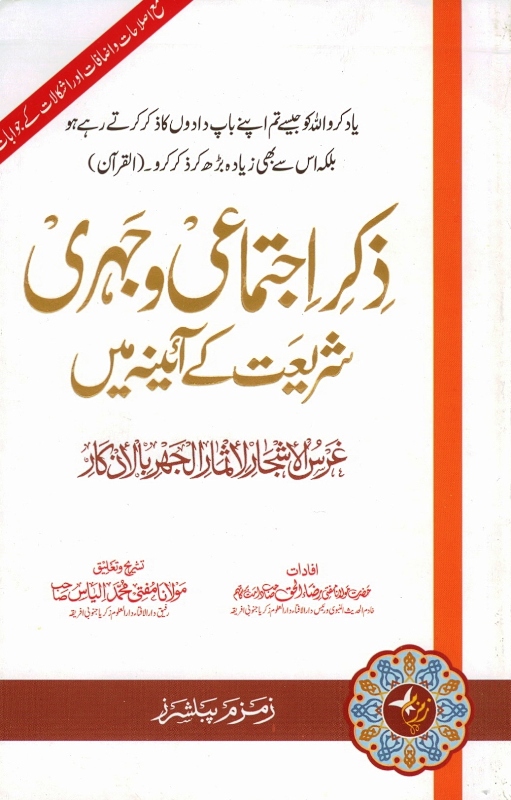
Anyone who is interested in a very detailed research on the topic of audible (and congegrational) Zikr should not miss Hadhrat Mufti Radhaul Haq (hafizahullah)'s work on that.

report post quote code quick quote reply
+1 -0Like x 1
back to top
Rank Image
Offline
Unspecified
2
Unspecified
2
#7 [Permalink] Posted on 13th November 2014 05:54
Allah Azzawajal tells us and promises us that whoever combines faith with righteous deeds will have a good life and a good reward in this world and in the Hereafter.
report post quote code quick quote reply
+1 -0Like x 1
back to top


Quick Reply

CAPTCHA - As you are a guest, you are required to answer the following:


In the above image: What is the word in red?