The Cabinet reshuffle announced by Custodian of the Two Holy Mosques King Salman on Wednesday has now started the process of passing the reins of the country’s government to the next generation, particularly the grandsons of the Kingdom’s founder.
King Salman relieved Crown Prince Muqrin, deputy premier, of his position, at his request, and replaced him with Prince Mohammed bin Naif, who will retain the Interior Ministry portfolio and the chairmanship of the Council of Political and Security Affairs. This makes him the first grandson of the late King Abdulaziz to be named crown prince.
The royal decree also named another grandson, Prince Mohammed bin Salman, as the deputy crown prince and second deputy premier. He will retain the Defense Ministry portfolio and chairmanship of the Council of Economic and Development Affairs.
In the royal decree, King Salman said that he had received a letter from Prince Muqrin outlining his desire to relinquish his position as crown prince. Praising Prince Muqrin, the king said he had agreed to the request.
The king said the appointment of the deputy crown prince was taken in terms of the procedures established by the late King Abdullah, which prioritizes the state’s interests “above all other considerations.”
He said Prince Mohammed bin Salman has shown everyone through his work that he has “great” abilities.
The decree stated that Prince Mohammed bin Salman has been able to perform his duties in an “optimal manner” and in accordance with Islamic law on transition of power. After taking charge on Wednesday, the new deputy crown prince met with the President of Eritrea Isaias Afwerki and had discussions on the two countries’ bilateral relations.
The Kingdom also appointed a new foreign minister after almost 40 years. Approving the request from Prince Saud Al-Faisal, the longest-serving foreign minister in the world, King Salman relieved him of his responsibilities on health grounds, and appointed Adel Al-Jubeir, the Saudi ambassador to the United States, as the new minister.
However, Prince Saud will continue as a minister of state, Cabinet member, adviser and special envoy to the king, and supervisor of foreign affairs. The new Cabinet will also have a fulltime Health Minister Khalid Al-Falih, the head of Saudi Aramco. In addition, Mohammed Al-Jasser, minister of economy and planning, has been relieved of his position and appointed an adviser at the royal court at the rank of a minister.
Labor Minister Adel Fakeih has been appointed as the new minister of economy and planning to replace Al-Jasser, while Mufrej Al-Haqbani is now the new minister of labor. In addition, Khalid Al-Essa, deputy chief of the royal court, has been relieved of his post and appointed as minister of state and a member of the Council of Political and Security Affairs.
Abdulrahman Al-Hazza, president of the Radio and Television Commission, has been relieved of his post and replaced by Abdullah bin Saleh Al-Jasser, who will retain his position as deputy minister of culture and information.
Other important appointments include Sheikh Khalid Al-Yousef as chairman of the Board of Grievances at the rank of a minister, and Hamad Al-Suwailem as chief of the royal court at the rank of a minister.
Nasser Al-Shahrani has been appointed as deputy president of the Human Rights Commission; Amro bin Ibrahim Rajab as deputy chief of the Cabinet’s Bureau of Experts; and Mansour Al-Mansour as assistant general president of Youth Welfare.
Also, Saleh Al-Jasser has been appointed as adviser at the royal court. The king relieved other officials of their posts including Norah bint Abdullah Al-Fayez, deputy minister of education for girls, Hamad bin Mohammed Al-Sheikh, deputy minister of education for boys, Mansour Al-Hawasi, deputy minister of health for health affairs and Mohammed Khashim, deputy minister of health for planning and development.
The king also announced that all military and security personnel in “appreciation of their extraordinary services” would be getting a one-month salary bonus.
http://www.arabnews.com/featured/news/739466
Crown Prince Muhammad
marks generational shift
Thursday, 30 April 2015
RIYADH — Saudi Arabia's new heir to the throne Crown Prince Muhammad Bin Naif will be the country's first king from the third generation of its ruling dynasty.
Custodian of the Two Holy Mosques King Salman, in a decree on Wednesday, appointed Deputy Crown Prince and Interior Minister Prince Muhammad as heir apparent, replacing Crown Prince Muqrin in a shake-up in the country's leadership.
The move comes three months after King Salman took the throne following the death of King Abdullah and as the Kingdom leads a military campaign against the Houthi militias in neighboring Yemen.
Prince Muhammad studied politics in the United States and had several military training courses.
In 1999, the bespectacled prince was given his first official post, serving as aide to his father.
He oversaw a crackdown on Al-Qaeda following a wave of deadly attacks in the Gulf state between 2003 and 2006.
His formative years at the Interior Ministry allowed him to build a "solid network both inside Saudi Arabia and regionally to fight Al-Qaeda", said one Saudi expert.
By sending an assassin to try to kill Prince Muhammad when he was Saudi security chief in 2009, Al-Qaeda paid him the compliment of treating him as one of its most dangerous enemies.
The prince narrowly survived that attack, in which a militant approached him claiming he wanted to defect before detonating a bomb concealed under his clothes. He was named interior minister in November 2012.
The 55-year-old is now firmly established as the most powerful member of his generation in the ruling family and will be one of the most important figures in the Kingdom.
He is the first grandson of the Kingdom's founder King Abdul Aziz to join the line of succession.
Prince Muhammad, who was named as first deputy prime minister, remained in his position as interior minister, Wednesday's decree said.
"I would assume he's from the second generation of princes who are more receptive to ideas of reform. But he is good at making everybody think he is in their camp. That's what makes a successful politician," said Jamal Khashoggi, general manager of Al-Arab News, when Prince Muhammad was appointed interior minister in 2012.
Along with Defense Minister Prince Muhammad Bin Salman, who was appointed deputy crown prince on Wednesday, Prince Muhammad is now the youngest member of the select group of princes at the top of government who control some of the most important portfolios, including intelligence and defense.
The prince, a son of the late Crown Prince Naif who had served as interior minister since 1975 until his death in 2012, has come to be closely identified with the formidable structure his father created.
http://www.saudigazette.com.sa/index...20150430242143
A prince with massive capabilities
Thursday, 30 April 2015
RIYADH — Custodian of the Two Holy Mosques King Salman's youthful son appointed Wednesday as second in line to the throne wields enormous power and is leading a war against rebels in neighboring Yemen.
Defense Minister Prince Muhammad Bin Salman, in his 30s, was named deputy crown prince thanks to his "massive capabilities which became evident to everyone through all the missions he had been assigned with," said a royal court statement.
Just weeks after taking charge of the Kingdom's armed forces Prince Muhammad assumed huge responsibility when a Saudi-led coalition on March 26 began an air war against Iran-backed rebels in Yemen.
His nomination on Wednesday gained "support from the vast majority of members of the Council of Allegiance," a committee of 35 descendants of the Kingdom's founder King Abdul Aziz.
Prince Muhammad also retains his position as head of the economic and development council, a coordinating body, and was named as second deputy prime minister.
But he will no longer hold the crucial position of head of the royal court. "He is the strong man in Saudi Arabia," a Western diplomatic source said before the reshuffle. "He oversees everything important which is going on in this country."
According to a biography from the MiSK Foundation, which Prince Muhammad established for youth development, he had "a professional career of 10 years" and was active in business and philanthropy before entering public service.
In 2009 he became special adviser to his father who was then the governor of Riyadh, before heading his court from 2013 after Salman was named crown prince.
In April last year he became a state minister and Cabinet member, prior to his appointment as defense minister and chief of the royal court on Jan. 23, the day Salman became King upon the death of King Abdullah.
http://www.saudigazette.com.sa/index...20150430242158 






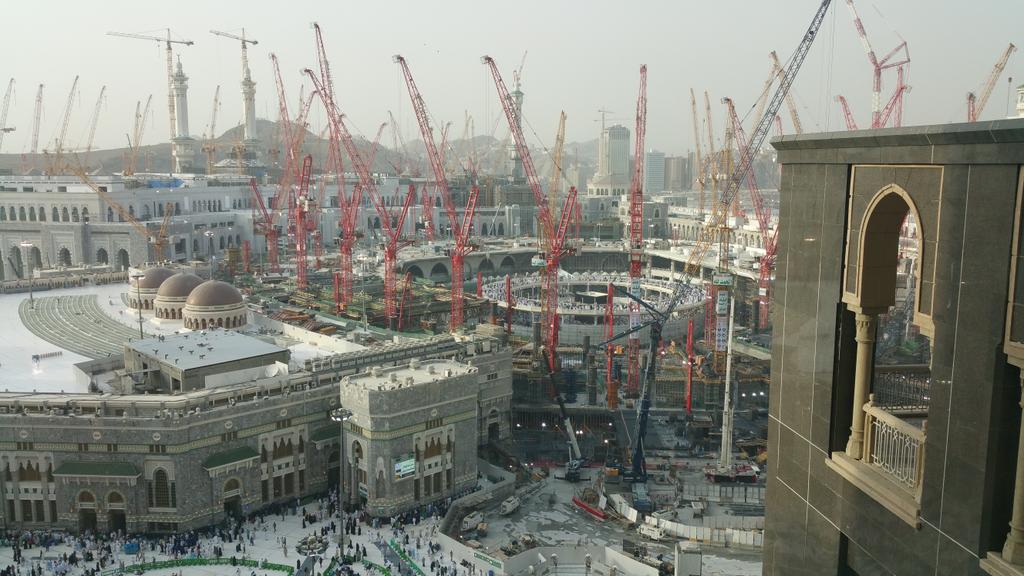
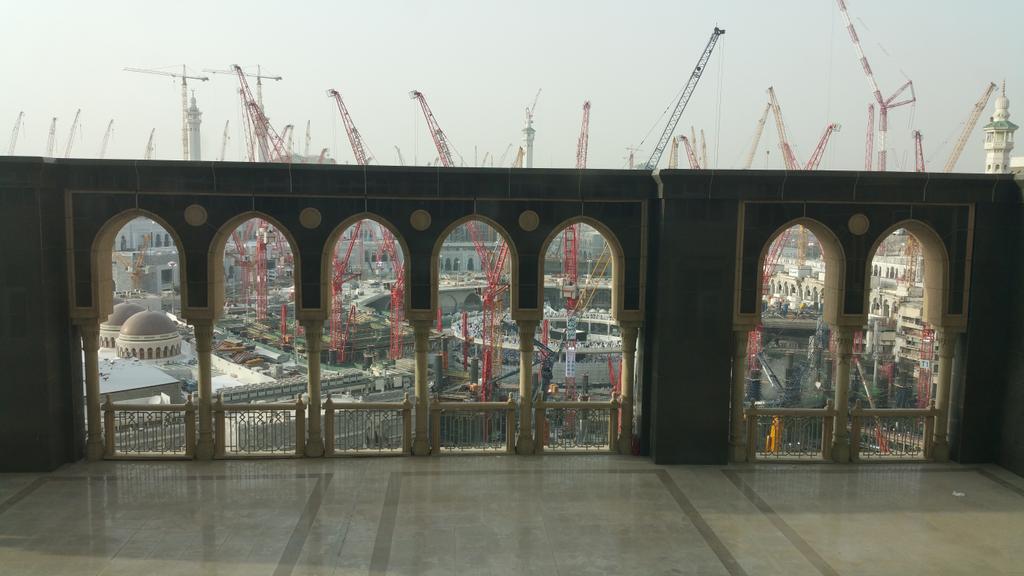
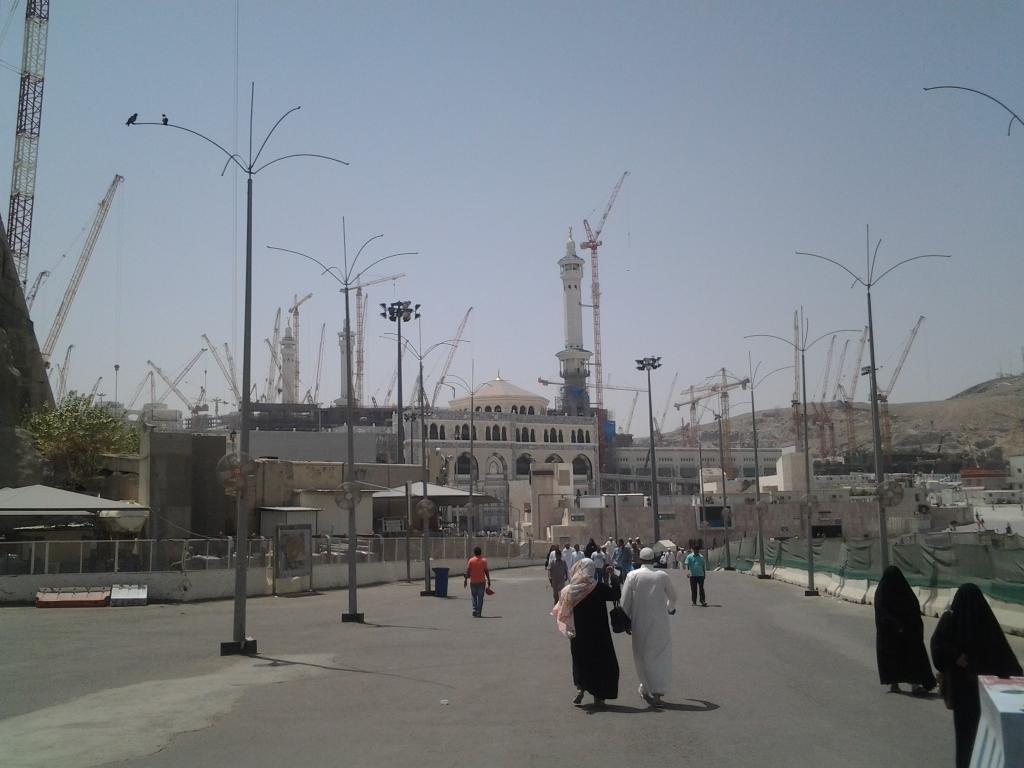
 Twin minarets and bridge construction