
Makkah 2014
October 2014 - by Emad AlHusayni

medium size: pbs.twimg.com/media/BzwB5GHCIAI1WBl.jpg

You have contributed 0.4% of this topic


Makkah 2014
October 2014 - by Emad AlHusayni
medium size: pbs.twimg.com/media/BzwB5GHCIAI1WBl.jpg

Friday, 17 October 2014
MAKKAH — THE last date for all pilgrims to leave the Kingdom is Muharram 15 (Nov. 8), according to Haj Ministry spokesman Hatem Ghadi.
He said all buses carrying pilgrims to Makkah or Madinah pass by Haj monitoring stations on the road that supply them with Zamzam water.
Buses will not leave for the airport until the ministry makes sure pilgrims’ flights are ready and on time. Ghadi said 50 percent of pilgrims visited Madinah before the start of Haj.
http://www.saudigazette.com.sa/index...20141017221434
October 2014 - by Emad AlHusayni

original size: pbs.twimg.com/media/BzbejSaCUAANuHX.jpg:large

17 October 2014
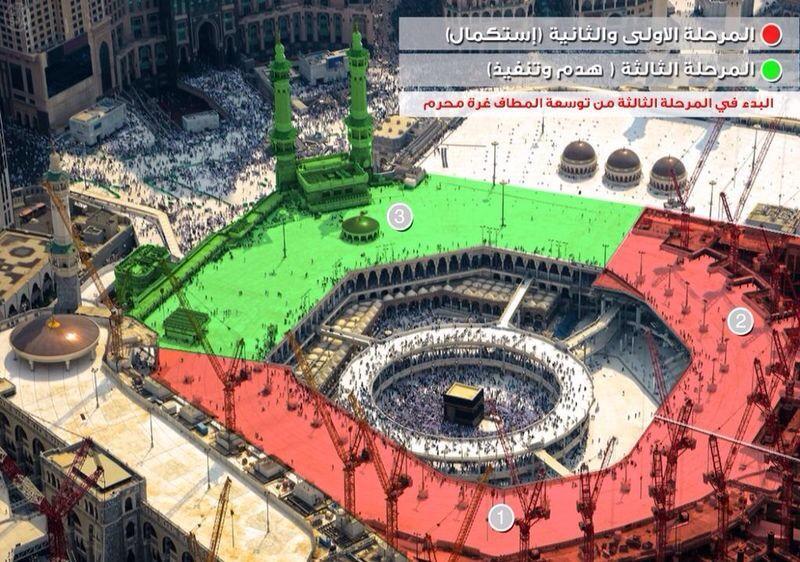
تستكمل الشركة المنفذة لمشروع خادم الحرمين الشريفين لرفع الطاقة الاستيعابية لصحن المطاف بالمسجد الحرام العمل في مرحلته الثانية مطلع الأسبوع المقبل، بعد توقف خلال موسم الحج، وينطلق العمل في المرحلة الثالثة غرة شهر محرم المقبل، بتركيب أسوار العزل المؤقتة والخاصة بمنطقة العمل للمشروع في أعمال الإزالة والإنشاء مع الإبقاء على جزء من أسوار المرحلتين الثانية والأولى حتى الانتهاء من أعمال التشطيب النهائية التي تستمر إلى نهاية شعبان المقبل، وبنهاية عام 1436هـ تكون كافة الأسوار المؤقتة قد أزيلت بالكامل مع المطاف المعلق المؤقت، وتكون أعمال مشروع التوسعة قد اكتملت ليصبح عدد الطائفين في الحرم المكي الشريف بدون المطاف المؤقت 105 آلاف طائف في الساعة، ما يعني مضاعفة أعداد الطائفين والطاقة الاستيعابية في الساعة.
يذكر أن العمل في مشروع رفع الطاقة الاستيعابية لصحن المطاف قد بدأ في محرم الماضي، وتمت إزالة الجزء الأول من مباني الحرم المكى الشريف وتنفيذ الأعمال الإنشائية المطلوبة للتوسعة، وتم استكمال تركيب الدور العلوي من المطاف المؤقت وربطه بالتوسعة السعودية الأولى عبر الدور الأول في شهر رمضان من العام نفسه لخدمة الطائفين وذوي الاحتياجات الخاصة ومستخدمي العربات، وتمت إعادة تركيب الأسوار المؤقتة وإكمال بناء دور السطح، مع تركيب الدور السفلي للمطاف المعلق المؤقت بعرض 10 أمتار وربطه بالدور الأرضي للحرم الشريف.
ويأتي المشروع ضمن رؤية استراتيجية لتحقيق أهداف بعيدة الأمد لحل مشكلة الاختناق التى يعاني منها الطائفون كل عام في المواسم وفي أوقات الذروة، ويوفر المشروع انسيابية تامة في الطواف مع مضاعفة الطاقة الاستيعابية تماشيا مع التوسعات المتتالية للحرم المكي الشريف، ومن أجل تحقيق هذا الهدف تضافرت كافة جهود الجهات ذات العلاقة وتم تسخير كل الإمكانيات والطاقات الفنية والتقنية والمالية اللازمة مع تأمين كافة المعدات والاحتياجات خلال الأشهر الماضية منذ بدء المشروع لإنجاز ما قد يحتاج إلى سنوات لإنجازه، ويتواصل العمل لتأمين الراحة التامة والطمأنينة لضيوف الرحمن، وحرصا على الحفاظ على الإرث التاريخي لعمارة الحرم المكي الشريف، وبدأت أعمال التوثيق مع بداية العمل في المشروع، وباستخدام أحدث التقنيات لتوثيق أدق التفاصيل تمهيدا لإعادة بناء الأروقة القديمة باستخدام العناصر المعمارية نفسها بشكل يتناسب مع التخطيط الجديد للحرم المكي الشريف.
وكانت المرحلة الثانية من المشروع لزيادة الطاقة الاستيعابية للمطاف في المسجد الحرام قد دخلت الخدمة مع بداية شهر ذي الحجة الحالي.
http://www.okaz.com.sa/new/Issues/20...1017729247.htm
Google translation: Complemented by the company executing the project of the Custodian of the Two Holy Mosques, to raise the capacity of the Mataf of the Holy Mosque to work in the second phase early next week, after a pause during the Hajj season, and begins work on the third phase lunar month of Muharram next, installing walls insulation temporary and private work area for the project in the work of removal and construction while retaining a portion of the walls of the second and the first until the completion of the work of finishing the final which will continue to the end of the next Shaban, and by the end of 1436H be all fences temporary have been removed completely with the ultimate commentator temporary, and the actions of the expansion project has been completed to become the number of faithfull in the Haram al-Sharif without up temporary visitation 105 thousand per hour, which means doubling the number of faithfull and capacity in time.
It is noteworthy that work on a project to raise the capacity of the Mataf had begun in Muharram last year, and has removed the first part of the premises Haram al-Sharif and the implementation of construction work required for the expansion, was the completion of the installation of the upper floor of ultimately temporary and linked to enlargement of the first Saudi through the first round in the month of Ramadan the same year to serve Taivin and people with special needs and users of vehicles, and has re-installation of temporary fences and completing the construction of the role of the surface, with the installation of the basement took shape commentator for the temporary display of 10 meters and link it to the ground floor of the Haram al-Sharif.
The project comes within the strategic vision to achieve the goals of long-term to solve the bottleneck problem plaguing Taúvon each year in the seasons and in peak times, the project provides a streamlined fully in circumambulation with double the capacity in line with expansions successive Holy Mosque, and in order to achieve this goal have combined all efforts the relevant authorities have been harnessing all the possibilities and artistic talents and technical and financial resources with secure all equipment and requirements during the past months since the start of the project to accomplish what might take years to be completed, and work continues to secure the comfort and reassurance to the pilgrims, and in order to preserve the historical heritage of the building Haram al-Sharif , and began to work with the documentation beginning work on the project, and using the latest technology to document the smallest details in preparation for the rebuilding of the old arcades(Ottoman Porticos) using the same architectural elements are commensurate with the new layout of the Holy Mosque.
The second phase of the project to increase the capacity of took shape at the Grand Mosque has entered service with the beginning of the current month of Dhu al-Hijjah.
October 2014


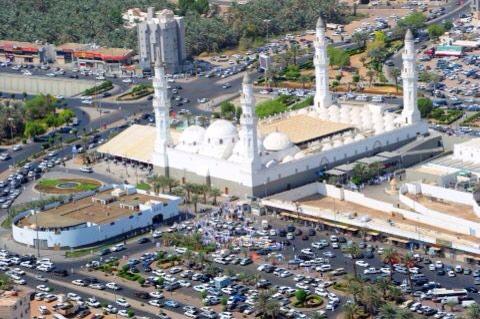
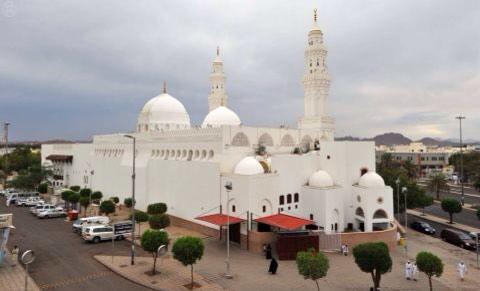
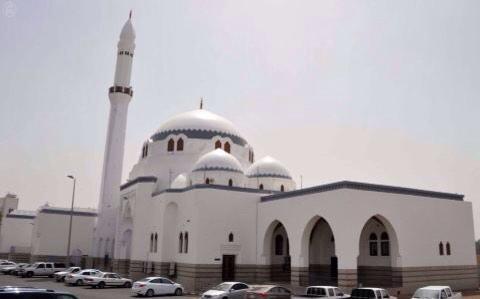
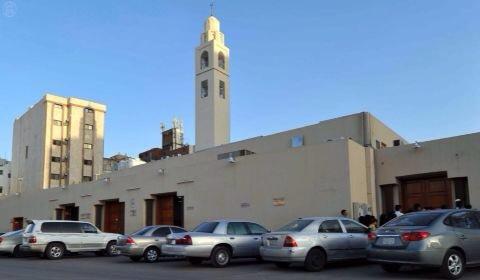
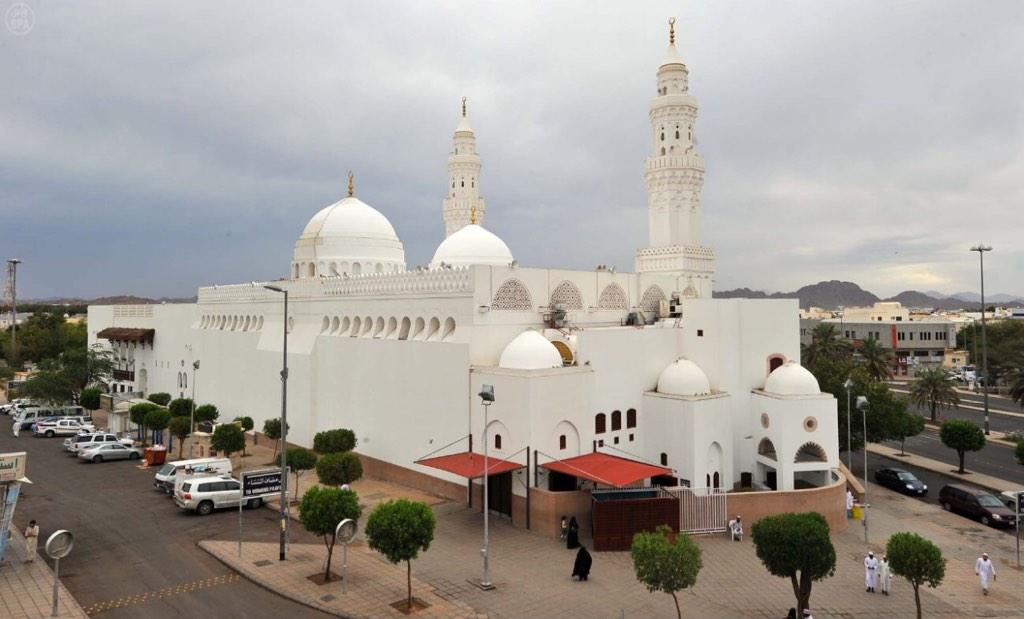
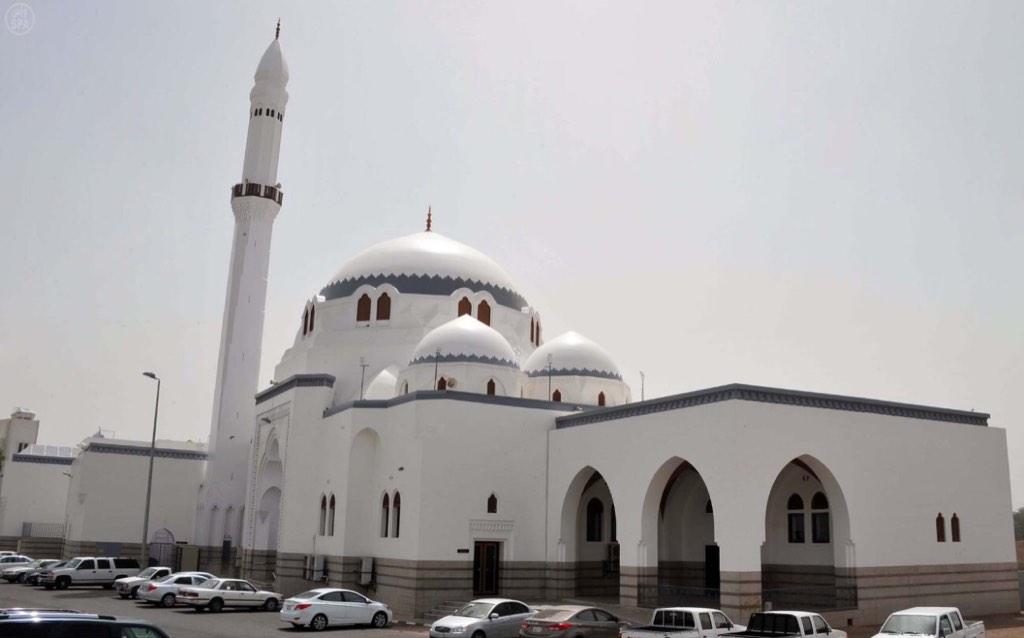
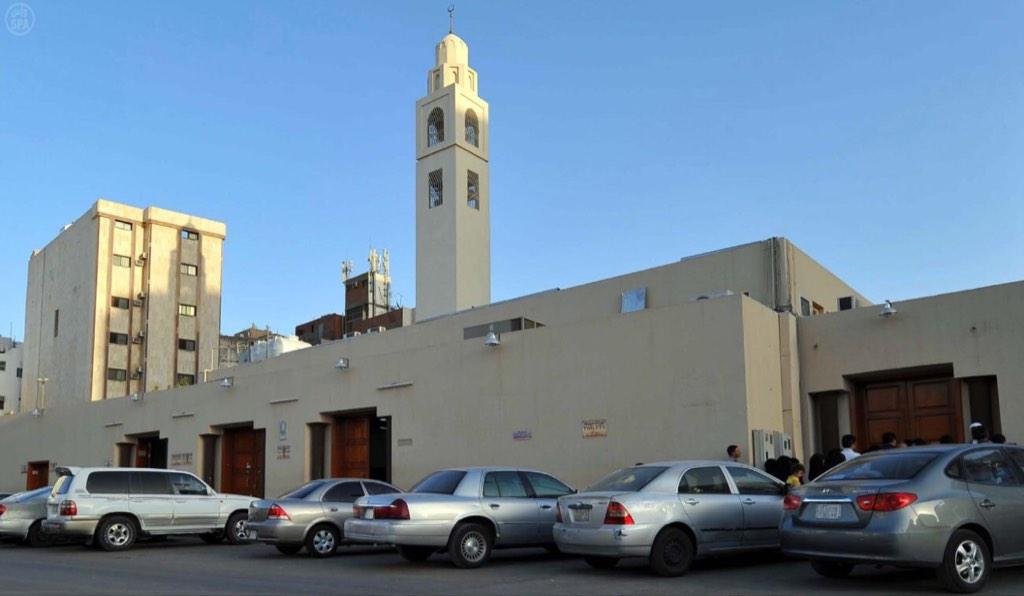


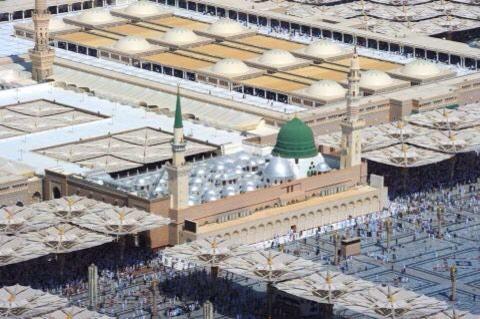
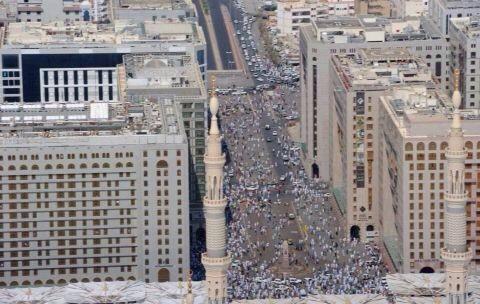
Aerial view of the Prophet's Mosque
Friday, 23 Dhu-AlHijjah 1435 - 17 October 2014

full screen +zoom: https://fbcdn-sphotos-a-a.akamaihd.n...58350880_o.jpg
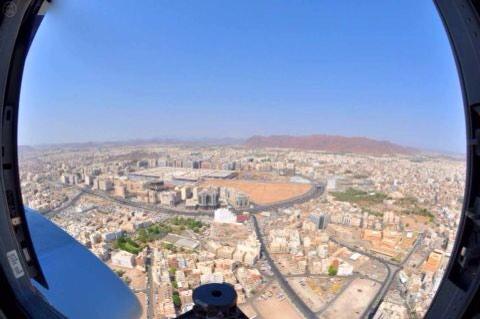
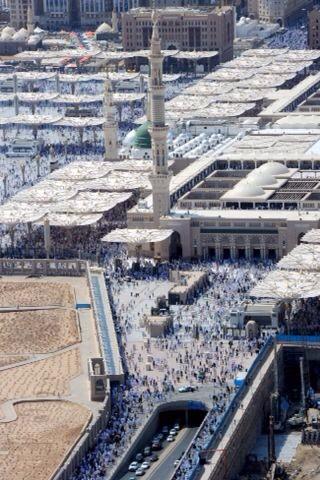
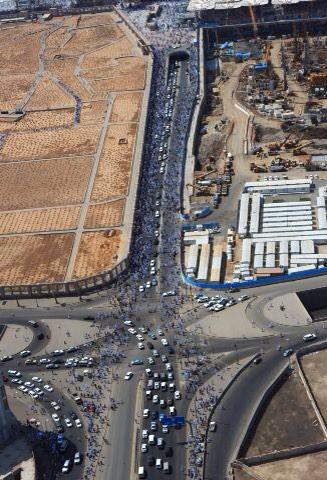
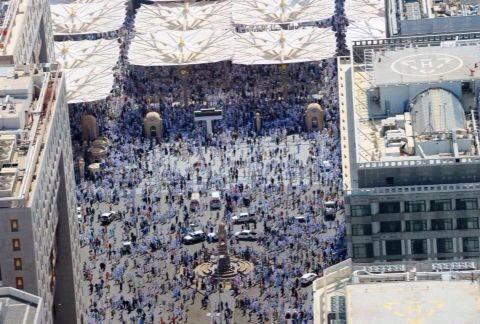
https://twitter.com/spagov/status/523146873398255616
https://twitter.com/spagov/status/523147263107821568
http://www.al-jazirahonline.com/news...20141017/30814

full screen +zoom: https://scontent-b-lga.xx.fbcdn.net/...45995336_o.jpg

full screen +zoom: https://fbcdn-sphotos-h-a.akamaihd.n...12439250_o.jpg

full screen +zoom: https://fbcdn-sphotos-f-a.akamaihd.n...70456317_o.jpg
عدسة " واس" ترصد الكثافة البشرية في المسجد النبوي على ارتفاع أعلى من 1000قدم (واس) 23-12-1435
17 October 2014




Sunday, 19 October 2014 - 25 Thul-Hijjah 1435
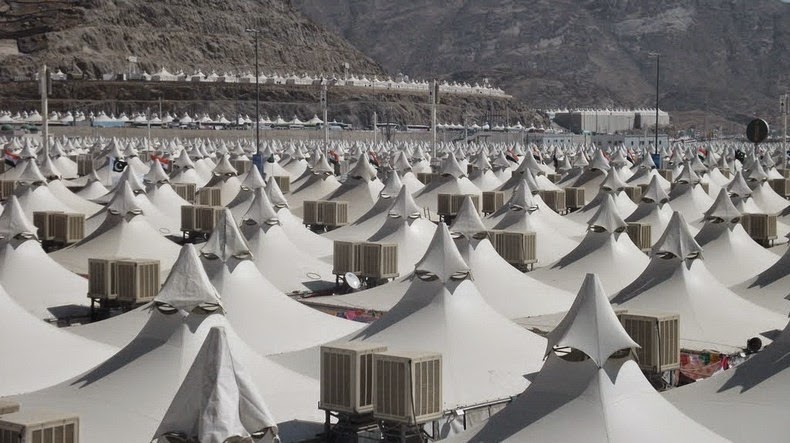
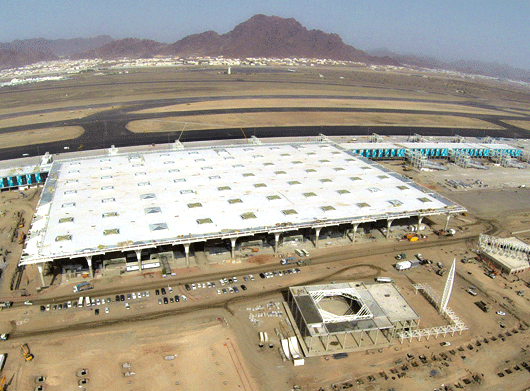
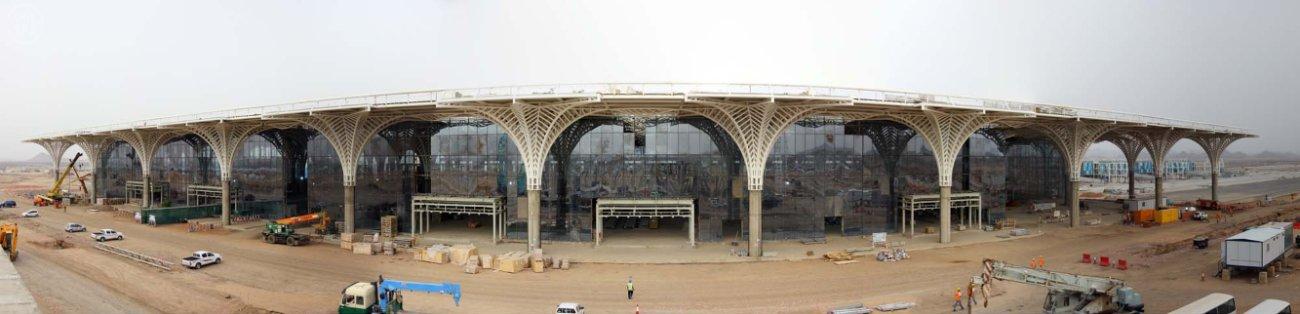
MADINAH — Over 100,000 Hajj pilgrims left Madinah airport for their home countries after the Juma prayers on Friday. The majority of the pilgrims left via flights operated by Saudi Airlines.
According to airport staff, Prince Muhammad Bin Abdulaziz Airport was bustling with huge numbers of pilgrims.
Haj officials say they want to ensure over half a million pilgrims leave the Kingdom through the airport in Madinah before Muharram 15 (Nov. 8).
http://www.saudigazette.com.sa/index...20141019221650
Haj Terminal Madinah - Pilgrims returning home


Sunday, 19 October 2014
RIYADH — Saudi Arabia hosted 24.8 million pilgrims from all over the world over the past 10 years.
Over the past decade the largest number of pilgrims was witnessed in 2012 when 3.16 million of them performed Haj and the lowest in 2013 with only 1.98 million pilgrims, Al-Eqtisadiah daily reported.
Last year the number of pilgrims dropped due to the government’s decision to cut the number of foreign pilgrims by 20 percent and domestic pilgrims by 50 percent because of the ongoing expansion projects in Makkah and Madinah.
This year about 2.1 million people performed Haj, consisting of 1,297,000 men and 843,000 women.
Indonesia sent the largest number of pilgrims from a single country this year. With 293,200 pilgrims, Indonesians accounted for about 21 percent of the total number of foreign pilgrims — 1.39 million.
Pakistan with 189,500 pilgrims and India with 151,500 occupied second and third places respectively.
Egypt, with 126,600 pilgrims, came fourth and Bangladesh fifth with 102,900 pilgrims.
Around 67,000 Egyptians accounted for 10 percent of the 696,200 domestic pilgrims while 41,900 Pakistanis accounted for about 6 percent.
Indians accounted for about 2 percent of domestic pilgrims while Indonesians and Yemenis each accounted for about 1 percent.
The Saudi government has spent more than $100 billion (SR375 billion) to improve pilgrimage facilities.
According to official data, there were 2.26 million pilgrims in 2005, increasing to 2.38 million in 2006.
This number further increased by about 3 percent in 2007 to reach 2.45 million but came down by 2 percent in 2008 to stand at 2.41 million.
The number of pilgrims further decreased by 4 percent in 2009 to reach 2.31 million.
In the following three years the number of the pilgrims showed steady increases, reaching 2.79 million in 2010, 2.93 million in 2011 and 3.16 million in 2012, increasing by 8 percent annually.
The rise in the number of foreign pilgrims over the past 100 years was phenomenal, thanks to the advancement in transportation means and tremendous efforts by the Saudi leadership to develop infrastructure facilities in the two holy cities as well as the pilgrimage sites.
According to data collected from relevant official bodies, fewer than 60,000 foreigners performed Haj in the year 1920.
http://www.saudigazette.com.sa/index...20141019221591
Total Number of Pilgrims
Between 2000-2012


Sunday 19 October 2014
Children below the age of 10 may be barred from performing Haj from next year.
According to a report in a local newspaper, the subject came up for discussion during a recent meeting between the heads of pilgrim establishments and the Haj Ministry.
No decision has yet been taken on the proposal, said Al-Watan newspaper, quoting sources. It is only a point of discussion at the moment, it said.
The proposal stemmed from the fact that rising temperatures and a very high density of people at the holy sites during the annual pilgrimage put children at risk. In addition, there is a great possibility of children’s catching infections.
Arab News saw hundreds of children during Haj this year. They were even brought by their parents to the Jamrat Bridge to perform the stoning of the devil ritual. This mandatory ritual generally takes place in the afternoon and is considered difficult and challenging even for the most able-bodied pilgrims.
The Haj Ministry’s field teams discovered hundreds of children, almost two-thirds of them under the age of six, at the Grand Mosque in Makkah and other holy sites during this year’s Haj.
The ministry estimated their number at between 5,000 and 7,000. Many of these children had fallen ill from the strain on their fragile bodies.
The total number of Indian pilgrims below the age of 10 was 144, according to data available on the Indian Haj Mission’s website. In addition, there were 52 infants.
In the past, infants from India needed no Haj visa and they were not counted in the quota. From this year onward, however, they are being treated as pilgrims.
Diplomats from South Asian and Southeast Asian countries feel the proposal has merit.
“We have a high demand and limited quota, and we would like that quota to be used by pilgrims who are fully aware of the religious obligations,” said one diplomat.
“Certainly, Haj is not some kind of picnic; it is a grueling task and children should not be put in harm’s way,” he said.
The men and women, who brought their children to Haj, told Arab News that they had no one to take care of them at home.
Some of the expat pilgrims from Riyadh, Dammam and other Saudi cities said most of their neighbors and acquaintances go home during Haj holidays and there is no one for them to leave their children with.
“Who would want to bring little ones to Haj?” said Sadiya Anam, a teacher at a school in Riyadh who performed Haj this year with her husband and two small children.
“We had no option but to bring them and so we went the legal way and paid for their permits.”
The other point of view, especially from Western pilgrims, is that unless they bring their children, the children will not be able to feel the grandeur and passion for Islam.
“I brought children from London this year to let them see and feel for themselves the real beauty of Islam,” said Rafi Patel, a British citizen. “We may keep telling our children about how everyone is equal in Islam but it is only at Haj you see that in practice and you cannot imagine the impact this has on young and impressionable minds.”
Tareq Angawi, head of the establishment for pilgrims from Turkey, Europe, America and Australia, was among those who backed the proposal.
“The majority of families who came from abroad to perform Haj this year with their children were mostly British, but their numbers were limited and they had only brought their children because they had no one to take care of them back home,” Angawi was quoted as saying in Al-Watan newspaper.
“Our group was very organized and we left children in big tents under the supervision of qualified assistants.”
If approved, the proposal will be submitted to the Council of Senior Scholars for consideration.
http://www.arabnews.com/featured/news/646726
Makkah Metro operates
under highest standard of safety

Sunday 19 October 2014
Top executives of the Makkah Al-Mashaer Metro (MMM), China Railway Construction Corporation (CRCC), explained the smooth operation of the MMM this year and the last five years pilgrimage since its inception.
Dong Liwei, the CRCC deputy general manager, said CRCC is committed to making every Haj year successful and meeting the most stringent safety standards for smooth operations of the Makkah Metro pointing out that they had transported a total of over 16 million passengers for five years in a row.
He said strict maintenance and evaluation of every task and work assignment are in place round-the-clock with the help of the best railways experts in the world to do safety inspections and test runs of the trains throughout the year before the Haj period.
Dong Liwei said: “Our team makes a comprehensive report at the end of every Haj and conducts a thorough evaluation and study on identifying every single observation where improvement is possible.”
He said with the last train driving back from Jamarat at 18:00 hrs on Oct. 7, 2014, the Haj operation of the MMM-Southern Line was successfully operated by CRCC. It completed the transport service mission for five consecutive years with an overall figure of 16 million passenger trips.
“Under the supervision of the Saudi Ministry of Municipal and Rural Affairs (MOMRA) this year, the train operation started at 04:00hrs on Oct. 1 with a continuous operating period of 158 hours (including 7 days and 6 nights)” he noted.
During the period, 1,949 train trips (as against the originally planned 1,696 trips) were operated during which they carried more than 3.8 million passengers. In general, train services were very safe, smooth and successful.
The whole operation is being monitored by sophisticated equipment and high tech computer systems under the supervision of well-trained engineers and technical staff.
At the main headquarters, the Operation Control Center (OCC), monitoring team works around the clock to watch every single movement at all stations where immediate action is required for any emergency. “The same monitors are also placed at every station to ensure immediate action and solutions,” said the OCC head.
CRCC led by Zhao Dianlong, secretary of the Party Committee of the CRCC International Group takes the onerous responsibility of ensuring safety for the tough and intense operation work. Dianlong worked at Arafat 3 station which witnessed the most stressful situation regarding crowd management and control.
The operation this year according to (MOMRA) was manned by 1,600 staff, both men and women deployed in all stations in Mina, Arafat and Muzdalifah, with the cooperation of various government agencies from the Ministry of Haj, Public Security and the Civil Defense.
According to the Deputy Stations Manager, Taher Al-Bhagdadi, the train does not stop while in operation except when in position or in cross boarding to allow another train to pass. Also, the train routinely undergoes a swift maintenance checkup to ensure that all operations are in order.
Explaining the embarkation process, he said every station has two waiting areas to board the train, with a solid glass wall that separates the first batch from the second batch. As such, 3,000 pilgrims with tickets will be allowed access to the first waiting area next to the train doors while the rest of the pilgrims will wait outside the wall separation. This will prevent large numbers of pilgrims from embarking the train all together.
http://www.arabnews.com/saudi-arabia/news/646596


Monday 20 October 2014
A Sri Lankan journalist who has come for the Haj for the first time has expressed awe at the outstanding services rendered by the government to pilgrims who had come from all parts of the globe.
Badoordeen Mohammed Murshideen, who performed his maiden Haj this year, said that he never knew that such a gigantic plan has been drawn up by the Saudi government to serve both foreign and local pilgrims.
“From the airport to the holy sites, we were treated so well,” he noted.
Murshideen thanked the UAE Ambassador in Colombo, Abdul Hamid Al-Fatah K Al-Mulla, for funding his pilgrimage, helping him achieve his life-long dream. The journalist said that there were ample facilities for pilgrims to seek medical treatment at every corner of the holy site.
“Health officials were kind and treated patients professionally and with a sense of dedication,” he added.
Murshideen, who is also the executive member of the Sri Lankan chapter of the Makkah-based Muslim World League (MWL), said that he met Professor Hamid bin Ahmed Al-Refaie, chairman of the International Interfaith Dialogue Group in Jeddah, on Thursday.
During the discussions, he was able to discuss matters regarding peaceful co-existence with other communities in non-Muslim countries.
“Muslims in Sri Lanka have to learn a lot about Islamic culture, traditions and practices from a country such as the Kingdom.”
During his stay in Makkah, he said that he got the opportunity to meet the Sri Lankan Ambassador Mohammed Hussein Mohamed and Consul-General Adam Bawa Uthumalebbe to get first-hand knowledge about the lives of Sri Lankan expatriates in the Kingdom.
Murshideen said that he prayed for the country at the House of God in appreciation of its wonderful services.
http://www.arabnews.com/saudi-arabia/news/647186
Makkah
October 2014 - by Emad Alhusayni




Tuesday, 21 October 2014
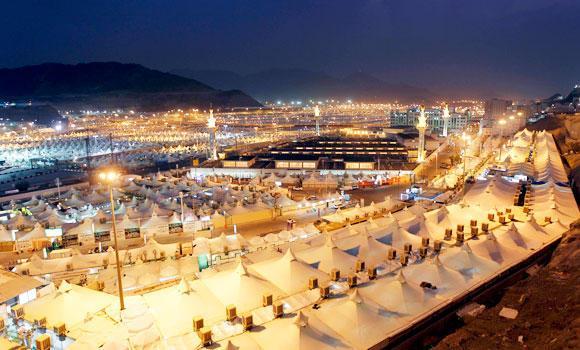
MAKKAH — The National Society for Human Rights (NSHR) has noted five areas of improvement in the management of the recently concluded Haj pilgrimage, including pilgrims squatting on the road and under bridges, Makkah daily reported.
Solaiman Al-Zaidi, the society’s supervisor in Makkah, said other areas that needed tackling included a rising number of beggars in Makkah, Madinah and the Holy Sites of Mina, Arafat and Muzdalifah.
He said there were repeated power and water cuts in some residential districts of Makkah and Mina. “Domestic pilgrims continued to complain about the rising costs of local Haj campaigns and their sub-standard services,” he added.
Al-Zaidi said some investors in the pilgrims' accommodation sector have complained that there was no or little demand by the pilgrims for their buildings, causing them immense financial losses.
He said the society has checked whether Haj rules and regulations were being applied properly to ensure pilgrims were provided with the best of services that would enable them perform the rituals in ease and comfort.
Al-Zaidi said the society made field visits to all Haj service providers, received written and verbal complaints from a number of pilgrims and also had complaints put on its website.
“We dealt with every case individually with the concerned private organization or government department,” he said. Al-Zaidi, on the other hand, commended the success of the Haj season and said the efforts of the Makkah governorate under its Emir Prince Mishal Bin Abdullah were worthy of praise.
He said the security forces carried out their duties with dedication and loyalty and dealt graciously with pilgrims. Al-Zaidi said the Ministry of Haj has carried out its plans well and the Health Ministry faced the challenges of the Ebola and Middle East Respiratory Syndrome (commonly known as coronavirus) competently.
He recalled that after last year's Haj season the society compiled its observations in a 60-page report in which it called for relocating the offices of all government departments not directly involved in Haj services outside the Holy Sites.
He said the report also called for not granting Haj visas to pilgrims coming individually without mutawwifs (Haj guides) because they could face serious problems in accommodation and transport.
http://www.saudigazette.com.sa/index...20141021221812



This cannot be undone and I am sure it will be greatly appreciated.
Please wait...

