Forum Menu - Click/Swipe to open
 

Makkah News and Updates

Jump to page:

You have contributed 0.4% of this topic

Thread Tools
Appreciate
Topic Appreciation
omer, Taqwah, Taalibah, rizmalek, super-glue, Seifeddine-M, bint Mohammed, member2, sweetmuslimahk1, abu mohammed, Yasin, Heather2727, Naqshband66, ummi taalib, mo_isaq, Acacia, Desi tadka, umar123, habeeba, Jinn, Arslan., ibn Ismail, najimuddin, ALIF, al-adnan, abuzayd2k, Moonlight, Mohammed8, ssaad, tanveerzakee, sharjan8643, opc121177
224 guests appreciate this topic.
Rank Image
Roukaya19's avatar
Montreal
4,092
Sister
4,288
Roukaya19's avatar
#4726 [Permalink] Posted on 15th October 2014 15:21
 
State-owned firm proposed
to develop Mina infrastructure


The Haj Ministry has proposed the establishment of a state-owned company to construct multistory buildings on Mina mountains as part of the efforts to accommodate more pilgrims in the tent city during Haj.

Haj Minister Bandar Hajjar said the proposal has been presented to Interior Minister Prince Mohammed bin Naif, chairman of the Supreme Haj Committee, which includes a mechanism to finance the project.

Hajjar proposed a fully government-owned company, which would be established on the basis of a Cabinet decision, in order to develop holy sites and construct residential buildings on Mina mountains.

“The huge company will have subsidiaries for leasing and maintenance,” the minister said, adding that project financing could be done through either public funds or commercial banks. Hajjar said the company would solve many existing problems, such as inadequate air-conditioning, water and electricity supply and sewage services. “It will also increase the capacity of Mina,” he added.

He said the buildings would be constructed in Mina following the conditions set by the Council of Senior Islamic Scholars and the development plan for holy sites.

Mohammed Badahdah, assistant secretary-general of the World Assembly of Muslim Youth, said it would speed up the construction of buildings in Mina.

“I hope the government will establish the company quickly to embark on construction work in order to help millions of Muslims around the world fulfill their dream of performing Haj without delay,” he said.

“There are more than 1.5 billion Muslims in the world. A good number of them intend to perform Haj every year, but we cannot accommodate them due to the shortage of space at the holy sites and ongoing expansion work at the Grand Mosque in Makkah,” he told Arab News.

He said that Islamic scholars have already approved construction of buildings in Mina to accommodate growing numbers of pilgrims. “They have already constructed buildings on Mina mountains on an experimental basis. The new company will be able to construct more buildings within a short period.”

Speaking about another proposal to set up a company to manage Haj affairs, Badahdah said it would not be possible in the short-term.

“The comprehensive management of Haj affairs requires a specialized company and will take time,” he said, while emphasizing the need to improve services being extended to the guests of God and making use of modern technology.

http://www.arabnews.com/saudi-arabia/news/644081

report post quote code quick quote reply
+1 -0
back to top
Rank Image
Roukaya19's avatar
Montreal
4,092
Sister
4,288
Roukaya19's avatar
#4727 [Permalink] Posted on 15th October 2014 15:26
 
 
Kingdom to retain Haj quota cuts for next season

Reduction of 20% foreign pilgrims
and 50% domestic pilgrims


Wednesday, 15 October 2014

JEDDAH — Minister of Haj Bandar Hajjar announced on Tuesday that the Kingdom will retain a 20 percent cut in the number of foreign pilgrims and 50% reduction in domestic pilgrims for the next Haj.

“The cut will continue until the completion of the third phase of the expansion of the mataf (circumambulation area around the Holy Kaaba),” Hajjar said while addressing a meeting of senior officials of the ministry and the related agencies and departments.

The reduced quota will continue for the third year in a row in view of the ongoing largest-ever expansion in the history of the Grand Mosque. The Kingdom started implementing a quota cut in 2013. The period for Umrah visa has also been reduced to 14 days as part of measures to minimize congestion at the Grand Mosque.

Hajjar said that implementation of the comprehensive electronic path for Haj pilgrims has been started. All pilgrims will come under e-path for the coming Haj. The minister urged the Haj service firms, travel and tourism offices and other related agencies to take advantage of the project, which is aimed at further improving the quality of services being rendered to the pilgrims.

The ministry has already started preparations for the smooth conduct of Haj 2015.

The meeting discussed various aspects of the operation plan and the success of the low cost Haj program.

Last year, the ministry implemented a comprehensive e-tracking system for Umrah pilgrims also. There were 48 licensed Umrah firms and about 2,000 foreign agents for the last Umrah season. The ministry had processed the Umrah visa applications and the issuance of visas in line with the system, which is directly linked to the ministries of interior and foreign affairs and other government departments.

The system enabled the ministry to have a control on the entire process, including issuance of visas, monitoring of services provided to pilgrims, entry and departure of pilgrims and the like. Under the e-system, Umrah visa applicant would apply through a foreign agent that concluded a contract with a Saudi Haj company. The e-system has been instrumental in upgrading the services to the pilgrims in addition to bringing down the percentage of overstayers to the lowest.

http://www.saudigazette.com.sa/index...20141015221286


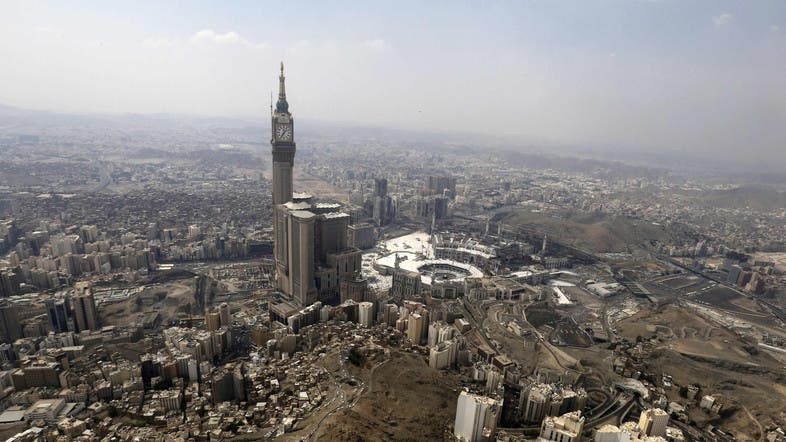
Makkah

2014


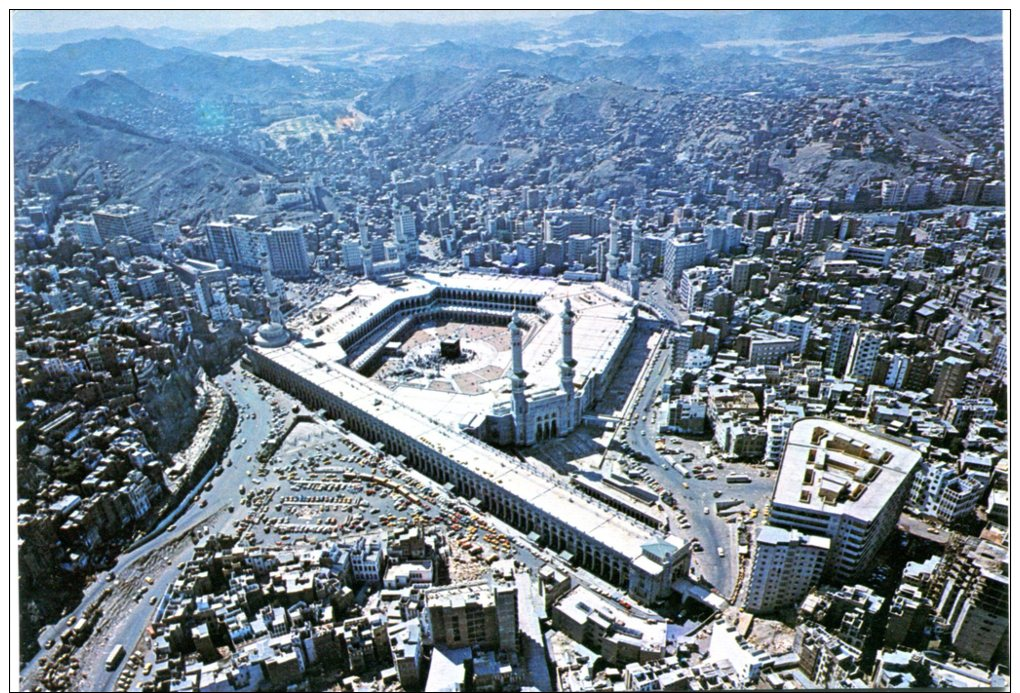
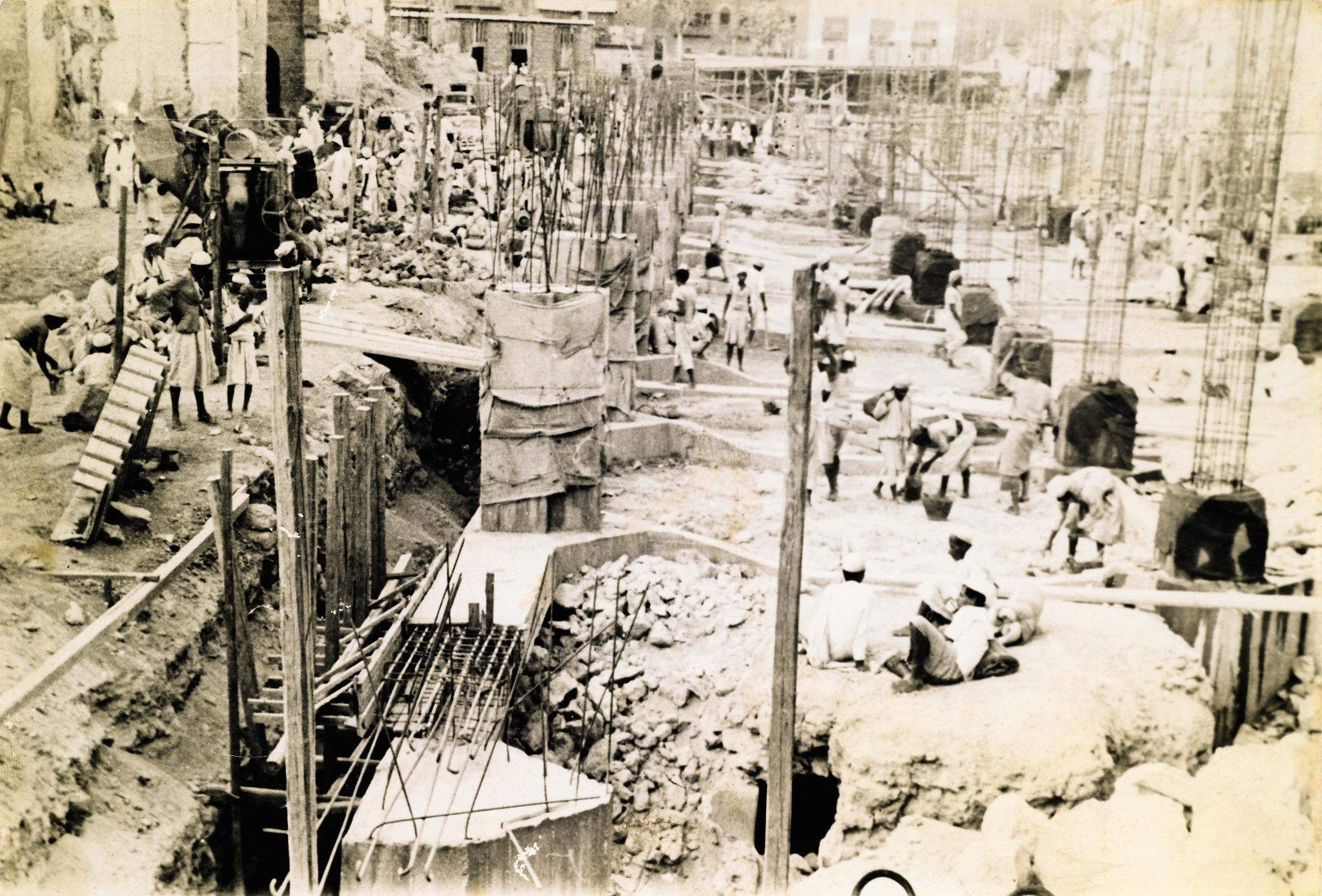
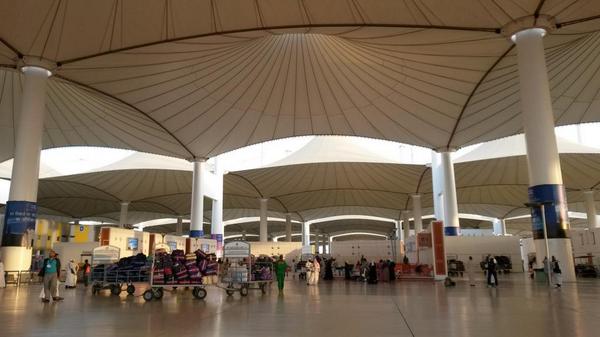
full screen + zoom: http://media4.s-nbcnews.com/i/newscm...a301586fd0.jpg

2008


*******************


2011


1978
 
report post quote code quick quote reply
+1 -0Winner x 1
back to top
Rank Image
Roukaya19's avatar
Montreal
4,092
Sister
4,288
Roukaya19's avatar
#4728 [Permalink] Posted on 15th October 2014 15:28
 
Departing pilgrims face cap
on Zam Zam water
 
Tuesday 14 October 2014

Pilgrims returning home after completing the Haj pilgrimage are becoming increasingly resentful of the five-liter cap on Zam Zam water imposed by the authorities.

With the demand for the precious water surging as pilgrims return home, the authorities have moved to increase the supplies of Zam Zam in Jeddah and Madinah.While in Makkah, pilgrims have access to plentiful supplies of Zam Zam.

However, the long tradition of carrying Zam Zam water home following the Haj may well be on its way to becoming a memory as now almost all pilgrims are only allowed to carry a five-liter container with them which they are given at the check in counters at the airports. Moreover, this facility is limited to those pilgrims who have performed the Haj under government schemes.

However, individual pilgrims who came through private Haj operators are also allowed to take the same quantity of Zam Zam upon their return home.

Saeed Musfer Al-Wadi, director of the King Abdullah Project for Zam Zam of the National Water Company told Arab News: “Zam Zam water is being packed according to norms set by the civil aviation authorities in view of the carriage space in aircrafts.” He added that, “We are exclusively packing five-liter cans for returning pilgrims as advised by the civil aviation authorities.”

He said that the King Abdullah Project for Zam Zam produced over 78 million water bottles during the current Haj season.

Al-Wadi also said that, “We have prepared well in advance to serve pilgrims by raising our production and both production and packing is being done according to world standards of excellence.” He added that they had established ten selling points at the airports for the sale of five-liter cans of Zam Zam water.

While pilgrims welcomed the change, they were disappointed at the five-liter cap imposed on the volume of Zam Zam water.

“Every pilgrim wishes to take as much as Zam Zam as he can, but since authorities have ruled that they can only take a five-liter can, we have to abide by the ruling,” Indonesian Religious Minister Lukman Hakim Saifuddin told Arab News earlier.

Egyptian pilgrim Rashad Fahmi said: “We thank the authorities for gifting the Zam Zam water upon our return home, but a mere five-liter can is insufficient for my family let alone the numerous visitors and relatives who will come to welcome me after the Haj pilgrimage.” He added that this was the only unique gift he could present back home.

“Zam Zam is a significant part of our journey of a life time,” said Indian pilgrim Abdul Hameed, referring to the pilgrimage, “but a five-liter can is really disappointing,” he concluded.

http://www.arabnews.com/saudi-arabia/news/644016


Pilgrims asked to look for signs of infections
 
Tuesday 14 October 2014

Pilgrims have been urged to be strongly vigilant and to immediately report any symptoms of infectious diseases to health authorities in the Kingdom or in their home countries, according to a joint press statement issued here by the Ministry of Health (MOH) and World Health Organization (WHO).

“This year’s Haj was free of epidemic diseases, but the pilgrims in particular and the public at large across the Kingdom have been asked to remain vigilant to any symptoms of infectious diseases and immediately report to local health authorities in Saudi Arabia or their home countries,” the statement said.

In addition to common infectious diseases like influenza, the ministry continues to remain focused on the public-health issues associated with coronavirus (MERS-CoV) and Ebola virus during the current season. It remains on alert for any signs of these or other infectious diseases as pilgrims head home.

“We have worked with the WHO to prevent the spread of infectious diseases during this Haj season, but a lot of our success is attributable to the steps our guests have taken to protect the community,” said Dr. Anees Sindi, deputy commander of the Ministry’s Command & Control Center.

“To prevent infection, please continue to wash your hands as often as possible and avoid contact with sick people or camels. If you fall ill, seek treatment right away,” he added.

He also requested the public to dial 937 to reach the MOH Emergency Call Center, which provides urgent medical consultations to patients and health care workers. If symptoms appear outside Saudi Arabia, pilgrims should contact their doctor or visit the closest hospital.

WHO representative in the Kingdom Dr. Hassan El Bushra said: “In our view, this year’s Haj preparation was a model to be followed, but it is important that pilgrims continue to be cautious after the end of Haj and continue to practice infectious disease control measures.

Besides the infectious diseases common during the annual Haj, the two deadly viruses of MERS-CoV and Ebola were the core of attention this time.
MERS-CoV is a highly contagious virus that spreads through direct contact with people — and possibly camels — who are infected with the virus. Symptoms include cough, high fever, congestion and shortness of breath. In some cases, the patient has diarrhea.

So, the MOH recommended the following practices to prevent infection from MERS-CoV: Wash hands with soap and water, avoid contact with sick people, refrain from touching the eyes or nose, cough into a tissue or the elbow and then wash the hands carefully, avoid close contact with camels, and maintain good hygiene habits in general.

The incubation period is up to two weeks, so pilgrims should remain alert for any signs of infection after they return home, the ministry stated and requested the public on its website to learn more about MERS-CoV.

Regarding the Ebola virus which spreads through direct contact with the bodily fluids of an infected person, the ministry urged any person exhibiting symptoms of the disease to immediately consult the nearest physician or health care facility.

http://www.arabnews.com/saudi-arabia/news/643991


Half a million Haj pilgrims
receive medical treatment
 
Tuesday 14 October 2014

Nearly half a million pilgrims made use of medical facilities that were available in Makkah and Madinah during Haj this year. Nineteen open heart surgeries were performed, Mansour Al-Hawasi, deputy health minister for Health Affairs, said here Sunday.

Al-Hawasi was addressing health officials here during an Eid party hosted by the Ministry of Health to thank health officials who were affiliated with the Haj program in both cities.

Some 22,000 health officials were deployed in the holy cities this year, as well as at 14 ports of entry.

Offering his congratulations to Custodian of the Two Holy Mosques King Abdullah and Crown Prince Salman, deputy premier and minister of defense, for their unwavering cooperation in making the health program a success, the deputy minister said health officials did their part to offer the very best of services to pilgrims.

He also expressed gratitude to the World Health Organization (WHO) for its assistance in the prevention of infectious diseases.

Shoura Council member Abdul Rahman Al-Sweilem was present during the function.

Al-Hawasi said some 472,000 pilgrims availed themselves of the medical facilities at the holy sites and at the ports of entry.

He said that 329,000 pilgrims had visited medical centers in the holy sites and 111,000 had sought outpatient treatment at these clinics.

"A total of 28,000 pilgrims have sought emergency treatment, while 3,700 were admitted to various hospitals in Makkah and Madinah," he added.

Al-Hawasi pointed out that 19,000 units of blood were used to treat patients at the holy sites so far.

Some 19,000 pilgrims were given on-the-spot medical treatment at various points throughout the holy city.

According to statistics provided by the deputy minister, 988 pilgrims received dialysis treatment, while 330 underwent catheterization and 55 were given endoscopic treatment.

A comprehensive Haj health program was implemented under the leadership of the acting Health Minister Adel Fakeih this year in cooperation with the WHO.

The Health Ministry took preventive measures to combat the spread of the Ebola and the Middle East Respiratory Syndrome coronavirus (MERS-CoV) with the help of local and international medical experts, including officials from the WHO.

This year, the Ministry of Health fielded a total of 22,000 medics and paramedics to look after the welfare of the local and foreign Haj pilgrims in the holy cities of Makkah and Madinah.

In addition to a fleet of 100 ambulances, the ministry has also deployed some 50 mini-ambulances to be able to infiltrate crowded areas to ferry patients to nearby hospitals.

There are 141 primary health care centers, which includes 100 primary health care centers and 17 emergency centers near the Jamrat bridge.

The ministry also set up a central command center to monitor and coordinate with the health officials to serve the pilgrims who fall ill or need medical treatments during their stay in the holy cities.

The center focused on the Ebola virus and MERS-CoV during the pilgrimage.
There are 25 hospitals in the holy cities, including seven in Makkah, nine in Madinah, four in Mina and four in Arafat, in addition to King Abdullah Medical City.

There are a total of 5,250 beds in the holy cities, including 500 beds for ICU patients.

http://www.arabnews.com/saudi-arabia/news/644031
report post quote code quick quote reply
+1 -0
back to top
Rank Image
Roukaya19's avatar
Montreal
4,092
Sister
4,288
Roukaya19's avatar
#4729 [Permalink] Posted on 15th October 2014 15:29
 
Lightning kills 1 atop Mount Noor


Muslim pilgrims climb Mount Al-Noor in Makkah during the annual Haj pilgrimage September 30, 2014.
Police said a pilgrim was struck by lightning on top of a mountain in Makkah amid rain on Sunday night.
Tuesday 14 October 2014

One person was killed after being struck by lightning on top of a Makkah mountain amid rains on Sunday night.

The victim had reportedly been capturing snapshots of the thunderstorm atop Mount Noor.

Rescue teams found the victim dead upon arrival at the scene. The body was transferred to a nearby hospital.

Col. Saleh Al-Olayani, Civil Defense spokesman in Makkah, has advised pilgrims to exercise caution while climbing mountains and moving into other areas in Makkah.

The Met Office has warned that rainclouds would move through the region, causing thunderstorms and rains, along with sandstorms in some parts of the Kingdom, including Madinah.

http://www.arabnews.com/saudi-arabia/news/644066


12% more Saudi female nurses at Haj this year


Pilgrims gather at the Plain of Arafat on the second day of Haj on Friday, Oct. 3, 2014.
Wednesday 15 October 2014

There has been a 12 percent increase in the number of nurses at this year's Haj compared to last year, the Ministry of Health revealed recently.

There were 1,887 this year compared to 1,657 last year. "These female nurses were mainly recruited to help female pilgrims, who account for a large percentage of pilgrims every year," said Munira Al-Osaimi, the assistant deputy health minister, and head of the ministry's laboratories, nursing, and nutrition committee at the Haj.

She said these nurses, and their male colleagues, had to undergo intensive training on how to deal with pilgrims, including taking courses in English, French, Urdu and other languages.

The nurses joined the ministry at the holy sites despite concerns over infectious diseases such as Ebola and the Middle East Respiratory Syndrome Coronavirus (MERS-CoV).

Most of them will be serving at health care facilities in Makkah, Jeddah and Madinah, until the end of the season. This falls on about Nov. 7 this year, when the last pilgrims are supposed to leave the Kingdom.

Some of the nurses told Arab News that they were not worried about getting infected by Ebola or MERS. They said their faith in Allah as the ultimate protector, and training, had helped them deal with their fears.

Salma Bukhari, a nurse from Jeddah, said she served at the holy sites for the first time this year after having seen many of her colleagues do so over the past few years. She said that the possibility of being infected with a dangerous disease did not deter her.

Reem Al-Tuaimi, another nurse, said that she participated to get the honor of serving the guests of Allah and to gain experience. She also said that worries about Ebola and MERS did not discourage her from working at the holy site.

http://www.arabnews.com/saudi-arabia/news/644566


Haj service-providers complain of difficulties
 
Wednesday, 15 October 2014

MAKKAH — A number of Tawafa (Haj guide) establishments and Haj campaigns have complained about a number of hurdles that faced them during the just-concluded pilgrimage. They said these problems mainly prevented them from extending good services to pilgrims.

The difficulties, which were conveyed to the Haj Minister Bandar Al-Hajjar during a meeting in Makkah this week, included among others the small size of the tents, the prevalent problem of inefficient air-conditioning in Mina and frequent water and electricity cuts.

According to Makkah daily, the Tawafa establishments and Haj campaigns also complained about the insufficient capacity of the garbage bins, confusion with regard to Haj flight reservations, the alleged ignorance of some security officers about the duties of mutawwifs (Haj guides who work for Tawafa establishments) and the difficulties service vehicles faced in entering the camps.

They also complained that the tents in Mina were old and left without proper cleaning or maintenance. They warned that the dust emitted by these tents might cause a number of diseases to pilgrims.

The mutawwifs told the minister that though they received their locations and tents in Mina at an early time, the ministry started providing them with the required services very late.

They also said the kitchens were very narrow compared to the large number of pilgrims they had to prepare food for.

Talal Qutub, chairman of the Tawafa Establishment for Iranian pilgrims, said the meeting was aimed at finding radical solutions to the problems impeding them from providing good services to pilgrims.

“The meeting with the minister came at a most suitable time immediately following the end of the pilgrimage.

“This will enable all of us to come together to find solutions to our operational problems.”

Hassan Milad, a mutawwif, complained about the traffic flow in Arafat. “Many roads leading to the camps in Arafat were closed.

“The buses were stopped in Muzdalifah, delaying the arrival of some pilgrims.”

Ala Saqqat, another mutawwif, said many mistakes are repeated every year, including the breakdown of buses and the delay of the arrival of mechanics to fix them.

“Pilgrims start complaining when their buses break down and there are no mechanics or electricians to repair them,” he said.

Saqqat also noted that many pilgrims were squatting at the metro stations, obstructing the entry and exit of other passengers.

The mutawwifs asked the minister to consider all these problems with a view to solving them before the next year's Haj season.

http://www.saudigazette.com.sa/index...20141015221290


Haj volunteers discuss ways to better services
 
Wednesday, 15 October 2014

JEDDAH – An event, organized by the Indian Pilgrims Welfare Forum (IPWF) to honor voluntary organizations which took part in Haj 2014, turned into a brainstorming session on how to further improve the quality of volunteer services rendered to pilgrims from all over the world.

Representatives of major voluntary organizations shared their field experiences and narrated some heart-touching moments while serving guests of God at the Holy Sites while Deputy Consul General and Haj Consul Md. Noor Rahman Sheikh impressed the audience by highlighting the fact that the Indian Haj Mission’s operation plan has become smooth and superb, He attributed this success to the whole-hearted cooperation and dedicated services of thousands of volunteers from different organizations.

The function at a local restaurant here also honored Asim Kamal of Press Trust of India, who came to perform Haj as a media guest of the Ministry of Culture and Information. Kader Khan, president of IPWF, was in chair.

In his speech, Sheikh said that the Haj Mission had offered its utmost support to the voluntary organizations in order to offer the best possible services to pilgrims from India and other parts of the world.

“We are keen to have much better coordination and cooperation between the mission and the voluntary organizations to further improve the services in future. Apart from pilgrims who appreciated and thanked the service of volunteers, several Saudi officials also praised their commendable work,” he said.

According to Sheikh, IPWF and other organizations did a wonderful job. They provided a wide variety of services including guiding lost pilgrims, supplying them rice soup and other food and drinks, supporting pilgrims at metro train stations as well transportation between Aziziyah and the Grand Mosque, Mina help desk and so on. They lend a big helping hand to the consulate, which otherwise was not able to extend all these services by itself.

The Haj consul specially thanked female volunteers and students from International Indian School-Jeddah (IISJ) and New Al-Wurood International School for their good support and excellent service. “The kind of support we have received from the Saudi government and other agencies were also excellent,” he said.

Referring to the difficulties faced by some voluntary organizations for accommodation in Mina, Sheikh said that the Indian Haj Mission had no option other than sharing the available limited accommodation with volunteers. He also announced plans to introduce more high-tech facilities and services for the next Haj season. The mission won accolades for introducing apps to locate pilgrims’ accommodation called Indian Haji Accommodation Locator and other high-tech services.

Asim Kamal congratulated Indian Consul General B.S. Mubarak and Haj Consul Sheikh for their dedicated and tireless services for the pilgrims at the Holy Sites. “As a journalist, I had a unique experience to witness management of such a well-organized and incident-free pilgrimage of over two million faithfuls. The great efforts of Saudi government, Indian Haj Mission and voluntary organizations are highly commendable for their vision, action and foresight.”

Kamal noted that people of different colors, languages and economic backgrounds came from all corners of the globe and united in their devotion to Almighty Allah. “I saw numerous incidents of people helping each other, and offering charities. Mansour Jafar, a Pakistani journalist, was accompanying me along with the Bangladeshi joint secretary in Mina. We set out for performing stoning ritual and spent several hours watching the movement of pilgrims, whose chanting of Allah-o-Akbar (God is Greatest) reverberated the valley. Though we do not know Arabic or many other languages used by the pilgrims, we shared their common feelings. By the time we were back at our accommodation, we three had established a strong bond of friendship. This was the outcome of the teachings of Islam and Haj on how to strengthen bonds of friendship and brotherhood. Islam enables us to share and care for each other and lead a peaceful and harmonious life.”

In his speech, Kader Khan briefed on the activities of IPWF in serving the pilgrims. “Ours is a non-political and non-governmental voluntary organization which works under the aegis of Consulate General of India for welfare activities of pilgrims. Our objectives include assisting lost pilgrims and guiding them to their accommodation, providing funds to Hajis who lost their money, giving guidelines to pilgrims about rules and regulations in Saudi Arabia, providing wheelchairs for sick and elderly pilgrims, printing banners, maps and guides in different languages and distributing among them upon arrival, helping Hajis to purchase Adahi coupons, and ensuring better coordination with other local organizations and volunteers to serve pilgrims.”

He said that the forum printed guides for pilgrims in nine languages. It also distributed ihram dress for female pilgrims, and prayer beads. Twenty to 25 members of IPWF and their spouses traveled daily from Jeddah to Makkah to conduct orientation programs for the pilgrims, helping sick, and see to any other needs of the pilgrims. Khan specially noted a growing trend. “There has been an encouraging response from more women and students to do volunteering work for pilgrims.”

Representatives of major voluntary organizations shared their experiences with the audience and put forward some suggestions to further improve the services. They included T.P. Shuhaib of Kerala Muslim Cultural Center, Abdurahman Wandoor of Jeddah Haj Welfare Forum, Abdul Ghani of Indian Fraternity Forum and Sujeer Puthanpally of Risala Study Circle.

Zakariya Ahmad Biladi’s video presentation about the selfless service of volunteers gave the audience some glimpses of the heart-touching moments the volunteers had encountered while serving the pilgrims.

The commendable services of Haji Ayoob Seoharvi Academy in serving the pilgrims were also commended on the occasion. The academy’s guiding soul Bahjat Najmi told Saudi Gazette about the academy’s services, especially distribution of prayer mats and beads among the pilgrims. “This year, he said, over 35,000 prayer mats were distributed among pilgrims,” he said.
The function began with recitation of few verses from the Holy Qur’an by Hafez Fahd Zinjani.

Ayyub Hakeem hosted the program remarkably. Interspersing some personal anecdotes, he stole the limelight with his elaboration of the benefits of voluntary service. Suhail proposed a vote of thanks.

http://www.saudigazette.com.sa/index...20141015221242
report post quote code quick quote reply
+1 -0
back to top
#4730 [Permalink] Posted on 15th October 2014 18:51
whats the actual number of hajis every year for the past decade?

sometimes you hear 2m and sometimes 5m
report post quote code quick quote reply
No post ratings
back to top
#4731 [Permalink] Posted on 15th October 2014 20:44
salaam

i rang saudi embassy they told me umrah visa opens end of dec however all the agents told me they are useless. most agents are still not giving a definite date saying most likely 1st of safar the visa opens which is around 24th nov. im looking to go 7th dec but all are advising me not to book because saudis can change their mind anytime. any advice? does anyone know someone who will know for sure when visa open
report post quote code quick quote reply
No post ratings
back to top
Rank Image
Roukaya19's avatar
Montreal
4,092
Sister
4,288
Roukaya19's avatar
#4732 [Permalink] Posted on 17th October 2014 17:14

Anonymous wrote:
View original post
What ever it might be at the beginning of Safar. They have no reason to retard.

I think you have no choice to wait the annoncement of the new Umrah season.

Number of pilgrims for Hajj 2 million this year .... number of pilgrims for Umrah season 6 million

Number of pilgrims in the past years before the reduction of pilgrims (about 1m less) for the expand of the Holy Mosque in a safe way


report post quote code quick quote reply
+1 -0Winner x 1
back to top
Rank Image
abu mohammed's avatar
London
27,447
Brother
9,578
abu mohammed's avatar
#4733 [Permalink] Posted on 17th October 2014 17:22
SubhanAllah, that's a total of 30,767,532 Hujjaj that went for Hajj legally. These numbers don't count for the 100's of 1000's, if not, millions of illegal pilgrims.
report post quote code quick quote reply
+1 -0
back to top
Rank Image
Roukaya19's avatar
Montreal
4,092
Sister
4,288
Roukaya19's avatar
#4734 [Permalink] Posted on 17th October 2014 19:17
 
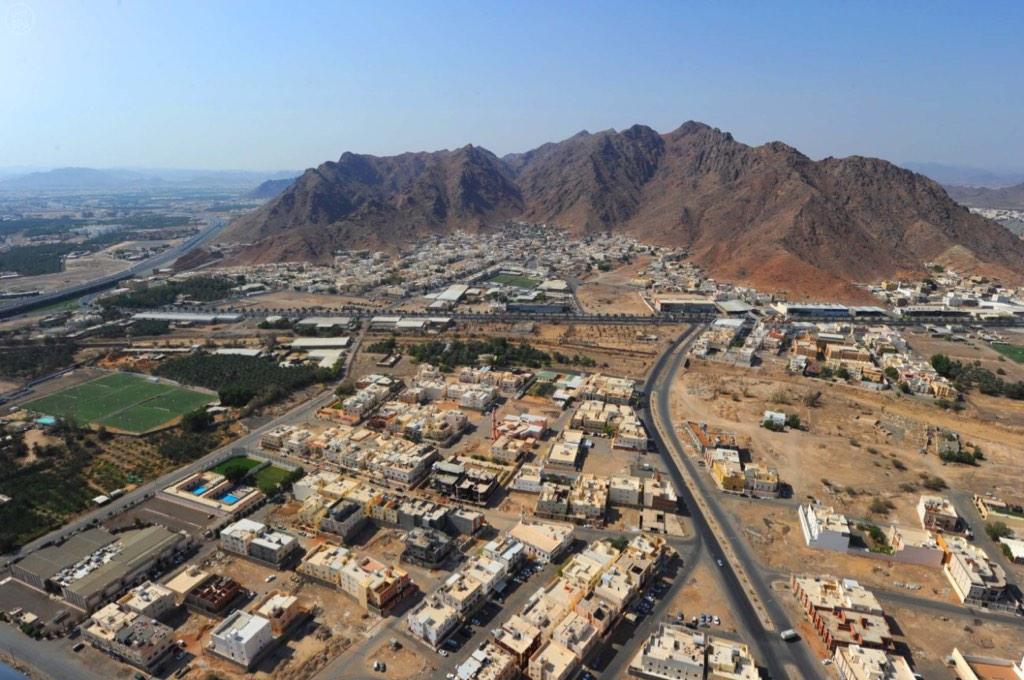
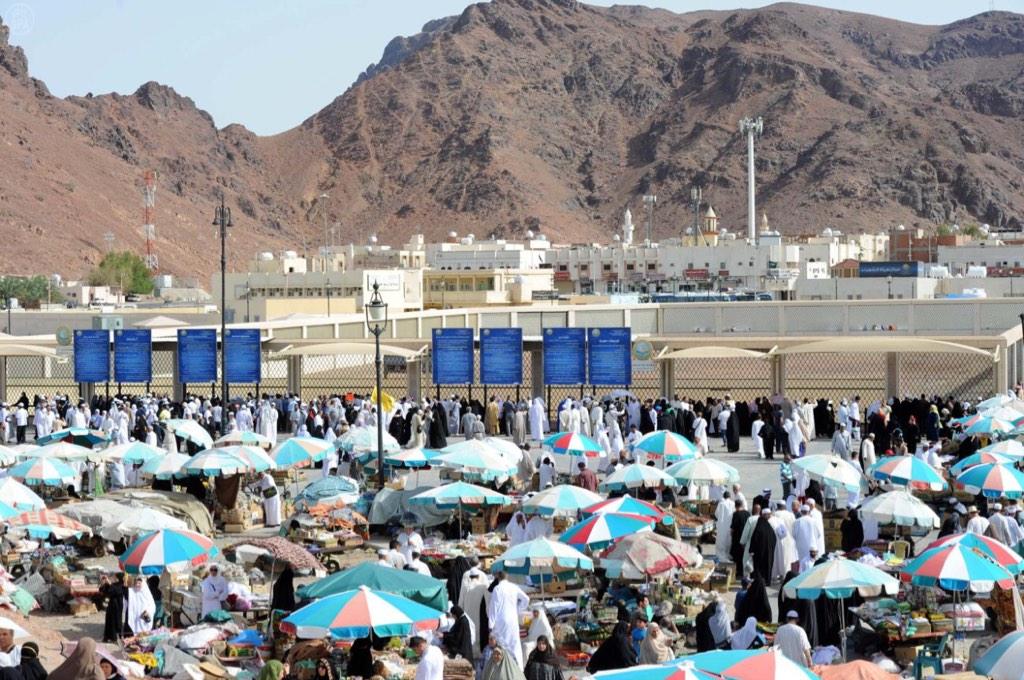
Mount Uhud, One of Most Famous Sites
in Prophet's Biography, Islamic history


Madinah, Dhu-AlHijjah 20, 1435, Oct 14, 2014

The pilgrims are nowadays spending their happiest times in Madinah ahead of their departure to their countries after performing their Hajj rites.

During their staying in Madinah, they visit the Mosque of the Prophet (peace be upon him) and his two companions, alongside the most prominent Islamic and historical monuments that abound in Madinah.

Mount Uhud, is one of the most famous sites in the Biography of the Prophet and Islamic history, that the pilgrims enjoy visiting as its territory witnessed the battle of Uhud invasion as an epic milestone of its kind at the beginning of the spread of Islam and the migration of Prophet Muhammad (peace be upon him) from Makkah to Madinah.

The field of Uhud incursion was a scene stretched between its South-western base and Aineen mountain, which is about one kilometer approximately, and is called Mount of Al-Rumah.

Madinah is also characterized for its location by a series of mountains surrounding it as if they are "wrist bracelets", highlighting events witnessed since the dawn of Islam and the most famous of these mountains are Uhud, Thor, Al-Rumah, Err and Sala.

The name of Uhud came in several sayings, including an indication of its excellence of unification and its disconnection from other mountains.

http://www.spa.gov.sa/English/print.php?id=1284091


Mount Uhud


report post quote code quick quote reply
+1 -0
back to top
Rank Image
Roukaya19's avatar
Montreal
4,092
Sister
4,288
Roukaya19's avatar
#4735 [Permalink] Posted on 17th October 2014 19:20
 
New Ottoman Porticos
_______________________________

Eliminate the eastern Porticos around the Mataf
and build three interfaces only


إسقاط الرواق الشرقي حول صحن المطاف والاكتفاء بثلاث واجهات فقط

14 October 2014

طوال العامين الماضيين ظلت تصاميم ومخططات الشكل النهائي والواقع الجديد لـ»الرواق البديل« محل جدل ونقاش وشدّ وجذب في أضيق نطاق ممكن، بين مختصين وخبراء ومسؤولين في مكة المكرمة، تمترسوا معا خلف مطالباتهم لمقاول تنفيذ التوسعة، بضرورة الحفاظ على شكل وأصالة الرواق التاريخي، ومن الجهات الأربع، صونا للقيمة التاريخية النادرة لهذا الرواق وللمحافظة على هوية الصورة الذهنية المترسخة في أذهان المسلمين، وحرصا على بقاء جمالية المكان العتيق من أي رؤية هندسية قاصرة لا تتعامل بتقدير كاف مع هوية ومسلمات المكان المقدس.

أي رؤية؟

ولا يعلم أحد ماذا حدث بعد ذلك، قبل أن تطبق الجهة المنفذة رؤيتها المعمارية المتفردة لشكل «الرواق البديل» بصورته الجديدة والنهائية حول الكعبة المشرفة، وتسقط رواق الجهة الشرقية بالكامل، من دون أي تبرير أوأسباب، معلنة فتح المجال لنقد قدرات مهندسي التصميم وضيق اختياراتهم للوصول إلى حلول تحافظ على أصالة وهيئة الرواق التاريخي الذي يعود إلى القرن الأول الهجري.

وبين طرفة عين وانتباهتها، طوت كل الملاحظات المعترضة، لتمضي بصمتها وغموضها المعتاد، فيما استقر عليه أمر مقاول التنفيذ وصدقه العمل، لتعيد للأذهان من جديد، ما حاول تطبيقه في المدينة المنورة قبل عامين عندما خطط وصمم وأعلن عن «منبر بديل» و«محراب بديل» للتوسعة الجديدة، بدلا عن منبر النبي وقبلته ومحراب صحابته في المسجد النبوي الشريف، وما رافقه من هرج ومرج انتهى بأمر ملكي حكيم من لدن الملك عبدالله بن عبدالعزيز حفظه الله يقضي بالتراجع عن ذلك التصميم الهندسي الصادم للمنطق والتاريخ والهوية لثاني أقدس المساجد في الإسلام.

قصة حصرية

ففي 9 أبريل 2014، انفردت «مكة» بقصة صحفية مزودة بصور حصرية، كشفت عن معمل ضخم لترميم أعمدة وقباب وواجهات الرواق العثماني أقيم في أقصى مشعر مزدلفة تديره جورسوي (Gursoy) إحدى أكبر الشركات التركية المتخصصة في الترميم، بعد أن تولت فكّ جميع أجزائه ( 2754 قطعة) لمعالجتها وإعادة تركيبها بعد الانتهاء من أعمال مشروع توسعة المطاف لتتسع الطاقة الاستيعابية لصحن المطاف من نحو48 ألف طائف في الساعة إلى 105 آلاف.


إبراء الذّمة!

ولقاء في جمادى الآخرة الماضي، مع الأستاذ الدكتور معراج مرزا كشف عن زيارته مع أمين العاصمة المقدسة الدكتور أسامة البار وعضو هيئة كبار العلماء الشيخ عبدالوهاب أبوسليمان، لمعمل ترميم الرواق العثماني في مزدلفة.

وكان مرزا يومها متحفظا في الحديث، غير أنه بدا متأثرا بشدة لعدم معرفة العالم بهذا الجهد الخارق التي تبذله السعودية للعناية بأدق التفاصيل المتعلقة بمشروع توسعة وإعمار الملك عبدالله بن عبدالعزيز للمسجد الحرام.

وكشف عن أبرز ما جرى خلال الزيارة الخاصة للمعمل، وكيف أنه والبار وأبوسليمان، توقفوا أمام عرض مصور لخرائط منفصلة توضح ثلاثة مقترحات لتصميم الرواق التاريخي بموضعه وصفوفه الجديدة:

- الأول لرواق كامل وبصفين من القباب تحيط بالجهات الأربع.- الثاني بثلاث جهات شمالية وغربية وجنوبية من صفين من القباب، والضلع الشرقي بصف واحد فقط من القباب.- الثالث يظهر فيه إلغاء جانب الرواق الشرقي للمطاف وتركه خاليا تماما، ليصبح الرواق من ثلاث جهات فقط.وإبراء للذمة، أبلغ ثلاثتهم في قول واحد، كبير مسؤولي الشركة التركية بأن التصميم الأخير (الثالث)، غير مقبول وسيثير كثيرا من الجدل فيما لو تم اختياره ومضى العمل بتنفيذه.

وجددوا رضاهم بأن يكون الخيار الثاني وبصف واحد من القباب للجهة الشرقية هو الحدّ الأدنى المقبول، منعا لأي قراءات سلبية في المستقبل.

بعد نشر القصة عن معمل الرواق في مزدلفة، ساد صمت عميق كالعادة.

لم يتحدث أحد، ولم تعقب أي جهة مسؤولة للحديث عن مستقبل الرواق التاريخي.
بدا الأمر وكأن هناك

عدم ارتياح للكشف عن أسرار المعمل، وما يحدث داخله من عمل صالح.
غير أن شهر س

بتمبر الماضي حملت أيامه مفاجآت جديدة وغير متوقعة تخص موضوع الرواق الجديد.

لسان وزارة المالية

وضمن احتفالات السعودية باليوم الوطني الرابع والثمانين في 23 سبتمبر الماضي، شاركت وزارة المالية (دون أي إعلان مسبق لمشاركتها) بجناح خاص في معرض «مشاريع متميزة في عهد خادم الحرمين الشريفين» والمقام في مركز المعارض بالرياض وضعت فيه نسخا جديدة ومحدّثة لمجسمات الحرم المكي الشريف بعد الانتهاء من مشاريع توسعته وعمارته، ظهر فيه وللمرة الأولى شكل «الرواق السعودي» الجديد، بارتفاع واضح لأعمدته وأقواسه الضخمة تحت مسطح الطواف العلوي الحديث، وكما ظهر فيه «الرواق البديل» للتاريخي ثبت أنه بالفعل لا يغطي جهات المطاف الأربع بل 3 فقط تستثني الجانب الشرقي التاريخي للكعبة المشرفة.
كما أظهرت مجسمات المسجد الحرام المئذنتين العملاقتين (420 مترا) في أقصى المصطبات الجديدة بارتفاع ضخم عن بقية المآذن الأخرى التي تعلو جميعها فوق المباني الرئيسية للمسجد الحرام، وبتفاصيل أكثر وضوحا لوظائفها «الجديدة» عما عرف عن المآذن من قبل.

تصريح السديس

وبعد ثلاثة أيام فقط، وفي أول جمعة من ذي الحجة شارك الرئيس العام لشؤون المسجد الحرام والمسجد النبوي الدكتور عبدالرحمن السديس في تقرير موسع لصحيفة عكاظ عن متحف عمارة الحرمين الشريفين في مكة المكرمة بعددها رقم 4849 وتاريخ 26 سبتمبر 2014م.

كان أبرز ما جاء في التقرير تسريب معاليه تصريحا هو الأول من نوعه يتعلق بالشكل الجديد للرواق العباسي -حسب وصفه- وتصوره عن تفاصيله بعد اكتمال تنفيذه، قال فيه: «إن معالم المشروع ستتضح بشكل دقيق بعد اكتمال مرحلتيه الثانية والثالثة التي تنفذ هذا العام والعام المقبل بإذن الله، وذلك من خلال الإبقاء على الرواق العباسي في النواحي الشمالية والجنوبية والغربية بعد أن يتم ترحيل الرواق الشرقي المتمم للرواق العباسي باتجاه الغرب لإفساح المجال لتوسعة مسار الطواف في الأدوار العليا، بالإضافة إلى تنزيل منسوب أرضيته إلى منسوب صحن الطواف لضمان الربط الأفقي الفعال بين صحن الطواف والقبو وانتهاء بالساحات الخارجية».

صمت المنفذ

كان منتظرا بعد ظهور صور صحن الحرم الجديد في جناح وزارة المالية في الرياض، وتصريح السديس، أن يكمل الضلع الثالث (الجهة المنفذة) سلسلة الرسائل المسربة حول شكل الرواق التاريخي الجديد، على الأقل لبيان أسبابه الهندسية والمعمارية التي قضت باستبعاد أهم واجهة في الرواق العباسي ـ العثماني العتيق.
لكنها لم تفعل كالعادة، ولم تستفد من فرصة متاحة، وأن تستبق على الأقل أي تطورات سلبية لاحقة ربما تحرج البلاد والعباد أمام المتربصين والحاقدين في العالم.

ففي هذه الجهة تحديدا، يكمن مستودع ذاكرة حيّة لتاريخ عمارة المسجد الحرام منذ القرن الهجري الأول.
والتي كانت تضم في داخلها ما يعرف بـ»درب النبي صلى الله عليه وسلم» عند دخوله للبيت العتيق انتهاء بباب بني شيبة أمام الكعبة المشرفة.

وهو الدرب الذي كان يحرص الخلفاء والملوك والسلاطين منذ القرن الهجري الأول، وعبر التاريخ على وضع أعمدتهم الموشومة بإهداءاتهم للبيت العتيق، وتخليد أيام ملكهم فيه لتكون شاهدة عبر الزمان خلفا عن سلف.

قراءة خاطئة

من جهته، حذر مرزا من أن شكل الرواق الثلاثي «سيصبح مثار تندر عبر التاريخ!»، مشددا على ضرورة إبقاء الصورة الذهنية النمطية لدى زوار البيت الحرام، وألا تحدث أي تشويه فيما لو تم إعادة بناء الرواق القديم من ثلاثة جوانب فقط.

ونبه الخبير المكيّ بعمارة الحرم الشريف، إلى ملاحظة أخرى رصدها خلال مشاهداته لأعمال تنفيذ أساسيات الرواق الجديد.
وقال: كان الهدف المعلن من تخفيض مستوى أرض الرواق القديم إلى مستوى صحن المطاف هو زيادة الطاقة الاستيعابية له، بحيث يمكن الطائفين في أوقات الذروة من الحركة بين الأعمدة بكل انسيابية، وهذا لن يتحقق بعد إحداث الدرج داخل الرواق إذ ستكون عائقا كبيرا للانسيابية، وأخشى أن يظهر للعامة وكأن الهدف من تخفيض مناسيب الرواق هو الهدم والإزالة للقديم فقط، لأن الاستفادة مع هذه السلالم في الصحن ستكون محدودة جداً.

وأضاف: كان الأولى أن يكون درج النزول من الدور الأرضي للتوسعة إلى الرواق القديم وصحن المطاف من جسم بناء التوسعة وليس كما هو المشاهد حاليا لنعطي سعة في أرضية المطاف باستخدام أرضية الرواق للطواف أوقات الذروة كما كان معلنا قبل الهدم وإعادة البناء.

حكمة الملوك تبقي الرواق التاريخي

المهندس أنس صيرفي يطرح رحلة سريعة عن تاريخية أروقة المسجد الحرام بقوله “تعهد الخلفاء والسلاطين الرواق المحيط بالكعبة المشرفة بالعناية والزيادة منذ أول بناء له في عهد الخليفة الراشد عثمان بن عفان رضي الله عنه إلى أن تلاه الخليفة المهدي العباسي بتوسعته القائم عليها حاليا سنة 168هـ والتي بقيت على حالها 810 سنوات حتى العهد العثماني الذي شهد إعادة بنائه المتصدع وجعلت لسقفه قبابا دون زيادة.

وقال: جاءت التوسعة السعودية الأولى 1375هـ لتؤسس لبناء جديد متعدد الأدوار للمسجد الحرام والمحافظة بأقصى ما يمكن على الرواق التاريخي، وزادت مساحة الحرم 10 أضعاف، وهذه الزيادة كانت تمثل حينها أكبر تهديد للرواق التاريخي لولا حكمة الملك فيصل طيب الله ثراه الذي أمر بالمحافظة عليه، ولولا هذا التدخل السامي لذهب الرواق ذو القيمة التاريخية مع ما ذهب من مآذن وأبواب ومعالم قيمة من حوله.

ثم قال صيرفي وهو رئيس مجلس إدارة مكتب الأبنية للاستشارات الهندسية بجدة: عاد الرواق العثماني مؤخرا إلى المشهد بعد دراسات أكدت تسببه في ضيق المكان ووقوفه حائلا دون زيادة استيعابية الطواف وانسيابية حركته خاصة في جزأيه الشمالي والجنوبي، فواجه تهديدا آخر بالإزالة قبل 3 أعوام إلا أن توجيهات الملك عبدالله بن عبدالعزيز حفظه الله بالمحافظة عليه كانت بمثابة طوق النجاة الثاني الذي حفظ هذا الإرث الحضاري كشاهد على تاريخ أمة وتعاقب حرصها وتشرفها بخدمة الحرمين الشريفين.

وتابع: كان من أهم ميزات مشروع التوسعة الأخيرة، أن جعلت منسوب البناء الجديد محاذيا لمنسوب صحن المطاف وبالتالي عودة الرواق إلى منسوبه السابق قبل رفعه عن منسوب الصحن في التسعينات الهجرية الماضية لدرء أخطار السيول التي كانت تداهم الحرم الشريف، وهذه نقطة إيجابية في العمل، مشيرا إلى أن “إعادة بناء الرواق ستكون فرصة مواتية لكي ينسجم في شكله مع محيط التوسعة الجديدة بخلاف ما كان سيخلفه من فراغات لو بقى في موضعه الأصلي بحسب التصميم السابق للتوسعة”.

وأكد صيرفي “أنه من الممكن أيضا أن يأخذ الرواق شكلا أكثر انتظاما بحيث يكون بعمق موحد لا يتجاوز صفين من الأروقة والقباب تحافظ على هوية المسجد الحرام التاريخية وصورته الذهنية العالقة في الأذهان على مدى القرون الماضية”.

تصميم الأضلاع التسعة يستحيل معه استمرار بقاء الكعبة على يسار الطائف

المستشار في التخطيط العمراني م.جمال شقدار يؤكد على أن عودة واجهة “الرواق العباسي” للحفاظ على الصورة الذهنية للحرم المكي ضرورة فنية.

ويقول: لم يلتزم مصمم توسعة الحرم المكي الشريف بإحدى التوصيات المهمة والمذكورة في مقدمة الدراسة لفريق وزارة التعليم العالي وممثل رئاسة شؤون الحرمين والتي تنصّ على أن تكون إعادة تصميم التوسعة السعودية الأولى على غرار، وبنفس المعايير التصميمية، لتوسعة الملك عبدالله بن عبدالعزيز (الشمالية) ذات التوجه التصميمي الدائري والموازي لحركة الطواف.

وأشار إلى أنه “ولسبب غير واضح لأهل التخصص العمراني ابتعد مصمم توسعة المسجد الحرام عن النسق الدائري الموازي لحركة الطواف واتجه بتصميم مبنى ذي تسعة أضلاع تحيط الكعبة المشرفة الأمر الذي يستحيل معه استمرار بقاء الكعبة المشرفة على يسار الطائف في المطاف المضلع غير الدائري كما هو مقرر شرعا.

وقال شقدار: كان لهذا التوجه التصميمي الغريب والمخالف لأحد توصيات الفريق المشرف وغير المتناغم مع التوسعة الشمالية للحرم المكي، تأثيره السلبي على معطيات متعددة في التوسعة ومن ضمنها عدم إمكان عودة “الرواق العباسي” بانتظام معماري يكون واجهة لمبنى المطاف المضلع غير المنتظم.

وتابع: بطبيعة الحال، كانت الجهة الشرقية من مبنى المطاف المضلع أكثر الجهات الجغرافية تضررا من إمكان عودة صفين من “الرواق العباسي” أو حتى صف واحد، كون الجهة الشرقية هي المحاذية لمبنى المسعى وستكون الجهة الأضيق من بين بقية الجهات في مبنى التوسعة المقبل.

خبراء ومختصون يتساءلون: هل واجهات رواق صحن الكعبة تطورت أم تدهورت؟

واجهات صحن الكعبة (أعظم مكان في الأرض) تتضمن عنصرين أساسيين: الأروقة التاريخية، والأروقة السعودية.
فهل عززت قيمتهما أم تدهورا؟ وهل بات الرواق التاريخي تاريخيا وأصيلا بالفعل، أم أن ما نراه اليوم ما هو إلا نسخة مقلدة لا قيمة لها، بنيت بالخرسانة وألبست بقشرة خارجية من الحجارة فقط؟ وأيضا هل حافظ الرواق الجديد على جماليات الرواق التاريخي القديم واحترامه للكعبة أم لا؟أسئلة وشكوك كبيرة تحوم حول هذه الحقيقة، وغيرها بحسب خبراء مختصين في عمارة الحرم المكي الشريف، والتراث الإسلامي.

أصلي أم تقليد؟

في تصريحات مشروطة بعدم الإفصاح عن هويتها، كشف عدد من الخبراء والمختصين عن ملاحظات يجب الانتباه لها وتداركها قبل فوات الأوان.

وقالوا: علينا أن نطرح سؤالا جوهريا يختصر كل الحكاية: هل واجهات صحن الكعبة المشرفة تطورت أم تدهورت؟ وأشاروا إلى أنه من الجدير وضع المقارنات لتتضح الصورة، وملاحظة كيف استعمل المصمم نمط أقواس ضخمة جافة موزعة على دورين دون نسب جمالية ومقارنتها بصور للرواق السعودي قبل الهدم (والذي بني قبل 60 سنة) لنعلم هل تصميمه يتطور أم يتدهور؟وحذروا في شكل واضح بقولهم: للأسف، سيفتح الشكل الجديد للرواق أبواب النقد على بلادنا، وسنتهم بأننا نزيف التاريخ.
وأضافوا: نحن بين أمرين لا ثالث لهما: إما أن نعيد الرواق التاريخي كما كان لنحافظ على قيمته، أو أن يزال تماما.

لأن تزييفه لن يحظى بأي قيمة، فالنسخ المقلدة ليست لها أي قيمة في واقع الأمر، مشيرين إلى أن الأعمدة التي تبنى الآن في نطاق الرواق القديم ليست أصلية، بل نسخة مصنوعة بالخرسانة.
وأضافوا: يمكن تشبيه ما يحدث الآن في إعادة بناء الرواق بأنه قتل لروح وجسد الرواق التاريخي مع الإبقاء على ثوبه الخارجي فقط؟ أزيل الرواق التاريخي وغيير مكانه ففقد أصالته ولم يحل مشكلة ضيق صحن المطاف، كما أن الرواق الجديد لم يحترم التاريخ، ولا هوية عمارة الحرم المكي، ولا حتى المنظور الهندسي الدقيق في حمى الكعبة المشرفة.
وتابعوا: كان على المقاول أن يكون واضحا منذ البداية؛ إما أن يفصح بأن مشروع إعادة الرواق التاريخي ستكون بالنسخ الأصلية من أجزائه بعد فكها وترميمها، أو أن يعلن أن الرواق البديل لا يمت بصلة إلى الرواق التاريخي.
وتوقف الخبراء أمام استخدام مصمم واجهات الرواق الجديد للأقواس الضخمة، القائمة على أعمدة مرتفعة للغاية وتقطع هذه الأقواس (بصورة غير مناسبة) بلاطات أدوار الحرم الجديد.
وشددوا في قول واحد على السلبيات الظاهرة والمتعددة للتصاميم النهائية، وكشفوا أنها اشتملت على عدة مآخذ تؤكد أن مهندسي عمارة الحرم قبل 60 عاما كانوا أكثر حرصا من مصممي اليوم على القيمة الجمالية.
وزادوا: إن الأقواس الجديدة ضخمة وأعلى من سطح الكعبة المشرفة، ما يعني أن المصمم لم يراع الخلل بمعايير النسبة والتناسب بين الكعبة وما يحيطها، بحيث أضحت الأقواس الجديدة تقزم المنظور الهندسي للكعبة المشرفة، خلافا للقديمة التي كانت متواضعة وأنيقة ورشيقة، وتراعي بهاء وعظمة الكعبة المشرفة وتؤكد أن الكعبة هي نقطة الارتكاز الرئيسة المستهدفة بالإظهار والإجلاء أمام كل داخل لبهو البيت العتيق.
وختموا: هذه الأقواس لن تسفر إلا عن صورة مشوهة، وستفقد الحرم الشريف روحانيته وستظهره بهوية جديدة وكأنها في خصام مع التاريخ والجغرافيا، ومع المقدس.

http://www.makkahnewspaper.com/makka...0#.VD701GcxhsI


Google translation:New Expansion of the Mataf: the historic corridor "alternative" three interfaces only

Resolve the matter, and the emergence of Pat »porch swing« porch of the historic dish up around the Holy Mosque after jaw and restored, and the start of the founding workshop racing against time to re-installed in its new form, a matter of time.
Throughout the past two years remained designs and plans of the final form of the new reality for »porch swing« the subject of controversy and debate Screwed and attract the narrowest possible range, between specialists and experts and officials in Mecca, reporters who gathered together behind their claims to the contractor implement the expansion, the need to maintain the shape and the originality of the gallery's historic, and all four sides, the maintenance of rare historical value of this corridor and to preserve the identity of the mental image rooted in the minds of the Muslims, and in order to place the survival of the ancient aesthetic of any geometric vision deficient estimate does not deal adequately with the identity of the Muslim holy place.

Any vision?

No one knows what happened after that, before you apply the implementing agency vision architecture unique to form «porch swing» his image new and final around the Kaaba, and fall porch eastern side completely, without any justification Ooaspab, declared open the way for criticism of the capabilities of design engineers and narrow their choices to reach solutions to maintain the authenticity and the hallway historic return to the first century.
And between the blink of an eye and Antbahtha, folded all notes objecting to go mark and ambiguity usual, as he settled upon is contractor implementation and sincerity work, revives again, tried to apply it in Medina two years ago when plans designed and announced «platform alternative» and «niche alternative »expandable new, rather than a platform Prophet and accepted and niche companions in the Prophet's Mosque, which was accompanied by the hubbub over by royal decree sage from the presence of King Abdullah bin Abdulaziz, may God protect him spend reneging on that engineering design bumper of logic, history and identity of the second holiest mosque in Islam.

Exclusive story

On April 9, 2014, is alone «Mecca» the story of journalist with pictures of exclusive, revealed a large plant for the restoration of columns and domes and facades of the hallway Ottoman held at the maximum Hairy Muzdalifah run Gursoy (Gursoy) one of the largest Turkish companies specialized in restoration, having assumed decode all its parts (2754 pieces) for processing and re-installed after the completion of the expansion project of the day to accommodate the capacity to dish up from about 48 thousand per hour visitation to 105 thousand.


Discharge!

And meet in the afterlife last June, with the ascension Prof. Dr. Mirza revealed about his visit with the Secretary of the Holy City, Dr. Osama al-Bar and a member of the senior scientists Abuslaman Sheikh Abdul Wahab, the Ottoman portico restoration lab in Muzdalifah.
Mirza was a conservative in the modern day, but it seemed strongly influenced by the lack of knowledge of the world of this extraordinary effort by Saudi Arabia to care for their attention to detail concerning the reconstruction and expansion project of King Abdullah bin Abdulaziz of the Grand Mosque.
He revealed what was most prominent during the special visit to the laboratory, and how he and the bar and Abuslaman, they stopped in front of a photographer to display maps illustrate three separate proposals for the design of the gallery's historic Bmodah and new ranks:

- First full gallery and two rows of domes surrounded approaching four.
- The second with three points north and west and south of the two rows of domes, and the eastern leg of a row and only one of the domes.
- The third shows the cancellation of the eastern side of the corridor took shape and leave it completely empty, to become a porch on three sides only.

The discharge of edema, told the three of them in the words of one senior Turkish officials, the company that designed the last (third), is unacceptable and will cause a lot of controversy as if it were his choice and went to work to implement it.
They renewed their satisfaction to be the second option and a single row of the domes of the eastern side is the acceptable minimum, to prevent any negative readings in the future.
After the publication of the story about the lab hallway in Muzdalifah, there was a deep silence as usual.
One did not speak, did not track down anyone responsible to talk about the future of the historic corridor.
It looked as if there is discomfort to reveal the secrets of the lab, and what happens inside of the good work.
However, last September, carried his days new surprises and unexpected subject matter of the new corridor.

San Ministry of Finance

As part of the celebrations of the Saudi National Day fourth and eighty on September 23 last year, involved the Ministry of Finance (without any prior announcement to share) wing special exhibition «landmark projects in the era of the Custodian of the Two Holy Mosques» and place in the exhibition center in Riyadh and put the copies of new and updated for Models Haram al-Sharif after completion of the projects expanded, and his building, built back in for the first time form «hallway Saudi» new, up and clear its columns and arches huge under flat circumnavigation upper talk, and also appeared on the «corridor alternative» to historical proven it already does not cover the points up four, but only 3 excludes the east side historic sacred Kaaba.
Models also showed the Grand Mosque minarets giants (420 meters) in the new maximum berm up huge for the rest of the minarets above the other all over the main buildings of the Grand Mosque, and the details of the more obvious functions «new» what is known about the minarets before.

Told Sudais

After only three days, and the first Friday of the argument co-president of the General Affairs of the Grand Mosque and the Prophet's Mosque, Dr. Abdul Rahman Al-Sudais in an extensive report for the newspaper Okaz Museum Building of the Two Holy Mosques in Mecca in number No. 4849 and the date of September 26, 2014 AD.
The highlight came in a report leaked Ma'aleh permit is the first of its kind to the form of the new gallery Abbasi-as they Cefh- and imagined all the details after the completion of its implementation, in which he said: «The parameters of the project will clarify precisely after the completion of stages II and III, which carried out this year and next God willing, through retaining the hallway Abbasi in areas of North, South and West after being deported eastern porch complement the gallery Abbasi westward to make room for the expansion of the path of circumambulation in the upper floors, in addition to the download level floor to the level of a bowl circumambulation to ensure connectivity horizontal effective between the dish circumambulation and the cellar and the end of the squares of State ».

The silence of port

Was expected after photos surfaced dish new campus at the Pavilion and the Ministry of Finance in Riyadh, and a statement Sudais, to complete the third side (the implementing agency) chain letters leaked about the shape of the gallery's historic new, at least to a statement causes the engineering and architectural ruled to exclude the most important interface in the hallway Abbasi Ottoman obsolete.
But it did not, as usual, have not benefited from the opportunity, and that at least pre-empt any negative developments subsequent possibly embarrass the country and the people in front of predators and hate in the world.
In this side specifically, lies warehouse vivid memory of the history of architecture of the Grand Mosque since the first Islamic century.
And that it includes within it what is known as »trail of the Prophet peace be upon him» when he entered the house of the end of the old door Bani Shaybah in front of the Kaaba.
It is a path that was keen caliphs and kings and sultans since the first Islamic century, and throughout history to develop Oamdthm tattooed Bahadaouathm of the old house, and the perpetuation of their own days in which to be a witness through time for a successor ancestor.

Misreading

For his part, Mirza warned that the triangular shape of the gallery «will become a matter of scarce throughout history!», Stressing the need to keep the mental image of the typical visitors to the Sacred House, and there will not be any distortion as if they were rebuilding the porch of the old three aspects only.
He cautioned expert architecture Haram al-Sharif of Mecca, to note other monitored during observations of the work of implementing the basics of the new corridor.
He said it was the stated goal of reducing the level of the land of the porch the old to the level of the dish of the day is to increase the capacity of him, so that they can Taivin at peak times of the movement between the columns all smooth, and this will not be achieved after the creation of the stairs inside the gallery, as would be a significant impediment to the smooth flow, and I'm afraid that appear to the public as if the goal of reducing the levels of the hallway is the demolition and removal of the old only, because the advantage with these stairs in the dish will be very limited.
He added: He was the first to be staircase down from the ground floor of the expansion to the porch the old and the dish of the day from body building expansion and not, as is the viewer currently give capacity in the ground up using the floor of the hallway to cruise peak times as it was declared by the demolition and reconstruction.

The wisdom of the Kings keep the historic corridor

Engineer Anas banker put a quick trip from the historic halls of the Grand Mosque, saying, "vowed the caliphs and sultans hallway Ocean Kaaba care and increase since the first building to him in the reign of Caliph Uthman bin Affan may Allah be pleased with him to that followed by the Caliph al-Mahdi Abbasi enlarged based upon current year 168 AH, which remained intact 810 years until the Ottoman period which saw the Rift redone and made to increase the ceiling without domes.
He said: The first Saudi extension 1375 to set up for the construction of a new multi-roles of the Grand Mosque and to maintain as far as possible on the porch historical, and increased the area of ​​the Temple 10-fold, and this increase was representing the then biggest threat to the gallery's historic nor the wisdom of King Faisal God bless him, which is to maintain it, but do not this intervention High Commissioner for gold hallway with historical value with what went from the minarets of the doors and the value of landmarks around it.
Then he said banker who is president of the Board of Directors office buildings for Engineering Consultancy in Jeddah: back porch Ottoman recently to the scene after studies confirmed the cause in a narrow place and standing barrier to increase the capacity of circumambulation and smooth movement, especially in Dzoah north and south, run afoul of another threat removal 3 years ago, but that the directives King Abdullah bin Abdulaziz, may God protect him maintain it was a lifeline second save this cultural heritage as a witness to the history of a nation and punish Cservha and eagerness to serve the Two Holy Mosques.
He continued: One of the main features of the expansion project recently, that made ​​the level of new construction adjacent to the level of the dish of the day and therefore the return of the hallway to the elevation former before submitting it for the level of the dish in the nineties Hijra years to ward off the dangers of floods, which were raided the Haram al-Sharif, and this positive point in the work, noting to "rebuild the corridor will be a good opportunity to be in harmony with the surroundings in the form of the new expansion other than what was successor of voids if remained in its original position, according to the previous design of the expansion."
The banker, "it is also possible to take a more systematic form the hallway so that a uniform depth does not exceed two rows of arcades and domes keeps the identity of the Grand Mosque and the historic image of mental lingering in people's minds over the past centuries."

Design ribs nine impossible to the continued survival of the Ka'ba on the left of the Taif

Advisor in Urban Planning M.gamal Hqdar confirms that the return of interface "porch Abbasi" to keep a mental picture of the campus SHRINE technical necessity.
He says, did not adhere designed to expand the Haram al-Sharif, one of the important recommendations mentioned in the introduction to the study team and the Ministry of Higher Education and a representative of the Presidency of the affairs of the Two Holy and which states to be re-designed expansion of the first Saudi-style, with the same design criteria, the expansion of King Abdullah bin Abdul Aziz (North) with Ring design and orientation parallel to the movement of circumnavigation.
He pointed out that "for some reason is not clear to the people of specialization Urban walked away designed to expand the Grand Mosque for Layout ring parallel to the movement of circumambulation and headed the design of a building with nine ribs surrounding the Kaaba, which is impossible with the continued survival of the Kaaba on the left of the Taif eventually polygon non-circular as prescribed legally .
Said Hqdar: was this trend design strange and contrary to one of the recommendations of the team supervisor and is harmonious with the expansion of the North of the campus SHRINE, its negative impact on the data multiple expansion, including the lack of the possibility of the return of "corridor Abbasi" regularly architect be a front for building up the polygon is regular.
He continued, of course, was the eastern side of the building eventually polygon more bodies geographical affected by the possibility of the return of the two rows of "corridor Abbasi" or even a single row, the fact that the eastern side is adjacent to the building endeavor will be the narrowest among the rest of the bodies in a building expansion next.

Experts and specialists are wondering: Is interfaces porch dish Kabah evolved or deteriorated?

Interfaces dish Kabah (th
report post quote code quick quote reply
+1 -0
back to top
Rank Image
Roukaya19's avatar
Montreal
4,092
Sister
4,288
Roukaya19's avatar
#4736 [Permalink] Posted on 17th October 2014 19:26


suite ... (this part didn't appear on the post above)

Experts and specialists are wondering: Is interfaces porch dish Kabah evolved or deteriorated?

Interfaces dish Kabah (the greatest place on earth) includes two main components: the historic colonnades, arcades and Saudi Arabia.
Is it worth reinforced or deteriorated? Is Pat hallway historical historically authentic and already, or is that what we see today is only a replica worthless, built with concrete and dressed stone veneer external only? Also you kept on the porch of the new aesthetics of the historic old porch and respect of the Kaaba or not? Questions and serious doubts hovering around this fact, according to experts and other professionals in the architecture of the Haram al-Sharif, and Islamic heritage.

Original or imitation?

In conditional statements not to disclose her identity, revealed a number of experts and specialists from the Notes must her attention and remedied before it is too late.
They said: We have to ask the fundamental question every story abbreviated: Is interfaces dish Kaaba evolved or deteriorated? They pointed out that it is worth setting comparisons for a clearer picture, and note how it used designer style arches huge dry spread over two floors without ratios aesthetic and compared with images of the gallery Saudi before demolition (and which was built 60 years ago) to know you design evolve or deteriorate? Warning in the form of a clear, saying: Unfortunately, the new format will open the doors to the gallery on the criticism of our country, and we are bleeding their year history.
They said: We are between two things only two: either to restore the historic corridor as it was to maintain its value, or be removed completely.
Because falsified would not receive any value, Valensch imitations do not have any value in a matter of fact, pointing out that the columns that are built now in the scope of the old porch is not original, but a copy made ​​with concrete.
They added: can be likened to what is happening now in the rebuilding of the hallway that he killed the spirit and the body of the historic corridor while maintaining only the outer robe? Removed the porch and historical Geyer place lost its originality and did not solve the problem of narrow dish of the day, as the new porch did not respect history, nor the identity of the Haram al-Amara, not even in the exact geometric perspective fever Kaaba.
And followed: He was on the Contractor to be clear from the outset; either disclose that the project will be re-porch historic copies of the original parts after her jaw and restoration, or to announce that the porch swing unrelated to the historic corridor.
He stopped in front of the experts use interfaces designed the gallery's new massive arches, columns based on extremely high and cut these brackets (improperly) slabs roles of the new campus.
They stressed in the words of one phenomenon on the negatives and multiple designs for the final, and revealed that it included several sockets confirm that the engineers building the campus 60 years ago they were more careful of designers today on the aesthetic value.
And increased: The brackets new huge and higher than the surface of the Kaaba, which means that the designer did not take into account the imbalance standards of proportionality between Kaaba and its surroundings, so that became the brackets new dwarf engineering perspective of sacred Kaaba, unlike the old, which was modest and elegant and graceful, and take into account the splendor and grandeur of the Kaaba and confirms that the Kaaba is the focal point and the main target Balazaar evacuation in front of each inside the lobby of the old house.
They concluded: These brackets will not only result in a distorted picture, and you will lose the Haram al-Sharif Stzarh spirituality and a new identity as if the quarrel with history, geography, and with the ....
 

New Plan


Plan before
report post quote code quick quote reply
+1 -0
back to top
Rank Image
Roukaya19's avatar
Montreal
4,092
Sister
4,288
Roukaya19's avatar
#4737 [Permalink] Posted on 17th October 2014 19:28
 
Documents showing first expansion
to Prophet’s Mosque on auction


A photo showing the construction of the expansion. (Photo courtesy: Sotheby's)

Friday, 19 September 2014

An archive of photos, architectural drawings and elevations of the first expansion of the Prophet’s Mosque in Madinah is now on auction through world-acclaimed auction house Sotheby’s.

A collection of 52 original drawings and 216 photographs that document the first expansion to Islam’s second-holiest site, ordered by King Abdul-Aziz al-Saud in 1951, is beingprivately auctioned.

The documents belonged to Fahmy Moemen Bey, an Egyptian architect commissioned to design the expansion of the Masjid al-Nabawi, the Arabic name for the Prophet’s Mosque.


A photograph part of the collection.
(Photo courtesy: Sotheby's)

Larger: http://vid.alarabiya.net/images/2014...e01eaf85b7.jpg


“Some of the plans actually detail life-size drawings depicting how the marbles, windows,arches and decorations of the columns and the pillars are going to be decorated and carved,”

Richard Fattorini, a specialist in books and manuscripts at Sotheby’s, told Al Arabiya News.

“They’re the architect’s own linen... They were rolled and unrolled everyday on the buildingsites, at the mosque, as the project was being done,” Fattorini said.


(Photo courtesy: Sotheby's)

Larger: http://vid.alarabiya.net/images/2014...08610b410e.jpg


Upon completion in 1955, the expansion tripled the size of the mosque to accommodate up to28,000 worshippers, Sotheby’s said.

Moemen Bey’s family had kept the collection for 60 years, but recently decided to approach the auction house to find a buyer as they felt it was a “a collection that should be in auniversity or in a museum and available for a lot more people to enjoy.”

A leading figure in Islamic architecture, Moem Bey’s collection can be used as “an educational tool... for people to understand Islamic architecture and design,” Fattorini said.

The collection is being sold as an archive and will not be broken up.

“It’s only that way that the parts explain and illuminate each other,” Fattorini said.

When asked how much the collection is worth, Fattorini said Sotheby’s will not publicly disclose the price because the auction is private.

“But you can imagine that the price is commensurate with the rarity and uniqueness of thisarchive,” he added.

http://english.alarabiya.net/en/pers...n-auction.html


**************************************


London auction house offers
Prophet’s Mosque archive for sale


Architect’s notes for the expansion of the Prophet’s Mosque
in Media to go on display before private sale


A drawing from the Sotheby’s auction house collection shows a side view of plans to expand
the Prophet’s Mosque in Medina, Saudi Arabia. (Asharq Al-Awsat/Courtesy of Sotheby’s)

Sunday, 21 Sep, 2014

London, Asharq Al-Awsat—In the Sotheby’s Books & Manuscripts Auction Department there lies an exceptionally rare treasure, a set of priceless documents with a direct connection to an important piece of the Islamic faith’s living history.

The hoard is a complete collection of the architectural plans drawn up by Fahmy Moemen Bey, who was commissioned to design the first extension of the Prophet’s Holy Mosque in Medina, Saudi Arabia. The huge archive, which is to be sold in a private sale by Sotheby’s auction house, contains a large number of original scale drawings, plans and elevations of the extension of the mosque, including 216 photographs that chronicle the construction works ordered by King Abdulaziz Al Saud back in 1951.

The director of Sotheby’s Books Department, Richard Fattorini, said the archive has special historical value because the Prophet’s Mosque, built in 622 CE, became the template for all subsequent examples of Islamic architecture. Fattorini said Moemen Bey sought to preserve existing Ottoman architecture “with the aim of maintaining the old mosque’s spirit and character, so that they remained apparent after the new expansions.”

“To imagine the archive’s size, you can compare it to a full library of a huge project. There are drawings on paper and there are others on huge architect’s linen, which is a special waxed linen [on] which Fahmy Moemen used ink to draw details of the construction, pillars, domes and ceilings,” Fattorini said.

He explains that the advantage of linen was its portability, being easy to carry to different sites of the project so that the taskforce could see the plans and discuss the details. The linen rolls could also be carried to places outside the city, including a mosaic factory that was constructed in the Abar Ali district just outside Medina.

A team of Italian marble craftsmen, having been brought into the Kingdom to help on the project, were not allowed to enter the holy city because they were non-Muslims. Moemen Bey was able to carry the plans to the Italian team in their workshop outside the city to show them the drawings and discuss the engravings and the column bases and heads, as well as details of the window designs and arches.

The archive contains 52 original pen and ink drawings, plans and elevations, and more than 200 photographs that chronicle different stages of the work as well as the detail of decoration, from engravings, bases of pillars and copper capitals, to the tiniest details of internal ceilings and arches.

On the collection’s provenance, Fattorini told Asharq Al-Awsat the archive remained in the possession of Moemen Bey’s family until now. “His family contacted us and notified us of their interest in selling it through Sotheby’s, not at public auction, but through direct contact with the buyer,” Fattorini said. “We should say we are very happy to have had such a unique opportunity.”

The sale is yet to attract attention from prospective buyers as the catalog only came to light a few days ago. According to Fattorini, “it takes time for the catalog to reach people but certainly we have interest from some prospective clients [whom we] are looking forward to showing the drawings to, and maybe [exhibiting] one or two of them as some of them are very large; they range between 1–2.4 meters [1.1–2.6 yards] long.”

The exhibition of the documents is set to open to the public on October 31.

Because the archive will be put up for sale outside public auction, the sold price will remain a secret between Sotheby’s and the buyer. When pushed, Fattorini said only: “We’ve decided not to make the price public, it is something that we can discuss with people who approach us as the archive will not be sold at auction. However, the financial value should necessarily reflect the archive’s spiritual value and importance.”

According to the official website of the Two Holy Mosques, King Abdulaziz Al Saud, having learned in the late 1940s that “people were complaining of the massive crowd during the pilgrimage and minor pilgrimage seasons, and that the mosque could no longer contain all worshipers and visitors, and that some pillars and walls were cracked, he ordered that all necessary measures were taken to accomplish the studies of the construction and expansion of the Prophet’s Holy Mosque.” In an address to Muslims in 1951, the king announced his intention to expand the Prophet’s Holy Mosque, and accordingly, work began in 1951 and continued for five years.

The mosque was re-inaugurated by King Saud Bin Abdulaziz in 1955 after his father’s death. Thanks to the expansion works, there has been a threefold increase in the mosque’s capacity after roughly 13,000 square yards (11,000 square meters) were added to the area, increasing the mosque’s capacity to 28,000 worshipers. Annexes were added to the original mosque in the east and the west, and two minarets were built in the Mamluk style.

Pillar capitals were covered by crowns of yellowish brass adorned with wonderful engravings that were completed in Egypt, where an office was opened to administer and contribute to the expansion project. On top of the crowns there is an adorned square-shaped structure on which four electric lamps are fixed on each side. The lamps are made of yellow copper and glass, styled in delightful shapes. The pillars’ plinths were made of black streaked marble, while the pillars themselves were snow white when first constructed, and remained so for a long time.

http://www.aawsat.net/2014/09/article55336835

report post quote code quick quote reply
+1 -0
back to top
Rank Image
Roukaya19's avatar
Montreal
4,092
Sister
4,288
Roukaya19's avatar
#4738 [Permalink] Posted on 17th October 2014 19:29
 
Masjid al Haram updates

View on last part of
the Haram North expansion - Terrace


June 2014


5 October 2014


Roof - Domes

June 2014


1 October 2014
 
report post quote code quick quote reply
+1 -0Like x 1
back to top
Rank Image
Roukaya19's avatar
Montreal
4,092
Sister
4,288
Roukaya19's avatar
#4739 [Permalink] Posted on 17th October 2014 19:31
Haj accommodation providers lose SR3bn


Several hotel chains in the city plan to raise their current capacity from 500,000 to 2.2 million rooms.
Friday 17 October 2014

Businesspeople owning property in Makkah and Madinah catering to Haj pilgrims claim they lost SR3 billion this year because of a glut of accommodation in the two cities.

They claim that the oversupply of accommodation can be attributed to the irregular entry of certain companies in the two cities, and government construction of large hotels.

The chambers of commerce and industry of Riyadh, Makkah and Madinah will discuss this issue at a forum in Makkah on Nov. 15, Al-Shareef Abu Rayash, chairman of the Makkah Chamber of Commerce and Industry's real estate committee, told Arab News on Thursday. He said 30 experts would speak at the forum.

Abu Rayash said that four committees would petition the government to intervene. The situation was grave and could lead to further losses for them. He described the situation as a recession.

“Because of this, rents in Aziziah dropped from the previous SR7,000 per pilgrim to SR2,000. This is in addition to the launch of a prominent ministry’s project to construct 24 hotels in the Kudai area, apart from the current construction of a chain of hotels.''

He said individuals and endowment property operators would be forced out of the market if this situation continues.

Abu Rayash accused some government agencies of not planning properly. The situation would worsen because several hotel chains in the city plan to raise their current capacity from 500,000 to 2.2 million rooms, he said.
The Haj Ministry’s plan not to increase the number of pilgrims in coming years would be another blow to the sector, he said.

http://www.arabnews.com/saudi-arabia/news/645661


Flood-hit Kashmir pilgrims call for relief work
 
Wednesday 15 October 2014

Haj pilgrims from Jammu and Kashmir are increasingly concerned about their flood-hit state urging the government to expedite the relief and rehabilitation programs prior to their return home from the Kingdom as winter sets in.

“The devastating floods have left disastrous conditions for the Kashmiri people with water flooding the roads and communication lines cut off,” Shahnaz Ganai, leader of the Kashmir ruling National Conference Party and MLC of state told Arab News.

She said many pilgrims had lost hope of being able to perform Haj this year due to the floods in Kashmir but Indian authorities ferried the marooned pilgrims from their houses and brought them to the airport to board Haj flights.

She said 7,011 pilgrims from Jammu and Kashmir came to perform Haj and most of them came from the flood-hit areas. “Sixteen pilgrims couldn’t make the journey due to the floods,” she added.

Ganai voiced concern regarding the relief and rehabilitation programs in the state which she said needed to be speeded up as winter had started in the state.

“With subzero temperatures all normal life comes to a standstill.

Therefore, we need relief programs to do their job speedily,” she said.

She also said that elections were round the corner and once the election commission announced the date, it would further put a spoke in the government’s efforts to announce any relief packages.

She said she had met with Dr. Ahmed Mohammed Ali, chairman of the Islamic Development Bank and urged him to render financial assistance to the flood-hit state to enhance rehabilitation measures.

“The Kashmiri pilgrims were the last group of pilgrims to leave the Kingdom due to rescheduling of flights owing to the floods in the state,” she said.

Ganai hailed the catering services offered to Indian pilgrims, as this relieved women pilgrims from their prime responsibility of cooking during their stay in the Kingdom and they could spend more time for spiritual activities. The Kashmiri leader also praised the services of the Indian Fraternity Forum (IFF) volunteers during Haj saying: “I was touched by their services where they even carried the pilgrims’ foot ware and held aged pilgrims aloft to complete their rites.”

She also lauded the Indian Haj medical mission in the holy cities for offering medical services to pilgrims.

Ganai thanked the Saudi authorities for the Haj arrangements also their utmost care for returning pilgrims.

http://www.arabnews.com/saudi-arabia/news/645151


Expat trying to travel
on pilgrim's passport detained at airport


Friday, 17 October 2014

JEDDAH – The passport police at the Haj Terminal of Jeddah’s King Abdulaziz International Airport on Monday arrested a foreigner who attempted to leave the Kingdom using the passport of a Haj pilgrim, the Saudi Press Agency reported.

Immigration officers discovered that the man had stolen the identity of a compatriot who came to perform Haj this year in an attempt go back home.

The man was arrested after officers saw his biometric features did not match the pilgrim's records.

http://www.saudigazette.com.sa/index...20141017221463
report post quote code quick quote reply
+1 -0
back to top
Rank Image
Roukaya19's avatar
Montreal
4,092
Sister
4,288
Roukaya19's avatar
#4740 [Permalink] Posted on 17th October 2014 19:32
 
Haj: Constraints of time and place

Friday, 17 October 2014

The Minister of Haj Bandar Al-Hajjar said that a study would soon be conducted to establish seven electronic gates at entrances to Makkah to prevent the entry of illegal pilgrims.

He said a number of concerned government departments and some international companies will supervise this electronic project.

The minister said the project will prevent squatting, overcrowding and the general chaos created by illegal pilgrims.

The idea seems to be good but in my humble opinion even legal pilgrims with Haj permits are responsible for the chaos and congestion during the annual Haj. This is mainly caused by the negativity of the Tawafa establishments and the domestic Haj campaigns which are unable to control the exit and entry of pilgrims to and from Makkah and Mina.

The minister said the ministry has agreed with the Tawafa establishments, the Haj campaigns and the Haj missions to prevent about 50 percent of pilgrims from rushing to Makkah from Mina on the second day of Eid Al-Adha. He also said a new committee would be established to deal with the grouping of pilgrims.

However, I do not agree with him that the establishment of the committee will be enough as the entire Haj is based on grouping. Instead, the ministry should automate all the Haj services which make the pilgrimage an industry.

Why can’t our seasonal ministry take over all the affairs of Haj and Umrah? Why can’t it involve the Tawafa establishments in the organization of Umrah?

I believe that the ministry should be responsible for the management of the masses without involving itself in security and health matters.

As for the minister’s idea of setting up seven electronic gates, I think the issue is much simpler than involving international companies, which will ask for billions of riyals to execute the project.

We can, instead, assign a local contractor to build barbed wire fences around the entry points to Makkah and the Holy Sites and supply them with surveillance cameras and mobile security patrols.

The establishment of the fences and their annual maintenance will cost less than one tenth of what international companies would demand.

However, the real challenge facing the ministry will come when the ongoing expansion projects at the Grand Mosque are completed.

By then the Haj quotas decided for all Islamic countries and the Muslim communities in non-Muslim countries will go back to their previous numbers. Therefore, the number of pilgrims will be much larger.

The ministry should liaise with the Ministry of Foreign Affairs and the Organization of Islamic Cooperation (OIC) to agree on new quotas for all Islamic countries. These quotas should not be large so that there is not a great increase in the number of pilgrims.

The Holy Sites are limited in size. All pilgrims have to assemble in them for a limited period of time each year. The problem of the overcrowding of pilgrims would continue even if we constructed multi-story tents in Mina and Arafat.
The Islamic countries should help us by agreeing upon reasonable Haj quotas.

The minister expects the number of pilgrims to rise to about seven million once the expansion projects are completed, and this may be a reasonable figure on which to base the quotas.

http://www.saudigazette.com.sa/index...20141017221417


5 October 2014


report post quote code quick quote reply
+1 -0
back to top

Jump to page: