
Mataf expansion progress - Phase 2
January 2014

16 January 2014
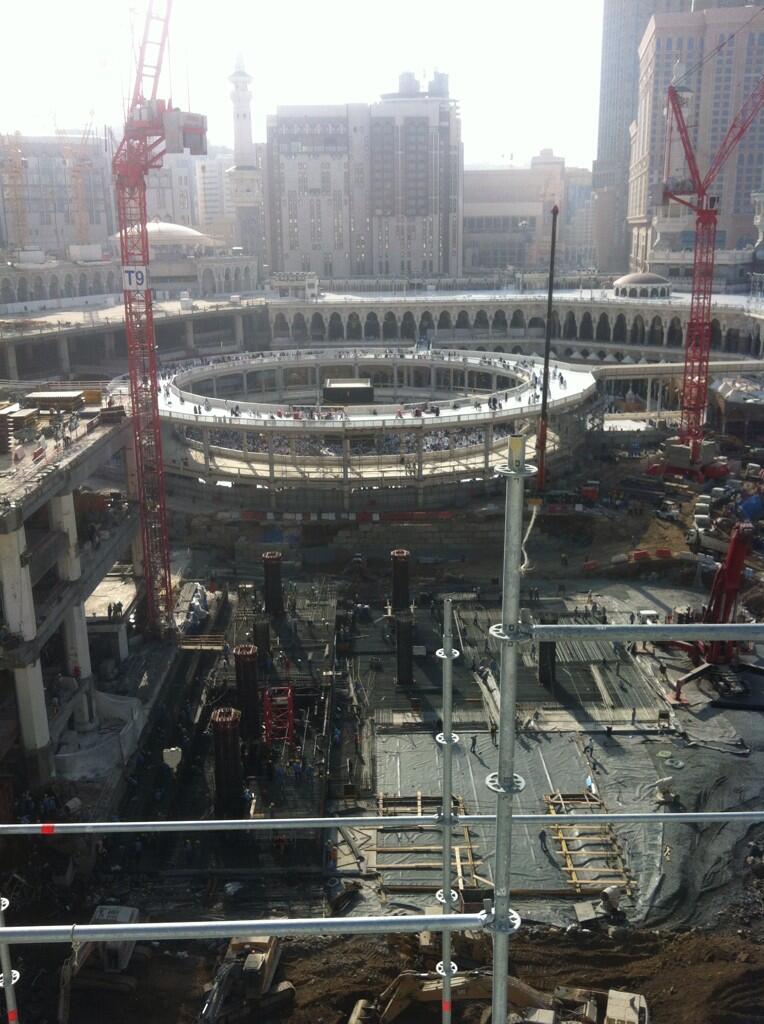
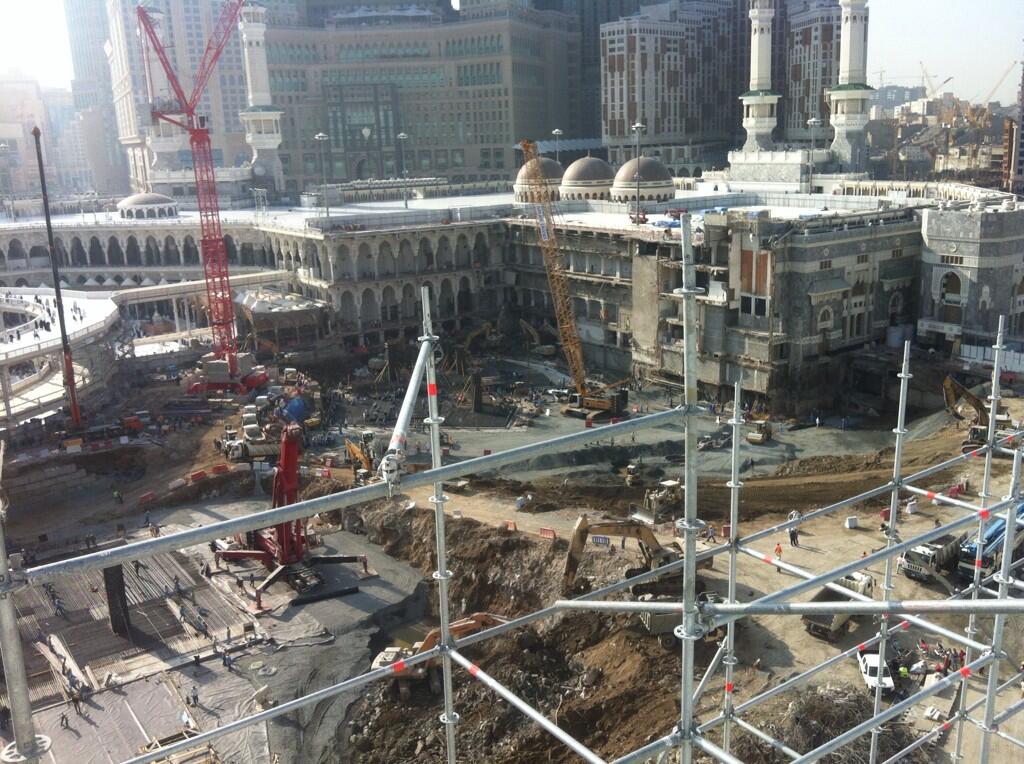
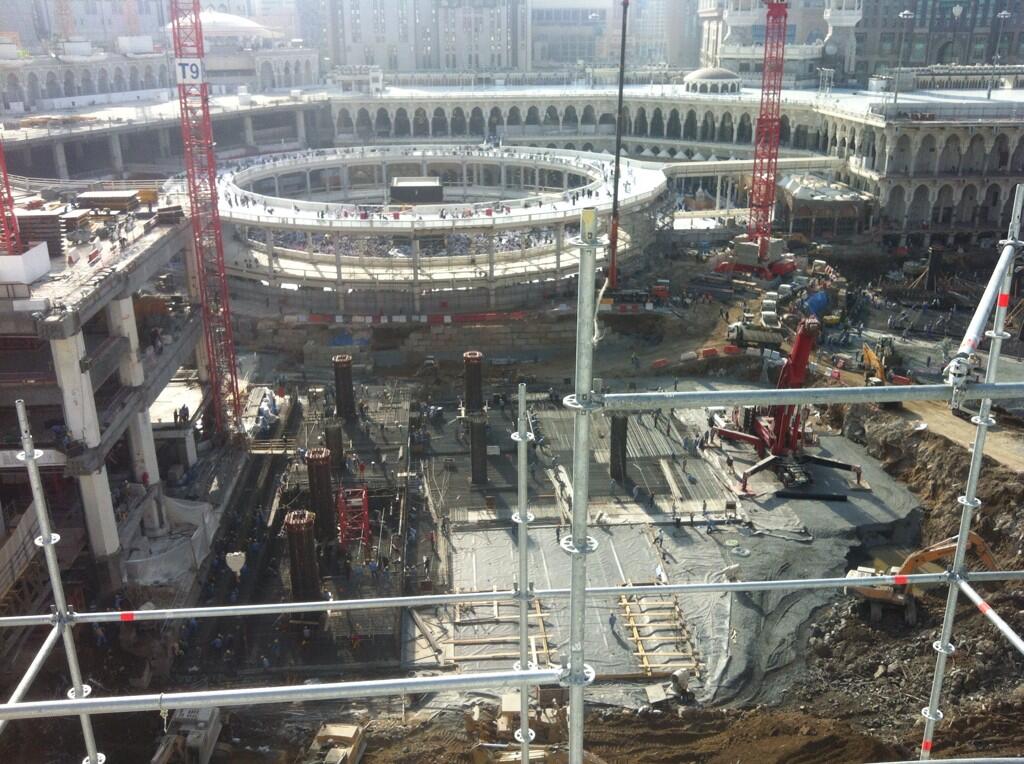
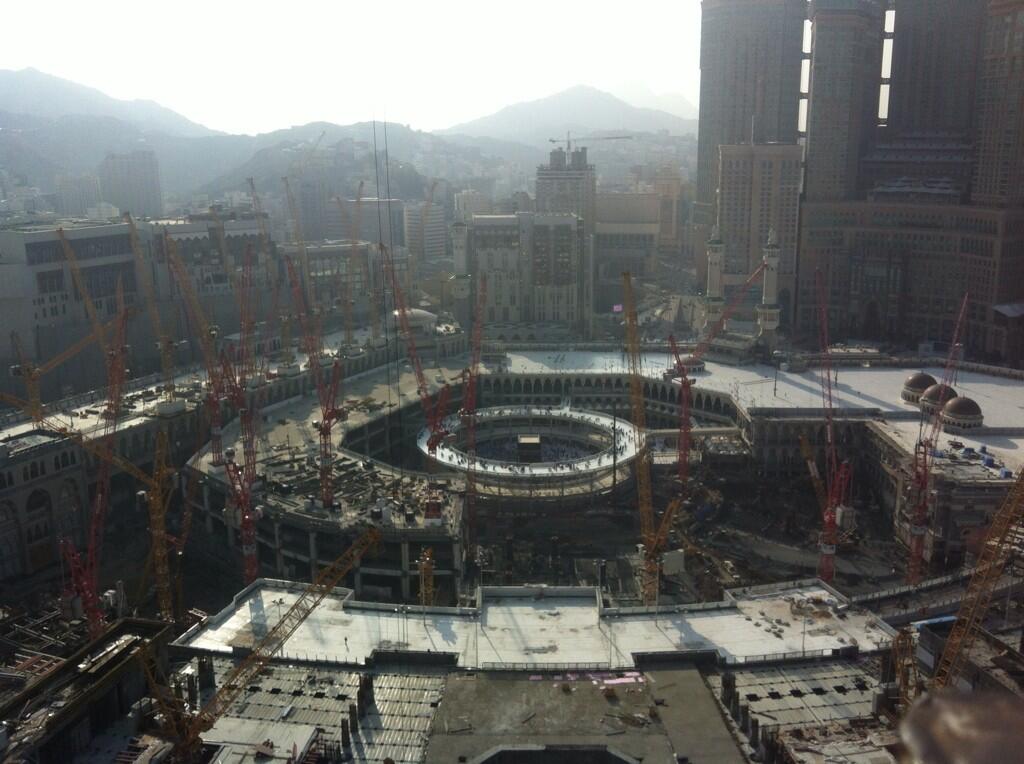
January 2014
16 January 2014

You have contributed 0.4% of this topic


18 January 2014
MAKKAH —Ten people, including a Saudi, have been arrested for distributing and selling drinking water claiming it was Zamzam. The Ministry of Commerce and Industry’s inspectors raided a house in Makkah’s Al-Rusaifah neighborhood, which was used for filling Zamzam bottles with normal drinking water.
Authorities later learned that the gang was run by a Saudi man. The men were caught red-handed as they were filling the bottles with water and preparing to distribute them. They were handed over to Al-Mansour police station for further action.
http://www.saudigazette.com.sa/index...20140118192898
Mataf expansion updates


17 January 2014




19 January 2014
The historical factory that manufactures the Kiswa, the covering for the Holy Kaaba in Makkah, is exploring the possibility of importing state-of-the-art technology from the US, Japan, Switzerland, Italy and Germany, to upgrade its facility in keeping with modern times.
Mohammed Abdullah Bajada, manager of the factory, said the factory had set up a committee to study the modernization process including cladding, sewing and embroidery of the Kiswa.
The move follows directives of the Presidency of the Two Holy Mosques Affairs, the manager said.
“An exclusive meeting was held recently to evaluate the strategy for modernization of the plant in which various stakeholders including the Binladin Group participated,” he said.
On July 1, 1927, King Abdulaziz ordered the construction of a special factory to be exclusively devoted to the manufacture of the Kiswa in Ajyad district in Makkah Al-Mukarramah. This factory, which was built on an area of 1,500 square meters, was the first of its kind to be set up in Makkah.
The Holy Kaaba represents the Qibla, or the direction in which Muslims all around the world face to perform their prayers.
The covering of the Holy Kaaba is known as the Kiswa, and it is one of the most important signs of respect and veneration in the House of Allah.
Its history is as much part of the history of the Holy Kaaba itself. Since the Kaaba was first built by Ibrahim and his son Ismail, the Kiswa passed through many stages, and it was not always as we see it today. Throughout its long history, the form and design of the Kiswa evolved following numerous social and economic factors related to particular historical periods.
In continuation of the care of the Prophet Muhammad (peace be upon him), his caliphs and Muslim rulers throughout the ages, a transition in the manufacture of the Kiswa took place during the Saudi era. When the factory was being set up, the Kingdom procured all the materials required to manufacture the Kiswa, including silk, dyes and looms, besides recruited the workforce.
In 1962, King Saud ordered that a house to manufacture the Kiswa should be set up in Makkah.
Later in 1977, the new Kiswa factory at Umm Al-Jud in Makkah was inaugurated during the reign of King Khaled, although the ground-breaking ceremony took place during the era of King Faisal.
This new factory incorporates departments devoted to various operations involved in the manufacture of the Kiswa, including dyeing and weaving the silk, embroidering the inscriptions with which the Kiswa is adorned, and putting together the different sections of the Kiswa.
About 200 artisans combine their talents to manufacture the Kiswa, in addition to the factory’s administrative staff, which was placed under the supervision of the General Presidency of the Two Holy Mosques in 1993.
About 670 kg of pure silk is required to weave the Kiswa, which is then dyed black. The thickness of the silk cloth should be 1.37 mm, and it is lined on the inside by strong white cotton cloth.
Various inscriptions are woven into the fabric of the Kiswa in black in a manner that they encompass its complete surface. Verses from the Holy Qur’an and expressions mentioning the date of the Kiswa are also woven onto it with gold thread.
At present, the exterior Kiswa of the Kaaba is replaced once a year.
The interior of the Kaaba is also adorned with a green Kiswa which is replaced only occasionally, as it is not exposed to nature’s elements, which ensures its preservation for a longer period of time.
Before replacing, the old Kiswa is cut into pieces and presented to leaders of Muslim countries, diplomats and major institutions around the world. One such piece was presented to the UN.
Mohammed Akbar, an Indian expatriate working near Haram, told Arab News that he has been collecting such cut pieces and presenting them to visiting dignitaries from India.
Mohammed Abdullah Bajada also welcomed visitors, who can visit the plant from 9:00 a.m. till noon to see the work.
He said 130 specially trained employees are working on the Kiswa.
http://www.arabnews.com/news/511561


20 January 2014
Adel Maltani, chief of money exchangers in Makkah, said exchange of GCC currencies topped that of other countries in Makkah.
He said the big number of Umrah pilgrims, who have arrived taking advantage of the mid-term school vacation, is the reason for this. “Gulf currencies account for 40 percent of the exchange market,” he added.
According to him, the daily exchange transaction reaches one million Saudi riyals, which is low compared to five years ago, when it stood at SR5-6 million daily.
Maltani described the currency exchange market as “very slow,” saying: “We hope the next two months will be better when the sector’s data is released.”
He explained that the number of Egyptian Umrah pilgrims has declined and the number of Arab pilgrims coming from countries with political disturbances has also gone down. He added that he has not witnessed any recovery in the currency exchange movement for the last three years.
“The Egyptian currency that used to top the movement declined to the fourth position,” he said, adding that the US dollar is followed by the Turkish lire, the Egyptian pound and the Asian currencies in general.
Except for the Iranian currency, Maltani denied that shops took extra measure against any other currency. “Many shops refuse to deal with the Iranian currency, even the Iranian Umrah pilgrims themselves refuse to do so. They all prefer the US dollar for its fixed value against the Saudi riyal,” he said.
Commenting on the competition between local banks and exchange centers in the business of currency exchange he said: “The entrance of banks in the exchange business opened a competitive market able to regulate it and drive it to a better position.”
He said that the black market in currency exchange and fake currencies has decreased to the minimum compared to past years.
Banking reports released recently said the Egyptian pound has recorded a recovery against foreign currencies registering slight gains but stayed stabilized without any change against the dollar, selling at 6.99 EGP against the dollar and 6.96 EGP for the buy.
At the 150th foreign exchange auction of the Central Bank of Egypt last Wednesday, the dollar recorded a level of 6.95 EGP where the bank excepted 38.6 million of a total of 40 million it offered to banks.
The central bank evoked the dollar auctions in December 2012 to face the monetary bleeding of its reserves. Banking sources forecast further stabilization and recovery of the EGP after the decision of the monetary policy to fix the prices on deposits and loans at 8.25 and 9.25 percent respectively, to avoid “dollarization.”
Meanwhile, the Saudi riyal maintained its rate at 1.85 EGP for buying and 1.86 EGP for selling.
http://www.arabnews.com/news/512001


This cannot be undone and I am sure it will be greatly appreciated.
Please wait...
