Forum Menu - Click/Swipe to open
 

Makkah News and Updates

Jump to page:

You have contributed 0.4% of this topic

Thread Tools
Appreciate
Topic Appreciation
omer, Taqwah, Taalibah, rizmalek, super-glue, Seifeddine-M, bint Mohammed, member2, sweetmuslimahk1, abu mohammed, Yasin, Heather2727, Naqshband66, ummi taalib, mo_isaq, Acacia, Desi tadka, umar123, habeeba, Jinn, Arslan., ibn Ismail, najimuddin, ALIF, al-adnan, abuzayd2k, Moonlight, Mohammed8, ssaad, tanveerzakee, sharjan8643, opc121177
224 guests appreciate this topic.
Rank Image
Roukaya19's avatar
Montreal
4,092
Sister
4,288
Roukaya19's avatar
#2161 [Permalink] Posted on 4th May 2013 20:47
 
The Kiswa

 
report post quote code quick quote reply
+1 -0Like x 1
back to top
Rank Image
Roukaya19's avatar
Montreal
4,092
Sister
4,288
Roukaya19's avatar
#2162 [Permalink] Posted on 4th May 2013 20:49
500-year-old Kaaba cover
highlight of the Abu Dhabi Book Fair


The oldest known Kiswah was displayed in public for the first time in AUH

May 1, 2013

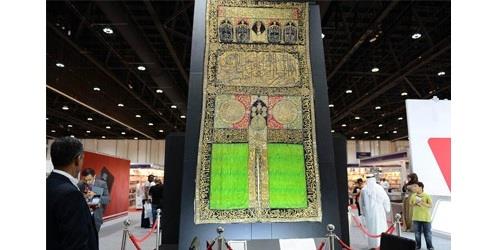
Abu Dhabi: A Ka’aba cover from the time of the longest reigning Ottoman emperor nearly 500 years ago was the highlight of the 23rd Abu Dhabi International Book Fair (ADIBF 2013) that concluded this week.

Known to be the world’s oldest known Ka’aba cover on public display, it was said to have been sent to Makkah by Sulaiman the Magnificent nearly 500 years ago. Also called a Kiswah, the artistically embroidered fabric ceremonially covers the Ka’aba before the Haj and was brought to ADIBF 2013 by Austrian company INLIBERS who handle preservation of ancient manuscripts and exhibits.

Rare Kiswah

According to the firm’s owner, Hugo Wetscherek, there is no earlier recorded example of a Kiswah. “Our Kiswah is the same in every iconographic detail with a counterpart that can be found at Topkapi Palace in Istanbul. Both the name of Sultan Sulaiman and the year 950 in the Islamic calendar are stated in the splendid calligraphy and the date is confirmed by carbon dating technology”, he said.

http://gulfnews.com/arts-entertainme...fair-1.1178014


Abu Dhabi: 30 million euros required in the covering
of the Kaaba rare 5 centuries-old ..


أبوظبي: 30 مليون يورو مطلوبة في كسوة نادرة للكعبة عمرها 5 قرون..


شهد معرض أبو ظبي للكتاب الذي افتُتح الأربعاء الماضي ويستمر حتى 29 أبريل الجاري عرض كسوة نادرة للكعبة المشرفة يبلغ عمرها ما يزيد على 470 عاما.

وعَرضت الكسوة التي لا تزال تحافظ على رونقها رغم مرور قرابة خمسة قرون على حياكتها "دار انتكواريات إنليبرس للمخطوطات الأثرية" النمساوية في جناحها بالمعرض، حيث حظيت الكسوة باهتمام العديد من الزوار والمصورين من داخل الإمارات وخارجها لندرتها وأهميتها، إذ تعتبر من أندر الوثائق التاريخية فضلا عما تمتاز به من دقة زخرفتها الإسلامية.

وقال هيجو ويتشيرك مدير الدار وفقاً لصحيفة "الرياض" إن الكسوة المعروضة هي أقدم كسوة معروفة للكعبة بهذه الدرجة من الدقة وإنها أفضل حالاً من نظيرتها المحفوظة في متحف قصر توبكابي والتي لم يتم حفظها بشكل سليم.

وأشار ويتشيرك إلى أن هذه الكسوة لأول مرة تُعرض في العالم خارج الدار وأنه مطلوب في هذه القطعة الأثرية 30 مليون يورو لمن يريد أن يقتنيها ويحتفظ بها.

http://akhbaar24.argaam.com/article/detail/134803

Google translation: Abu Dhabi: 30 million euros required in the covering of the Kaaba rare 5 centuries-old ..

Saw the Abu Dhabi Book Fair, which opened Wednesday and runs until April 29, the current view of the Kaaba rare livery-old supervises more than 470 years.

And offered cladding, which still maintain its glory despite the passage of nearly five centuries حياكتها "Dar Antekoarriet Anlibers of manuscripts archaeological" Austrian pavilion exhibition, which received cladding attention of many visitors and photographers from within the UAE and abroad for their rarity and importance, as it is one of the rarest historical documents as well as characterized by the accuracy of the Islamic decoration.

Hugo said and Ichirk director of the house and according to the newspaper "Al-Riyadh" The cladding shown are the oldest known livery of the Kaaba in this degree of precision, it fared better than its counterpart preserved in the Topkapi Palace Museum, which is not saved properly.

The Ichirk pointed out that this cladding for the first time was in the world outside the house and that he was wanted in this artifact of 30 million euros for anyone who wants to acquired and maintained.

report post quote code quick quote reply
+1 -0Like x 1
back to top
Rank Image
Roukaya19's avatar
Montreal
4,092
Sister
4,288
Roukaya19's avatar
#2163 [Permalink] Posted on 4th May 2013 20:52
Cosmetic colored rods
 
to facilitate access to the Holy Mosque

اذرع تجميلية ملونه لتسهيل الوصول للمسجد الحرام

23-06-1434
مكة الآن - أسامة زيتوني

بدأت أمانة العاصمة المقدسة في تنفيذ فكرة جديدة في مداخل مكة المكرمة الرئيسية تتمثل في وضع أذرع تجميلية على أعمدة الإنارة ذات ألوان مرتبطة ببوابات المسجد الحرام ، بحيث يشير كل لون إلى احد الأبواب الرئيسة للمسجد الحرام وتم البدء بمحور طريق مكة جدة القديم.

وقد قامت إدارة صيانة الإنارة وبمتابعة سعادة مدير عام الطرق بالبدء في أعمال تحسين مداخل مكة وذلك انطلاقاً من حرص أمانة العاصمة المقدسة واهتمامها بأعمال تطوير وتحسين الطرق الرئيسية بمكة المكرمة ولإظهارها بشكل أفضل أمام زوار بيت الله الحرام أثناء موسم رمضان المبارك وعيد الفطر الأمر الذي يساعد على إبراز المداخل بما يتناسب مع قدسية المكان ويساعد على تسهيل الوصول الى المسجد الحرام بواسطة الألوان المضاءة .

يذكر أن جميع هذه الأعمال تأتي وفقاً لتوجيهات سعادة وكيل أمين العاصمة المقدسة للتعمير والمشاريع المهندس خالد الهيج وحرصه على تحقيق كل ما يمكن ان يساهم في تطوير وتحسين الخدمات .

http://www.makkah-now.com/news.php?action=show&id=8672

Google translation: Secretariat of the Holy City began the implementation of a new idea in the main entrances to Mecca is the put Cosmetic arms on light poles with colors associated with the Grand Mosque gates, so that each color refers to one of the main doors of the Grand Mosque was initiated axis through the old Mecca, Jeddah.

The Department of maintenance of lighting and follow-up Director General of ways to begin work to improve the entrances to Mecca and so out of the keenness of the Secretariat of the Holy City and its interest in the work of development and improvement of major roads in Makkah and show better in front of visitors to the Holy Mosque during the season of Ramadan and Eid al-Fitr, which helps to highlight the entrances commensurate with the sanctity of the place and helps facilitate access to the Sacred mosque illuminated by colors.

It is noteworthy that all these actions come in accordance with the directives of His Excellency the Deputy Secretary of the Holy City and reconstruction projects engineer Khaled الهيج, and his eagerness to achieve all that can contribute to the development and improvement of services.


report post quote code quick quote reply
+1 -0Like x 1
back to top
Rank Image
Roukaya19's avatar
Montreal
4,092
Sister
4,288
Roukaya19's avatar
#2164 [Permalink] Posted on 4th May 2013 20:56
 
Haj 1434 - 2013
________________________


Official Key Dates for Haj 1434/2013


Haj First Day: 8 Dh-Hijjah - 13 Oct
Arafat Day : 9 Dh-Hijjah - 14 Oct
Eid al-Adha : 10 Dh-Hijjah - 15 Oct


- First day of arrival in the Kingdom for pilgrims is 1st of Dhu al-Qidah 1434 H - 7th September 2013.

- Last date for arrival of pilgrims in the Kingdom by air, at the King Abdulaziz International Airport, Jeddah,
or at the Prince Muhammad bin Abdulaziz International Airport, Madinah is 4th of Dhu al-Hijjah 1434 H - 9th October 2013.

- Last date for pilgrims to travel from Jeddah to Madinah by bus is 25th of Dhu al-Qidah 1434 H - 29th September 2013.

- Last date for pilgrims to travel from Jeddah to Madinah by air is 2nd of Dhu al-Hijjah 1434 H - 7th October 2013.

- Last date for pilgrims to travel from Madinah to Makkah by bus (before Haj) is 5th of Dhu al-Hijjah 1434 H - 10th October 2013.

- Last date for pilgrims to travel from Madinah to Jeddah by air (before Haj) is 6th of Dhu al-Hijjah 1434 H - 11th October 2013.

- Final date for departure (return trip) is 15th of Muharram 1435 H - 18th November 2013.


Important dates for Pilgrims


Dates of receipt of applications for Hajj visas

The last date for receiving applications for Hajj visas from the embassies and representations Custodian of the Two Holy Mosques outside the Kingdom is the 25th of Dhu al-Qi'dah of each year according to Hijri calendar*.

Validity of Hajj visas

The Hajj Visas for pilgrims coming by air will expire by the end of Dhu al-Hijjah, and no later than the 15th of Muharram of the year which followed. And the date of coming back must be according to the dates of travel tickets.

The last date of pilgrims coming by sea is the end of Muharram.
The last date of pilgrims coming by bus is 5th of Muharram.

Dates of arrival for Pilgrims coming by Land

Last date for arrival of pilgrims to the Kingdom by land is the end of the Zil Qadh of each year according to the Hijri calendar*.

Dates of arrival for Pilgrims coming by Air

Last date for arrival of pilgrims in the Kingdom by air, at the King Abdulaziz International Airport, Jeddah,
or at the Prince Muhammad bin Abdulaziz International Airport, Madinah is the 4th of Dhu al-Hijjah of each year.

Dates of arrival for Pilgrims coming by Sea

Last date for arrival of pilgrims to Jeddah Islamic Port is the 4th of Dhu al-Hijjah of each year.

Dates of travel to Medina after arrival

Last date for pilgrims to travel from Jeddah to Madinah by Bus is the 25th of Dhu al-Qi'dah of each year.
Last date for pilgrims to travel from Jeddah to Madinah by Air is the 2nd day of Dhu al-Hijjah of each year.
Last date for pilgrims to travel from Medina to Makkah by Bus (before Hajj) is the 5th of Dhu al-Hijjah of each year.
Last date for pilgrims to travel from Medina to Jeddah by Air (before Hajj) is the 6th of Dhu al-Hijjah of each year.


* Hijjri calendar is based on Umm Al-Qura calendar.

http://www.saudiairlines.com/portal/...00d59618acRCRD


__________________________________________________________


Ministry of Hajj - وزارة الحج


Arabic: www.haj.gov.sa

English/Français: www.hajinformation.com


***
report post quote code quick quote reply
+1 -0
back to top
Rank Image
Roukaya19's avatar
Montreal
4,092
Sister
4,288
Roukaya19's avatar
#2165 [Permalink] Posted on 4th May 2013 23:51
 
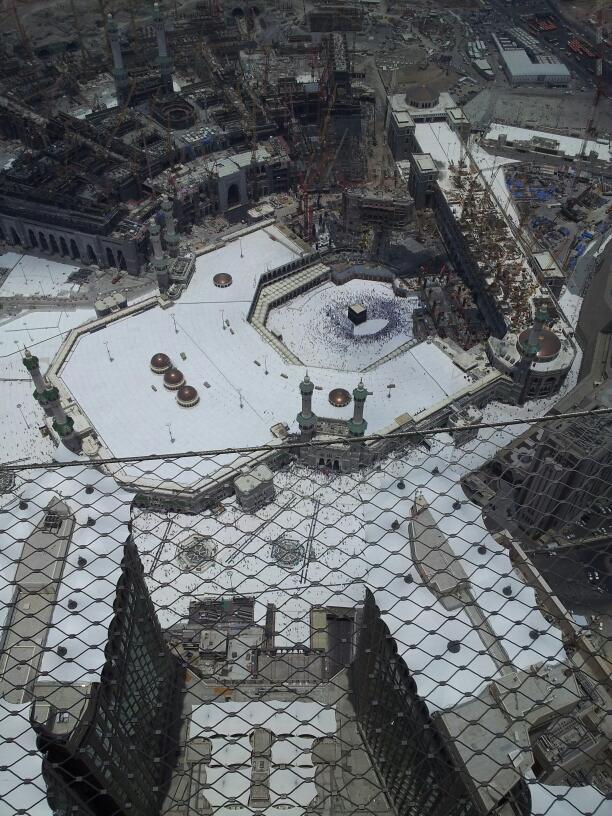
Holy Mosque work progress

3 May 2013


report post quote code quick quote reply
No post ratings
back to top
Rank Image
Roukaya19's avatar
Montreal
4,092
Sister
4,288
Roukaya19's avatar
#2166 [Permalink] Posted on 5th May 2013 06:16
 
New Center for Disease Control

Diseases a major concern during Haj and Umrah seasons

Thursday 2 May 2013

Plans are being made by the Ministry of Health to set up the National Center for Prevention and Disease Control (NCPDC) in accordance with the decision taken by the Council of Ministers on Monday, Health Minister Abdullah Al-Rabeeah announced here yesterday.

Thanking the Council of Ministers and Custodian of the Two Holy Mosques King Abdullah for consenting to the decision to establish such a center, the minister said that the NCPCD will function on the lines of the Atlanta-based Center for Disease Control and would also follow the guidelines of similar bodies that operate in Europe.

CDC is the United States’ health protection agency, working 24/7 to protect America from health and safety threats, both foreign and domestic.
He explained that the NCPDC, which would function under the aegis of the Ministry of Health, would play a vital role in the fight against diseases and implement an effective surveillance program.

Al-Rabeeah said the proposed center would curb the spread of infectious and noncommunicable diseases within the country. He added that the ministry has been making efforts to develop health services and raise the level of performance in health facilities to offer the best health care services to patients according to the vision of the country’s leadership.

He said that the center would conduct research on diseases that are endemic to Saudi Arabia and also carry out scientific experiments to prevent and control both infectious and noncommunicable diseases. The center is also expected to monitor the outbreak of epidemics and advise the nation of the suitable steps for early prevention.

Haj and Umrah seasons

According to an official from the Health Ministry, the Kingdom’s major concern is the diseases that are imported into the Kingdom through pilgrims during Haj and Umrah seasons.

The Ministry of Foreign Affairs dispatches circulars to all its embassies abroad indicating the quarantine requirements in the respective countries for the issuance of the pilgrim visa, prior to the commencement of the Umrah and Haj seasons, based on the Health Ministry’s recommendations.

Last year, the Kingdom focused on diseases such as yellow fever, meningitis, seasonal influenza, polio and food poisoning. Stipulated vaccines should be given 10 days before the date of departure to the holy cities of Makkah and Madinah. In addition, the ships and aircraft carrying pilgrims have been advised to produce a certificate that the carriers are free of mosquitoes.

http://www.arabnews.com/news/450167

Common sense about diseases

Friday 3 May 2013

THE announcement that the Kingdom has just launched a disease management system coincided with reports of further cases of dengue fever, a condition that sounds nastier than it generally is, but which nevertheless highlights the vulnerability of the Kingdom to infections of many kinds.

As the gateway to the Haj and Umrah, welcoming millions of pilgrims from around the world, Jeddah has always been at risk from conditions imported innocently by its guests. Indeed the term “Haji disease” has long been applied to viruses that have been brought to the city and thereafter spread among locals as well as other pilgrims.

It is therefore comforting to know that the Saudi Ministry of Health has rolled out a state-of-the-art Health Solution for Disease Management in Jeddah, Makkah, Taif and Qunfudah, designed and built by IBM.

Nothing of course, even careful health screening of would-be visitors, is going to stop infectious diseases arriving on our shores. The really important consideration, which is fully addressed by the new IBM program, is how quickly a contagious disease is spotted and identified and thereafter, the steps that are taken to stop its spread be it through immunization or in extreme cases, the isolation of disease hot spots.

Nor should it be imagined that the risks arise purely from pilgrims. We are all of us traveling more and more and visiting parts of the world where dangerous conditions are widespread. Given that symptoms may not present themselves for some days after infection has occurred, it is perfectly possible for someone from the Kingdom to have traveled home safely, before it is realized that something is wrong.

more: http://www.arabnews.com/news/450185
report post quote code quick quote reply
No post ratings
back to top
Rank Image
Roukaya19's avatar
Montreal
4,092
Sister
4,288
Roukaya19's avatar
#2167 [Permalink] Posted on 6th May 2013 13:19
How to Perform Umrah

Procedure of Umrah - KSA2 - 2011


What is Umrah?

In Arabic, the word 'Umrah is derived from I'timaar which means a visit. However, 'Umrah in Islamic terminology, means paying a visit to Ka' bah, performing Tawaaf (circumambulation) around it, walking between Safaa and Marwah seven times. A performer of 'Umrah puts off his Ihraam by having his hair shaved or cut. 'Umrah can be performed along with Hajj and in other days as well.

'Umrah can be performed during anytime in the year, there is no fixed time for 'Umrah.

The Pillars of `Umrah are four:

a) Ihraam: which is assumed at the Meeqaat.

b) Tawaaf: around the House.

c) Sa'y: walking between As-Safaa and Al-Marwah, which consists of seven circuits.

d) Tahal-lul: which means coming out of the state of Ihraam; becoming lawful what was previously prohibited during Ihraam.

During 'Umrah, pilgrims do not go to Minaa, 'Arafaat and Muzdalifah or throw pebbles on the Jamrahs (stone pillars representing devils) or offer animal sacrifice. These rites are only performed during Hajj.
report post quote code quick quote reply
No post ratings
back to top
Rank Image
Roukaya19's avatar
Montreal
4,092
Sister
4,288
Roukaya19's avatar
#2168 [Permalink] Posted on 6th May 2013 13:20
Location of Miqats


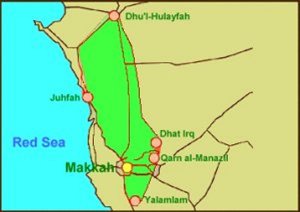
There are five places some distance from the Holy City of Makkah which pilgrims must not cross before they are in a state of Ihram if they intend to enter al Masjid al Haram for Umrah or Hajj. These points or stations are called Miqats. For map, see Location of Miqats

Dhu'l-Hulayfah: This miqat is about 9 kilometers from Madinah and about 450 kilometers from Makkah. Dhu'l-Hulayfah is the miqat for those who live in Madinah and for those who approach Makkah from that direction.

Juhfah: This miqat is about 190 kilometers to the northwest of Makkah. This is the miqat for the people who come from the direction of Syria.

Qarn al-Manazil: This miqat is a hilly place about 90 kilometers to the east of Makkah. This is the miqat for the people of Nejd or for those coming from that direction.

Dhat Irq: This miqat is about 85 kilometers towards the northeast side of Makkah. This is the miqat for the people of Iran, Iraq and for those coming from that direction.

Yalamlam: This miqat is a hilly area about 50 kilometers to the southeast of Makkah. This is the miqat for the people of Yemen and others coming from that direction. It is the miqat for many of the pilgrims from China, Japan, India, Pakistan who come by ship.

The area outside the Haram, the holy land on which the City of Makkah stands, is called al-Hill. Muslims who enter the Haram area on business or for other purposes need not do the ihram before entering the Holy City of Makkah unless they have the intention to perform Umrah or Hajj. Muslims coming to Makkah with the intention of performing Umrah or Hajj must not cross a Miqat without first entering into the state of Ihram, unless they live within the area between Miqat and the Haram. In this case they do Ihram either at home or just before entering the Haram area.

http://www.hajinformation.com/main/e101.htm
report post quote code quick quote reply
+1 -0Like x 1
back to top
Rank Image
Roukaya19's avatar
Montreal
4,092
Sister
4,288
Roukaya19's avatar
#2169 [Permalink] Posted on 6th May 2013 13:27
At the historic Miqat Mosque


The Miqat Mosque was built by Caliph Umar bin Abdulaziz when he was the prince of Madinah. It was very small,
then built with mud and stones, until late King Abdul Aziz ordered it to be expanded and renewed.


Wednesday 17 October 2012

MADINAH: The Miqat Mosque, also called Aaba Ali or Bir Ali, is one of the most noticeable spots in Madinah. It is the station for pilgrims from the Prophet’s city and pilgrims passing through it. At this place, they wear their ihram, the two pieces of white cloth that each male pilgrim must wear prior to performing Haj or Umrah, and make niyah, the intention of performing Haj or Umrah in Makkah.

This mosque has many names, such as Miqat, Aaba Ali, Bir Ali, Al-Shajarah Mosque (tree mosque) and Al-Mu’ris Mosque.

The mosque is located within the blessed Aqeeq Valley and is 14 kilometers away from the Prophet’s Mosque.

The mosque was built by the Caliph Umar bin Abdulaziz when he was prince of Madinah and renewed during the Abbassid and Ottoman eras.

It was very small, then built with mud and stones, until late King Abdul Aziz ordered it to be expanded and renewed.

With the increasing number of pilgrims every year, the mosque became a large station for pilgrims. It is built now on 6,000 sq. meters and consists of two groups of corridors separated by a wide, open space. It can accommodate up to 5,000 persons.

http://www.arabnews.com/historic-miqat-mosque


report post quote code quick quote reply
+1 -0Like x 1
back to top
Rank Image
Roukaya19's avatar
Montreal
4,092
Sister
4,288
Roukaya19's avatar
#2170 [Permalink] Posted on 6th May 2013 15:11
 
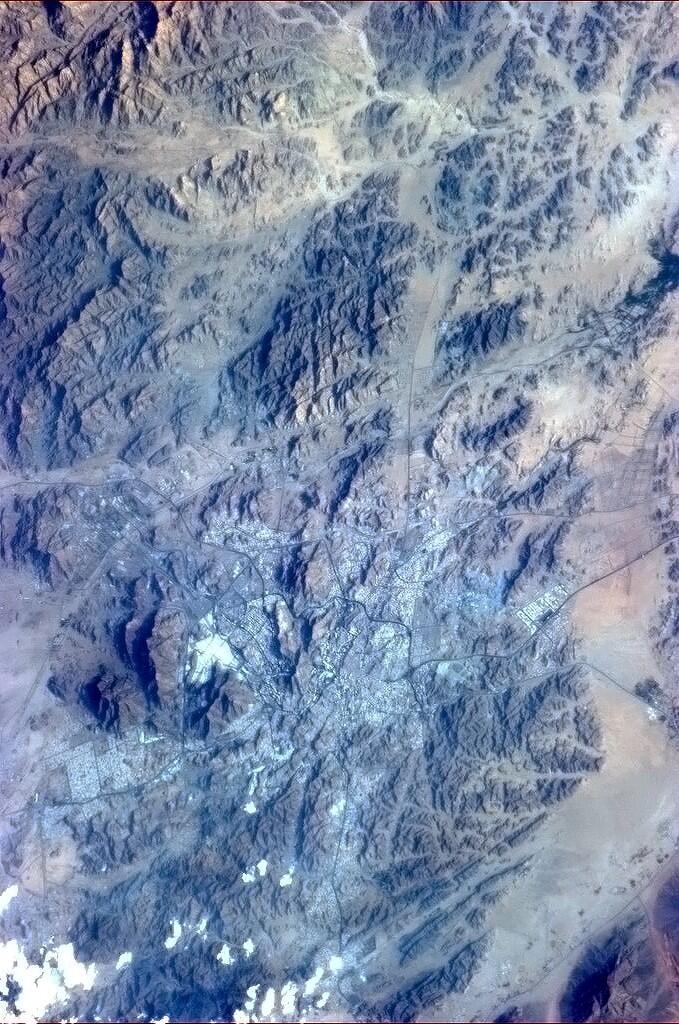
Makkah from the Space

By Chris Hadfield, Canadian Astronaut

Currently living in space aboard ISS
as Commander of Expedition 35, Orbiting Earth


Makkah (مكة), spiritual home to over a billion of us.

posted on twitter - 4 May 2013


https://twitter.com/Cmdr_Hadfield/st...236994/photo/1
report post quote code quick quote reply
+1 -0Like x 1
back to top
Rank Image
Roukaya19's avatar
Montreal
4,092
Sister
4,288
Roukaya19's avatar
#2171 [Permalink] Posted on 7th May 2013 16:53
Women inside the Grand Mosque


LOCAL VIEWPOINT - Dr. Hatoon Al-Fassi
Al-Riyadh - 30 April 2013 - 20 Jumada Al-Akhir 1434 H

How far can women go when speaking about certain topics in Islam without feeling that they have crossed the limits? Undoubtedly, this question will receive a lot of attention and criticism because the obvious answer is women are allowed to speak about any religious topic they wish to. In reality, however, things are different.

To make my point, I’m going to tell you the story of a Pakistani female friend of mine who visited the Kingdom for the first time after years and years of dreaming about coming here to perform Umrah. Let me describe to you her first visit to the Grand Mosque.

In a nutshell, it was a terrible experience in the full sense of the word marked by discrimination and disrespect.

When my friend, her husband, and three children entered the Grand Mosque, she repeatedly thanked Allah for giving her the opportunity to come and perform Umrah. She was, however, saddened for not being allowed to perform prayer in front the Holy Ka’ba. Every time it was time to pray, she either had to go downstairs, if she was on the roof, or to the areas allocated for women. She didn’t get the chance to freely sit in a place where she could see the Ka’ba up close and immerse herself in the spiritual experience.

When prayer was called, all the areas surrounding the Ka’ba including the ones on the roof would get cordoned off and women would be asked to go to other areas.

She tried once to beat the rush but as she got close to the Ka’ba, she was asked by female supervisors to go back and sometimes they even shouted at her.

She also was not allowed to perform prayer on the roof even though it was empty. Before leaving for Madinah, she learned about a place where women could actually sit near the Ka’ba. However, it was too late and her wish remained unfulfilled.

The practice of segregating men and women inside the Grand Mosque and the tendency of supervisors to shout at people must be closely scrutinized.

Since they have to pray separately, couples often get separated, something that would not happen if they were allowed to stay together. And finding someone among the thousands of worshippers who are present in the Grand Mosque, can be a time-consuming and frustrating task.

Would it be too much to ask supervisors to let married couples enjoy the spirituality of the place together instead of wasting a lot of time searching for each other?

http://www.saudigazette.com.sa/index...20130430163573
report post quote code quick quote reply
No post ratings
back to top
Rank Image
Roukaya19's avatar
Montreal
4,092
Sister
4,288
Roukaya19's avatar
#2172 [Permalink] Posted on 7th May 2013 16:55
 
Jabal Noor


in the past ...

report post quote code quick quote reply
No post ratings
back to top
Rank Image
Roukaya19's avatar
Montreal
4,092
Sister
4,288
Roukaya19's avatar
#2173 [Permalink] Posted on 7th May 2013 16:56
 
Wanted: true heir of 19th Century
 
Malabar nobleman. Reward? $1 billion.

A search for the direct descendant of a 19th Century Indian shipping magnate
who is owed $1 billion in compensation from Saudi Arabia has sparked a feud
between the Muslim royals of Malabar and one of their most powerful rival families.


The historic city of Mecca, where shipping magnate Mayankutty Keyi had his bungalow
23 Apr 2013

The Arakkals, erstwhile rulers of the Malabar coast, and the Keyis, who created a shipping empire which spanned from India to Arabia during the British Raj, have been locked in periodic feuds since the Keyis first made their fortune and incurred the Sultan's jealousy.

Attempts to end their rivalry through marriage alliances were snubbed, offence was taken and vows were made that the families would never be joined.

But the centuries-old rivalry has been reignited after the Indian government appointed a representative to find the direct heir of Mayankutty Keyi who is entitled to $1 billion (£655 million) in compensation from the government of Saudi Arabia which demolished his family's bungalow in Mecca in 1971.

Mayankutty Keyi commissioned the building in 1848 as a guest house for friends and family members traveling to Mecca to perform the Haj pilgrimage. The Saudi government valued the building at Haram Sharif, close to the Holy Ka'baa shrine, at 400 Crores of Rupees - just under $100 million - at the time of demolition. Today it is worth 5000 Crores, around a billion dollars.

Saudi officials have said they will pay the compensation to the rightful heir and the Indian government has appointed an official to find the direct descendent. But both the Arakkal royals and the Keyi family have indicated they will mount campaigns to be recognised as the rightful beneficiaries.

According to the Times of India, members of the Arakkal family say Mayankutty Keyi had married one of their female ancestors, Arakkal Beevi, and that their matrilineal culture makes them the true heirs.

Mr T.O Sooraj, who has been appointed by the Kerala government liaise between India's Ministry of External Affairs and the Saudi Arabian government, said so far neither family had identified a genuine direct descendant entitled to claim the money.

"So far we have not found a direct heir of Mayankutty. Few people had come in the past but the authorities have not entertained their claim as they couldn't produce any documents. The process has just been initiated and my job is to find a legal decendent of Mr Mayankutty. If we fail to find a legal descendant, then the Kerala government will try to look for legal options to claim the amount [itself], since Mayankutty was an Indian national," he said.

http://www.telegraph.co.uk/news/worl...-billion..html
report post quote code quick quote reply
No post ratings
back to top
Rank Image
Roukaya19's avatar
Montreal
4,092
Sister
4,288
Roukaya19's avatar
#2174 [Permalink] Posted on 7th May 2013 16:58
 
A former expat’s reflections on Makkah


The road to Makkah bustles with cars as the Clock Tower
stands out in all its nightly splendor
Tuesday 7 May 2013

On our way to Makkah from Jeddah, I was surprised at the traffic. What was wrong? Everyone was actually driving within the speed limit and in their lanes. There were no cars on the shoulder. I was here for Umrah from the United States, visiting the Kingdom after seven years.

“There are cameras everywhere. You get snapped and fined, if you break the law. I have received speeding tickets worth SR 900 in the last two months alone,” said our friend, Qureishi.

There were occasional speedsters, who didn’t seem to be afraid of the cameras. But I soon found out why. Qureishi pointed out that some drivers had placed a white tape on the license plate number, hiding one or two digits hoping to render their vehicle untraceable. I did not see any major accident that day. But I did notice that a large number of vehicles had signs of a fender-bender; broken taillight or dented bumper. I had never seen so many dents on vehicles in a single day in my life.

As we sped toward Makkah, I was amazed to see how Saudi Arabia seemed to have grown. There were no signs of recession, but on the contrary economy seemed to be booming. Things were gone or closed, but only to be replaced by something better or bigger. The Beautiful Creatures Zoo was gone. That was a good thing. I remember doing a story on it for Arab News. I had gone at a time when it was breakfast time for pythons. I still remember with a shudder how live rabbits were fed to the snakes.

Gone was also the Al-Watani supermarket. This is where we did our grocery. I could still remember Al-Watani General Manager Leslie Lloyd who was perplexed as to why oats were the No. 1 seller in Ramadan when it was a breakfast food and people were fasting. He at the time did not know that oats were used for shourba (soup) which was what Saudis ate after breaking their fast.

The visit to the Grand Mosque in Makkah was a very emotional and nostalgic experience for me. I could not believe my eyes when I entered the vicinity of the mosque. It had grown so much. The Clock Tower stood out in its splendor. There were so many new hotels. A portion of the mosque was closed; there were many cranes and construction work going on. There were so many pilgrims, enthusiastic and vibrant. It felt a bit like Haj. The Grand Mosque needed this expansion because of the increase in Haj and Umrah traffic from within and outside the Kingdom.

The “saiee” downstairs was closed and was only being performed on the top level. The sight of mechanized carts was a pleasant surprise. My 89-year-old mother was with us. She had performed Haj in 1996 and was here for her first Umrah. We rented the battery-operated cart for SR 100 which my husband drove. There was just one slight mishap. Two women riding their cart crashed into ours, but because the speed is never high no one was hurt. However, I noticed two similar mishaps and they both involved women, perhaps because they aren’t accustomed to driving.

After Umrah, we stopped to eat. I did not have the heart to eat at Al-Baik. When we lived in Jeddah from 1994 onward, my daughters, aged 6 and 7 at the time, loved Al-Baik. “When we go to Makkah, it is ‘Labbaik’ and when we come back it is ‘Al-Baik,’” they said. Now in their 20s and married, I asked them if they wanted anything from Jeddah? “Only Al-Baik,” they said.

Jeddah looked so different. We lived on Arbaeen Street for seven years but I couldn’t recognize it. The roundabouts were gone replaced by flyovers. Even Arab News had shifted to a beautiful new building. Jeddah looked all dug out, ugly and inconvenient but that is a necessary evil needed in the expansion and beautification of a city.

Downtown Jeddah looked every inch the vibrant place that it was. Toys were still selling at SR 15.

Women working at checkout counters in department and grocery stores were something I had never imagined seeing in the Kingdom in my lifetime. I had read about it, but seeing it in person was an awesome experience. Many women I spoke to were all praise for Custodian of the Two Holy Mosques King Abdullah and said he understood women’s issues and was a very kind and fair ruler. They were also confident that if women were ever allowed to drive, it would be in his reign.

Men on the other hand, seemed to be the same. Most of them were tired of Jeddah’s traffic delays and diversions. They complained about their wives watching soaps all day. Some also complained of the strict government rules regarding visas and iqamas. In all fairness, I think it is a good thing to streamline the iqama industry. There have always been too many shady practices going on. People came on one company’s iqama, worked for someone else and even their profession was not registered correctly on paper. If implemented thoroughly, everyone will benefit from it. Right now a handful of corrupt people are able to make a lot of money and oftentimes cheat the people they are dealing with.

We were there for only a week and left Jeddah with mixed feelings of joy and sadness. Immigration and security officers were actually polite and even smiled. I would love to come back to Jeddah in a few years, once the dust settles on the construction, expansion and deep excavation projects. Who knows, I may have a female cabbie, then.

http://www.arabnews.com/news/450743
report post quote code quick quote reply
No post ratings
back to top
Rank Image
abu mohammed's avatar
London
27,453
Brother
9,578
abu mohammed's avatar
#2175 [Permalink] Posted on 8th May 2013 12:06

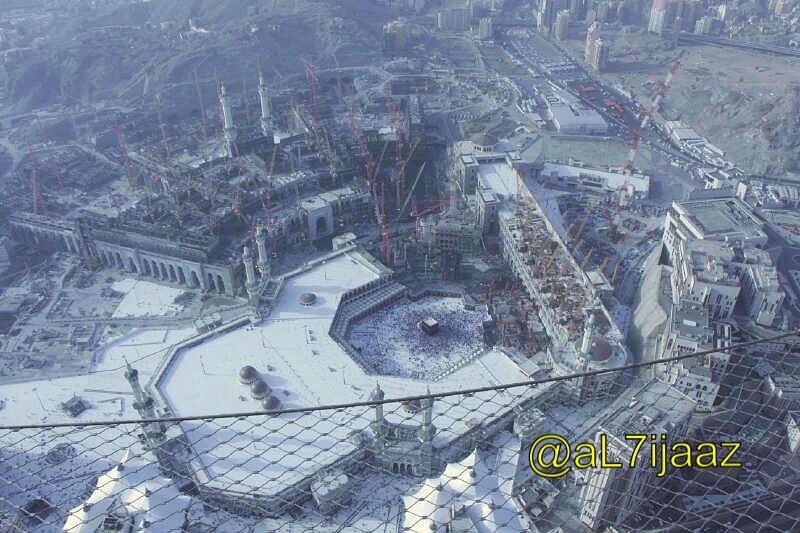
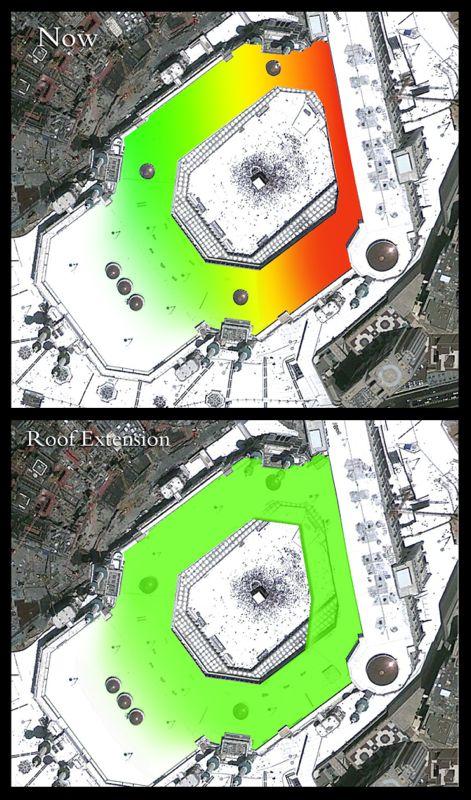
Holy Mosque work progress

6 May 2013


Roof extension


report post quote code quick quote reply
No post ratings
back to top

Jump to page: