MDA inks SR375 million program
management deal with Louis Berger
STRATEGIC ALLIANCE: Prince Faisal bin Salman, governor of Madinah and
chairman of Madinah Development Authority and Thomas Topolski, Louis Berger’s
executive vice president and managing director, Middle East and North Africa,
shake hands after signing the agreement.
Thursday 2 April 2015
Prince Faisal bin Salman, governor of Madinah and chairman of Madinah Development Authority (MDA), on Wednesday signed a contract with Louis Berger to be the program management office consultant (PMOC) for implementation of the Madinah Public Transportation Program (MPTP), one of the most ambitious transportation infrastructure initiatives in the Middle East. The value of the PMOC contract is approximately SR375 million ($100 million).
The MDA event kicks off an ambitious phase of the Saudi government organization’s MPTP initiative. MDA’s vision is to prepare Madinah to meet the expectations of both permanent residents and visitors through 2040.
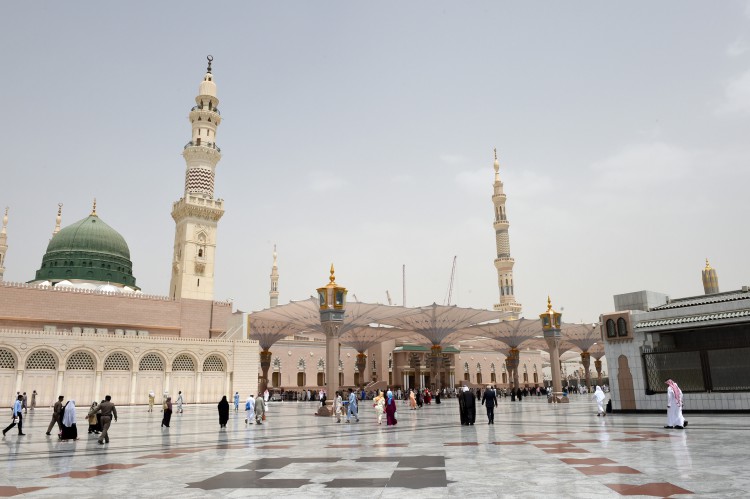
With a major expansion of both the Prophet’s Mosque and to the city’s airport, projections indicate as many as 8.6 million Umrah visitors and 3.6 million Haj pilgrims will visit the city in 2040. The program will address current and future challenges related to crowding, traffic congestion and environmental pollution caused by vehicle emissions.
“We could not be prouder to be associated with MDA in the implementation of the MPTP for the holy city of Madinah,” said D. James Stamatis, president of Louis Berger’s international operations. “The implementation of an advanced public transportation system will endow Madinah with one of the most advanced transportation systems in the world.”
The PMOC contract will extend over a five-year period, during which time Louis Berger will support and assist with MPTP’s strategic planning as well as control, guide, oversee, coordinate and integrate service delivery of the various project and construction management consultants, any other consultants, advisers and third parties across MPTP projects. In addition, Louis Berger will be fully integrated with the MDA management team. Together, they will act as one organization.
The MPTP includes a comprehensive metro and bus network, as well as substantial upgrades and new construction for the primary road network. It also provides relevant facilities, such as stations, park-and-ride lots, depots, and advanced intelligent transportation systems (ITS).
To promote knowledge sharing and ensure the sustainability of the project, Louis Berger will establish a talent development program allowing senior Saudi MDA personnel to follow PMOC senior managers.
The program aims to train and equip Saudi professionals with the management skills and technical capabilities to eventually take over the same positions they once shadowed before implementation is complete.
“Once completed, MPTP will boast world-class transportation facilities, enabling the city to ensure the safety of its citizens, visitors and pilgrims — all while enabling greater knowledge transfer and training for Saudi professionals,” said Thomas Topolski, Louis Berger’s executive vice president and managing director, Middle East and North Africa.
http://www.arabnews.com/economy/news/726576 Louis Berger lands $100m Madinah transport deal 
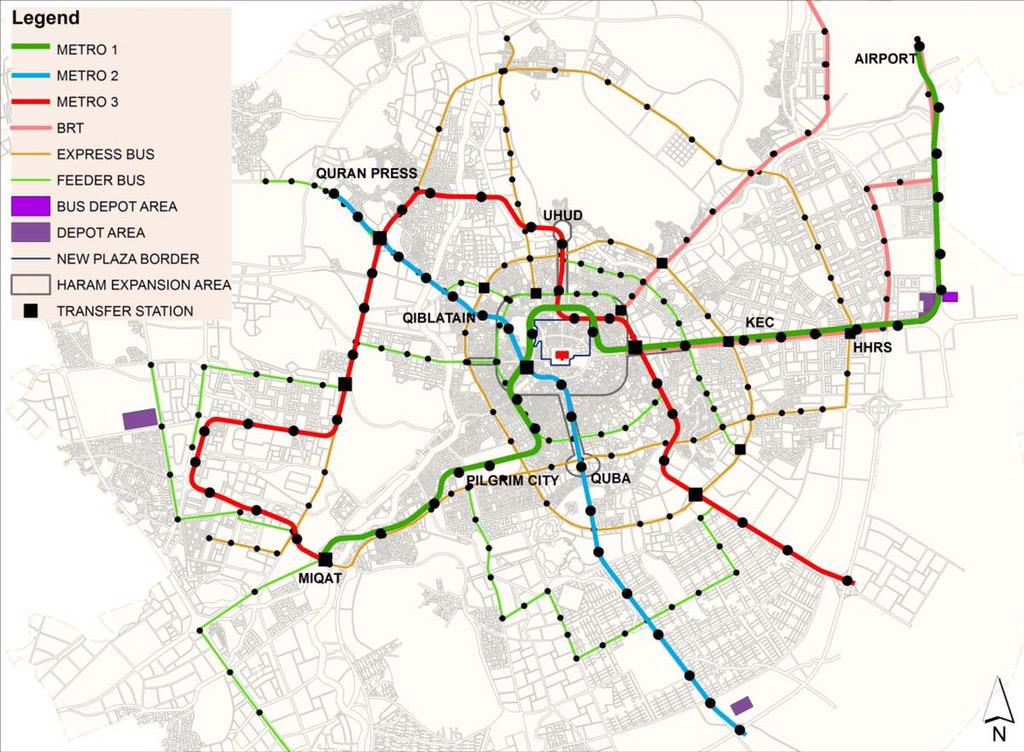
Image of the Madinah Metro system
Apr 1, 2015
US-based consultancy Louis Berger has picked up a $100m contract from Al Madinah Al Munawwarah Development Authority (MMDA) to programme manage the city's new Public Transportation Programme (MPTP).
The plan for Saudi Arabia's second-holiest city, which includes a new metro and bus network, as well as new roads and substantial upgrades to the existing road network. A new park and ride network will also be developed under a 25-year plan to meet the city's transport need in the run-up to 2040.
The consultancy deal will run for five years.
Louis Berger will integrate with MMDA's internal team and guide and oversee relationships with other consultants, advisors and contractors.
With a massive expansion of The Prophet's Mosque in Madinah still taking place, the MPTP is aimed at providing a public transport network to serve the city's residents and religious tourists alike. It is estimated that by 2040, Madinah will be handling 8.6m Umrah visitors and 3.6m Hajj pilgrims.
“We could not be prouder to be associated with MMDA in the implementation of the MPTP for the holy city of Madinah,” said D. James Stamatis, president of Louis Berger’s international operations. “The implementation of an advanced public transportation system will endow Madinah with one of the most advanced transportation systems in the world.”
http://www.constructionweekonline.co...ransport-deal/ by Hadi Khatib on Mar 23, 2015
“The Madinah public transport program will require the best of the best minds in the construction, consulting and engineering business to mull over the challenges that the project presents,” CH2M HILL International Rail Director said during a recent Middle East Rail summit held in Dubai.
Mark Loader together with engineer Mamdouh Tarabishi, Public Transportation Program CEO of Al Madinah Al Munawarah Development Authority threw down the gauntlet asking interested parties to participate in building a platform for “technical innovation” to overcome a unique set of problems.
The Madinah public transport program is certainly one of the largest public transport programs in the Kingdom. Al Madina is the second holy city in Saudi Arabia after Mecca and is visited by 12 million pilgrims from around the world every year. Situated 320 km north of Mecca and 900 km west of Riyadh, the city’s resident population of 1.3 million is increasing and expected to more than double by 2040 up to 3 million.
So how do you develop a transport plan in a city that not only doesn’t have one, save for taxis and hardly a public option, but it’s also where residents make up but a small part of the equation, as they are outnumbered 10 to 1 by visitors? “Logistics is going to be key because the population is fairly unique, dominated by 12 million visitors and not by people commuting to work. Normally you design for peak hours, but here we will need the greatest minds to come up with solutions that creates balance between resident and visitor needs,” said Loader.
Madinah is a congested city with pedestrian and cars fighting for right of way. On November 5, 2014, a Cabinet plan was approved to develop and implement an 8-year program for a state of the art public transportation services based on three metro lines with 71 stations and two BRT lines covering 34 km and 36 stations, with four express and seven feeder bus routes and all necessary service facilities and infrastructure required.
The unified transport control system and the Intelligent Transportation System will likely automate the metro making it driverless
“The development is based on financial and environmental sustainability principles. It will seek revenue streams from devised transportation corridors to minimise government subsidies towards servicing the project and will use modern energy conservation techniques,” announced Tarabishi. All metro lines eventually pass through the central Madinah district. Most lines will be at ground level while others will be underground or elevated. Each train will have 3-4 carriages, but up to 12 carriages for those passing through the central Al Haram area. “The modernisation of the system will entail infrastructural road upgrades throughout the city,” Tarabishi added.
Infrastructure related works present their own set of challenges.
What’s below the ground is anyone’s guess. “Data is missing in certain areas and at certain depth we may encounter archaeological sites due to the historic nature of the holy city,” said Tarabishi. “As such, we will likely run into delays at different periods of the project.” While delays are likely part of any project this size, what’s problematic is the fact that Madinah is a volcanic site. “Madinah is unique. As soon as you come out of the airport, you see the edge of the lava flow. It’s a volcanic area and the geology of the area is dominated by lava. As an engineer I’m looking for ways to build a tunnel through lava. It’s hard substance and intermixed with ash. It is a real opportunity for technical innovation. We need the best tunneling engineers in the world to contrive solutions,” said Loader.
When implementing an integrated public transport service, we always keep in mind the commuters, said Tarabishi. “Some Muslims spend their lives’ savings to visit the sacred Mecca and Madina. The least we can do for them is to service their needs. Our services need to be seamless between different modes of travel.” Madinah gets visitors from many nations which means integrating several languages in the communication. The bus program will cover the whole city and connect to the Metro. Technology for real time information will be offered to commuters. BRT lines will have ‘smart’ buses, modern information displays, CCTV, and passenger safety information.
Loader said that the Airport link (Line1) and main area of hotels is a key element of this project. “We need to interface with other projects. The new airport is very close to opening. Integration will be key,” added loader. Prince Muhammad bin Abdul-Aziz International Airport is due to open and would accommodate nearly eight million travelers annually once it operates. “With other metro and transport projects taking place in the region, there are lessons to be learned and Madinah’s master plan will benefit from them.”
The contract has been awarded to design the three metro lines. French engineering groups Egis and Systra have been jointly appointed to carry out design studies for the new Madinah Metro system. The pair have been appointed by the Madinah Metro Development Authority to design a system that will have three lines (green, red and blue) and will stretch over 95km.
Some 25km of this will be underground and 48km will run on overhead lines.
“By mid 2015, we expect the prequalification documents to be issued for consortiums and suppliers. Tendering is hopefully in Q1 of 2016 and we expect that by 2017 the contract to be awarded to a consortium,” said Tarabishi.
http://www.constructionweekonline.co...n-the-business 


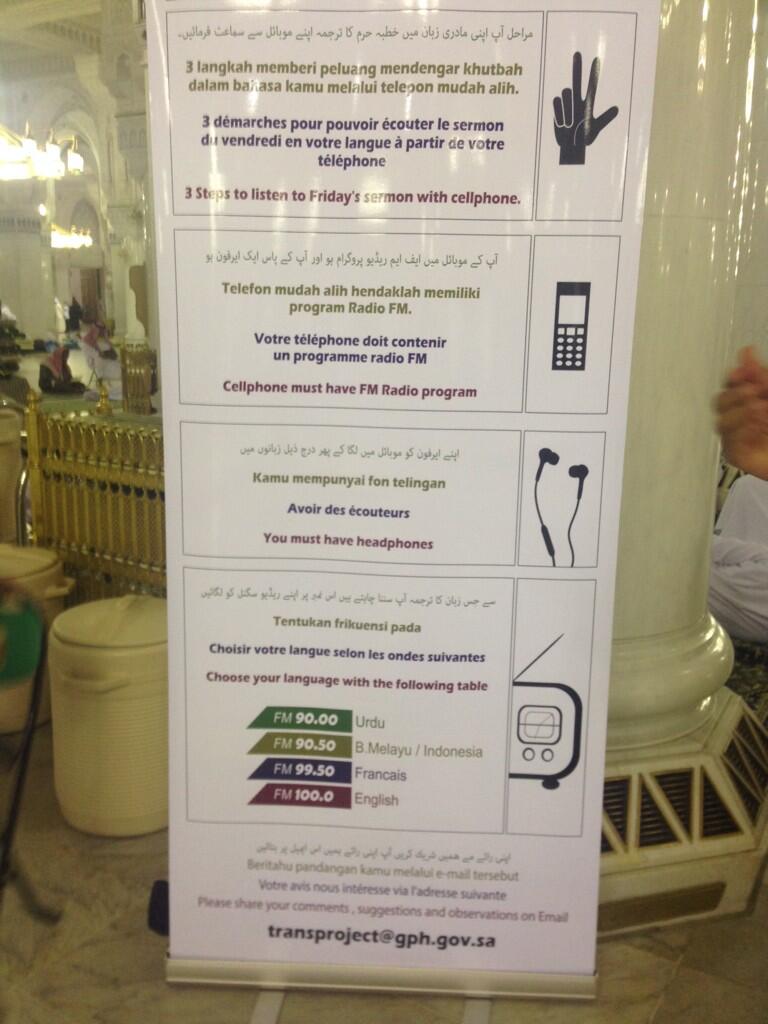


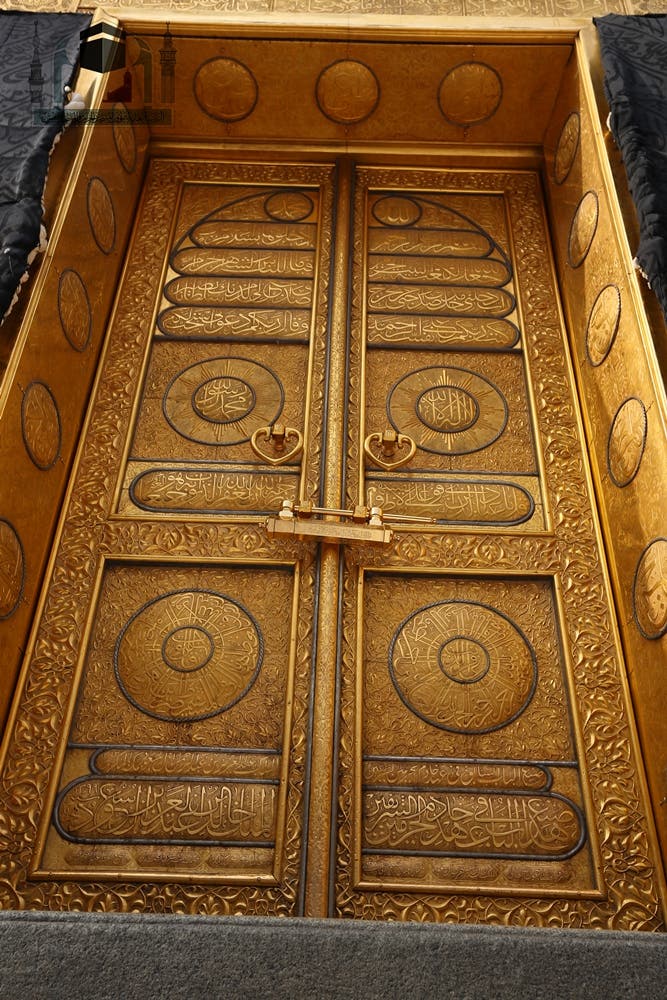
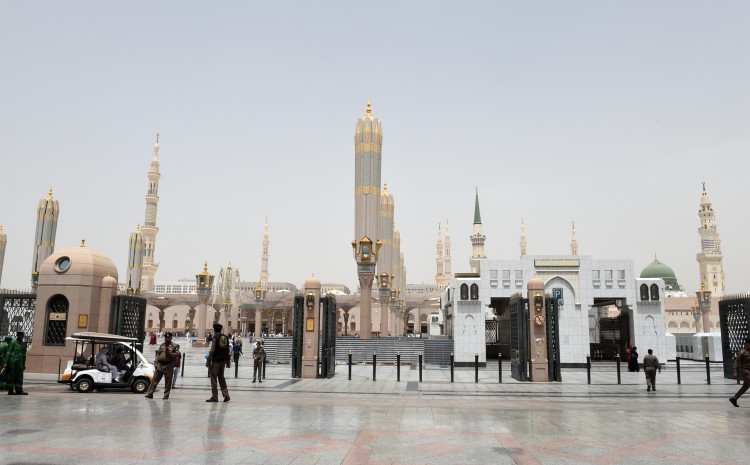
 new doors of Haram