Forum Menu - Click/Swipe to open
 

Makkah News and Updates

Jump to page:

You have contributed 0.4% of this topic

Thread Tools
Appreciate
Topic Appreciation
omer, Taqwah, Taalibah, rizmalek, super-glue, Seifeddine-M, bint Mohammed, member2, sweetmuslimahk1, abu mohammed, Yasin, Heather2727, Naqshband66, ummi taalib, mo_isaq, Acacia, Desi tadka, umar123, habeeba, Jinn, Arslan., ibn Ismail, najimuddin, ALIF, al-adnan, abuzayd2k, Moonlight, Mohammed8, ssaad, tanveerzakee, sharjan8643, opc121177
224 guests appreciate this topic.
Rank Image
Roukaya19's avatar
Montreal
4,092
Sister
4,288
Roukaya19's avatar
#4681 [Permalink] Posted on 6th October 2014 17:00
 
''Golf Carts'' to transport pilgrims
elderly and disabled

Jarwal district to King Abdullah expansion

عربات "القولف" تنقل الحجاج المسنين وذوي الاحتياجات


غزوان الحسن– سبق- بعثة المشاعر المقدسة- تصوير عبد الملك سرور: تعد خدمة عربات "القولف" من الخدمات الحديثة التي وضعتها الرئاسة العامة لشؤون مسجد الحرام والمسجد النبوي، في خدمة الحجاج والزوار من كبار السن وذوي الاحتياجات الخاصة.

وقال مدير العلاقات العامة في المسجد الحرام عبد الحفيظ الثبيتي لـ "سبق": تخدم هذه العربات الحجاج وتعمل على نقلهم من أطراف المنطقة المركزية على مدار الساعة في منطقتين رئيسيتين، هما الساحات الشرقية والساحات الغربية بالإضافة إلى النفق الرابط بيت توسعة الملك عبدالله ومنطقة جرول.

وأضاف الثبيتي: يقود تلك العربات نخبة من الموظفين الذين يحسنون التعامل مع الشريحة المستهدفة لتقديم أرقى الخدمات لضيوف الرحمن وإعانتهم على أداء مناسكهم بيسر وسهولة، وذلك بتوجيه من الرئيس العام للمسجد الحرام والمسجد النبوي.

http://sabq.org/48mgde

Google translation: Ghazwan Al_husn- Sbak- Mission feelings Almekdsh- portray King Abdul pleasure: longer service vehicles "golf" of modern services developed by the General Presidency for the Affairs of the Holy Mosque and the Prophet's Mosque, in the service of pilgrims and visitors of the elderly and people with special needs.

The director of public relations at the Grand Mosque Abdul Hafeez Althbyta for "already": serve these vehicles pilgrims and is working to transfer from the parties to the central area around the clock in two main areas, namely squares East and squares Bank, in addition to the tunnel link house expansion of King Abdullah and the Jarwal.

He Althbyta: driving those vehicles from elite staff who deal well with the target audience to provide the best services to the guests of God and help them to perform their rituals easily and smoothly, under the direction of the President-General of the Grand Mosque and the Prophet's Mosque.


report post quote code quick quote reply
+1 -0
back to top
Rank Image
Roukaya19's avatar
Montreal
4,092
Sister
4,288
Roukaya19's avatar
#4682 [Permalink] Posted on 6th October 2014 17:03


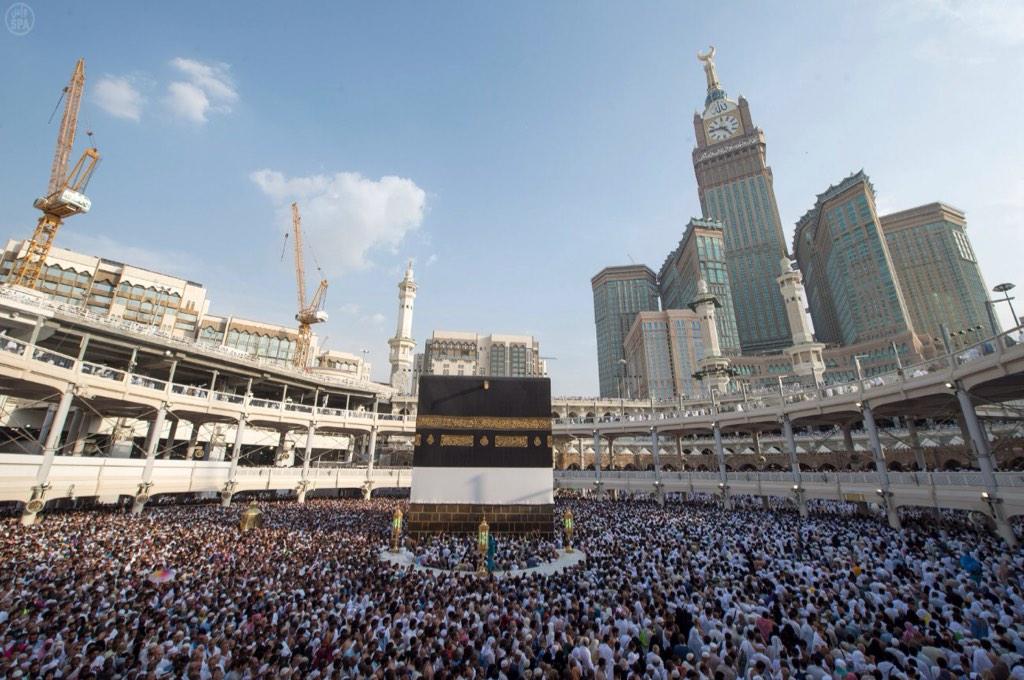
Holy Mosque - Masjid al Haram

2 Oct 2014 - 39 pics


King Abdullah expansion


King Fahd expansion


King fahd gate


King Abdul Aziz gate

report post quote code quick quote reply
+1 -0Like x 1
back to top
Rank Image
Roukaya19's avatar
Montreal
4,092
Sister
4,288
Roukaya19's avatar
#4683 [Permalink] Posted on 6th October 2014 17:08
 
Hajj Day 4 - 11th Dhu-AlHijjah
__________________________________


Rains excite Hajis as Jamrat ritual progresses

Monday 6 October 2014

Pilgrims symbolically stoned the devil on Day 4 of the Haj on Sunday. Chanting “God is Greatest,” pilgrims threw seven small pebbles at each of three gray stone walls in the last ritual of Haj. The ritual, will be repeated on Monday as the Haj winds down.

Throughout the day, the weather remained cool with overcast skies. To add to the happiness of the pilgrims, a steady stream of cool winds was blowing across the valley sending excitement among the more than two million pilgrims who are camping in Mina.

As soon as we got off at the Jamrat train station, we were welcomed by a cool draft of air," said Ahmad Sayeed, a Sudanese pilgrim. "And when we started walking toward the Jamrat complex to carry out the stoning ritual, it looked as if a divine shade had been created to protect the pilgrims," he said. For the pilgrims, it was the shade of Allah and a sign of His mercy.

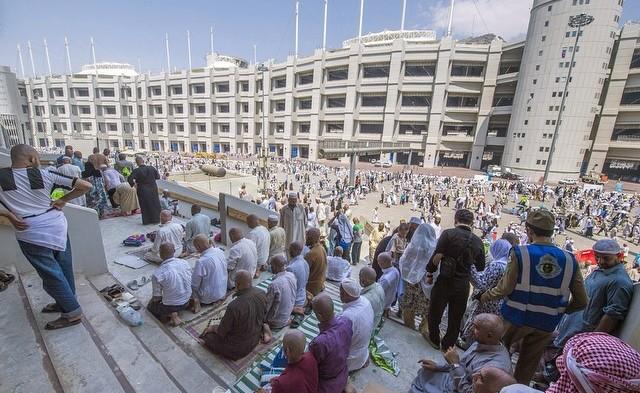
The stoning ritual was done with absolute ease. There were no bottlenecks. Even elderly pilgrims could stone the devil with ease and comfort. Huge fans at the Jamrat complex blew humidified air to keep the area cool. At around 4 p.m., the skies opened up and Mina experienced light showers. Pilgrims expressed their joy by coming out of their tents, and exclaiming, SubhaAllah, in unison.

"This is Allah's sign that our Haj has been accepted," said Abdul Bari, from Dhaka, Bangladesh. "This means our sins are being washed away."

With just one day to go for the completion of this year’s Haj, many pilgrims were seen engaged in supplication and prayers.

Kamal Ahmad from London said the whole exercise required mental preparation.

Overcoming the stresses of Haj is a metaphor for what must be done in life, he said. “The aim is to always seek the peace of Allah,” he said. “It teaches us that all of life is a spiritual quest.”

The pilgrims will stream out of Mina today after performing what for many will be a once-in-lifetime journey of faith.

http://www.arabnews.com/featured/news/640361


Stoning ritual goes smoothly


Monday, 06 October 2014

MINA/MAKKAH — On the second day of the stoning ritual on Sunday, over two million pilgrims pelted pebbles at each of the three Jamarat (pillars symbolizing Satan) in Mina. The afternoon ritual was smooth and peaceful.

Chanting “Allah-o-Akbar” (God is the Greatest), pilgrims hurled seven pebbles each first at Jamarat Al-Sughra, then at Jamarat Al-Wusta, and finally at Jamarat Al-Aqba. After performing stoning at each of the first two pillars, they turned towrad Qiblah, raised their hands and beseeched Almighty Allah’s mercy and forgiveness.

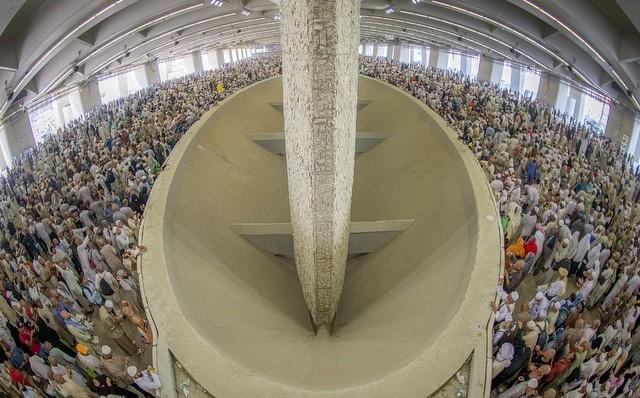
Stoning at Jamarat is the main ritual pilgrims have to perform during the last three days of Haj, known also as Ayyam Al-Tashreeq. It is to emulate the stoning of Satan at three spots by Prophet Ibrahim (peace be upon him) where the devil is said to have appeared trying to dissuade him from obeying Allah’s order to sacrifice his son, Ismail (pbuh). In essence, it is a renunciation of evil in all its forms and a solemn promise never to fall prey to the machinations and intrigues of Satan, the cursed.

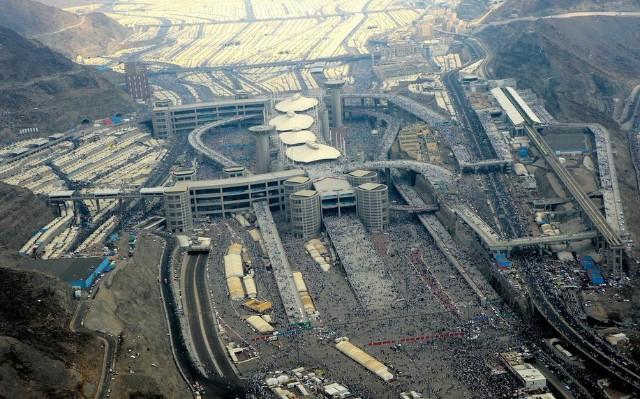
Huge presence of security forces and Civil Defense personnel was seen at various points at the mammoth state-of-the-art Jamarat complex, which has the capacity to hold 300,000 pilgrims per hour, as well as on the passages leading to Jamarat.

Under the direct supervision of Minister of Interior and Chairman of the Supreme Haj Committee Prince Muhammad Bin Naif, and Emir of Makkah and Chairman of the Central Haj Committee Prince Mishal Bin Abdullah, the forces had performed a huge task of crowd management smoothly.

A large number of security men were engaged in preventing pilgrims from squatting on the pathways leading to Jamarat and thus facilitating smooth flow of pilgrims between Jamarat and their places of accommodation. More than 1.3 million pilgrims have so far benefited from the Mashair train, which is transporting 360,000 pilgrims a day. The Ministry of Commerce and Industry officials were seen ensuring supply of food and other essential goods at various outlets and stores at reasonable prices in Mina.

On Sunday, pilgrims performed four main rituals of Haj – stoning at Jamarat Al-Aqba, sacrifice of animals, shaving head or cutting their hair, and performing Tawaf Al-Ifadah and Sai. With this, pilgrims had an exit from their state of ihram and they started wearing normal dress. Most of the pilgrims will leave Mina after performing the stoning ritual for the third day on Monday while the remaining pilgrims will stay back in the Tent City to complete the stoning ritual on Tuesday, the third day of Tashreeq, following the example of Prophet Muhammad (peace be upon him).

Although the Haj, one of the five pillars of Islam, comes to a close officially on Tuesday, pilgrims are allowed to leave a day earlier. Those pilgrims who leave Makkah Monday will perform their Tawaf Al-Wida (farewell circumambulation around the Holy Kaaba), which is the last ritual of Haj. Some pilgrims will leave Saudi Arabia Monday itself at the end of this year’s totally incident-free Haj.

A total of 2,085,238 pilgrims, including 1,389,053 foreigners, performed this year’s Haj which was by and large hassle-free and very much comfortable.

Addressing a press conference in Mina on Saturday, Maj. Gen. Mansour Al-Turki, spokesman of the Ministry of Interior, attributed the resounding success of Haj to the excellent outcome of the government’s Haj operation plan and cooperation of pilgrims as well as full support of various Haj missions.

http://www.saudigazette.com.sa/index...20141006220383


Rain in Mina
 
Monday, 06 October 2014

Pilgrims, in front of the Indian Haj Mission, take cover under umbrellas following rain in the Tent City of Mina on Sunday. The rain provided relief for pilgrims, setting out to perform their stoning ritual under the hot sun, by bringing the temperatures down.

Most of the districts of Makkah City received moderate to heavy rain. Makkah Emir Prince Mishal Bin Abdullah closely followed the situation and instructed all concerned agencies to ensure the safety and security of pilgrims. The authorities reported no casualties.

http://www.saudigazette.com.sa/index...20141006220391


Radars and satellites observe weather at holy sites

Monday 6 October 2014

The Presidency of Meteorology and Environment (PME) is closely monitoring weather conditions through the Arafat and Mina radars for the safety of the pilgrims in the holy sites, better known as Mashair.

Dr. Mohammed Al-Jasser, general president of the PME said: “The operation room for environment and meteorology is working to serve the sectors working during the Haj and providing them with data about the weather, temperature and climate.”

The room operates round-the-clock and is equipped with the required human resources and automated machines to ensure the safety and comfort of Haj pilgrims.

Al-Jasser explained that there are five automatic monitoring stations distributed in Mina, Muzdalifah, Arafat and some of the highways leading to the Mashaer specifically the Makkah-Jeddah Expressway, Makkah road and Madinah road. All of these stations work to provide the main center with meteorological and environmental information.

He pointed out that all the observation centers are associated with the main center located in Jeddah providing the latest updates in weather conditions and issuing weather bulletins.

“There is no indication of bad weather threatening the pilgrimage season. The sky will remain clear except for some cloud on the last three days. It may also be accompanied by light drizzle at high altitudes in Taif and parts of the holy sites,” assistant chief of the meteorology and national center for environmental observation Saad Muhallafi said in a statement.

He added that temperatures in the holy sites during the Haj were expected to reach highs of 38 degrees Celsius and lows of 21 degrees Celsius. The source added that more automated observation points in Jeddah, Madinah, and along the entire stretch of the Red Sea coast from north to south were being planned. The source added that the PME has launched a new portal to supply the latest weather reports at Arafat, Mina, Muzdalifah, Makkah, Madinah and Jeddah during the pilgrimage.

Al-Jasser said that the presidency inaugurated its own electronic portal of Meteorology and Environment reports during the Haj. He added that the portal will be equipped with various updated meteorological data, in addition to other environmental and meteorological information.

The portal sends information of weather and environment directly to the command and control center in Mina, in addition to relevant authorities.
The data includes weather forecasts at Muzdalifah, Mina, Makkah, Madinah and Jeddah as well as proactive weather Information for the upcoming ten days.

The presidency has operated the automatic monitoring stations in Makkah, Madinah and Jeddah, and also the Red Sea coastal area. These stations receive satellite pictures and weather information from radars around the Kingdom operated by experts and specialists from the presidency. These experts use advanced tools to communicate the information to beneficiaries.

In the environmental sector, the PME operates mobile laboratories in the holy sites, to measure air quality and environmental pollutants in the Mashair, and the leading tunnels. It also works on drafting environmental studies and surveys, to protect the Haj environment and use this information in future analysis.

The supervisor of the Haj works stressed that satellites pick up images of the Mashear weather every 15 minutes. The data and the weather radars in Mina and Arafat that scan the skies of Makkah and the Mashaer areas, will be then analyzed.

http://www.arabnews.com/saudi-arabia/news/640306


Pilgrims safe from infectious diseases
 
Monday 6 October 2014

Health authorities detected 134 MERS cases during this Haj season but they all tested negative during lab investigations.

“By the grace of God, all suspected MERS cases were negative,” said Dr. Anis Sindi, deputy chief of the command and control center in a statement on Sunday.

He said the health condition of pilgrims is satisfactory, adding that no confirmed MERS or Ebola cases have been found among them.

He said the Kingdom’s health facilities in Makkah and other holy sites had provided 903 dialysis services in addition to 11 open-heart surgeries and 277 catheterization and cardiovascular interventions.

“We have dealt with suspected MERS cases considering them as confirmed cases in order to prevent the spread of this disease in the Kingdom,” Sindi said, adding that the ministry has set up a mobile laboratory inside the holy sites to test samples from suspected cases.

Saudi nurses taking part in the Haj service said they were not afraid of being exposed to MERS and Ebola cases during the Haj season. “I am serving pilgrims during the Haj season for the third year in a row,” said Hussein Buhamoud from the Health Department in Al-Ahsa.”

Jowhara Hamad, a female nurse, said she joined the Haj service this year for the first time seeking the blessings of God. “I have taken all precautions against infectious diseases and the rest I leave to God,” she added.

http://www.arabnews.com/news/640356


More electric wheelchairs for the disabled at Jamrat
 
Sunday 5 October 2014

The Ministry of Municipal and Rural Affairs has provided 234 electric wheelchairs for use at the Jamrat (stoning area) and its vicinity to facilitate the Haj rituals through safe and easy mobility.

Wajdi bin Hassan Toulah, director of maintenance and operations in the holy sites, said these electric wheelchairs will serve more than 70,000 disabled pilgrims in addition to their companions which takes the number to 200,000.

The number of chairs were increased following the allocation of three more paths in addition to the existing five leading to the bottom of Mount Arafat. Toulah said that two more paths had been added to the pedestrian area in Aziziyah while an additional 50 carriers had been provided to further facilitate the disabled pilgrims.

“The electric wheelchairs will soon become operational on the three new paths including the first path which ascends from the Jamrat yards from the southern side to the second floor of the facility with 665 carriages. Path number two which ascends on the northern side of the Jamrat facility to the second floor has been allocated 28 carriages while path number three in Mina has a capacity of 105 carriages in addition to paths seven and eight with 29 carriages.

All these paths converge on the King Abdulaziz road and can transport 900 pilgrims.

Wajdi said the operational plan in Jamarat for serving the disabled, the elderly and the sick called for the allocation of a large number of drivers, supervisors and maintenance teams.

There are around 232 drivers who work on 12-hour shifts in addition to 134 field supervisors and maintenance technicians who work around the clock to assist users and deal with technical issues.

http://www.arabnews.com/saudi-arabia/news/639961
report post quote code quick quote reply
+1 -0
back to top
Rank Image
Roukaya19's avatar
Montreal
4,092
Sister
4,288
Roukaya19's avatar
#4684 [Permalink] Posted on 6th October 2014 17:13


Hajj Day 4 - 11th Dhu-AlHijjah

5 October 2014


Rain in Mina


report post quote code quick quote reply
+1 -0Like x 1
back to top
Rank Image
Roukaya19's avatar
Montreal
4,092
Sister
4,288
Roukaya19's avatar
#4685 [Permalink] Posted on 6th October 2014 17:15


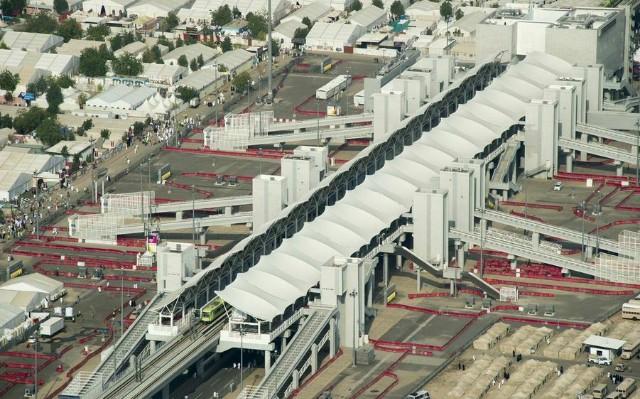
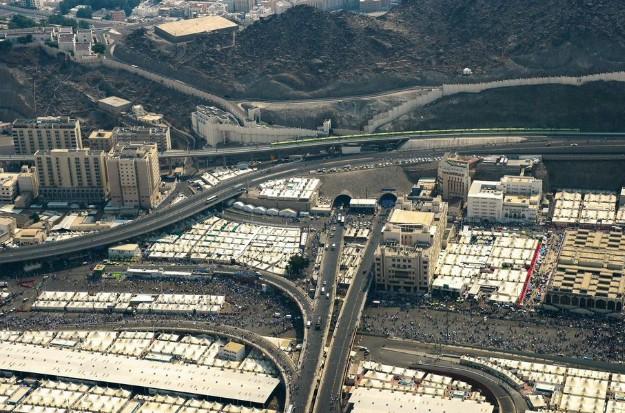
Aerial view of Mina & Jamarat bridge


report post quote code quick quote reply
+1 -0Like x 1
back to top
Rank Image
Roukaya19's avatar
Montreal
4,092
Sister
4,288
Roukaya19's avatar
#4686 [Permalink] Posted on 6th October 2014 18:00
 
Metro transports nearly 1m pilgrims


COMFORT: Pilgrims have to buy tickets, worn as bar-coded bracelets
that are scanned electronically as they enter the platforms.
Sunday 5 October 2014

Makkah’s state-of-the-art metro will have transported nearly one million pilgrims by the end of this Haj season, said a top official.

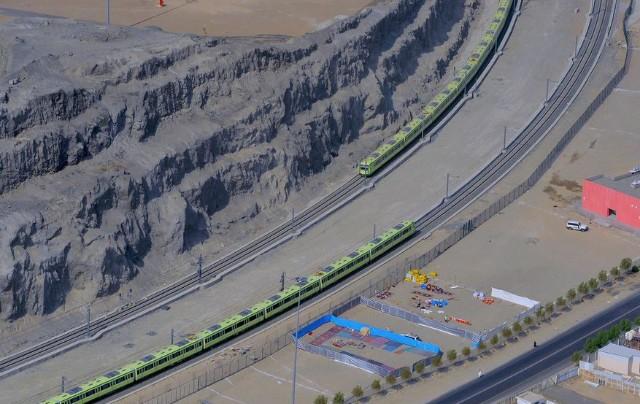
Just a couple of years ago, moving between Mina, Muzdalifa and Arafat took hours on end, but now, a trip between any of the three holy sites does not take more than 15 minutes thanks to the introduction of the Al-Mashaaer Al-Mugaddassah Metro Line at the end of 2011.

More than 360,000 pilgrims have been issued electronic tickets to use the line between Mina and Arafat, passing through Muzdalifah, according to Saud Al-Zikri, head of projects at the Ministry of Municipal and Rural Affairs. “The tickets can be used multiple times to travel back and forth between the holy sites,” Al-Zikri said.

The SR6.7 billion service, launched in 2009, can accommodate 72,000 pilgrims between its different platforms per hour. A total of 20 trains are operational this season, with each train comprising 12 carriages and accommodating 4,000 passengers, according to sources. Pilgrims must buy tickets, worn as bar-coded bracelets that are read electronically as they enter the platforms.

The government has, for years, carried out development and construction projects to expand and improve services for Hajis.

Since it has been put into service, the train project eradicated the need for more than 12,000 buses, greatly reducing traffic congestion.

Yet one more challenge remains, which is facilitating movement back to Mina after pilgrims have completed their stoning rituals at the Jamrat area.
To address the challenge, the government announced in 2012 plans to complete building tracks to be linked with the Makkah Metro project.

The government announced plans to build this metro, officially known as the Makkah Mass Rail Transit, in 2012. According to the plans, work is expected to commence in 2016. The announcement said that the entire expansion project would take up to 10 years.

http://www.arabnews.com/saudi-arabia/news/639976


Aerial view of Mashair Metro


report post quote code quick quote reply
+1 -0
back to top
#4687 [Permalink] Posted on 7th October 2014 11:49
Roukaya19 wrote:
View original post


jazakAllah for the reply, is this confirmed? i intend to go around the 7th dec but i been told saudis have a habit of changing dates last minute. I am going to book flights and hotel seperately i dont want to be in a situation where i buy tickets and find out the umrah season as not started. ps anywhere know what site or where to get cheapest direct flight? i seen ba for 450 is that good price?

jazakallah
report post quote code quick quote reply
No post ratings
back to top
Rank Image
Roukaya19's avatar
Montreal
4,092
Sister
4,288
Roukaya19's avatar
#4688 [Permalink] Posted on 8th October 2014 17:41

Anonymous wrote:
View original post
In this way , call Saudi embassy. Inshallah they will inform you better than me.

May Allah ease your way to Makkah

report post quote code quick quote reply
+0 -0Ameen x 1
back to top
Rank Image
Roukaya19's avatar
Montreal
4,092
Sister
4,288
Roukaya19's avatar
#4689 [Permalink] Posted on 8th October 2014 17:43
 
8 brothers vie to serve mother perform Haj
 
Monday 6 October 2014

This year’s Haj witnessed eight sons of a woman competing with one another in assisting their mother to perform her Haj rituals comfortably. They all wanted to gain special reward from Allah for doing goodness to their beloved mother.

Many people accompany their elderly mothers and fathers for Haj and Umrah to show their love and commitment toward them, inspired by the teachings of the Qur’an and Sunnah that urge the faithful to support their elderly parents.

Seventy-year-old Aysha came for Haj this year with her eight sons, and each one them wanted to provide maximum care to her. In order avoid conflict, the youngest of them, Mustafa Al-Faisal, proposed that everyday two of them carry her in a wheelchair to perform the rituals.

“It was a good suggestion,” said the eldest brother Moussa. “During the past 20 years we have been saving money to perform Haj with our mother,” he said, hoping that Allah would accept their Haj and prayers.

http://www.arabnews.com/saudi-arabia/news/640326


Paying money for stoning the devil
by proxy illegal: Scholar


6 October 2014

HOLY SITES — Several brokers are exploiting the ignorance of some pilgrims on the correct methods of performing the Haj pilgrimage to make money. These brokers, mostly expatriates working individually or for some Haj campaigns, convince some domestic pilgrims wanting to complete their Haj rites quickly, that they could do the rite of throwing pebbles at the Satan for a fee.

They also have them agree to do the Tawaf Al-Ifadha (circumambulation of the Holy Kaaba) on their behalf against a certain amount of money.

Hassan, a 35-year-old Yemeni expatriate, said he is hunting for women and old men to convince them that he could throw the pebbles at the Satan on their behalf.

“During the first three days of the Haj, I can easily make between SR10,000 and SR14,000 for this work,” he said.

Hassan said he starts his work by collecting a large amount of pebbles from Muzdalifah to sell to the pilgrims.

“I then offer them my proxy service to do the throwing of stones at the Satan for them. Some of them readily agree and pay me my fees in advance,” Hassan said.

He said in the past he used to do this work free of charge but with the rising cost of living he started charging money.

Yahya, another Yemeni expatriate, said he has made it a habit to come to the Holy Sites every year during the Haj to offer his proxy services to interested pilgrims.

“I especially target domestic and pilgrims from the GCC countries. They are more eager to pay and are always in a hurry to complete their Haj rites quickly,” he said.

He said every Haj season he makes more than SR30,000 for rendering his services.

“Some domestic and GCC pilgrims are willing to pay between SR800 and SR1,000 for throwing the pebbles at the Satan on their behalf. They are rushing to go back to their homes to spend the rest of the Haj holidays with their families,” he said.

Atiq, Jalal and Siraj, three Yemeni expatriates, said they offer to do Tawaf Al-Ifadha and the Sai (walking back and forth seven times between the hillocks of Safa and Marwah).

They said the money they make out from this job is enough to sustain them for a whole year.

A renown Saudi scholar objected to this work and said it is not correct.

Saleh Bin Saeed Al-Lihaidan, a scholar and a professor of criminal justice, said the pilgrim can deputize others to do the throwing of stones at the Satan, the Tawaf Al-Ifadha and the Sai on five main conditions only.

He said pilgrims can deputize others to do these rites for them if they are in a great hurry to leave Mina, they are unconscious because of sickness such as the diabetic coma, hospitalized due to an accident, too old and weak to do these rites by themselves, Pilgrims can deputize others to do these rites for them if they are in a great hurry to leave Mina, they are unconscious because of sickness such as diabetic coma, hospitalized due to an accident, too old and weak to do these rites by themselves, and pregnant and breast-feeding women.

He said pilgrims who are ignorant of the correct Haj rites usually fall prey to these brokers.

http://www.saudigazette.com.sa/index...20141006220384


51 fake Haj groups to be probed by BIP
6 October 2014

HOLY SITES — Fifty-one bogus Haj group owners will be referred to the Bureau of Investigation and Prosecution in different parts of the Kingdom on fraud charges. The fraudsters were arrested in different locations while they were promoting false Haj packages to con people out of their money. The bureau will refer them to pertinent courts that hand down proper verdicts and provide justice to the victims.

Haj security forces commander Maj. Gen. Abdulaziz Al-Sauli said secret police officers helped in nabbing the organizers of fake Haj packages. Courts will hand down deterrent verdicts to fraudsters, who will also be made to reimburse the victims.

“Part of the blame can be placed on the pilgrims themselves who approached such fake Haj organizers. They should have accessed the Ministry of Haj website first and check whether these organizers are registered with the ministry or not,” he added. For his part, Ministry of Haj spokesman Hatim Qadi said: “The ministry had not caught any fake Haj organizers in the Holy Sites, a fact that proves the strenuous and great efforts security officers exerted to prevent the organizers of fake campaigns from reaching the Holy Sites.”

Meanwhile, Col. Sami Al-Shwairekh, commander of media and information, Public Security Agency, said latest statistics showed that checkpoint officers prevented 351,681 persons from entering Makkah because they did not have Haj permits. They also impounded 95,985 vehicles and arrested 1,517 drivers who violated the Haj regulations.

http://www.saudigazette.com.sa/index...20141006220392


40 jailed and fined for violating Haj rules
7 October 2014

The Saudi government has fined 40 illegal operators and sentenced them to jail terms of 6 months to two years for violating Haj regulations.

The Taif Pilgrims Organizing Department said that most of the violators are Saudi citizens. Khalid Mansour, a citizen, was fined SR1.3 million for trying to transport pilgrims without permits into Makkah.

Others received penalties of between SR75,000 and SR100,000 for transporting pilgrims without permits. Those transporting illegal residents received jail sentences.

The Supreme Haj Committee recently announced that the government would punish those violating Haj regulations, whether they are expatriates or Saudis. Taif Police Superintendent Brig. Mohammad Al-Walidi said Al-Buhaita checkpoint has been equipped with state-of-the-art technology to register the names of violators.

In earlier reports, the government announced that security personnel raided 40 fake Haj service firms. Around 49,600 people without Haj permits were stopped from entering the holy sites up until Sep. 30, according to a statement issued by the Interior Ministry.

Security officers also stopped 25,216 vehicles with no permits from entering the holy sites, and impounded 85 vehicles for various traffic violations, the report said.

The Passport Department said it has issued 67 verdicts against 52 citizens and 15 expatriate workers for violating Haj regulations. The total fines imposed on them exceeded SR3 million.

Grand Mufti Sheikh Abdul Aziz Al-Asheikh has said that performing Haj without a permit is unlawful in Saudi Arabia and therefore not allowed by Islam. “Whoever does that to perform an optional Haj has fallen into something haram.”

He said the government passed the law to prevent overcrowding at the holy sites and ensure the safety of pilgrims. “This Haj permit or pass is part of a rule that has been implemented to keep pilgrims safe, so Muslims must fear Allah, and make absolutely sure they cooperate with their leaders.”

http://www.arabnews.com/saudi-arabia/news/640661


‘Strict fines and penalties
for breaking Haj regulations’
Monday, 06 October 2014

MINA — Minister of Haj Dr. Bandar Al-Hajar said the ministry would apply strict fines and penalties on any Tawafa establishment, local Haj company or officials within the ministry and individual or company that violate Haj regulations, stressing that any mistakes that harm the guests of Allah will be dealt with strictly.

During an interview at the ministry’s headquarters in Mina, Dr. Al-Hajar said the ministry, following an agreement with local Haj companies, will keep 50 percent of pilgrims in Mina on Monday and won’t let them go to the Grand Mosque in order to control the rush. A unit specifically set up for this purpose, which is run by 1,500 employees, will make sure half of the pilgrims stay in Mina all Monday long, Dr. Hajar said.

The next big challenge for the ministry is the number of local pilgrims who try to sneak into the Holy Sites without Haj permits and squat on roads. Those numbers can disrupt the ministry’s plans in terms of organization. “As a ministry, we’re worried about the fluctuating number of pilgrims without Haj permits. One year the number is up, another it is down,” Dr. Hajar said. Squatting on streets poses great concern to the ministry, which is conducting a comprehensive study of the issue to arrive at a solution.

The ministry will set up seven smart electronic gates in the entry points of Makkah to prevent pilgrims violating Haj regulations and reaching the Holy Sites. Once the study is ready, it will be sent to higher authorities for final approval.

“When the development projects for Haj are over in the next few years, the number of pilgrims who can come to Makkah will jump to seven million every year,” he said. He noted the ministry is conducting studies to expand Mina, which currently can accommodate 1,400,000 pilgrims only, and turn into a place that can accommodate between 4-5 million pilgrims in the future. All studies focus on building buildings on the plains of Mina after, of course, getting official approval from the Senior Board of Scholars, for the project.

http://www.saudigazette.com.sa/index...20141006220376
report post quote code quick quote reply
+1 -0
back to top
Rank Image
Roukaya19's avatar
Montreal
4,092
Sister
4,288
Roukaya19's avatar
#4690 [Permalink] Posted on 8th October 2014 17:45
 
Snap! Haj selfies gain popularity,
spark controversy

 
Monday, 06 October 2014

MINA — Raising his arm, Yousef Ali hugs his elderly father near the Grand Mosque in Makkah as they grin for a selfie — a craze that has hit this year’s Haj. But not everyone is happy about young pilgrims from around the world constantly snapping “selfie”, photographs taken of one’s self, as they carry out Haj rights.

From Tawaf — circumambulating the Holy Kaaba — to prayers atop Mount Mercy in Arafat, and stoning of the “devil” in Mina, the key stages of Haj have all been recorded on cameras and smartphones for posterity, and for instant sharing through social media.

Haj is the one of the world’s largest religious gatherings. It has attracted over two million believers this year.

“As this is my first pilgrimage, it is important for me to document all the events taking place around me,” Ali, 24, told AFP, snapping a picture of himself with a green sign reading “Big Jamarah”, which refers to a wall where pilgrims ritually stone the Satan.

“Wherever I go, I take pictures, especially since nowadays we have these little cameras... that offer a full view of the area,” the bearded Kuwaiti said with a smile.

The increasingly popular phenomenon has sparked controversy among conservatives, however, with some taking to Twitter to criticize pilgrims who take selfies.

“When we went for Umrah in the mid-90s, Dad nearly had his camera confiscated to shouts of ‘haram!’ Now, #HajjSelfie is A Thing. What a world,” wrote one Tweeter.

Another user named Kahwaaa wrote: “It’s a time to connect to Allah and purify my soul. #hajjselfies selfies shouldn’t be taken.”

But others said the issue was being blown out of proportion.

“People creating a huge issue about #hajjselfies. If photos are allowed during Haj then what is wrong with selfies?,” asked Abdul Mufeez Shaheed.

Nothing at all, says Ali’s father Mohammed Ali, 65.

“A person taking such pictures is documenting a rare event”, a once-in-a-lifetime experience for many Muslims, he said, wearing a traditional white robe.

“This is a symbolic place representing history,” Mohammed Ali added, pointing to the three sites which pilgrims began stoning on Saturday at the start of the Eid Al-Adha feast of sacrifice, which is celebrated by Muslims worldwide.

Two women covered in traditional black abayas and veils hurried toward the Big Jamarah wall, but not without stopping for a quick self-portrait along the way.

“My daughter and I are taking selfies to show our Haj pictures to our family in Paris. It’s also a nice memento,” said one of the women, a Saudi pilgrim from Jeddah who gave her name only as Umm Abdallah, 44.

Her daughter Wafaa Ahmed, 19, said: “I love taking many selfies wherever I go to keep them for myself, as well as to show them to my friends and brothers.”

Speaking to AFP by telephone, a professor of Islamic Shariah law Riyadh said that “if photographs are only for personal memory and not for disseminating, then no problem.

“But if they were for the purpose of showing off, then they are prohibited, such as the photography that takes place at the (Haj) rites.”

The scholar requested anonymity.

“It is better for Muslims to avoid them,” he said of selfies.

For the teenage pilgrim Wafaa Ahmed, “this is not a convincing view” because taking selfies “has nothing to do with religion”.

The elderly pilgrim Mohammed Ali also discounts the scholar’s opinion.

He says the camera “is a tool such as mobiles, used even by religious scholars who have not prohibited them, so why prohibit another tool of the modern era?”

As he speaks, a group of young Saudi men gather for a group selfie in front of a Jamarah wall before they stone the “devil”.

http://www.saudigazette.com.sa/index...20141006220386


Journalists beat all odds in the line of duty

FINAL RESULT: Journalists are professionals working under a code of ethics.
Monday 6 October 2014

As the revolutionary progress in the various Internet tools continue to overwhelm the world, it is the media personnel who are still mastering the scene every time there is a big event taking place in any part of the world, such as the Haj.

People call them the unknown or ghost soldiers, for the fact that do their job from behind the scenes and work hard to ensure that the message is delivered to the readers wherever they are.

However, not only covering Haj season for many reporters, photographers and cameramen falls within their job as journalists. Rather, it is perceived by many of them as a remarkable religious mission aimed at delivering the message of Islam to the rest of the world.

This Haj season, as was the setup in the previous years, the media delegations are residing in camps hosted by the Saudi Civil Defense Center in Mina and the Saudi Telecommunications Company in Muzdalifah and Arafat.
Although the camps are equipped with A\Cs, beds, refrigerators and furnished with carpets, this doesn’t sound as fancy as it sounds.

The high temperature and the many computers and refrigerators posed an overload to the electric power supply. This caused some AC’s to fail to operate for hours during the day and at night, making it almost impossible to sleep despite the state of weariness and exhaustion journalist would be suffering from running around hunting news down.

Without a doubt, being involved in the Haj season is not an easy job to do whether you are in the services, or the media sector. However, journalists feel the huge burden that falls on their shoulders particularly during Haj.

“It is in the heart of our job to report news to the readers who are eager to learn more about Haj. Having that in mind, we are also doing our best to deliver an important message not only to the Muslim world, but also to non-Muslim communities so they would learn more about Islam,” Majed Al-Mofadhali, a managing editor at Makkah Daily and head of its media delegation to Haj, told Arab News on Sunday.

Al-Mofadhali, like several other journalists, had decided to take the opportunity perform Haj while covering the various rituals of Islam’s fifth pillar.
“This makes it a double burden on me and on other colleagues who are also performing Haj,” he said. “It is not an easy mission on both counts and I only hope that I do my job as good as possible,” he said.

Asharq Al-Awsat’s Fahd Al-Bugami said that as soon as he came back from Muzdalifah he had to visit a clinic after he had skin rashes in certain parts of his body from friction, in addition to blisters on his feet.

Nevertheless, this was not good reason enough to stop him from doing his job as a reporter. “It is a tough mission covering this important Islamic ritual but without the media the larger world would be ignorant of what is happening in this part of the world,” Al-Bugami said.

He elaborated that journalists are professionals working under a code of ethics which includes the need to be fair to all parties involved in any news story. However, journalists, most of the time, work under pressures such as meeting deadlines, checking facts, verifying quotes and most of all pleasing their editors.

“Of course, you will sometimes fail. This is an imperfect world, and journalists are also imperfect. But as far as I am concerned, I will continue to do my job relentlessly,” he said.

The media has a noble message that reaches its peak while covering Haj, Ibrahim Al-Qurashi, from Asharq Al-Awsat, said.

“The Kingdom has done enormous and impressive job in service of the pilgrims. It is fair to say that the world should know what the Saudi government has been doing to facilitate this religious journey of the millions of pilgrims coming from around the world,” Al-Qurashi said.

“We also report any mishaps that we see while covering the various rituals of Haj. We are the people’s window to the authorities and we are the country’s window to the outer world so we try to be balanced in our reporting as much as possible,” he concluded.

http://www.arabnews.com/saudi-arabia/news/640321
report post quote code quick quote reply
+1 -0
back to top
Rank Image
Roukaya19's avatar
Montreal
4,092
Sister
4,288
Roukaya19's avatar
#4691 [Permalink] Posted on 8th October 2014 17:51
 
Most successful Haj ever

Tuesday 7 October 2014

Authorities have described this year’s Haj as the most successful ever as more than two million pilgrims performed their religious rites with peace.
“The Haj 1435 was a big success,” said Makkah Gov. Prince Mishaal bin Abdullah. “I thank the Almighty for helping the pilgrims perform their Haj rituals easily and comfortably,” he said.

He congratulated Custodian of the Two Holy Mosques King Abdullah, Crown Prince Salman and Deputy Crown Prince Muqrin for the successful Haj operation.

Pilgrims from across the world were full of praise for the Saudi government's arrangements while foreign media persons commended Saudi security forces’ crowd management capability.

Hundreds of thousands of pilgrims streamed out of the tent city of Mina on Monday at the culmination of this year’s Haj. They performed the symbolic stoning of the devil by throwing seven pebbles at each of the wall-like structures of the Jamrat.

It was extremely hot, but the movement near the Jamrat was orderly and uninterrupted. As part of the tradition, pilgrims have to leave Mina before sunset on Dul Hijjah 12. If for some reason they cannot do so, then the tradition is that they have to stay one more night and perform the stoning ritual.

The Jamrat Bridge was packed from 1 p.m. as a steady stream of pilgrims were brought in from different stations in Mina to the complex. Nearly one million made the trip on the final day of the stoning. Many went to the bridge on foot from their camps in various parts of Mina.

A pilgrim from Egypt, Ahmad Al-Masri, told Arab News that this was his third Haj. “The first time I came was in 1994. You cannot imagine how difficult Haj was in those days,” he said, while walking about the Jamrat complex.

“There was no train at that time and we had to walk many miles between the holy sites. The Saudi government deserves praise for having done a meticulous job. They have expanded Mina beyond imagination.”

Mohamed Al-Bunyan, an elderly pilgrim, said: “Haj demands physical and financial ability. If you have the money and no physical strength, then you cannot perform Haj. It demands personal sacrifice,” he said.

Mohammed Javed Rahman, from Bijnor, India, had his two-and-a-half-year-old son, Mubashir, with him while performing the stoning. Asked why he brought the little one, he said: “He wouldn’t stay with any of my relatives. He insisted and so I brought him. This is my first Haj and everyone tried to dissuade me from taking him, but I must tell you that he did not bother me at all. I took him on my shoulders for all the rituals and he’d laugh all the time. In fact, he was my strength at Haj.”

Rahman also praised the Saudi government for having done such a wonderful job organizing two million people. He said the only hitch was when he had to take the train from Arafat to Muzdalifa. The crowd was too much to handle for the train managers. “Save for that, everything else went well.”

The pilgrims moved out to the Grand Mosque in Makkah to perform the farewell circumambulation or Tawaf Al-Wida. Later in the night, domestic pilgrims left for their hometowns in various Saudi cities including Taif, Riyadh Jeddah, Dammam and Jazan. Most of the pilgrims from abroad went to Jeddah International Airport to catch their flights home.

http://www.arabnews.com/featured/news/640761


Hajj Day 5 - 12th Dhu-AlHijjah

6 October 2014


report post quote code quick quote reply
+1 -0Like x 1
back to top
Rank Image
Roukaya19's avatar
Montreal
4,092
Sister
4,288
Roukaya19's avatar
#4692 [Permalink] Posted on 8th October 2014 17:57
 
Haj institute outlines top research priorities


Sunday 5 October 2014

Pollution, flooding, housing and transportation topped the agenda of 36 studies conducted by the Haj & Umrah Research Institute to improve facilities for pilgrims at the Kingdom’s holy sites.

Atif Asghar, the institute’s dean, said the studies and programs have not been confined to Makkah and the holy sites, but include Madinah, where a study on the importance of expanding the women prayer’s court northeast of the Prophet’s Mosque and linking the women’s prayers court with the Holy Rawda (Garden of Paradise) area has now been given top priority.

Asghar explained that the institute seeks to conduct an applicable study to develop services through a series of different research branches on Haj and Umrah.

“The study will depend on scientific and experimental basics in resolving obstacles,” added Asghar.

He said that these programs and studies gave the issue of floods much needed attention because floods are one of the biggest dangers faced by Makkah and the holy sites.

“The objective of the study is to forecast locations most at risk for flooding and to monitor weather changes and the impacts of hydrological changes on the holy sites,” he explained.

“The study will also focus on developing ways to control air pollution. In addition, a study to combat pollution factors at water utilities, bathrooms and the courts around the Grand Mosque will also be introduced.”

The center also drafted a study that will adopt development standards to control rent prices, limit manipulation by brokers, boost and improve the housing environment for pilgrims and curb the prices of pilgrim lodgings, while maintaining security for landlords and investors.

Asghar said an urban study at the Prophet’s Mosque has focused on the expansion of the women’s prayers area northeast of the mosque.

“The proposition to link women’s prayers area with the Rawda area will increase capacity and reduce dependence on manpower in separating women from men during women’s visiting hours.”

“There is also a program to assess vehicle and pedestrian movement when pilgrims leave Arafat,” he said.

He said the center will closely follow up on transport during Haj by ensuring the full utilization of buses.

“The time it takes to board and get off these buses will be measured, in addition to the time it takes to get from Arafat to Muzdalifah and then from Muzdalifah to Mina,” he pointed out.

Asghar said the institute contributed to several giant projects, including expansion initiatives.

“The institute has also played a key role in establishing a project that aims to fully utilize sacrificial meat and ensure cleanliness and hygiene standards while performing the ritual,” added Ashgar.

Another important study conducted by the institute, said Asghar, is a field study on the services offered by Tawafa establishments by taking into account the viewpoint of pilgrims about the situation on the ground.

http://www.arabnews.com/saudi-arabia/news/639951


King: Military role in Haj operation pivotal
 
Sunday 5 October 2014

Custodian of the Two Holy Mosques King Abdullah has underscored the great services being offered by the Kingdom’s military and security forces to the guests of God.

“Serving pilgrims is a big responsibility,” the king said in a speech, which was read out by Crown Prince Salman, deputy premier and minister of defense, during a reception here Saturday.

King Abdullah said Saudi armed forces have proved their capabilities in organizing this mammoth annual gathering in the best possible way “showing their dedication and spirit of responsibility.”

Addressing commanders of the armed forces, the king said: “You have represented Saudi Arabia in the best manner in front of the millions of pilgrims who have come from different parts of the world.”

He also praised the armed forces for defending the Kingdom against enemies who try to undermine its security and stability. He remembered the services of those officers who fell martyr while battling with militants and terrorists. The king extended his Eid Al-Adha greetings to all armed forces personnel.

http://www.arabnews.com/featured/news/639991


Pakistani pilgrim sells home
to do Haj for his dead wife
 
Monday, 06 October 2014

MINA — A 45-year-old Pakistani pilgrim had to sell his house and few goats to be able to collect enough money to do the Haj on behalf of his wife, who died before fulfilling this dream.

"My wife died at the age of 38 when the roof of our house fell down on her. She was always talking of performing Haj. I had to fulfill her dream," said Ashraf Rahmah.

He said the money he had collected from selling the house and the goats was not much but it was enough to bring him and his six children to the Kingdom and perform Haj for his dead wife.

"The death of my wife is a destiny from which we can not escape but my children and I are still wrapped by the sadness from her eternal separation," he told local daily Al-Madina.

Rahmah said he got married about 15 years ago and all the time during their time together his wife never stopped talking about the Haj. He always promised his wife that he would try to take her to Haj but his financial conditions never allowed him to do so during her lifetime.

Rahmah said he could not leave his children behind because of the unstable security conditions in his country.

He said he met a Saudi in the Holy Sites who has promised to find a job for him in the Kingdom. "The kind man asked me to visit him in his home in Jeddah after the Haj and promised to find a job that will sustain me and my children," he said.

MINA — A 45-year-old Pakistani pilgrim had to sell his house and few goats to be able to collect enough money to do the Haj on behalf of his wife, who died before fulfilling this dream.

"My wife died at the age of 38 when the roof of our house fell down on her. She was always talking of performing Haj. I had to fulfill her dream," said Ashraf Rahmah.

He said the money he had collected from selling the house and the goats was not much but it was enough to bring him and his six children to the Kingdom and perform Haj for his dead wife.

"The death of my wife is a destiny from which we can not escape but my children and I are still wrapped by the sadness from her eternal separation," he told local daily Al-Madina.

Rahmah said he got married about 15 years ago and all the time during their time together his wife never stopped talking about the Haj. He always promised his wife that he would try to take her to Haj but his financial conditions never allowed him to do so during her lifetime.

Rahmah said he could not leave his children behind because of the unstable security conditions in his country.

He said he met a Saudi in the Holy Sites who has promised to find a job for him in the Kingdom. "The kind man asked me to visit him in his home in Jeddah after the Haj and promised to find a job that will sustain me and my children," he said.


Old Algerian pilgrim performs Haj with mother
 
Monday, 06 October 2014

HOLY SITES — An old Algerian grey-haired pilgrim has vowed that he would not let his age stand in the way of performing Haj with his mother. At the outset, when the very idea of performing Haj with his mother was considered by him, he believed in Allah and knew that Allah would not let him down.

His old and frail mother, who is too old to walk or move, was overjoyed when her son told her they would perform Haj together.

Despite fatigue, he kept pushing the wheelchair of his 85-year-old mother all through the Holy Sites. They stood together in Arafat and prayed and supplicated that Allah would accept their Haj and bestow His mercy on them.

He said he can’t describe the feeling of happiness after fulfilling Haj with his mother. “Feelings overwhelmed me when I and my mother stood in Arafat at the same time,” he said.

http://www.saudigazette.com.sa/index...20141006220388


Doing Haj a golden opportunity
for expatriates in Saudi Arabia

 
Monday 6 October 2014

Thousands of expatriates working in the Kingdom and their families are performing Haj this year by joining caravans organized by domestic Haj service providers.

They consider their presence in Saudi Arabia a golden opportunity to perform Haj, an important pillar of Islam.

Dr. C.V. Saleem of Al-Abeer Polyclinic in Sharafiya was excited as he performed Haj for the first time. “I have conducted a lot of studies to learn more about Haj and its rituals. Nowadays, it is very easy to understand Haj through books, CDs and the Internet,” he told Arab News.

Saleem, who has previously worked as a professor at India’s MES Medical College in Perinthalmanna, Kerala, said his main objective was “to seek forgiveness from Allah for past sins in order to live a virtuous life in the future.”

He considers Haj a golden opportunity for the faithful to cleanse their minds from sins. “Haj is a big offer from the Almighty and we have to make use of it. We have to be mentally prepared to complete this spiritual journey with extreme satisfaction,” he added.

He said the Haj should not be done haphazardly. “I was planning to perform Haj last year, but could not do it because of certain circumstances. So, for the last one year, I have been preparing for it,” said Saleem, who performed the pilgrimage with his wife Binu, a dentist.

Dr. Saleem said pilgrims should take precautions to protect themselves against infectious diseases such as Ebola and MERS, despite the government’s efforts to prevent the spread of such diseases among the Hajis. “Pilgrims have to use masks, ensure cleanliness and pray to Allah to protect them from such diseases.”

P.K. Ismail, an electrical engineer at Samref in Yanbu, said he was lucky for having gotten the opportunity to perform Haj this year. “My mother came for Haj this year and I got a chance to meet her in Mina,” he said.

Ismail’s father had wished to perform Haj, but he died before fulfilling that dream. He was working in Malaysia and could not come for Haj because of a leg injury.

“My father had requested for performing Haj on his behalf on his deathbed. I will hopefully perform Haj for him next year.”

Ismail was happy that everything went smoothly for him and other pilgrims while perform their religious duty. He was worried about the present situation of the Ummah, especially the ongoing violence in the Middle East, and said he would pray for the unity, stability and progress of the Islamic nation.

Saleem and Ismail had joined the Kerala Haj Group’s caravan that set off from Sharafiya on Thursday morning. Mohammed Najeeb, president of Thanima Saudi Arabia, who flagged off the caravan, had prayed to the Almighty that for pilgrims’s successful Haj this year.

http://www.arabnews.com/saudi-arabia/news/640301
report post quote code quick quote reply
+1 -0
back to top
Rank Image
Roukaya19's avatar
Montreal
4,092
Sister
4,288
Roukaya19's avatar
#4693 [Permalink] Posted on 8th October 2014 18:00
 
Recovering addicts thank minister for Haj

Monday, 06 October 2014

HOLY SITES — A number of past drug addicts thanked Interior Minister Prince Muhammad Bin Naif for giving them a chance to perform Haj at his expense. They agreed that this is a good start for a bright future after they have become clean and sworn off drugs. They said that they have eventually come to realize that doing drugs was immoral and it had cost many young men their lives and families.

One of the recovering drug addicts, while recounting his story, said he suffered immensely when he was on drugs; he felt depressed and suicidal all the time. When he was committed to Al-Amal Hospital, he started to feel better and appreciative of the efforts exerted by the hospital staff to help him kick the drug habit permanently.

“I’ve been clean for quite some time now. I’m planning to complete my high school and college. I’ll be more than happy to offer my services as an advice-giver to drug addicts and help them recover from addiction for good,” he said.

Another member of the group, who gave his first name as Fahad, said, “by performing Haj, I will be able to get back on the path of righteousness and start a new life, a clean one, so to speak. Today, I feel closer to Allah and no longer am in the dark.

Another member said he got hooked on drugs when he was 12 years old. “It all started with a hashish cigarette and that led me to more serious drugs till I became a complete addict, and that cost me, my government position. I hit rock bottom after I got fired and started stealing things from people in order to keep up a constant supply of drugs. I was committed to Al-Amal Hospital ten years ago and it took me a long time before I gave up drugs.”

Yousif Al-Yousif, who is responsible for the Haj delegation of former drug addicts, said most recovering drug addicts are engaged in Dawah activities and missions to help people on drugs give up the habit. Some of them work for Al-Amal Hospital in the Eastern Province, which treats drug addicts.

He added that the Interior Minister’s campaign has so far helped 140 pilgrims perform Haj over the past few years. Only those who stay off drugs for six months after recovery are given a chance to perform Haj.

http://www.saudigazette.com.sa/index...20141006220390


Triplets born in Makkah on Haj
 
Tuesday 7 October 2014

A Makkah couple were blessed with triplets on Sunday, officials of the Maternity and Children's Hospital said on Monday.

The mother of the male triplets delivered her babies as more than two million pilgrims from 163 countries performed Haj in the holy city.

Hospital director Dr. Anas Sadayo said the mother gave birth 15 minutes after she was rushed to the hospital as she started having labor pains.

Anas said the "complication rate in the birth of triplets is high, but with the grace of God Almighty the medical team performed the delivery process smoothly."

The babies each weighed between one to one-and-a-half kilograms, said Dr. Suhair Mahjoub, an obstetrician and gynecologist.

http://www.arabnews.com/saudi-arabia/news/640396


Three Africans arrested
Monday, 06 October 2014

MAKKAH — Makkah police arrested three Africans in two separate incidents robbing pilgrims. In the first incident two Africans were trying to steal money from a street peddler. The peddler called for help and secret police moved in and arrested the two Africans. In another incident at the Grand Mosque, police arrested an African who tried to steal money from a woman.

The woman was distributing money to the poor outside the mosque when the thief snatched the whole amount. Secret police present in the area arrested the thief.

http://www.saudigazette.com.sa/index...20141006220377


Pilgrims injured in rockfall
Monday, 06 October 2014

MINA — More than 15 pilgrims were injured during a rockfall incident in on of Mina mountains. According to Civil Defense statement, number of pilgrims were resting under the mountain when rocks fell on them. Some pilgrims suffered from minor injuries and three pilgrims were treated on site. The rest of the pilgrims were transferred to a nearby hospital for more treatment. Civil Defense warned pilgrims from camping under mountains.

http://www.saudigazette.com.sa/index...20141006220379


More camp facilities for 358 agencies


Safety teams of various government and civil agencies had intensified their work.
Tuesday 7 October 2014

The Civil Defense in Mina had granted 358 permits to Haj agencies to make additions to camp facilities at the holy sites, after ensuring these additions were in compliance with safety regulations.

Col. Mohammed Abdulrahim Al-Asmi, the head of the safety and preventive supervision team in Mina, said all permits were issued in accordance with pre-approved procedures and after ensuring that these additions did not pose any threat to the safety of pilgrims during their stay at the camps, or prevented civil defense personnel from carrying out their emergency work.

He said safety and preventive supervision teams had followed up on the implementation of these requested additions to the camps through scheduled field visits.

More than 2,100 visits had taken place so far to oversee and verify safety compliance of these additions, which included installation of items such as air conditioners, cooling systems, curtains and other items to the camps, he said.

Col. Al-Asmi said safety teams of various government and civil agencies had intensified their work to identify and address any irregularities that might have arisen during the Haj that has just concluded.


Health Ministry declares Haj 2014 free of Ebola,
 
Monday 6 October 2014

MINA: Health Minister Adel Fakeih has declared this year's Haj epidemic-free as he announced that 70 people who were considered as possibly having MERS have all tested negative of the coronavirus.

“I am pleased to announce the Haj was free of all epidemic diseases,” Fakeih told reporters in Mina as pilgrims performed the last rituals of the Haj and began leaving the holy sites.

About two million Muslims from 163 countries have performed Haj this year. The Haj drew a cross-section of humanity, from presidents to commoners, including a wounded Syrian rebel war veteran.

The health ministry employed thousands of health workers to make sure pilgrims were protected from two deadly viruses, Ebola and Middle East Respiratory Syndrome (MERS) coronavirus.

Fakeih set up of a “command and control” center to direct the Haj health operation, and required every pilgrim to complete a health screening questionnaire.

Passengers were monitored by thermal cameras that detect high body temperature, and 15 isolation rooms were set up to hold any suspicious cases at the airport in the city of Jeddah.

Saudi Arabia is the country hardest hit by MERS, which has killed 322 people in the kingdom since it first appeared in September 2012.

The health ministry on Sunday reported two more MERS deaths, one in Riyadh and another in the mountain city of Taif, 80 kilometers east of Makkah.

Because of the Ebola epidemic that has killed more than 3,000 people in West Africa, pilgrims from the hardest-hit countries of Guinea, Liberia and Sierra Leone were not allowed to perform Haj this year.

The Saudi Red Crescent Authority also declared the emergency response plan for the Haj season a success. Prince Faisal bin Abdullah, president of Saudi Red Crescent Authority, said emergency air and ground teams responded to about 15,000 cases in the holy cities of Makkah and Madinah.

The Red Crescent employed some 3,600 emergency personnel, including doctors, technicians and support services, with some 536 ambulance teams scattered in the holy sites.

http://www.arabnews.com/saudi-arabia/news/640391


Haj services: RSC volunteers win praise
 
Monday 6 October 2014

JEDDAH: Hundreds of pilgrims are benefitting from the services provided by Risala Study Circle (RSC)at several key locations such as Masjid ul-Haram, Mina, Arafat, Musdalifah and railway stations in Makkah.The volunteers serve the pilgrims from the first day of their arrival to the last rituals of Haj.The RSC’s Care and Share Council organized the service during this Haj for the sixth consecutive year, winning the appreciation of officials and security personnel in Holy Haram.“Our volunteers are sacrificing their time, health and wealth during Eid holidays in serving the guests of God,” commented Muneer Kodungalloor, convener, Care and Share Council of RSC Saudi Arabia chapter.

http://www.arabnews.com/saudi-arabia/news/640686


RSC volunteers help pilgrims.
report post quote code quick quote reply
+1 -0
back to top
Rank Image
Roukaya19's avatar
Montreal
4,092
Sister
4,288
Roukaya19's avatar
#4694 [Permalink] Posted on 8th October 2014 18:02
 
The inevitable modernization of Makkah

Monday 6 October 2014

As Haj approached this season an Arab friend complained the government had ruined Makkah with its modern construction and dramatic changes to the Grand Mosque that in his mind had changed the way pilgrims performed Haj.

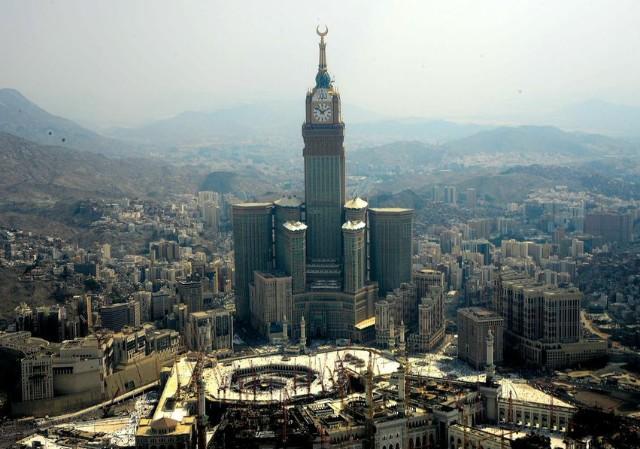
His complaint is common and some Saudis have similar feelings about the approach the government has taken to expand the Grand Mosque and modernize Makkah. From the towering clock to the massive hotels and apartment buildings, many have taken to grumbling about the government destroying some historic sites in the name of expansion.

I can’t join the chorus of complaints. I, as much as anybody, am saddened by the destruction of historic venues, but at the same time there is a solid logic exercised by authorities that see the big picture. And that is the problem with my Arab and Saudi friends, who like the idea of things as they were and the way they should be.

The problem is that we can’t live in the past. When I was a child, the number of pilgrims arriving in Saudi Arabia to perform Haj was a healthy number, but nowhere near the millions we host now. There was a time that pilgrims arrived by sea and even by camel. The young and healthy performed Haj, and when their elders came there was strong support from the younger generation to see them through the rituals.

Modern travel has changed all that, and now we have millions of pilgrims arriving annually because air travel is cheaper and accommodations are more comfortable. Can Makkah really remain the same as it was 75 years ago and still accommodate 3 million people? Of course not. It would be ridiculously dangerous and negligent.


Today, we have hundreds of thousands of sick, infirm and elderly pilgrims arriving in Makkah. Many pilgrims come to perform Haj toward the end of their lives because they spend most of their adulthood raising children and making a living. They saved their money for the day to perform these rituals, and that day often comes when they are in the 60s and 70s, if not older. This was not necessarily possible during an earlier time.

To accommodate the vast number of pilgrims and the old and infirm, we are duty-bound to protect them with wider streets, better and more comfortable living quarters, the necessary Mataf, which accommodates 130,000 pilgrims per hour, and other improvements that ensure the safety of our guests.

This is what many Muslims, particularly the young, don’t see. Imagine an accident occurring during the rituals; a fire that may create a stampede, or a collapsed building or structure. Imagine the number of injuries and deaths, and then imagine with all our certainty the fingers pointed at the Saudi government for its failure to protect pilgrims. We would rage against the government for its negligence and then shake our heads at their “incompetence.”

So the government takes the initiative to protect its visitors, but faces a storm of criticism for its insensitivity toward traditions, customs and the old way of doing things. Simply, the government is damned if it does and damned if it doesn’t implement safety measures.

There is a right way and a wrong way to modernize a city, and I will be the first to say that the government has made some mistakes in clearing away historic venues in the name of progress, particularly when it ignores public opinion. But the authorities are more right than wrong on this issue, and I for one am grateful for their foresight.

http://www.arabnews.com/news/640276


We can’t always live in the past

Monday 6 October 2014

They came yearning for the mercy of Allah, and they are leaving filled with hope that they have got what they came here for. They left everything behind and arrived in their white Ihram. I do not think there is anything that is more purifying than this.

It is a tough journey; millions of pilgrims, young and old, men and women gather in Makkah. It is an honor for the Kingdom and also a huge challenge.
It is not only the responsibility of making these few days safe and easy for everyone, but it is about making sure the whole infrastructure is capable of hosting those millions year in and year out. It is a continuous responsibility, it does not start at the beginning of Haj, and does not end few days later.

And with each and every season of Haj, one of the most controversial debates related to the holy lands, and the Grand Mosque in particular, is revived; that is the repeated and ongoing modernization and expansion projects. Just before Haj, the New York Times published an article attacking these projects!

There are those who are arguing that the Grand Mosque and its surroundings have become so modern that it is affecting the spirituality of the place. The Makkah Tower, hotels, and malls, are cited as examples.

While, on the other hand, there are those who are seeing such projects unavoidable to sustain the growing number of visitors to the Grand Mosque, to upgrade the infrastructure and services delivered to the guests of Allah. Personally, I find myself inclined toward this side of the argument.

I can understand the general sentiments. For a lot of people, it is that simple experience of praying in the mosque, and then mingling with people from everywhere in the world in tiny shops just outside the gates of the mosque. It is the old nearby houses, the stories and memories imprinted on the aisles and corners. However, time never stops, sometimes, you have to take the difficult decision to serve the greater good. Such expansion projects goes back in time before the Saudi era. It is the way of life; since the day Allah permitted to construct Kaaba in the valley of Makkah, generations of people and events and memories have been created and preserved in the hearts and minds of millions. I do not believe anyone would suggest that keeping the area as it was in the days of the Prophet (peace be upon him), with its tiny praying space and unpaved roads, is the only way to preserve the place’s spirituality; the spiritual experience starts and ends in the heart, we do not go to the Holy Mosque to watch the clock tower, we go to open up with Allah.

Hard facts support this argument; the Grand Mosque can now host more pilgrims, it is easer to move in and out the surrounding area; such progression is related throughout the Grand Mosque’s history.

However, I believe that documenting and preserving any artifacts found in the Mosque or its surroundings, in a museum for example, would end this debate once and forever.

Sometimes, we have to realize that necessity dictates sacrificing some of the history to salvage the future.

http://www.arabnews.com/columns/news/640281


report post quote code quick quote reply
+1 -0
back to top
Rank Image
Roukaya19's avatar
Montreal
4,092
Sister
4,288
Roukaya19's avatar
#4695 [Permalink] Posted on 8th October 2014 18:10
 
Presidency for Two Holy Mosques' Affairs
Launches Experiment of Flying Camera


VIDEO - '' Phantom 2 vision+ test '' in Grand Mosque: 

www.youtube.com/watch?v=Oc2A_ZCBBIo

Mina, Dhu-AlHijjah 12, 1435, Oct 6, 2014, SPA

Department of projects at the General Presidency for Affairs of the Grand Mosque and the Prophet's Mosque has launched an experiment of flying camera, a model of (+ phantom 2 vision) to cover the works of projects and large areas of the Grand mosque and its yards, which are difficult to be covered by regular cameras, and to document them by photographs and videos with high accuracy.

This was announced by the Director of the Department, Engineer Sultan Al-Qurashi.

The experiment was made in the presence of President General for Affairs of the Grand Mosque and the Prophet's Mosque, Sheikh Dr. Abdulrahman bin Abdulaziz Al-Sudais.

http://www.spa.gov.sa/english/print.php?id=1282019


report post quote code quick quote reply
+1 -0Like x 1
back to top

Jump to page: