
Prophet's Mosque - Masjid an Nabawi in Ramadan


You have contributed 0.4% of this topic


Prophet's Mosque - Masjid an Nabawi in Ramadan


Friday 26 July 2013
A popular site for pilgrims visiting Madinah is the Friday Mosque, known as the place where the Prophet Muhammad (peace be upon him) performed the first Friday prayers after his migration from Makkah.
The mosque, situated between gardens and parks, is about 500 meters from the Qubaa Mosque.
The Friday Mosque was earlier called the Atekah Mosque and before that, Valley Mosque because it is located at the bottom of the Ranawna Valley.
On the Friday morning after the Prophet finished building Al-Taqwa Mosque, he went to Madinah leaving Qubaa behind. The houses of Bani Al-Najjar were on his right in the eastern side, where his maternal uncles asked him to stay with them and pulled on the reins of his camel Al-Qaswa.
The Prophet told them to leave his camel alone because she had her own mind. She stopped later in the valley, where the Prophet prayed Friday prayers and performed the customary duties including delivering a sermon.
Kaab bin Ajrah reported that the Prophet prayed the first Friday in Bani Salem Mosque. It was the first Friday prayer in Islam, and the first Friday in Madinah after the migration of the Prophet to that city.
The roof of the mosque was repaired at the end of 9 Hijri (630 CE) by Shams Al Din Qawoon.
The mosque was rebuilt the first time during the reign of Omar bin Abdulaziz, and a second time during the Abbasid period between 155 and 159 Hijri (771 CE to 775 CE).
During the Ottoman period, Sultan Bezaid ordered its renewal in the mid-14th century.
Before the latest expansion, the mosque was built on a small hill and was 8 meters long and 4.5 meters wide, with a height of 5.5 meters. It had one dome made of red bricks and on its northern side was a hall 8 meters long and 6 meters wide.
During the reign of Custodian of the Two Holy Mosques in 1412 Hijri (1991 CE), the mosque was rebuilt and expanded to several times its original size.
http://www.arabnews.com/news/459222


Friday 26 July 2013
Custodian of the Two Holy Mosques King Abdullah ordered the distribution of 250,000 copies of the Holy Qur’an among the Islamic centers and offices affiliated to the Kingdom’s Ministry of Islamic Affairs, Endowments, Call and Guidance in foreign countries.
This was stated by Minister of Islamic Affairs Saleh Al-Asheikh.
These copies are printed at the King Fahd Complex for Printing the Holy Qur’an in Madinah. The king also ordered Saudi Arabia Airlines to ship the copies of the holy book to the ministry’s offices abroad, the SPA reported.
The ministry supervises the activities of the King Fahd Complex, translation of the meanings of the Holy Qur’an and the printing, translation, and distribution of Islamic books.
http://www.arabnews.com/news/459227
King Fahd Complex for the Printing of the Holy Quran
a bright landmark for the service of Islam and Muslims


Saturday 27 July 2013
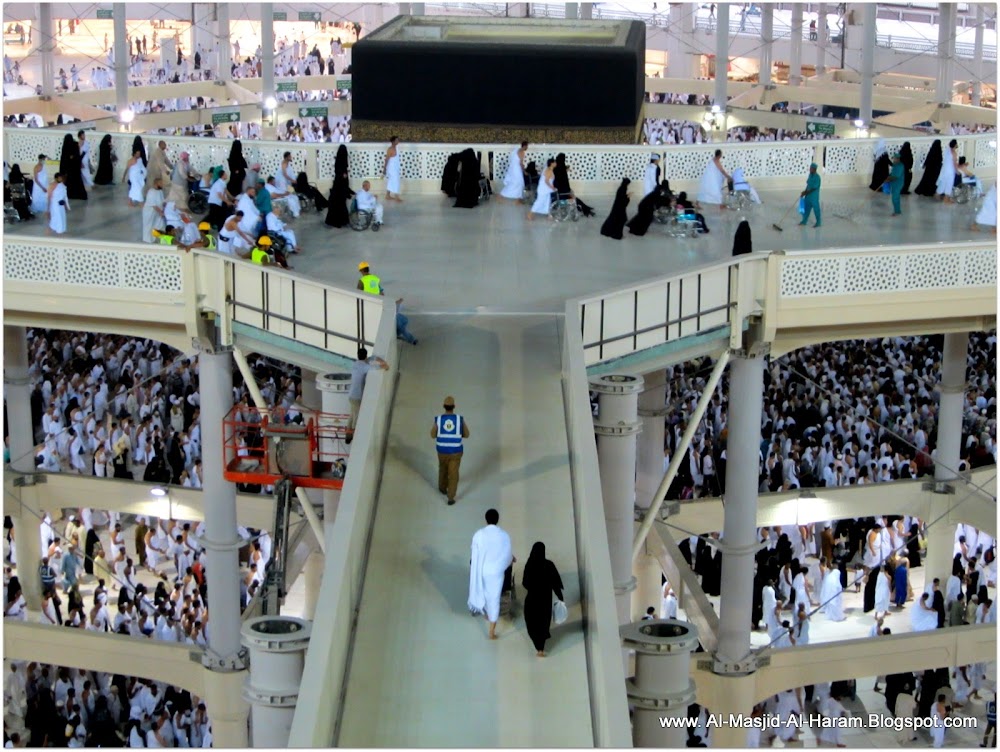
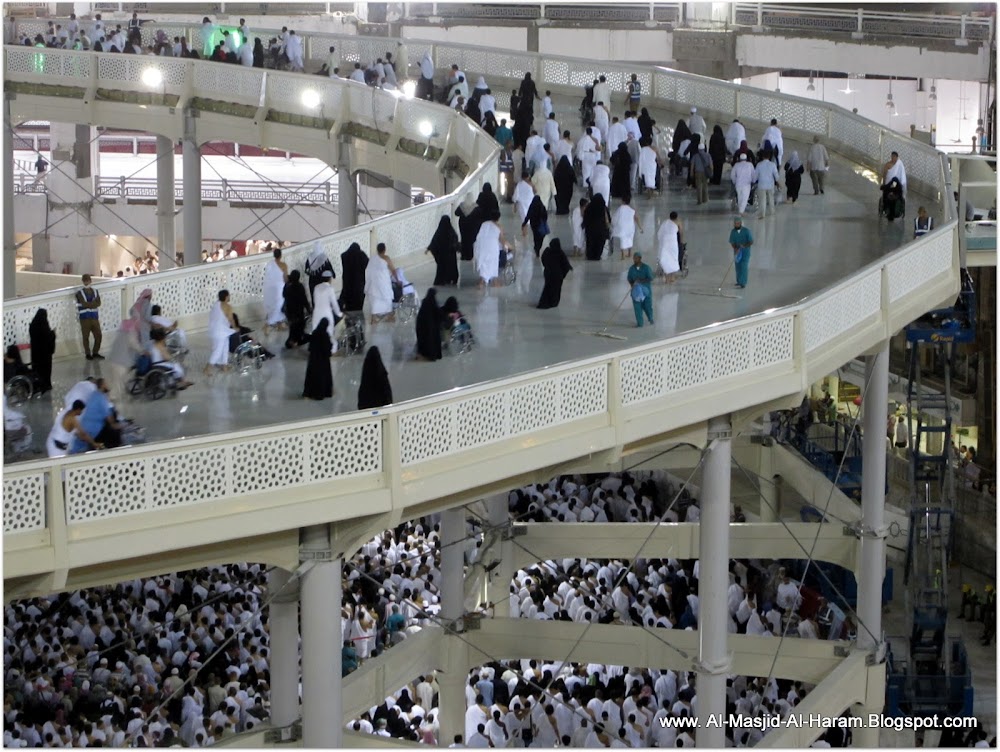
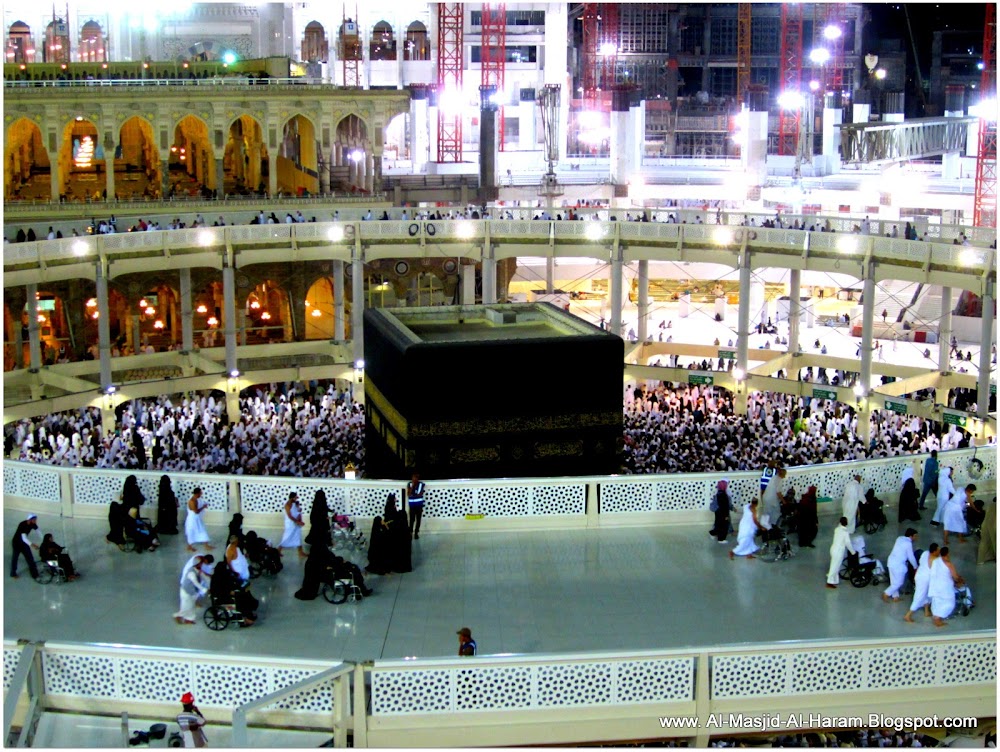
Amid efforts to make pilgrimage easier for the disabled, the Presidency of the Two Holy Mosques has provided 12,000 standard wheelchairs and 110 electric wheelchairs free of charge for their movement inside the mosque.
The standard wheelchairs are available at offices at the Eastern Square and the Ajayd. The powered versions are supplied from the Al-Safa office on the first floor where 521 wheelchairs are also available on rent, the Saudi Press Agency reported.
“A number of volunteers are also ready to push wheelchairs around the clock,” said Director of Wheelchairs Administration at the Grand Mosque Muslih Al-Mahmadi.
Wheelchairs allow worshippers into the mosque through 10 gates such as the King Abdul Aziz, the Ajyad New, the Honain, Al-Safa, Arqam Escalator, Al-Marwah Escalator and Al-Marwah.
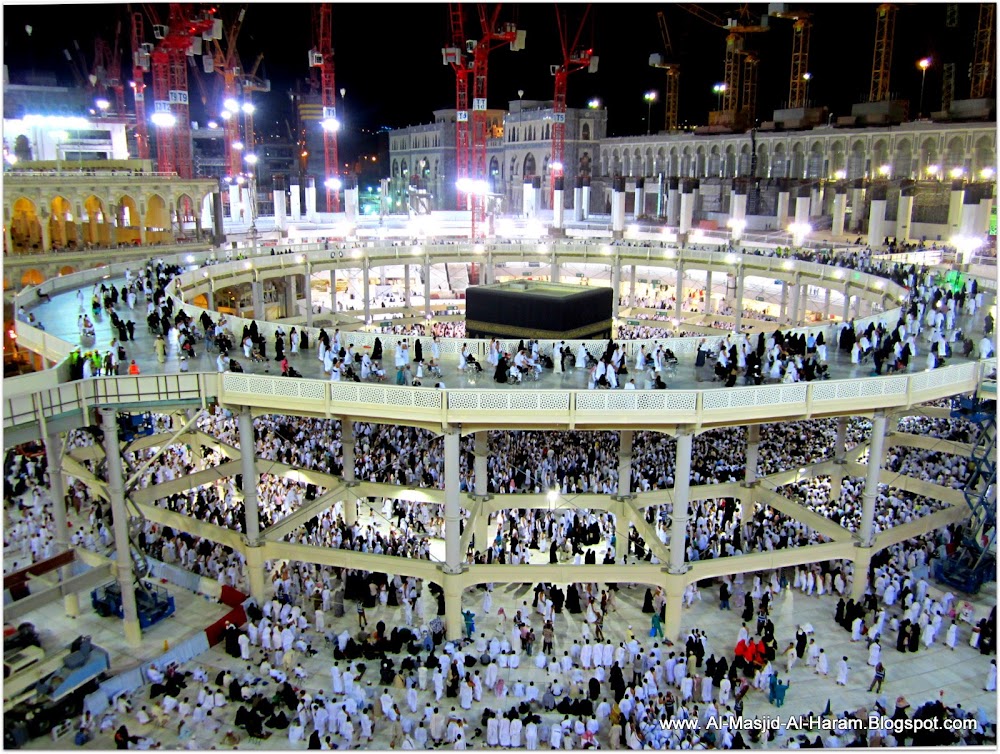
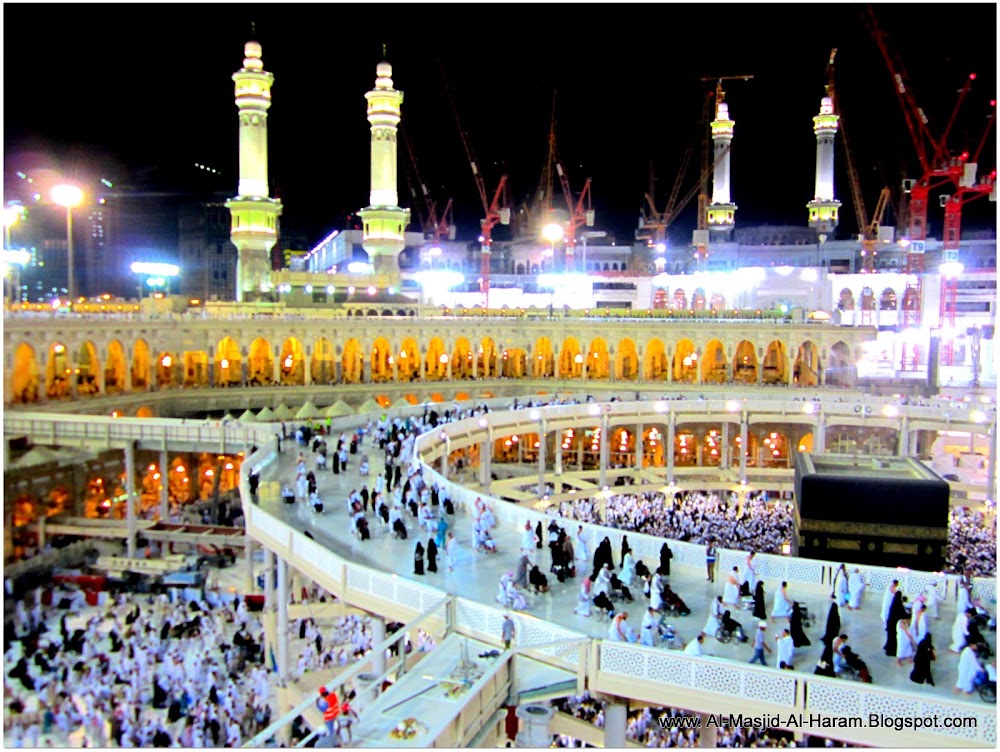
When the Tawaf Bridge is formally opened today all the wheelchairs will be allowed to enter the Mataf Bridge though the Ajyad bridge and exit through the New Qushasha bridge at the Al-Marwa side of the Grand Mosque.
The Haram police, emergency forces and Civil Defense will help regulate wheelchair-bound pilgrims when the Mataf Bridge is opened.
He added that the presidency and the wheelchair administration have jointly taken steps to curb the practice of some unlicensed wheelchair pushers charging high rates from pilgrims, especially at peak hours.
He also called on all the wheelchair users to keep their own tracks on the mataf in order not to obstruct the smooth flow of circumambulation.
http://www.arabnews.com/news/459342
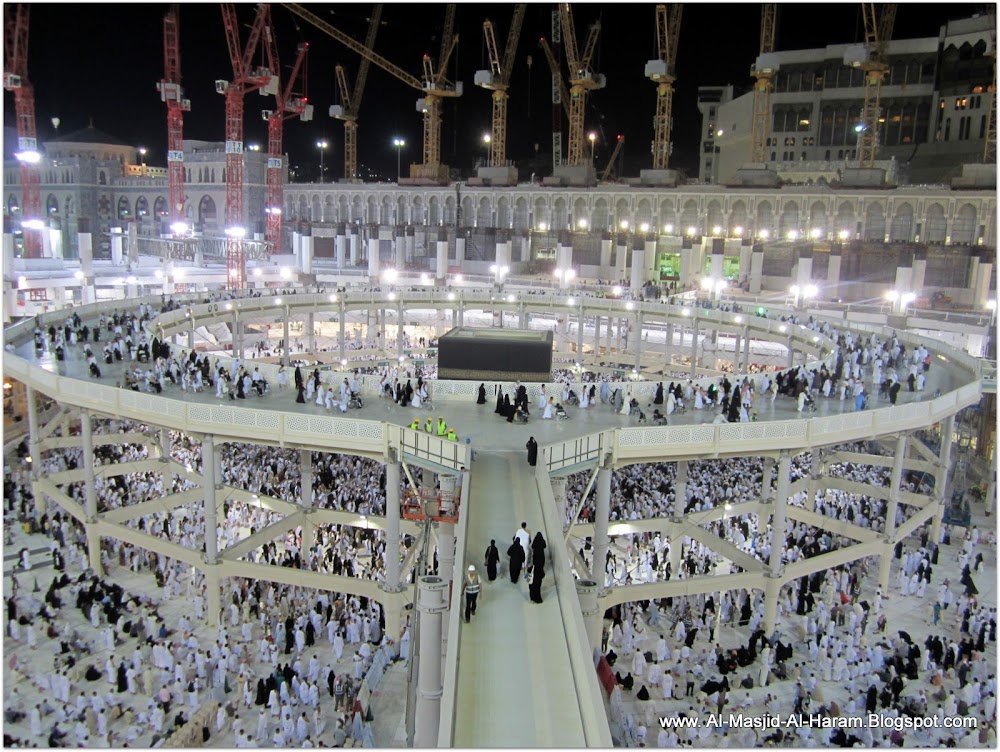
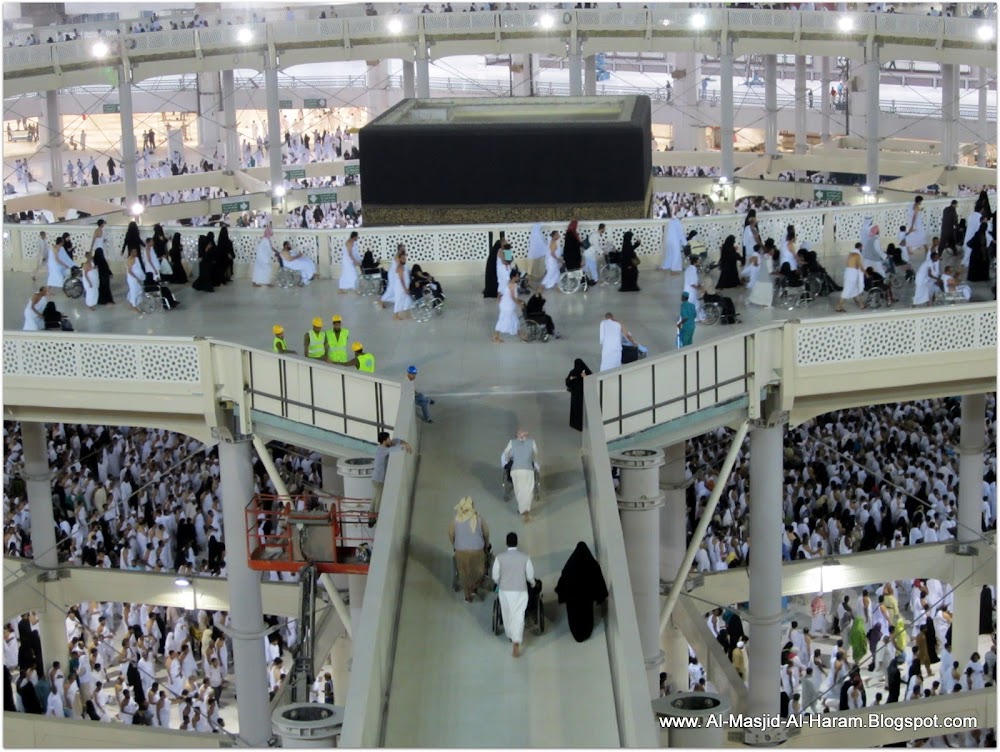
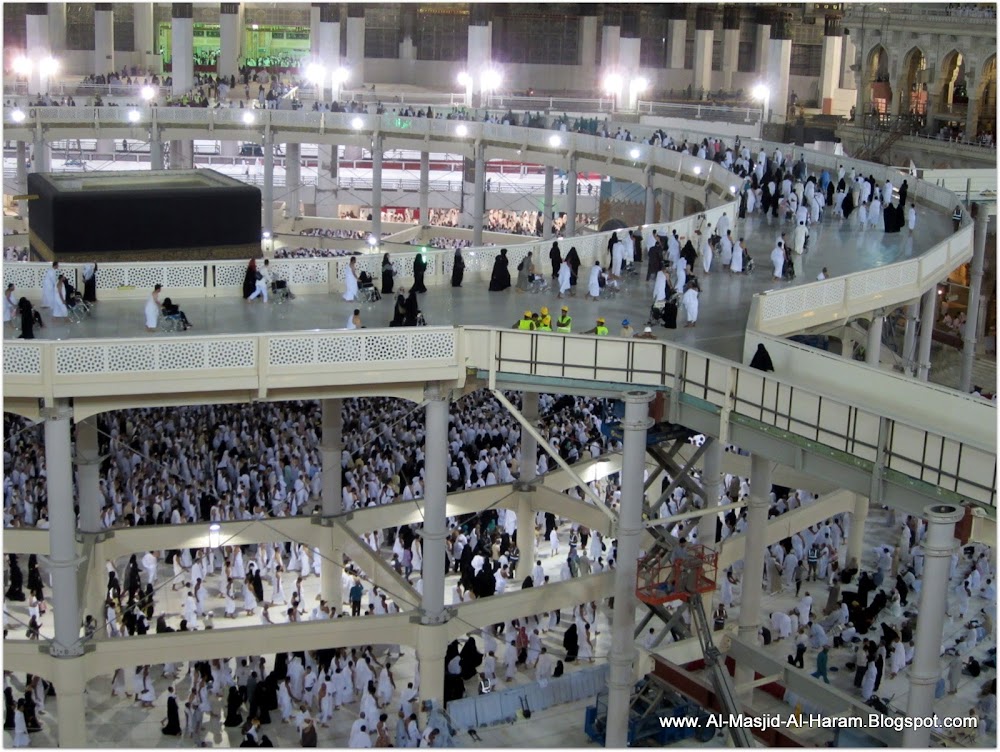
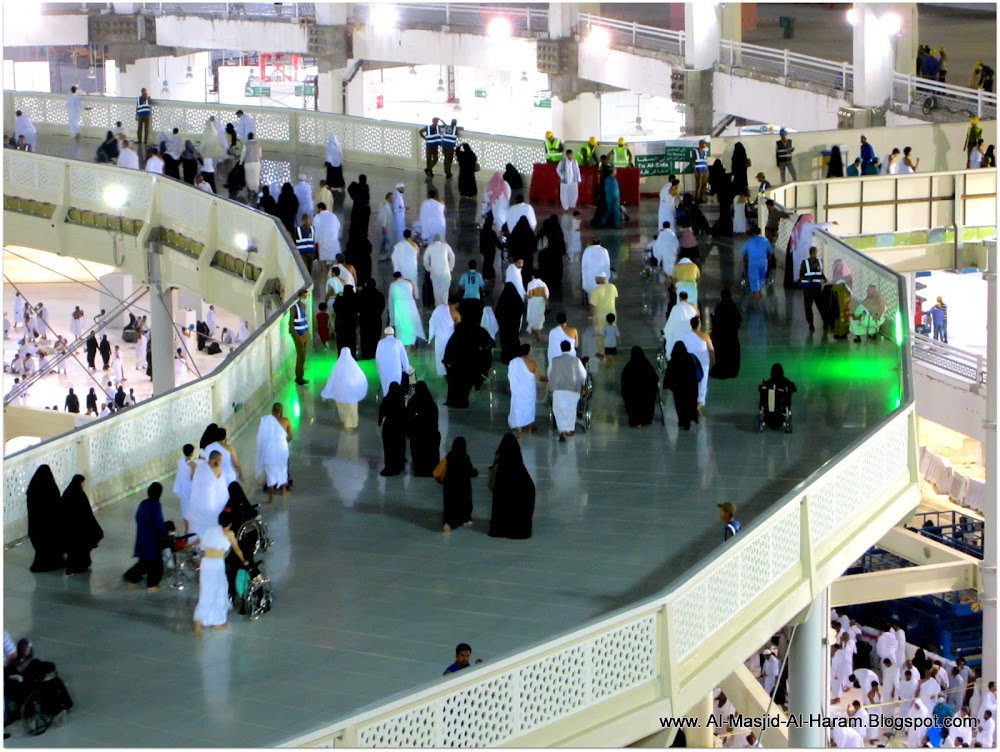




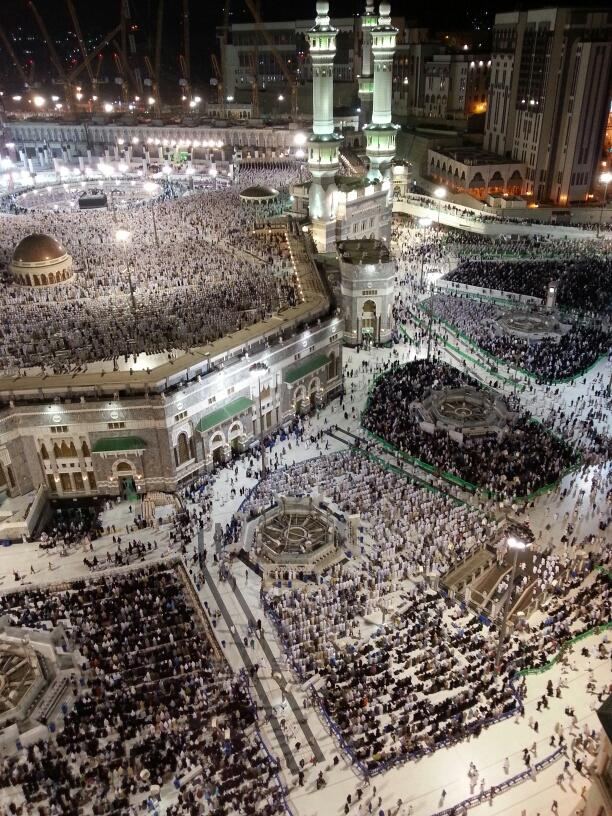
Mataf
July 2013


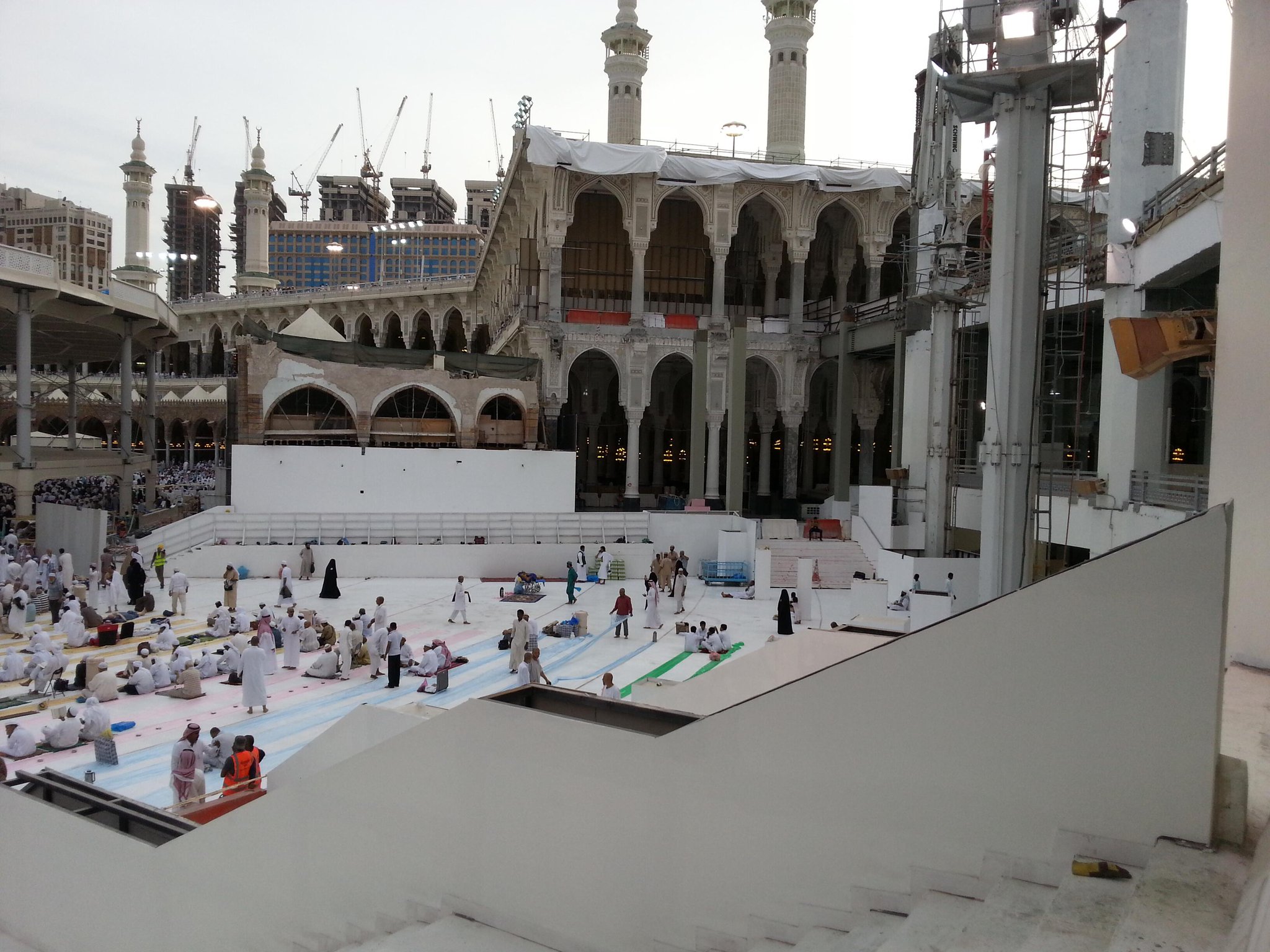

This cannot be undone and I am sure it will be greatly appreciated.
Please wait...
