Forum Menu - Click/Swipe to open
 

Makkah News and Updates

Jump to page:

You have contributed 0.4% of this topic

Thread Tools
Appreciate
Topic Appreciation
omer, Taqwah, Taalibah, rizmalek, super-glue, Seifeddine-M, bint Mohammed, member2, sweetmuslimahk1, abu mohammed, Yasin, Heather2727, Naqshband66, ummi taalib, mo_isaq, Acacia, Desi tadka, umar123, habeeba, Jinn, Arslan., ibn Ismail, najimuddin, ALIF, al-adnan, abuzayd2k, Moonlight, Mohammed8, ssaad, tanveerzakee, sharjan8643, opc121177
224 guests appreciate this topic.
Rank Image
Roukaya19's avatar
Montreal
4,092
Sister
4,288
Roukaya19's avatar
#1411 [Permalink] Posted on 23rd October 2012 18:11
It’s all systems go for Haj 1433

Tuesday 23 October 2012

Saudi authorities stepped up preparations for the five-day annual Haj pilgrimage — which begins tomorrow — by mobilizing human and material resources.

More than three million pilgrims, including two million from abroad, are expected to take part in the spiritual event.

Groups of pilgrims have started the move from Madinah and other parts of the Kingdom to Makkah and Mina, chanting Labbaik Allahumma Labbaik (O God, here I am answering your call).

Custodian of the Two Holy Mosques King Abdullah, who is supervising Haj operation from Jeddah, instructed all related government departments to provide the necessary services to the guests of God.

Khaled Mirghalani, Health Ministry spokesman, said: “The ministry has readied 25 hospitals with a capacity of 5,200 beds in addition to the 141 health clinics situated in the holy sites, to serve pilgrims.” More than 175 ambulances are on stand by,” he added. The Saudi Red Crescent Authority plays an important role during Haj, providing first-aid and transportation services to hospitals. It will deploy 1,060 volunteers in Makkah, Mina and other holy sites.

The Civil Defense yesterday conducted a mock operation to control gas leakage near the Jamrat Bridge in Mina, where a large number of pilgrims assemble during the peak days of Haj for the stoning-the-Satan ritual.

Lt. Col. Abdullah Al-Ghamdi, commander of the Civil Defense’s special intervention force, said: “The operation was aimed at keeping our forces at a high level of readiness to deal with possible leakage of poisonous gases.”

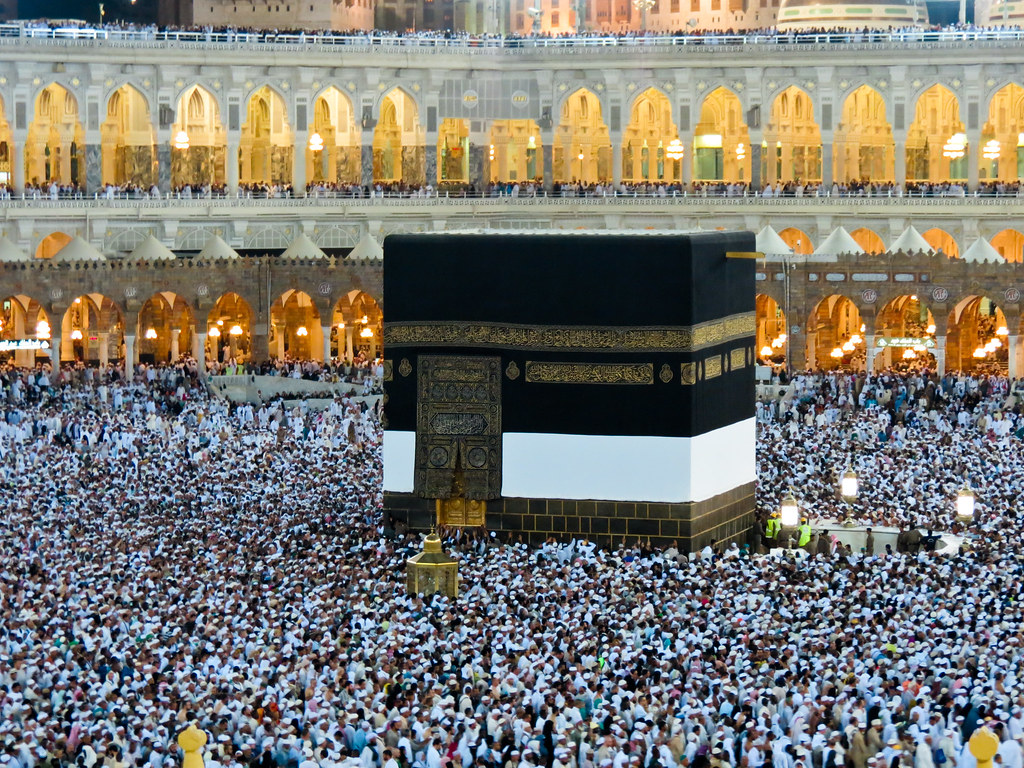
Foreign pilgrims have expressed their joy over getting the opportunity to perform Haj, the fifth pillar of Islam. “It’s my first time in Makkah for pilgrimage. I can’t wait to pray in Arafat,” said 32-year-old Koara Abdulrahman, a businessman from Burkina Faso. Inside the Grand Mosque, scores of pilgrims circumambulated the Holy Kaaba with many pushing their way through the crowds to kiss Hajar Al-Aswad (the Black Stone) on a corner of the cube-shaped structure.

“Right now, I’ve got all the good feelings you can think of,” said an ecstatic Iranian pilgrim.

More than 1,400 Muslim leaders from around the world are performing Haj this year as guests of King Abdullah. They come from China, Russia, Cambodia, South Korea, Japan, Vietnam, Togo, Botswana, Burundi and Liberia.
Heavy rains hit Makkah and Mina on Sunday, and the Civil Defense said 13 people were slightly injured when a fire erupted in a building housing Indian and Myanmarese pilgrims.

Despite being marred by deadly incidents in the past such as floods, stampedes and fires, Haj has become nearly incident-free in recent years, thanks to multibillion-dollar projects implemented by the government annually.

This year, new development projects totaling SR 1.5 billion include an initiative to help pilgrims reach the Jamrat Bridge quickly from Makkah, Aziziya and Shaabain. The Ministry of Water and Electricity said it has started supplying 600,000 cubic meters of water daily to the holy sites. There are 36 water tanks in Makkah and 27 at the holy sites with a total capacity of 2.5 million cubic meters.

In other news, participants of a seminar organized by the Haj Ministry called for the use of social media networks to enhance Haj awareness for pilgrims. Najah Al-Qublan of Princess Norah University said: “We have to make use of social media effectively for creating Haj awareness and spreading the message of Islam.” Facebook users in the Arab world increased from 29.8 million in 2011 to 45.2 million by June 2012, she said.

http://www.arabnews.com/it%E2%80%99s...ms-go-haj-1433


Ibrahim’s legacy


Tuesday 23 October 2012

During Haj, Muslims remember and commemorate the trials and triumphs of the Prophet Ibrahim (peace be upon him). The Qur’an describes Ibrahim (pbuh) as follows: “Surely Ibrahim was an example, obedient to Allah, by nature upright, and he was not of the polytheists. He was grateful for Our bounties. We chose him and guided him unto a right path. We gave him good in this world, and in the next he will most surely be among the righteous.” (Qur'an 16:120-121)

One of Ibrahim (pbuh) supreme trials was to obey the command of Allah to sacrifice his only son, Ismail. Upon hearing this command, he prepared to submit himself to Allah’s will. When he was all prepared to carry out His Will, Allah revealed to him that his “sacrifice” had already been fulfilled. Ibrahim (pbuh) had thus proven that his love for his Lord superseded everything else and that he would lay down his own life or the lives of the people dear to him for the sake of God.

During the celebrations of Eid Al-Adha, Muslims commemorate and remember Ibrahim’s (pbuh) trials by slaughtering an animal such as a sheep, camel, or goat. Those outside the Islamic faith have often misunderstood this ritual.
Abdurahman Al-Rajhi said the Udhiyah (Islamic slaughtering) is a very meaningful and important occasion that reminds us of the sacrifices of Prophet Ibrahim (pbuh).

“We usually provide sacrifice on behalf of our parents and family and distribute part of it to the poor,” he said. “For me, I also have Udhiyah in the Philippines, three in Manila and two in Marawi city and this time another two in Bumbaran.”

The meats are distributed through a charitable organization there that I deal with, supervised and run by known Muslims in the country. They take half of them and distribute half of them to the poor people in the country.
Allah has given us power over animals and allowed us to eat meat, but only if we pronounce His name at the solemn act of taking life. Muslims slaughter animals in the same way throughout the year. By saying the name of Allah at the time of slaughter, we are reminded that life is sacred.

The meat from the sacrifice of Eid Al-Adha is mostly given away to others. Immediate members of the family and relatives eat one-third, another third is given away to friends, and one-third is donated to the poor. The act symbolizes our willingness to give up things that are of benefit to us or close to our hearts, in order to follow Allah's commands. It also symbolizes our willingness to forego part of our own bounties in order to strengthen ties of friendship and help those in need. We recognize that all blessings come from Allah, and we should open our hearts and share with others.

It is equally important to understand that the sacrifice itself, as practiced by Muslims, has nothing to do with atoning for our sins or using the blood to wash ourselves from sin. This is a misunderstanding by those of previous generations: “It is not their meat nor their blood that reaches Allah; it is your piety that reaches Him.” (Qur'an 22:37)

The symbolism is in the attitude — a willingness to render sacrifices in our lives in order to stay on the straight path. Each of us makes small sacrifices and give up things that are important to us. A true Muslim, who submits himself or herself completely to the Lord, is willing to follow Allah’s commands completely and obediently. It is this strength of heart, purity in faith, and willing obedience that our Lord desires from us.

On the day of Eid Al-Adha, Muslims around the world attend morning prayers at their local mosques. Prayers are followed by visits with family and friends, and the exchange of greetings and gifts. At some point, members of the family will visit a local farm or otherwise will make arrangements for the slaughter of an animal. The meat is distributed during the days of the holiday or shortly thereafter.

http://www.arabnews.com/ibrahim%E2%80%99s-legacy
 

report post quote code quick quote reply
No post ratings
back to top
Rank Image
Roukaya19's avatar
Montreal
4,092
Sister
4,288
Roukaya19's avatar
#1412 [Permalink] Posted on 23rd October 2012 18:14
Postal Stamps Pilgrimage

tale dimensions of culture and
civilization and cognitive time and place


طوابع الحج البريدية ، حكاية الأبعاد الثقافية
 
والحضارية والمعرفية زمانا ومكانا


منى 06 ذو الحجة 1433 هـ الموافق 22 اكتوبر 2012 م واس
حمل الطابع البريدي الجديد لحج هذا العام 1433هـ حكاية البعد الثقافي والحضاري والمعرفي " زمانا " في موسم الحج " ومكانا " لمكة المكرمة والمشاعر المقدسة .

ويضيف الطابع البريدي بعدا للجوانب التاريخية والحضارية والإنسانية والتنموية لمختلف بلدان العالم بعيداً عن المفهوم السائد أن الطابع قيمة الأجرة التي يتقاضاها البريد مقابل إيصال الرسالة .

وتعكس الطوابع ثقافة المجتمع وواقعه وفق رؤية المؤسسة البريدية.

وأبرزت مؤسسة البريد السعودي في جميع إصدارتها منذ بداية أعمالها هوية المملكة الإسلامية وإرثها المعرفي ومنجزها الحضري على مختلف الأصعدة ؛ إيمانا منها أن الطابع البريدي " سفير " لبلده ، ويعطي صورة عنها للقريب والبعيد ، ويحمل في مكنونه الصغير حجما لوحة تعريفية للوطن لجميع شعوب العالم .

وكان لإصدار طابع بريدي عن الحج من الموضوعات التي تميزت وانفردت بها جملة الطوابع السعودية بحكم عِظم الشعيرة إلى جابن المكانة الإسلامية التي تتمتع بها المملكة ؛ إذ دأبت المؤسسة على امتداد 34 عاماً على إصدار طابع سنوي تذكاري يتناول موضوعات ذات علاقة بالحج .

وكانت المؤسسة أصدرت في عام 1398 هـ أول طابع عن الحج معبراً عن ركن من أركانه وهو الوقوف بعرفة بقيمة 20 و 80 هللة .

وتوالت الإصدارات في الأعوام التي تلتها متناولة بقية أركان الحج من الإحرام والسعي وطواف الإفاضة ، وما يتلو ذلك من واجبات للحج مثل رمي الجمار والمبيت بمزدلفة والوقوف بعرفة والمبيت بمنى أيام التشريق ، وطواف الوداع ، ثم طرحت طوابع عن المساجد في المشاعر المقدسة مثل المسجد الحرام ومسجد الخيف ومسجد نمرة .

وفي السنوات التي أعقبتها تناولت الإصدارات مواقيت الحج " السيل الكبير والجحفة وذي الحليفة وذات عرق ويلملم والتنعيم " فيما أبرزت بعد ذلك أماكن في الحج وبئر زمزم وأنفاق مكة وخيام الحجاج الجديدة بمنى .

وللخدمات الجليلة التي تقدمها المملكة للحجاج منذ وصولهم وثقت المؤسسة تلك الأعمال بإصدار طوابع عن استقبال الحجاج القادمين جواً وبحراً .

وحينما تحولت العاصمة المقدسة لورشة عمل كبيرة تأهيلية وتطويرية كان عنوانا رئيسيا لإصدارات مؤسسة البريد السعودي ، فأبرز طابع الحج عام 1430هـ جسر الجمرات الجديد ، وطابع سنة 1431 هـ مشروع إعمار الملك عبد الله بن عبد العزيز للمسجد الحرام ، وطابع 1432 هـ وقف الملك عبدالعزيز للحرمين الشريفين وقطار المشاعر .
ومع بداية موسم حج هذا العام 1433 أصدرت المؤسسة طابعين للحرم المكي والحرم المدني بتوسعتهما الجديدتين اللتين اعتمده تنفيذهما خادم الحرمين الشريفين الملك عبدالله بن عبدالعزيز آل سعود - حفظه الله - خدمة لضيوف الرحمن ولاستيعاب الأعداد المتزايدة لقاصديهما من الحجاج والمعتمرين والزوار .

http://www.spa.gov.sa/print.php?id=1041839

 
report post quote code quick quote reply
No post ratings
back to top
Rank Image
Roukaya19's avatar
Montreal
4,092
Sister
4,288
Roukaya19's avatar
#1413 [Permalink] Posted on 23rd October 2012 18:16
Sheep markets inactive
 
as Eid approaches

 
Tuesday 23 October 2012

Livestock markets are witnessing inactivity and hiked prices, despite the advent of Eid Al Adha.

In Buraida’s livestock market, there seemed to be a modest turnout of customers. “I expect more customers will come and throng the market in the next few days of the month of Dul Hijja. Sales will be higher than last year,” said one sheep trader, adding that prices are reasonable in general, but there are some kinds of sheep that are priced higher according to their weight.

Another sheep trader, Ali Al-Dakheel, said the market had not witnessed acute price hikes, unlike last year, when the prices of Nuaimi and Najdi sheep reached SR 2,500. This year, the highest price recorded so far is SR 2,000, he said, adding that he thought sales would increase by the approach of Eid.
Meanwhile, Ahmad Al-Ajlan, a customer, said the livestock prices were “too high”, as they reached SR 2,000. “Markets are inactive because most people have decided to buy their sacrifices a few days before Eid. Traders have also intentionally reduced the supply in the market, aiming to increase prices by the advent of Haj,” he added.

Livestock markets in Jizan exhibited the same prices. Furthermore, several people said they went to the market to buy their sacrifices ahead of time, to benefit from lower prices, but instead found the prices higher than usual.
Abdu Awwaf, who bought his sacrifice for SR1, 700, called on the Ministry of Commerce and Industry to monitor prices.

Abdullah Al-Harbi, a livestock trader who supplies sheep to Hafr Al-Baten market, said the market witnessed “hundreds of thousands of sheep heads, priced around SR 1,000 to SR 1,500 per head — which could reduce sheep prices for customers by 20 percent compared to last year.” Al-Harbi also expected supply to surpass demand by 130 percent. The reason prices are still high despite the large supply is the fact that the costs for framing sheep are higher than in the past. One head’s fodder now costs SR6, while it used to cost SR2, he added.

http://www.arabnews.com/sheep-market...eid-approaches


12 pilgrims undergo
 
open-heart surgeries

Tuesday 23 October 2012

Twelve Haj pilgrims successfully underwent open-heart surgeries during this year’s pilgrimage, the Ministry of Health announced yesterday. The operations were performed at the King Abdullah Medical City (KAMC) in Makkah. The patients were among the pilgrims from various countries.

Dr. Adil Tash, head of the Cardiology Center at KAMC, said the oldest patient was a 91-year-old pilgrim and the youngest a 16-year-old girl.

The Health Ministry did not reveal the identity or their nationalities.

Commenting on the conditions of patients who underwent open-heart surgeries, he said all of them are in good and stable condition. Some had already been shifted from intensive care units to general wards.

Tash said arrangements would be made for recovered patients to be escorted in a medical convoy to Mount Arafat on Arafat Day to complete their Haj.

The official expressed his thanks to Custodian of the Two Holy Mosques King Abdullah and Crown Prince Salman, deputy premier and minister of defense, for their continued support to provide quality health services to pilgrims.

http://www.arabnews.com/12-pilgrims-...eart-surgeries


Seasonal renting for
 
Haj creates problems

Tuesday 23 October 2012

“Please evacuate the apartment,” read a number of signs hung on many buildings in Makkah this year. It's building owners asking tenants to leave their rented apartment during Haj and the holy month of Ramadan, as agreed upon in the contracts they signed. Renting residential property to pilgrims is legal in Makkah as long as a municipal license is obtained.

These apartments are rented for 10 months, instead of a whole year, and then rented to pilgrims for the remaining two months. “These are our high seasons. We make more money renting apartments during Ramadan and Haj than throughout the whole year,” said Abu Ahmed, a landlord in Makkah. “We ensure that tenants are well aware of this arrangement before they sign the contract,” he added.

Talha Al-Anzi, a schoolteacher who did not complete a year in his apartment in Makkah, said he was taken by surprise when the landlord asked him and his family to leave the apartment, because he wanted to rent the whole building to Haj pilgrims. "I spent a huge amount of money on maintenance and repairs when I first moved into the apartment. However, I did not have a chance to enjoy the apartment, because the owner asked us to move out as quickly as possible,” he said. “I asked the owner where would my family live during this month, and whether he would give me money to rent an apartment elsewhere. He refused,” he added.

“This problem should be addressed by the Ministry of Housing, because we should not be living like this. There should be rules against evicting people in this manner,” said Al-Anzi.

Saad Ansari is another renter who was forced to stay at his uncle’s house with his wife and children until the month was over. “I have been doing this for three years now. I got used to playing this game, where I collect my family’s items and move into another family member’s house for a month. But I’m getting sick and tired of this ordeal, especially since my children are growing older, and they do not fit in one room anymore,” he added.

Ansari said it was not possible for him to rent another apartment, given the rising cost of rent and his finances.

Aziza Al-Hamed, a divorcee who lives with her children in a two-bedroom apartment in Al-Adel district in Makkah, said the pilgrims ruin her apartment every year. “This is the second year I have been undergoing this. Last year I went to Jeddah and spent the entire month with my children, among family and friends. When I came back, I was horrified at the state in which my apartment was left,” she said. Al-Hamed spent a lot of money on renovating the apartment, including repairing the broken doors, and repainting the walls.
On the other hand, businessman Hatem Al-Hindi rents his three-story building to pilgrims and charges them SR 2,000 to SR 3,000 per pilgrim. “I make a lot of money during the Haj season, as a surprising number of people come to live in my house. Sometimes five to eight people stay in one room,” he added.

http://www.arabnews.com/seasonal-ren...eates-problems


Balloons track illegal pilgrims

Tuesday 23 October 2012

Amid efforts to ensure that only legitimate domestic pilgrims perform Haj this year, security forces have launched a balloon system to track illegal pilgrims attempting to enter Makkah, particularly through unfrequented roads.

“Special cameras installed on a balloon launched with the help of the King Abdulaziz City for Science and Technology instantly beam all movements on roads including dirt roads to a control room of the road security forces. Instantly, patrols are sent to ensure that the people who proceed on dirt roads that lead to Makkah and the holy sites are carrying Haj permits,” Maj. Gen. Khaled Al-Qahtani, commander of the special forces, said in a statement to Al-Eqtisadiah business daily yesterday.

He added that the special forces had intercepted 1,174 vehicles including buses carrying 7,500 pilgrims without tasreeh (Haj permit) before entering the holy sites over the past month. The arrested people were returned to their place of origin and the vehicles seized.

The balloon cameras also help monitor traffic congestion on expressways, and take immediate steps to normalize vehicle flow on roads leading to Makkah, he added.

He said four buses seized at checkpoints in Sayel and Taneim were operated by fake domestic Haj service companies. The special forces in collaboration with the traffic department and Transport Ministry also stopped 786 cars smuggling pilgrims to Makkah in other provinces.

He said special plans are in place to monitor road networks and ensure a high level of traffic safety in the Kingdom.

The officer called on all drivers to undertake maintenance work of their cars, especially engines and tires, besides adhering to traffic regulations. He pointed out that recent accident statistics showed that incidents of flat tires and speeding were the two major factors that caused accidents in the Kingdom. “A driver should realize his responsibility not to endanger the lives and property of other road users with illegal and negligent behavior,” he said.

Stressing the importance of advanced technology in maintaining security on roads, the officer said, digital cameras had been installed at a number of locations close to the entry to Makkah besides conducting patrols that monitor and pass information to control rooms day and night.

He said the Road Safety Department also offered special assistance to Haj convoys in particular and ordinary passengers in general on highways across the country. It receives calls for assistance on 996.

In a related development, commander at the Shumaisy checkpoint on the Jeddah-Makkah Expressway Maj. Miqad Al-Sobaei said checkpoints make extra efforts to make sure that no illegal pilgrim travels to Makkah or the holy sites on roads, including the many dirt roads.

“No case of pilgrim-smuggling has been detected on the Jeddah-Makkah Expressway so far. All the dirt roads that were used in the past to smuggle pilgrims in are put under strict surveillance. Helicopters and Mujahideen patrols also are participating in tracking operations,” he said, adding that security forces discovered 70 dirt roads and secret paths used by pilgrim smugglers last year.

He affirmed that no pilgrim without tasreeh would under any condition be able to infiltrate to locations of Haj this year, and any driver caught colluding with illegal pilgrims would be punished with a huge fine and other penal measures.

http://www.arabnews.com/balloons-track-illegal-pilgrims
report post quote code quick quote reply
No post ratings
back to top
Rank Image
Roukaya19's avatar
Montreal
4,092
Sister
4,288
Roukaya19's avatar
#1414 [Permalink] Posted on 23rd October 2012 18:17
20,534 pilgrims without
 
Haj permits turned away

 
23 October 2012 - 07 Thul-Hijjah 1433 H

HOLY SITES — A total of 20,534 pilgrims on their way to the holy sites without Haj permits were turned away at a number of checkpoints, said Brig. Ayed Al-Harbi, Commander of the Passports Department (Haj).

The official said out of the 20,534 people, over 1,600 were trying to sneak into the holy sites without ihram (the cloth all pilgrims must wear before performing Haj or Umrah) while 20 were carrying forged papers.

One of the violating pilgrims was disguised as a woman, Brig. Al-Harbi said.

He said 75 Saudi and foreign drivers were caught trying to smuggle in pilgrims without the necessary paperwork.

He added: “The campaign resulted in the nabbing of 281 overstayers, 207 foreigners who infiltrated through the borders, 43 with forged iqamas (residence permits) and 200 foreigners who violated the Kingdom’s rules and regulations regarding residence and work.”

He revealed eight buses were caught carrying Saudis and foreigners proceeding to Makkah without Haj permits and wearing plain clothes over their ihram.

Foreign drivers of the buses, he said, were handed over to immigration authorities for deportation.

Al-Harbi said the Saudi owners of the vehicles would be subject to harsh punishment including fines and imprisonment.

He added: “Whoever is caught transporting illegal pilgrims will be punished.”

Meanwhile, brokers who smuggle pilgrims to Makkah and the holy sites through mountains, valleys and difficult terrain were noticeably on the rise this year.

The smugglers, usually driving four-wheel-drive cars, would agree with pilgrims to meet them at certain places away from the glare of police and security forces.

Several pilgrims told Okaz/Saudi Gazette that the high Haj charges have forced them to resort to these brokers.

One of the brokers, who did not want his identity revealed, said he knew his work was illegal but he had no other option as he had to feed his family. He said his rate is SR500 per head and will increase to more than SR1,000 during as the Haj nears.

http://www.saudigazette.com.sa/index...20121023140554


Charges for local pilgrims
 
artificially high, admits official


Thanking The Almighty for His countless bounties.
23 October 2012 - 07 Thul-Hijjah 1433 H

MAKKAH — Domestic pilgrims have been forced high charges as the Tawafa establishments have artificially hiked the rates, a senior official has said.

Hatim Qadi, undersecretary and official spokesman of the Ministry of Haj, said efforts to bring down the charges were under way.

Prince Ahmed Bin Abdul Aziz, Interior Minister and Chairman of the Supreme Haj Committee, has ordered the establishment of a committee comprising representatives from the Haj Ministry and other concerned government departments to lay down mechanism to control the charges, he said.

The spokesman said the ministry had asked all heads of domestic Haj campaigns to supply the ministry with detailed Haj programs at reasonable charges.

According to the spokesman, domestic Haj campaigns cost on average between SR1,900 and SR3,700 but said some Haj service providers increased their rates and claimed they would be providing top services to their pilgrims. Many domestic pilgrims shelved the pilgrimage plan this year because of these high charges, he said.

A number of low-income citizens complained that they would not be performing the fifth pillar of Islam this year because of the high costs. They said less costly campaigns, which were being subsidized by the Haj Ministry, were unable to accommodate the large number of citizens wishing to perform the pilgrimage.

Sulaiman Al-Zahrani, who wanted to go for Haj this year, said: “I tried to perform the Haj this year but couldn’t afford the high costs due to my low income.”

He said he tried to join a local Haj campaign only to discover that the charges were higher than last year.

He said: “In a single day the cheap Haj campaign filled up its quota of local pilgrims and would not accept anymore.”

He added the number of campaigns at reasonable prices was very little.
Majed Al-Harbi, another citizen, said he tried to join a domestic Haj campaign more than two months ago, only to discover those offering the cheapest Category D tours had stopped accepting any more applications after their charges reached more than SR8,000.

He added the charges of A-category campaigns had reached more than SR16,000 per head.

“Some of the domestic campaigns lowered their charges because of the bad services they were offering. These campaigns would house hundreds of pilgrims in a single tent far away from the Jamarat area,” he said.

Fahd Al-Otaibi, another Saudi citizen, said he and his four sons looked for a reasonable campaign only to discover that the cheapest would cost SR15,000 per person.

He added: “This will cost me in total SR75,000, which is half my annual income.”

Al-Otaibi asked concerned officials to find a quick solution to the problem to enable Saudis and expatriates perform Haj.

Lack of supervision of the charges has caused this problem, he said.
Saad Jameel Al-Qurashi, Chairman of the National Haj Transport Committee and incharge of domestic Haj campaigns, said charges went up because of the high prices of air tickets, services and salaries of foreign workers working in the holy sites.

As long as there was demand for domestic Haj campaigns, their charges would remain high, Al-Qurashi said.

http://www.saudigazette.com.sa/index...20121023140553
report post quote code quick quote reply
No post ratings
back to top
Rank Image
Roukaya19's avatar
Montreal
4,092
Sister
4,288
Roukaya19's avatar
#1415 [Permalink] Posted on 24th October 2012 02:34
 
Haj 2012 begins

_______________

pilgrims start moving into Mina


Wednesday 24 October 2012

Hundreds of thousands of white-clad believers, in buses, cars and on foot and all of them chanting “Labbaik Allahumma Labbaik” (“Here I am, O Allah, here I am”), began their trek last night to the nearby tent city of Mina in the first leg of the annual pilgrimage.

Nearly 2 million pilgrims have come from abroad for what is described as the largest gathering of Muslims in the world. They will be joined by nearly 1 million from within Saudi Arabia, including a large number of expatriates.

The weather was moderate with a mild and cool breeze blowing across the Mina valley.

Saudi Arabia has left nothing to chance to ensure that pilgrims perform the arduous rituals with ease and comfort. Following instructions from Custodian of the Two Holy Mosques King Abdullah, all Haj-related ministries and security agencies have mobilized their resources in the service of the guests of Allah.

All Muslims are required to perform Haj at least once in their lifetimes if they have the means to do so. Pilgrims from nearly 150 countries are taking part in this year’s Haj. Among the countries that have sent the largest contingents of pilgrims are India, Egypt, Pakistan, Indonesia and Turkey.
The Saudi religious authorities have announced that the standing on the Mount of Arafat in prayer by pilgrims, the high point of the annual pilgrimage, will take place tomorrow.

The following day will be Eid Al-Adha, the feast of the sacrifice, when Muslims worldwide slaughter lambs, goats and camels to mark Prophet Ibrahim’s readiness to sacrifice his son Ismail upon instructions from Allah.

Many pilgrims began leaving for Mina last night after circumambulating the Holy Kaaba, the first house of worship on Earth, built by Adam. Prophet Ibrahim and his son Ismail rebuilt it some 5,000 years ago. Most Haj rituals are related to Prophet Ibrahim, his wife Hager and Ismail, and thus reflect the unity of humanity.

The whole atmosphere in and around the Grand Mosque yesterday was charged with piety and religious fervor and the pilgrims, men, women and children, were speaking only one language — the language of the Holy Qur’an. There were tears of joy in their eyes.

“You might be rich and famous, with everything at your beck and call, but unless He gives a call, you cannot perform Haj,” said Zainul Abedeen, from Khartoum, Sudan. “O Allah, grant victory to Muslims wherever they are.”

The government has given top priority to the security and safety of pilgrims and has deployed thousands of security forces in Makkah, Mina, Arafat and Muzdalifah, all cities within a radius of 10 kilometers, to ensure a safe and secure Haj for the guests of God. Haj is one the five major pillars, or tenets, of Islam that followers of the religion must abide by. The others are the Shahadah, the declaration of the faith; Salah, the five daily prayers; Zakah or mandatory giving of a portion of a person’s wealth to the needy; and Saum or fasting during the month of Ramadan.

“Unity is essential to show practically that Islam is valid for all places and all times until the Day of Judgment,” said Mustafa Ismail, an Indian pilgrim. “It is only with unity that we will be able to rectify the image of Islam and Muslims.”
The pilgrims will camp in Mina today praying to Allah for forgiveness and solace before leaving for the plains of Arafat tomorrow.

“This is a dream come true for me. Each year I saved money to come on this journey,” said Saeed Jabara, an Egyptian pilgrim. “Now that day has arrived and I’m among millions of Muslims who have gathered here to perform the pilgrimage.”

The number of checkpoints on all roads leading into Makkah has increased enormously. Security forces were checking each and every vehicle. Those who did not have the mandatory Haj permits were turned away to avoid overcrowding at the holy sites.

http://www.arabnews.com/haj-2012-beg...rt-moving-mina


All roads lead to Mina


Pilgrims try to ride on top of a vehicle after dawn prayers near the Grand Mosque in Makkah, Tuesday.
They will start their movement toward Mina Wednesday to spend the night in the tent city following the
Sunnah of the Prophet (pbuh).
Wednesday, 24 October 2012 - 08 Thul-Hijjah 1433 H

MINA – Pilgrims in convoys begin to move to Mina Wednesday to spend the Tarwiyah Day following the Sunnah of Prophet Muhammad (peace be upon him).

In Mina, pilgrims pray Dhuhr, Asr, Maghreb, and Isha, shortening their four-unit prayers so as to make them two units each, without combining them. According to the Sunnah, the pilgrims spend the night of the Tarwiyah Day in Mina.

After performing dawn (Fajr) prayer on the 9th of Dhul Hijjah, pilgrims wait for sunrise and then move toward Arafat chanting the Talbiyah and Takbir and glorifying Allah.

In Arafat they pray Dhuhr and Asr combined at the time of Dhuhr, making each one two units.

The Haj security command has laid down an elaborate plan to facilitate the pilgrims’ movement to Mina. It is focused on providing security and safety on all roads leading to the tent city.

Prince Ahmad Bin Abdul Aziz, Minister of Interior and Chairman of the Supreme Haj Committee, is personally following up the security plan, which is focused on preventing the entry of small cars to the holy sites so as to allow large vehicles belonging to the General Cars Syndicate and transport companies to transport the pilgrims.

The mega projects carried out by the government in Makkah and the holy sites have contributed to streamlining the traffic flow.

The Director of Traffic, Major General Abdul Rahman Bin Abdullah Al-Miqbil, said that 24,000 buses are participating in the transportation of pilgrims from Makkah to Mina.

Maj. Gen. Mansour Al-Turki, spokesman of the Ministry of Interior, said the main plan focuses on transporting over two million pilgrims.

Maj. Gen. Saad Al-Khilaiwi, Commander of the Haj security forces, said that the Haj security forces are working in tandem with the other agencies in managing traffic flow and the movement of pedestrians in the Central Area and the outer courtyards of the Grand Mosque.

Earlier, tens of thousands of pilgrims left Madinah for Makkah in preparation for their movement to Mina. Assistant Director General of the Branch of the Ministry of Haj in Madinah Mohammad Hosain Alarabi said that more than 2300 buses were pressed into service Sunday to facilitate the movement of pilgrims from Madinah to Makkah.

Thirty pilgrims who have been receiving treatment in different Madinah hospitals will be transported to Arafat Hospital by the Madinah Health Affairs Directorate, according to the directives of Prince Abdul Aziz Bin Majed, Emir of Madinah and Chairman of the Madinah-based Haj Commission.

The transportation arrangements have been overseen by Dr. Abdullah Al-Taifi, director of Madinah Health Affairs. Thirty ambulances run by the Ministry of Health will carry the pilgrims to Arafat. There will also be an emergency ambulance and a mobile auto repair vehicle in addition to a catering truck.

All procedures to transport the pilgrims to Arafat have been completed, said Dr. Al-Taifi, adding that each patient will be accompanied by a doctor and a nurse.

Dr. Al-Taifi said that no epidemic diseases have been discovered among pilgrims this year.

Dr. Khaled Marghalani, spokesman of the Ministry of Health, said the health condition of the pilgrims is reassuring and the ministry has not registered any epidemic or quarantine cases.

Pilgrims have been advised to drink plenty of water, fresh juice and dairy products to compensate for water loss.

The nutrition consultant at Al-Amal Complex for Mental Health in Riyadh Dr. Adel Badr advised pilgrims to avoid caffeine products such as tea and coffee as they cause diuresis and further loss of body fluids. “While performing Haj rituals, the human body needs adequate amounts of vitamins,” he said, calling on diabetes patients to eat a snack and drink water before performing Haj rituals.

The Board of Senior Ulema has set up five centers in the holy sites to receive questions from pilgrims relating to Haj.

The questions will be answered by permanent members of the Board and scholars.

The permanent committee consists of Sheikh Salih Al-Fawzan, Sheikh Ahmad Al-Mubarki, Sheikh Abdullah Al-Mutlaq, Sheikh Abdullah Khaneen, Sheikh Muhammad Aal Asheikh, and Sheikh Abdul Kareem Al-Khudair.

Meanwhile, the Saudi Post said that it has set up branches in the holy sites to offer various services to pilgrims including the availability of animal sacrifice coupons, pre-paid calling cards, Eid Al-Adha holidays post cards, phone chips, and cell phone devices.

The company’s operational plan for this year has focused on providing quick services to pilgrims in the holy sites in addition to courier services.

Pilgrims who are interested in purchasing animal sacrifice coupons, which cost SR450, can do so by accessing the Saudi Post website at “http://www.sp.com.sa/” t “_blank” http://www.sp.com.sa or by going to one of the Saudi Post offices available in different locations in Makkah and holy sites.

http://www.saudigazette.com.sa/index...20121024140646
report post quote code quick quote reply
No post ratings
back to top
Rank Image
Roukaya19's avatar
Montreal
4,092
Sister
4,288
Roukaya19's avatar
#1416 [Permalink] Posted on 24th October 2012 04:14
Health status of pilgrims reassuring


Wednesday 24 October 2012

Mina: Minister of Health Dr. Abdullah bin Abdulaziz Al-Rabiah said that the health status of the pilgrims is reassuring.
In remarks he made yesterday evening, the minister said that the health status of the pilgrims is excellent and until now, there are no health problems or epidemics.
He added that all indicators are very positive and ‘we are optimistic that the pilgrimage season will be distinguished and successful.’

http://www.arabnews.com/health-statu...ims-reassuring


British government keen
 
to serve its Haj pilgrims


Wednesday 24 October 2012

Almost 23,000 pilgrims from Britain will perform Haj this year, just like in 2011. Most of them are already here and rest of will arrive very soon, said Mohammed Shoukat, the British consul general.

Every year the British government arranges a team of foreign office officials to provide consular support. “The team will be based in Makkah to provide consular support to the pilgrims in Makkah throughout the duration of the Haj,” he said.

He further said the work and objectives of this team have evolved over recent years, as the Saudi authorities improved their own services to the pilgrims. Last year, the team provided support ranging from emergency travel documents to the replacement of lost or stolen passports; supporting hospitalized pilgrims; advising British pilgrims who were victim of tour operators and providing logistical and bureaucratic arrangements to families of pilgrims who died whilst performing Haj.

“All of this is done in close co-operation with the Saudi authorities that provide fantastic support to our consular team in Makkah. There is an annual increase in the number of British pilgrims coming to the Kingdom to perform Umrah,” Shoukat said. “In 2011, there were over 65,000 British pilgrims for Umrah in the month of Ramadan alone. It remains one of the key priorities of the British Consulate and Embassy to ensure that British pilgrims are provided with the necessary support,” he said.

The Kingdom carries a huge responsibility to ensure that Muslims from all over the world are able to perform this religious duty. In 2011, over 3 million pilgrims gathered in Arafat to seek forgiveness and thanks for the opportunity of visiting the Holy land. The Holy Mosque in Makkah can currently accommodate 750,000 pilgrims at any time and work is underway to double the capacity.

“The Saudi government, under the guidance of the Custodian of the Two Holy Mosques King Abdullah, develops Jamarat Bridge, new railway lines and the expansion of Harmain. These investments in the sites of holy rituals will make performing the rituals easier for pilgrims,” he said

According to a recent report in a local newspaper a British charitable organization arranged a voluntary medical team under the British Haj delegation to serve pilgrims during Haj. The team consists of nine doctors and there will be a small medical clinic with two surgeries and a waiting room offering free medical services for 14 to 16 hours daily, the article said.

http://www.arabnews.com/british-gove...s-haj-pilgrims


Colombo pilgrims arrive
 
at Kingdom’s expense


Wednesday 24 October 2012

Thirty pilgrims from Colombo arrived here for Haj at the expense of the Saudi government, a senior official of the Sri Lankan Haj delegation said Monday.

“We are very happy about the magnanimity of Custodian of the Two Holy Mosques King Abdullah for allowing these pilgrims to perform Haj free-of-charge at the expense of the Saudi government,” Sri Lankan Senior Minister for Urban Development, Abdul Hameed Mohamed Fowzie, told Arab News yesterday.

Fowzie arrived in Jeddah on Friday, was accompanied by the Governor of the Western Province Alavi Mowlana, Director of Muslim Department Y.L.M Nawawi and Coordinating Secretary to Governor, Najeeb Mowlana.
On arrival, the delegation was received by the Sri Lanka Consul General in Jeddah, Atham Bawa Uthuma Lebbe.

The Saudi Arabian Embassy in Colombo headed by Adbulaziz Al-Jammaz hand-picked the group of 30 pilgrims from among Islamic scholars, social service workers and representatives from Islamic organizations in Sri Lanka.
Fowzie said that around 3,000 pilgrims had come from Sri Lanka and they were staying in the holy cities to complete their Haj rituals this week.

The Colombo pilgrims, he said, had come through 77 Haj operators in Sri Lanka. They were all ferried by Sri Lanka’s national carrier SriLankan Airlines, followed by Saudi Arabian Airlines.

The minister said that in order to help the pilgrims, his department requested that Haj operators charge only SR 4,250 from each pilgrim. He warned that any agent who charged more than the stipulated amount would face serious consequences. The pilgrims, who paid more than said amount, should notify the Muslim department in Colombo for necessary action.

The Lankan aide also thanked Custodian of the Two Holy Mosques King Abdullah for providing enhanced facilities and services to the pilgrims, who come from all parts of the globe. “There was a time that stampedes were an annual complication, now there are new improvements at Jamaraat which have facilitated the smooth flow of pilgrims in the area,” Fowzie added.
Asked about the accommodations given for his pilgrims in Minah, he said the Sri Lankan group of pilgrims would be staying well within the boundary determined by the Saudi ministry of Haj.

Nawawi said that one death was reported among the Colombo pilgrims. The deceased, Mohammed Naleem, 58, died of natural causes. Nawawi added that a female pilgrim was admitted to Al-Ansar Hospital in Madinah since entering into a coma due to high glucose levels in her body.

http://www.arabnews.com/colombo-pilg...80%99s-expense


60,000 illegal Hajis halted


Wednesday 24 October 2012

About 60,000 pilgrims without valid Haj permits have been sent back from checkpoints near Makkah and Madinah.

Col. Badr Al-Malik, spokesman of the Passport Department said yesterday that department officers had arrested a number of residency rule violators, people overstaying Umrah visas and those who had entered the Kingdom illegally.

“We have also detained a number of people for transporting illegal pilgrims,” Al-Malik said. “We have seized their vehicles and the drivers have been handed over to the Department for Expatriates Affairs for punitive action.”

He said drivers transporting illegal pilgrims would face fine and imprisonment. “We’ll deport expats involved in transporting undocumented Hajis to the holy sites,” he warned.

The department has intensified inspections at all Makkah entry points. “We’ll not allow any domestic pilgrim to enter Makkah and other holy sites if they don’t have Haj permits,” Al-Malik said. Those who violate the Haj regulations would be punished according to the law, he added.

http://www.arabnews.com/60000-illegal-hajis-halted


Transfer 30 pilgrims patients

in hospitals of Madinah to Makkah

report post quote code quick quote reply
No post ratings
back to top
Rank Image
Roukaya19's avatar
Montreal
4,092
Sister
4,288
Roukaya19's avatar
#1417 [Permalink] Posted on 24th October 2012 04:16

Mina Report

_________________


report post quote code quick quote reply
No post ratings
back to top
Rank Image
Roukaya19's avatar
Montreal
4,092
Sister
4,288
Roukaya19's avatar
#1418 [Permalink] Posted on 24th October 2012 06:14
Would-be pilgrims in Syria
 
trapped by crisis


Syrians living inside the country have faced difficulties in attending hajj this year,
the state run Syrian media wrongly claim that Saudi Arabia is responsible.
23 October 2012

Syrians who wish to perform the Muslim pilgrimage this year are finding it difficult to leave their violence-stricken country for Mecca.

Hajj is one of the five pillars of Islam which should be performed by all Muslims who have the financial and physical capability, at least once in their lifetime.

Prior to the uprising that broke out in the country 19 months ago, Syrian hajj travel agencies charged applicants between $1,000 and $3,000, depending on their age. It costs a Syrian -- 50-years of age or older -- $1,000 to perform the Hajj and $3,000 for anyone under 50 years of age.

There are certified agencies nationwide that in charge of completing the necessary paperwork required for the journey. It usually takes few days for applicants to receive their passports with the required visa.

Syrians who have planned to perform Hajj this year have been turned down by the hajj agencies.

Ahed al-Shamout, 62, a grandma who has performed hajj regularly over the past seven years, said Hajj agencies made it “impossible” for Syrians to go forward with obtaining the visa this year. The cost of the visa climbed to $25,000 before the decision was formally announced by the official Syrian SANA news agency.

On Sept. 18, the government news agency blamed Saudi Arabia for not facilitating this year’s hajj journey for Syrians, a claim the Kingdom has denied.

The report, which was also broadcast by the Syrian TV, stated that Syrian travel agencies took all necessary procedures to ensure that citizens are able to perform the hajj, but that “the relevant ministry in Saudi Arabia didn’t sign the agreement as it does every year.”

Saudi Arabia denied the report and its ambassador to Lebanon Ali Awad Asiri has said, according to the Riyadh-based Arab News, that haj applications for Syrians were being processed in “record time,” emphasizing “the embassy is working round the clock to finalize Haj procedures for Syrians, and to ensure they proceed to the Holy places smoothly.” The embassy created a special section to implement the Saudi king’s directive so that the process takes three days maximum.

Yet, many Syrians who followed their state media appeared to have been fed disputable information.

Ahmed Sam’an, a Syrian who planned to go to hajj, said people were taken away by “this wave of sanctions” and are no longer able to live a normal life as much as they desire. Sam’an, 39, was able to perform hajj for his first time last year.

“We were welcomed in Saudi Arabia last year,” he said. He explained that he was informed the Saudi government was not allowing Syrians inside the country to perform the hajj for fear of inciting unrest.

According the Saudi Hajj Ministry, the Syrian government is fully responsible for restricting its citizens inside the country from preforming hajj.

“The Syrian government never replied to our messages as the hajj ministry tried to contact them three weeks ago,” said deputy governor of Mecca region, Abdulaziz al-kudary.

He said King Abdullah ordered all embassies in the neighboring countries to provide all Syrians who desire to preform hajj with the appropriate visa.

“We have thousands of Syrians who already made their way to Mecca from Lebanon, Jordan, and Turkey,” al-Kudary said.

When asked about the hajj visa fees, al-Kudary said, “there are no visa fees, zero.”

He said overpriced hajj charges inside Syria could be associated with agencies, but nothing was tied with the Saudi embassy or hajj ministry.

Al-Kudary said the Saudi government is “aware of the hardships Syrians are faced with and that the government is trying its best to make it easy for all Syrians to preform hajj this year.”

“We haven’t met our 20,000 annual quota for Syria; the number is still open until the day of hajj.”

The Hajj, an annual Muslim gathering held in Mecca, is the largest human assembly worldwide. On average, 3 million people perform the Hajj every year.

http://english.alarabiya.net/article...23/245537.html


Man disguised as woman
 
detained trying to enter Mecca for hajj


Estimated 245,000 civil servants and employees were deployed to provide
full support for the pilgrims, whose number is expected to reach about 3 million.
 
23 October 2012

Saudi authorities have foiled the attempt of one undocumented pilgrim to smuggle himself into Mecca to perform the annual Muslim ritual of hajj, a local newspaper reported, quoting a passport control authority source.

The man was dressed in women’s clothing in an attempt to deceive passport control officers, Brigadier Aed al-Harbi, of hajj authority, told the Okaz daily on Monday.

Harbi said 73 persons have been arrested for transporting Saudi citizens and foreign expatriates trying to enter Mecca without pilgrimage permits.

The Saudi general directorate of passports detained 281 expats who overstayed their residency permits in the kingdom and 207 individuals who tried to enter the country illegally, Harbi added.

He said 1,604 people without proper hajj clothing were returned from entrance points. Some of them, Harbi added, had forged passports or fake visas.

At least eight buses carrying pilgrims without legal permits were stopped at several highway patrol inspection points. Transporters were detained and could face fine, imprisonment or deportation.

He said in total 20,534 of people who attempted to enter Mecca without official permits were returned.

Meanwhile, smuggling pilgrims through the mountains surrounding Mecca has renewed as in every season, the officer said, adding that the authorities were prepared to combat all illegal activity to ensure a smooth and safe pilgrimage.

Estimated 245,000 civil servants and employees were deployed to provide full support for the pilgrims, whose number is expected to reach about 3 million.

The Saudi health ministry has deployed 15 thousand employees to deal with various health issues during the hajj under the supervision of the highest pilgrimage committee, and the central Haj committee headed by the Emir of Mecca.

http://english.alarabiya.net/article...23/245557.html
report post quote code quick quote reply
No post ratings
back to top
Rank Image
Roukaya19's avatar
Montreal
4,092
Sister
4,288
Roukaya19's avatar
#1419 [Permalink] Posted on 24th October 2012 13:09
World’s Muslims speak
 
with signs, gestures in Mecca


Facial expressions and hand gestures served as the medium
for communication among thousands of Hajj pilgrims in Mecca.
22 October 2012

Nods, smiles, frowns, and hand gestures speak volumes in the holy city of Mecca where Muslims gathered from across the world for the annual pilgrimage manage to communicate in silence.

In the Grand Mosque, home to the Holy Kaaba, an African woman frowns and waves her hand to signal to a female Turkish pilgrim that the prayer is not yet over.

She understands, nods, smiles and continues to pray. Afterwards they shake hands and exchange smiles.

It all takes place in silence, both women well aware that they could not have had this dialogue aloud as they speak very different languages.

“We call this special means of communication the ‘language of the Haram’ (Grand Mosque),” says Ali Abdullah, a Sudanese shopkeeper living in Mecca.
“I deal with Asian pilgrims using sign language,” he said. “We depend on body language and signs and even on drawings in some cases.”

“I can deal better with Nigerians and other Africans who can usually speak English, but Asians have their own languages which I can't understand.”

Abdullah, who has been working in Mecca for five years, tries to improve his communication skills by offering customers a pen and paper to draw the item they are looking for as he tries to commit to memory the words they use for the drawing.

“I try to memorize it in case someone asks for the same thing in future,” he says with a grin.

Meanwhile his colleague Rasheed Ali, from Myanmar, proudly announces “I speak 10 languages. I learned them all from working here for 17 years.”
Pilgrims nearby stop to ask a security official for directions. He understands, nods and points.

“I don’t speak foreign languages but I can understand what they are trying to say and they usually understand my directions,” he says. If not, he has to leave his post and lead them to their destination.

It took Majed al-Qulaisi, a Saudi merchant, two to three years to learn Turkish, Malaysian and some Russian. But with Africans, he still communicates using sign language.

“Sometimes they don’t understand what I'm saying. I could say something which a pilgrim would interpret as an insult, get cross with me and walk out of the shop.”

After 11 years in the small shop selling rosaries made from precious stones, Qulaisi’s job has become easier as he now knows beforehand what stones every pilgrim is looking for depending on their country of origin.

“Southeast Asians usually look for pearls, coral, and wooden rosaries,” he said. “Africans prefer long rosaries while Turks look for smaller ones with 33 beads” instead of the standard 99, representing the various names of God.

A few kilometers (miles) away, a policeman trying to organize the pilgrims’ movements in and out of the mosque waves his arms to direct the crowds, whose various phonetics mingle to form a loud reverberating buzz inside the building.

But silence descends as prayer begins and the pilgrims all recite the holy Muslim book the Quran, and worship Allah (God) in Arabic.

Speaking English with difficulty, a Turkish pilgrim says “in the mosque we understand with signs.”

Signposts in the mosque and its squares are often illustrated with drawings in addition to being written mainly in English, Arabic and Urdu.
Linguistic challenges

The Saudi authorities have taken various small steps to try to overcome the linguistic challenges posed by the pilgrimage of more than two million foreigners who arrive each year for the world’s largest Muslim gathering.

As pilgrims pour into the country through the hajj terminal in Jeddah airport, they are met by officials from the ministry of hajj, many of whom are capable of giving directions and advice in different languages.

Millions of booklets, films, copies of the Quran and tapes in various languages are also handed out to pilgrims arriving from abroad. Media outlets provide basic information in 32 different languages.

A hotline, the Mnask service, has also been set up to respond to the questions of pilgrims in Arabic, English, French, Urdu, Indonesian, Turkish, Bengali and Hausa.

The authorities have launched a free smart phone application that provides a simple explanation on hajj rituals in four languages -- English, Arabic, Indonesian, and Urdu.

The religious police have meanwhile hired 700 translators to guide pilgrims in Mecca and the second holy city Madina.

Some pilgrims attempt to learn some Arabic during their short stay for hajj.
“I have learned a few Arabic words to help me communicate with people here. I can say ‘shukran’ which means thank you and ‘sabr’ which means patience,” said a U.S. pilgrim of Nigerian origin.

“In the United States we say restrooms, but here they understand toilets, so I do my best to use the words I figure they can understand.”

By contrast, however, a young Chinese woman standing nearby shakes her head and stares blankly when approached, saying “China” and an Iranian pilgrim gives a similar reaction repeating “Farsi, Farsi.”

http://english.alarabiya.net/article...22/245303.html
report post quote code quick quote reply
No post ratings
back to top
Rank Image
Roukaya19's avatar
Montreal
4,092
Sister
4,288
Roukaya19's avatar
#1420 [Permalink] Posted on 24th October 2012 13:12
''They come from every deep ravine''

____________________


24 October 2012 - 08 Thul-Hijjah 1433 H

MAKKAH — The Qur’an says: “And proclaim unto mankind the Pilgrimage. They will come unto thee on foot and on every lean camel...from every deep ravine.”

The Friday prayers at the Haram Grand Mosque during Haj is a sight to behold and a confirmation of this verse. The expression, “a sea of humanity”, takes a literal meaning, for Makkah is awash in a sea of people; black people, brown people, white people, every kind of people from every deep ravine as described in the Qur’an.

The crowds of pilgrims and inhabitants of the city start filling up the Haram from early morning. Hours before the prayers, the three floors of the mosque were filled and security stopped the swelling crowds from entering. Our hotel is considered part of the Haram and they had a special prayer area that overlooked the mosque’s courtyard. I did not want to pray in the hotel so I went downstairs thinking I could find space in the courtyard outside.

However, I found even the doorsteps of the hotel was packed with people. It was an amazing sight to behold, everywhere I looked were all kinds of people, even the bridge and roads leading to the Haram were filled with the faithful. I ended up listening to the sermon sitting on a mat on the hotel’s doorstep and enjoyed the sound of the “Amen” reverberating around us.

It took nearly two hours for the area surrounding the Haram to clear up and there were no vehicles in sight except for a lone ambulance that was stuck in the crowd. I just sat there watching this spectacle and later on slowly hobbled to the mosque.

In my excitement to do as many acts of worship as possible, I had ended up overexerting myself by doing two tawafs (circumambulating the Ka’aba seven times), one of which I did on the roof of the mosque and it took me nearly two hours to complete. The tawaf is not just a simple circling of the Ka’aba; the challenge arises from doing it alongside tens of thousands of other pilgrims. Trying to move in such huge crowds is overwhelming and claustrophobic. People inadvertently step on your feet, you get pushed and elbowed, it is a physically arduous exercise, and Lord help those who are not fit!

The first time I tried to do the tawaf next to the Ka’aba, the crowds were overwhelming. But one of the miracles of being in such holy places is that God, in His infinite mercy, gives you the strength. So I stepped in this vortex of humanity and tried my best to focus on being calm and concentrate on my prayers. All around me people were in different states of prayers, some were quietly whispering their prayers, others in a loud voice, some were walking sobbing quietly, and others were blowing kisses to the Black Stone; it was an exhilarating experience to watch humanity humbled.

Of course, there was pushing from all sides, people walked over my toes, I got hit by elbows, and so on. I nearly lost my temper but remembered to keep my calm as I was sharing this space with thousands. It was one of the lessons that I had to learn during this journey, to remain patient in any situation.

After I finished, I was exhausted and the fact that I, a young woman, was bone-tired after only a couple of days of worship made me wonder where the elderly people got their energy from?

It is only through barakah (blessings) that such old people could undertake this physical hardship. And Haj is full of old people, some shriveled and bent with age, but you still see them walking around with so much energy and the expression of joy on their faces. This made me feel very ashamed of complaining about a few aching joints.

http://www.saudigazette.com.sa/index...20121024140651
report post quote code quick quote reply
No post ratings
back to top
Rank Image
Roukaya19's avatar
Montreal
4,092
Sister
4,288
Roukaya19's avatar
#1421 [Permalink] Posted on 24th October 2012 13:23
Saudi women offer
 
the perfect gift for pilgrims


A Qur’an cover designed by a Makkan craftswoman.
24 October 2012 - 08 Thul-Hijjah 1433 H

JEDDAH —With the blessings of Allah, Makkah, which was a barren uninhabited desert, became the most sought after city in the world bustling with economic activity, abundant in food and drink, the source of the never-ending Zamzam spring, and the sacred place that in recent years welcomes in the range of 3 million visitors each year during the Haj season.

Talented Saudi women who grew up in Makkah wait for the season to craft beautiful and memorable items for pilgrims to take home.

Pilgrims can buy these valuable items that are keepsakes from the holy land and will remind them of their unforgettable Haj journey for years to come.
With art and skill the women weave the old traditional Saudi patterns with attractive colors and delicate additions of lace or beads to make a variety of creations that serve as the perfect gift for pilgrims to give their families and loved ones upon their return.

Using a variety of materials including velvet and satin as well as crochet and knitting patterns or traditional Saudi weaving, the Makkan women make decorative covers for the Holy Qur’an, bookmarks and gift bags that contain rosary beads (subha), a prayer rug, a small bottle of oil perfume and a booklet of supplications translated into a number of languages.

The complete gift bag, on average, sells for the reasonable price of SR25.
For some women it is a hobby, for others it is an honorable way to make a living and to help support their families financially.

They have found an appreciative market for their handmade gifts in some of the Tawafa organizations (delegations that guide and facilitate the performance of Haj rituals for pilgrims).

The Haj delegations often purchase large numbers of these gift bags to distribute among pilgrims enrolled in the group.

The female artisans who lack contacts with Tawafa organizations have more difficulty in marketing and selling their unique products.

They may end up setting up stalls on the sidewalks or streets around the Grand Mosque or outside the major shopping centers, but that is cumbersome due to the hot weather and huge crowds.

Craftswoman Um Ahmad said: “I call on the city’s authorities to provide the hard working women with a specially designated, enclosed and well-maintained place where we can comfortably display and sell our goods.

“For the past three years, I have been making attractive gift items that appeal to pilgrims but I lack a stable and reliable base to reach interested pilgrims and showcase the goods that I have to offer.”

http://www.saudigazette.com.sa/index...20121024140653


All govt bodies given power
to enforce safety measures in Haj

24 October 2012 - 08 Thul-Hijjah 1433 H

MAKKAH – All government agencies connected to this year’s Haj operations have been granted extra powers to implement the safety plans designed by the Makkah Civil Defense Directorate for this year’s season.

Each agency’s crisis management department will nominate a representative to be at the emergency operations center in Mina and respond to any emergency that falls within his line of duty.

The center is run by Civil Defense Directorate personnel and staff from all relevant government departments.

They will work in coordination with each other to deal with any emergency situation that might take place during Haj.

Inside the center, there are representatives from the ministries of defense, interior, Haj, health, water and electricity and information and culture, as well as from the Public Security Administration, Border Guard Directorate, Security Forces Hospital and Presidency of Meteorology and Environment.

All representatives have been trained on how to respond to several common risks and manage any crisis by taking preventive measures during Haj.

Maj. Muslim Al-Osaimi, representative of the National Guard, said the goal of all representatives is to ensure the safety of pilgrims and mitigate the effects of accidents, if and when they occur.

Abdullah Al-Siwat, representative of the National Water Company, said the company ensures the holy sites are supplied with adequate quantities of water.

The company also provides Civil Defense firefighters with alternative sources of water if there is a shortage in the reservoirs, he added.
Abdullah Al-Awfi, representative of the Ministry of Transport, said the ministry’s mission is to provide enough buses to evacuate pilgrims from camps and take them to safe places in case of any emergency.

http://www.saudigazette.com.sa/index...20121024140660
report post quote code quick quote reply
No post ratings
back to top
Rank Image
Roukaya19's avatar
Montreal
4,092
Sister
4,288
Roukaya19's avatar
#1422 [Permalink] Posted on 24th October 2012 14:40
 
Makkah
 
in Hajj Season 2012

_________________________


report post quote code quick quote reply
No post ratings
back to top
Rank Image
Roukaya19's avatar
Montreal
4,092
Sister
4,288
Roukaya19's avatar
#1423 [Permalink] Posted on 24th October 2012 14:49
8 Dhu-AlHijjah 1433
 
24 October, 2012

__________________


Pilgrims go to Mina
 
to spend the day of Tarwiyah


Mina, Dhu-AlHijjah 8, 1433, Oct 24, 2012, SPA

Pilgrims began arriving in Mina this morning to spend the day of Tarwiyah there following the example of Prophet Muhammad, peace be upon him.

Saudi Press Agency's mission in the holy sites watched the Hajj journey of pilgrims in its first phase from Makkah to Mina, which was characterized by ease despite the heavy traffic.

Prince Ahmed bin Abdul Aziz, Minister of the Interior and Chairman of the Supreme Hajj Committee, followed up the movement of pilgrims to Mina.

Prince Khalid Al-Faisal bin Abdulaziz, Governor of Makkah Region and Chairman of the Central Hajj Committee, and all officials concerned with serving the pilgrims also followed up the process.


report post quote code quick quote reply
No post ratings
back to top
Rank Image
Roukaya19's avatar
Montreal
4,092
Sister
4,288
Roukaya19's avatar
#1424 [Permalink] Posted on 24th October 2012 14:58
More Than 1.7 Million Pilgrims
 
Come From Abroad


Mina, Dhu-AlHijjah 8, 1433, Oct 24, 2012, SPA

Prince Ahmed bin Abdulaziz, Minister of Interior and Chairman of Hajj Supreme Committee, has sent a cable to Custodian of the Two Holy Mosques King Abdullah bin Abdulaziz Al Saud, in which he congratulated the King on the complete arrival of pilgrims coming from abroad to perform this year's Hajj rituals.

"The number of pilgrims coming from abroad reached 1,752,932; of which 951,806 are male pilgrims and 801,126 are female pilgrims," Prince Ahmed said.
He also pointed out that they arrived in the Kingdom of Saudi Arabia by air (1,621,982); by land (113,020) and by sea (17,930). He also said that the pilgrims represent 189 nationalities from all over the world.

http://www.spa.gov.sa/English/index.php
report post quote code quick quote reply
No post ratings
back to top
Rank Image
Roukaya19's avatar
Montreal
4,092
Sister
4,288
Roukaya19's avatar
#1425 [Permalink] Posted on 24th October 2012 15:06
Holy Mosque - Haj season 2012


report post quote code quick quote reply
No post ratings
back to top

Jump to page: