Forum Menu - Click/Swipe to open
 

Makkah News and Updates

Jump to page:

You have contributed 0.4% of this topic

Thread Tools
Appreciate
Topic Appreciation
omer, Taqwah, Taalibah, rizmalek, super-glue, Seifeddine-M, bint Mohammed, member2, sweetmuslimahk1, abu mohammed, Yasin, Heather2727, Naqshband66, ummi taalib, mo_isaq, Acacia, Desi tadka, umar123, habeeba, Jinn, Arslan., ibn Ismail, najimuddin, ALIF, al-adnan, abuzayd2k, Moonlight, Mohammed8, ssaad, tanveerzakee, sharjan8643, opc121177
224 guests appreciate this topic.
Rank Image
abu mohammed's avatar
London
27,587
Brother
9,606
abu mohammed's avatar
#946 [Permalink] Posted on 24th July 2012 19:36
Saudi scholar slams critics of MBC’s Omar ibn al-Khattab TV series


The TV series, currently being aired on MBC, depicts the life of Islam’s second Caliph Omar ibn al-khattab. (MBC)
Sunday, 22 July 2012

Professor of Islamic law at Saudi Arabia’s al-Qassim University, Khaled al-Musleh, lashed out at critics of the TV series depicting the life of Islam’s second Caliph Omar ibn al-khattab and accused them of agitation.

“The issue of impersonating the prophet’s companions has always been controversial with some scholars sanctioning it and others considering it prohibited,” Musleh was quoted as saying by the Saudi newspaper al-Hayat.

Musleh cited the example of prominent preacher Sheikh Abdul Rahman bin Saadi and who attended a reenactment of one of the prophet’s battles, namely the Battle of Badr, at the Scientific Institute of Riyadh.

“That was 50 years ago and he did not see a problem with that.”

Musleh also explained in an interview with al-Safwa TV channel that the crew of the series, currently aired on MBC, had every right to choose one of two stances on the impersonation of revered Islamic figures and act accordingly.

“They choose to go for the opinion that it is religiously permissible to impersonate them. That does not give those who adopt the opposite view the right to start slandering them.”

The war waged by critics of the series against those who took part in it, Musleh noted, is like promoting sedition.

“Those who slam the series and its team are inciting hatred and creating an atmosphere of hostility and conflict.”

Musleh argued that instead of attacking people who believe impersonating the prophet’s companions is not against Islam, it is better to set the criteria that determine how they are impersonated.

“Strict rules should be imposed on the way those figures are presented to the audience in order to avoid any possible mistakes that could provoke the other side.”

For Musleh, Muslim figures can also be impersonated by non-Muslim actors as long as the intended message is still conveyed in the same way.

“Take the example of the film about Libyan freedom fighter Omar al-Mukhtar and you will realize that there is no problem if non-Muslim actors play the role of Muslim figures,” he concluded.


report post quote code quick quote reply
+1 -0Like x 1
back to top
Rank Image
abu mohammed's avatar
London
27,587
Brother
9,606
abu mohammed's avatar
#947 [Permalink] Posted on 25th July 2012 00:16

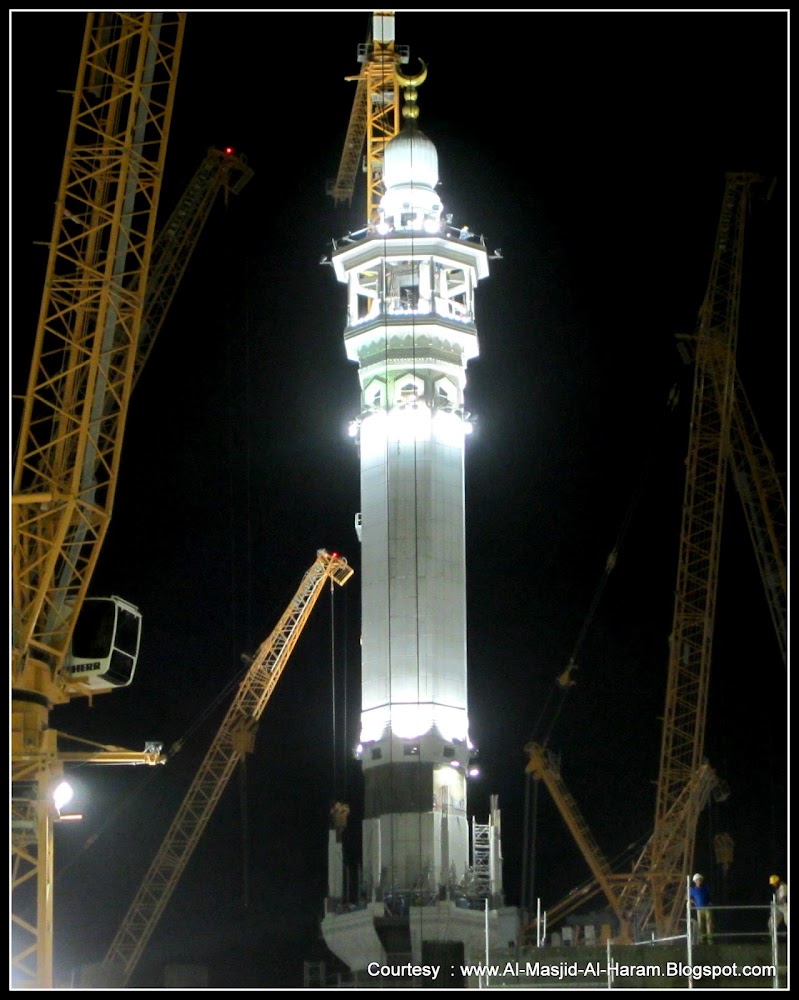
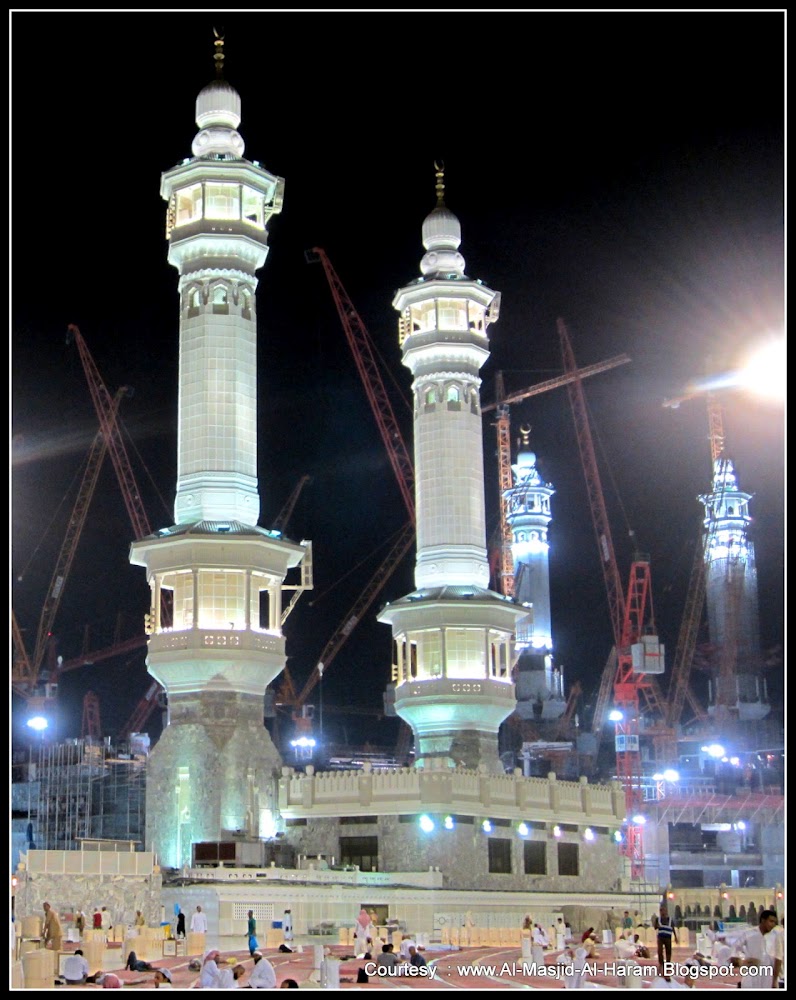
Look at the size of the new minarets. 


report post quote code quick quote reply
No post ratings
back to top
Rank Image
abu mohammed's avatar
London
27,587
Brother
9,606
abu mohammed's avatar
#948 [Permalink] Posted on 25th July 2012 03:17
Makkah car parks ready for inf lux of pilgrims


One of the car parks in Makkah ready to receive vehicles during Ramadan on Tuesday.

25 July 2012 - 06 Ramadan 1433 H

MAKKAH – Municipal authorities in Makkah have completed all measures to provide adequate parking space around the Grand Mosque for millions of visitors to the holy city during Ramadan, said Osama Al-Bar, the city’s mayor.

Parking lots at Kudai, Al-Omarah and Al-Aziziyah are ready for pilgrims to park their cars. Pilgrims and visitors will be guided to these three car parks in order to reduce traffic congestion in the central area of the city.
All parking areas have been asphalted and illuminated. In addition, the parking facilities will have mobile canteens strictly monitored by the mayoralty.

Cars parked in unauthorized locations within the city will be immediately towed away, the mayor warned.

He said impounded cars would be kept in five lots located at Makkah-Al-Madinah Highway, Makkah-Jeddah Highway, Makkah-Taif (Al-Sail) Road, Makkah-Taif (Al-Kar) Road and Makkah-Laith Road. These lots have also been provided with all necessary facilities such as bathrooms and places to rest.

The mayoralty is also taking care of cleaning and maintenance of the parking lots.


report post quote code quick quote reply
No post ratings
back to top
Rank Image
abu mohammed's avatar
London
27,587
Brother
9,606
abu mohammed's avatar
#949 [Permalink] Posted on 26th July 2012 09:47
Makkah Projects Exhibition

Makkah set to become smart city


JEDDAH: ARAB NEWS

Thursday 26 July 2012

Custodian of the Two Holy Mosques King Abdullah development project for Makkah will benefit all Muslims and will transform Makkah into a modern smart city, said Crown Prince Salman, deputy premier and minister of defense, after visiting an exhibition of Makkah projects here Tuesday.

Prince Salman commended the efforts of King Abdullah for the developments of Makkah. "The Saudi government considers it a great honor to serve the Two Holy Mosques."

He emphasized the Kingdom's endeavors to ensure the security and comfort of the millions of pilgrims who come to the holy places every year to perform Haj and Umrah. The crown prince hoped that the King Abdullah development project for Makkah would be implemented in the best form. He praised the efforts of Makkah Gov. Prince Khaled Al-Faisal in developing Makkah and other cities in the region. The new development plan for Makkah is expected to cost SR 100 billion.

According to Haj Minister Bandar Hajjar, a record six million foreign pilgrims are expected to perform Umrah this year. At present there are nearly 500,000 foreign pilgrims from 70 countries in Makkah. Hajjar commended the various services being extended to pilgrims by the Interior and Foreign ministries, as well as governorates.

Prince Khaled briefed the crown prince earlier on the major projects being implemented in the region.

On arrival to the exhibition, Prince Salman was greeted by Prince Khaled, Deputy Gov. Abdul Aziz Al-Khodairy, Makkah Mayor Osama Al-Bar, and Sami Barhameen, secretary-general of the Makkah Development Authority.

Addressing a brief ceremony on the occasion, Prince Khaled thanked the crown prince for visiting the exhibition. "It shows our leadership's keen support for the development projects," the governor said, adding that a number of new projects are being implemented in Makkah to make it a smart city.

Prince Salman and other participants later watched a documentary on the King Abdullah development project for Makkah. Prince Salman admired the new Makkah projects.

The crown prince was accompanied by a number of princes and top officials including Prince Saud bin Naif, head of the crown prince's court, Prince Abdul Aziz bin Salman, assistant minister of petroleum and minerals and Prince Muhammad bin Salman, special adviser.

Last year King Abdullah launched the largest expansion of the Grand Mosque in history, which will increase the mosque's capacity to more than 2.5 million worshippers and cost SR 80 billion. King Abdullah dedicated the new expansion to the Islamic world.

Saleh Al-Hosain, former head of the Presidency of the Two Holy Mosques, praised experts at Saudi universities for preparing the best environmentally friendly designs for the expansion, while incorporating high safety standards.

"As King Abdullah wished, the Islamic world as a whole will be proud of the new expansion project," Al-Hosain said.

A documentary screened during the ceremony said the expansion's main gate would be named after King Abdullah and will have two minarets, bringing the mosque's total number of minarets to 11.

Muhammad Al-Khozaim, vice president of the presidency, said the new project, covering 400,000 sq. meters in the northwest and northeast of the mosque, was the project of the century.

Abdul Mohsen Bin Humaid, director of projects, said the new project would be completed in a year and a half.

www.arabnews.com/makkah-set-become-smart-city
report post quote code quick quote reply
No post ratings
back to top
Rank Image
abu mohammed's avatar
London
27,587
Brother
9,606
abu mohammed's avatar
#950 [Permalink] Posted on 26th July 2012 09:48
Police emergency unit in Makkah receives over 4,000 calls daily

26 July 2012 - 07 Ramadan 1433 H

MAKKAH - Over 4,000 calls pour in daily - 150 every hour - to the Makkah Police emergency service unit.

Some instances of the emergency service unit in action include their rescuing a man and his two children who were locked inside a store. Police officers arrived at the scene, contacted the store keeper and had him reopen the store. Another time, a resident called the unit during Maghreb prayer and asked officers to fetch him some food as he was trapped inside his house and could not get out.

The officers brought him food and called a Civil Defense team to break down the door. Yet another instance was that of an old man who asked the unit to wake him up when the Maghreb prayer was called.

The unit also receives numerous calls from citizens who want officers to offer them Iftar meals.

The unit dispatches patrol cars to the locations with food. Police officers also coordinate with charity organizations to distribute meals during the month.

The emergency unit is aided by CCTV cameras to help keep a close eye on the central area of the Grand Mosque and other neighborhoods of Makkah.

There are thirty cameras distributed in different places near the Grand Mosque to pick up on suspicious activity which, if detected, is immediately investigated by a patrol car.

"Patrol car officers work non-stop during their shift, even during prayer times and Iftar. They have to break their fast inside their vehicles and remain vigilant," asserted Lt. Col. Abdul Mohsin Al-Harthy, director of the unit.

The emergency service unit is linked with every government department, and forwards calls not within their jurisdiction to the respective departments.

The unit then dispatches the nearest available patrol vehicle to the required location, arriving approximately seven to ten minutes after the call. All calls are recorded and prank callers are arrested.

www.saudigazette.com.sa/index...20120726131128
report post quote code quick quote reply
No post ratings
back to top
Rank Image
abu mohammed's avatar
London
27,587
Brother
9,606
abu mohammed's avatar
#951 [Permalink] Posted on 26th July 2012 09:49
Prisoners pardoned in Ramadan


26 July 2012 - 07 Ramadan 1433 H

Prisoners are seen walking out of a prison in Makkah on Tuesday. The Prisons Department in Makkah released 40 prisoners after they were granted a royal pardon during the holy month of Ramadan. The head of Makkah prisons urged all those released to take advantage of the holy month and urged them to be productive members of society and stay away from crime.

www.saudigazette.com.sa/index...20120726131129
report post quote code quick quote reply
No post ratings
back to top
Rank Image
abu mohammed's avatar
London
27,587
Brother
9,606
abu mohammed's avatar
#952 [Permalink] Posted on 26th July 2012 09:54

Holy Mosque great updates...

By Ibn Hanif - 23 July 2012

report post quote code quick quote reply
No post ratings
back to top
Rank Image
abu mohammed's avatar
London
27,587
Brother
9,606
abu mohammed's avatar
#953 [Permalink] Posted on 26th July 2012 16:17
Istanbul mosque displays ‘Prophet’s mantle’


The “holy mantle of the Prophet” (shown) said to belong to Prophet Mohammad (PBUH)
in the ‘Hirka-i Serif’ mosque in the Turkish city of Istanbul (file photo)

Jul 22, 2012

Thousands of people in the Turkish city of Istanbul have visited a mosque to see a garment, known as “the Prophet’s holy mantle,” said to have belonged to Prophet Mohammad (PBUH).

The citizens of Istanbul visit the mosque, named “Hirka-i Serif,” every year on the occasion of the Muslim holy month of Ramadan.

The garment is said to have been gifted by Prophet Mohammad (PBUH) to one of his followers Uwais al-Qarani who was martyred in the Battle of Siffin.

Under the Abbasid dynasty, the holy mantle went to Baghdad, then to Cairo under the Mamluks, and finally, during the reign of Ottoman Sultans, to Istanbul by Sultan Selim in 1595 and preserved along with some other holy relics.

A mosque, the “Hirka-i Serif” in Istanbul, was later built by Ottoman Sultan Abdulhamit I in 1853 to keep and protect the mantle and allow people to visit the holy relic.

Traditionally, the garment was visited by the sultan, his family, and the court during a religious ceremony on the fifteenth day of Ramadan each year.

http://www.presstv.ir/detail/2012/07...s-holy-mantle/

report post quote code quick quote reply
No post ratings
back to top
Rank Image
abu mohammed's avatar
London
27,587
Brother
9,606
abu mohammed's avatar
#954 [Permalink] Posted on 26th July 2012 16:18
Egyptians most numerous pilgrims to Mecca


Pilgrims attend Friday prayers around the Kaaba inside the Grand Mosque,
during the annual Hajj in Mecca, Saudi Arabia. (Photo: Reuters)

Wednesday 25 Jul 2012

Six million pilgrims have visited Mecca since the beginning of the Umrah pilgrimage season in February and Egyptians have comprised the largest contingent from any nation, Saudi Arabia's Hajj minister Bandar El-Haggar said Wednesday.

There are currently half a million pilgrims from 70 countries in Mecca, added El-Haggar.

The number of pilgrims has increased by half a million this year, according to the Saudi National Committee for Pilgrimage.

According to the deputy head of the pilgrimage committee, Abdallah El-Qady, the average cost of pilgrimage services offered during the last days of Ramadan is much higher than that offered during the first twenty days.

The number of pilgrims is expected to increase during the last ten days of Ramadan.

Egypt's total travel expense outflows in July 2011–March 2012 are estimated to be $ 1.9 billion, most of which is spent going to the oil-rich kingdom during the pilgrimage season.

The Umrah is a pilgrimage to Mecca performed by Muslims that can be undertaken at any time of the year. It is sometimes called the 'minor pilgrimage' or 'lesser pilgrimage'. The Hajj is the 'major' pilgrimage and is compulsory for every able-bodied Muslim who can afford it. The Umrah is not compulsory but highly recommended.

http://english.ahram.org.eg/NewsCont...-Mecca---.aspx

report post quote code quick quote reply
No post ratings
back to top
Rank Image
abu mohammed's avatar
London
27,587
Brother
9,606
abu mohammed's avatar
#955 [Permalink] Posted on 26th July 2012 17:01
The calligrapher of the Prophet's Mosque

Islamic artist finds peace in his work


The calligrapher of the Prophet's Mosque, Shafeeq uz Zaman, is from Pakistan
Arab News | Khalid Khurshid

Thursday 26 July 2012

The calligrapher of the Prophet's Mosque, Shafeeq uz Zaman, is from Pakistan.Since 1990, he has been doing calligraphy work (in the Thuluth script) on the mosque's 177 domes.He won second prize at the International Calligraphy Competition in Istanbul, Turkey.He has also won several competitions at national and international levels. Hundreds of Arabs and Turkish people are students of Ustadh Shafeeq. It is astonishing that he learned calligraphy on his own and calls himself the spiritual student of the renowned 20th century calligrapher, Ustadh Hamid Al-Amidi.Ustadh Shafeeq thinks in the period of computers, calligraphy's importance will not fade. He also says he finds peace while doing calligraphy in the Prophet's Mosque and cannot find this anywhere else. He shared his experiences and achievements in an interview with Khalid Khurshid.

AN: Do you think that calligraphy is a full-time job? How did you get interested in calligraphy?

SZ: Since childhood I was devoted to calligraphy and drawing. I think when I was six there was no paper or wall in my home that had been left untouched by my drawings and calligraphy. Whatever I got hold of chalk, pencil and colors, I made use of it. I used to get beaten by my parents but it didn't dampen my enthusiasm for drawing and calligraphy. After one scolding too many, I took my brush and paints outside and started to draw and write on the walls of my neighborhood. In the beginning, my parents were against my work and were also very harsh with me. After a long time passed, an elder in my family saw my work and was astonished. He told my parents that I was doing wonderful work.
If there was any free period or lunch break at school, all my classmates went outside to play but I didn't. I used to do calligraphy and sometimes draw on the classroom blackboard. When my teacher and classmates used to go into the classroom they used to be stunned and because of this I became well-known as a calligrapher and artist at school.
I won an interschool handwriting competition and I was also successful in handwriting competitions were held in Karachi. When I was in the fifth grade, I made all the boards and signboards at school. My art teacher used to tell me that one day I would make it big.

AN: We heard that you were employed to work in Saudi Arabia while you were working on a street.

SZ: While I was creating signboards using text from the Holy Qur'an for a company on a street in Karachi, a Saudi sheikh was passing by. When he saw my work, he immediately stopped and asked me to work for his company. At that time, my passport had not been issued, but the sheikh ensured I got one quickly and took me to Saudi Arabia. I worked for a long time in Riyadh as a calligrapher. I designed and made hundreds of signboards and plastic boards and I have also done screen paintings.

AN: Who was your teacher for calligraphy?

SZ: I learned calligraphy on my own. The Almighty Allah blessed me with the skills of calligraphy. At the beginning, I did this for fun but later I learnt from books.
My hard work and tireless calligraphy studies were the key to all my successes in life. During my stay in Madinah, I had the chance to meet the best calligraphers of the world and also saw their glorious work. I think I am most impressed by the magnificent work of the best calligrapher of the 20th century, Ustadh Hamid Al-Amidi of Turkey. You can call me his spiritual student. I always tried to maintain his standards and methods in my work. If we compared my work with his, no one would be able to tell the difference.


AN: How did your appointment as calligrapher of the Prophet's come about?

SZ: I used to visit Masjid Al-Nabawi many times. I was deeply impressed by the calligraphy done on the domes of Prophet's Mosque during the Turkish era and used to examine it for hours. While in Riyadh, I got an offer from Madinah to work for a signboard company, which I accepted immediately.
In 1990, the holy mosque's constructing company Dallah announced a worldwide calligraphy competition because most of the original work on the domes had worn off.
They were searching for a calligrapher who could retrace and correct the calligraphy. Nearly 400 pieces of work were showcased in this calligraphy competition. I was declared the winner, but the competition judges thought the winner would be a Turk or Egyptian. They were shocked to learn I was from Pakistan.
Their selection is a blessing from the Almighty Allah. When this competition was announced, I didn't want to participate. An Arab friend of mine convinced me otherwise. Even those who visit the mosque are shocked to learn the calligraphy was done by a Pakistani. It's an honor not only for me but also for Pakistan.

AN: Describe the work you are restoring in the Prophet's Mosque.

SZ: The construction of the Prophet's Mosque can be divided into three parts: the Turkish era construction; construction during King Saud's reign; and construction during King Fahd's reign.
The Ar-Rawdah, Al-Riyad Al-Jannah, Prophet's Minbar and Ashab Al-Sufa parts of the Prophet's Mosque were constructed during the Turkish era.
This construction was carried out during the reign of Turkish Sultan Abdul Hameed Khan. He said every mason should have learned by heart the Holy Qur'an. Every mason had to do ablution and then begin construction.
At that time the construction industry was not that developed. To build the mosque, the Turkish made the use of all resources available at that time. For the pillars, they melted metals. For the interior decoration, the sultan invited the most reputable calligrapher of the time, Ustad Abdullah Al-Zahidi from Turkey.
The sultan himself was a great calligrapher. For a long time Al-Zahidi did the calligraphy work and sketching on the mosque's domes.
In the book "The Art of Turkish Calligraphy," it is written that when Al-Zahidi finished his work, whoever then saw it refused to believe that it had been carried out by a mere mortal. Al-Zahidi's calligraphic work remained on the domes for about 250 years.
The chief judge of the committee that selected me as the calligrapher of the Prophet's Mosque was Ziauddin Ibraheem. He was the student of Ustad Hamid Al-Amidi and has been living in Madinah for a long time.

AN: What are the differences in the Turkish calligraphy style and yours?

SZ: There are about 177 domes constructed during the Turkish era in the Prophet's Mosque. Each dome's diameter is about 11 meters and the pen used for calligraphy is about 18 millimeters thick.
The modern style of carrying out calligraphic work is that one or more ayahs (Qur'anic verse) can be written but it should start and end on the same dome.
But the Turks did not do that. If an ayah was not completed on the same dome, they stopped and continued on the other dome. This is not easy because some domes are small and some are big. It takes about three to four months to write an ayah on a dome and sometimes longer.
Engraving was also carried out. All calligraphy was done in the Thuluth script. The writing style used in the Turkish era is called Rasm Amlai, but now the adopted style is called Rasm Usmani.
The mosque's supervisor said as Rasm Usmani is used by all Islamic scholars, that is the style all calligraphy work should use.
My work is a little bit different from Al-Zahidi. Saudi Arabia's reputable calligrapher, Usman Taha, who has also written Saudi Arabia's Holy Qur'an, used to read the calligraphy written on the domes of Masjid Al-Nabawi for a long time after Fajr. He has shown appreciation for my work.

AN: How long will it take to finish the calligraphy work on the 177 domes?

SZ: When the calligraphy began to spoil, the authorities retraced it with the help of a schoolteacher, calligrapher or painter. Whoever did the repainting for sure didn't have knowledge of the Thuluth script.
Because of this the original calligraphy started to get ruined and the words began to mix up. When I became the Prophet's Mosque calligrapher, I was asked to restore the calligraphy done in the Turkish era.
It was then decided new calligraphy should be written on all 177 domes constructed by the Turks in the Prophet's Mosque.
So far, nearly 80 percent of calligraphic work on the domes has been completed and the rest will be completed within four to five years. It can take more than three months to complete a dome.


AN: Carrying out calligraphy work on the domes is very difficult. How is calligraphy done?

SZ: First the size of the dome is measured. The ayahs to be written can be short or long. The method for writing a big ayah is to ensure the words do not look congested and the method of writing a small ayah is to ensure there are no spaces left between the words.
The most complicated part is to write a complete ayah on a dome.
After measuring the dome, I then make a rough sketch of the ayah to be written on the dome using a blackboard. The rough sketch is then transferred to traceable paper.
Then, the script is refined according to the rules of the Thuluth script. The words are then transferred onto the dome through a special process using zinc. After this, we complete the calligraphy work on the dome using a special kind of paint that lasts for about 200 years.
The calligraphy work is carried out at the night and requires a lot of patience.

AN: Many of the Turkish call you Shafeeq Thani. Why?

SZ: Ustadh Shafeeq Bay was a reputable Turkish calligrapher of his times. He carried out the calligraphy in Al-Aqsa Mosque.
This means the first Shafeeq had the honor of doing the calligraphy in Al-Aqsa Mosque while the second Shafeeq had the honor of working in the Prophet's Mosque.
This is why the Turkish call me Shafeeq Thani. Our work is similar because we use Jali script, but I have more control over my art.
Nowadays calligraphers write with a pen about 1 to 1.5 cm thick and using a computer enlarge the text by about 20 to 100 percent more before writing the text again.

AN: This period in time is also known as the computer age. What is the future of calligraphy in your view?

SZ: All names on the doors of the Prophet's Mosque like the King Fahd Gate, Salaam Gate, Rehmah Gate and others have been written by my own hands. The offices as well. No computers were used.
For the names and boards of the offices inside, the engineers created about 200 computer samples but none were approved, even though software using the Thuluth script was available.
For this type of work the only thing that is important is the creative mind. To write an ayah by hand in a particular style is remarkable cannot be achieved by a computer.
I am sure that in this computer age, calligraphers are not fading. They have no shotage of work. If computers could do this work, why would people come to us?

AN: Are you satisfied with your work? Did you teach your knowledge of calligraphy to others?

SZ: There are hundreds of my students living in Pakistan. I also have hundreds of students in countries like Turkey, Saudi Arabia, Afghanistan, Sudan, Yemen and others. Saudi calligraphers Bashar Alawa, Abdul Aziz Rasheedi, Badr Rasheedi and Abdul Hakeem are my students. The head of Madinah University and King Fahd Qur'an Complex created a school for learning calligraphy. I was a teacher of this center for a long time.

AN: How do you intend to raise awareness of Islamic calligraphy in Pakistan?

SZ: I hope to establish a calligraphy academy in Pakistan. I am trying very hard to get government support. I think we require such an academy in Pakistan so Islamic calligraphy becomes more important in society.
There are many such institutes in Pakistan but they are not of international standard. Calligraphy can be learned no matter how old you are. The thing is, you should have the interest, obsession and ability to learn calligraphy.
The need for an academy in Pakistan is important because it will be better for both student and teacher to be in one environment.
The two important things you have to learn in calligraphy are how to handle a calligraphy pen and alphabet style. I will also try to invite renowned Islamic and Arab calligraphers and calligraphy teachers to Pakistan to teach in the academy.

AN: For you, being the calligrapher of Masjid Al-Nabawi is a really big honor. Why didn't you get any award at government level in Pakistan?

SZ: The thing is, I didn't wish for such things in my life. My day and night starts and ends with calligraphy. I have lived about half of my life in Madinah. I love to be alone and do not crave media attention.
But people who understand calligraphy and also know me compliment my work. I don't want to comment on those people who have received calligraphy awards by the Pakistani government.
I am always satisfied with my work. I cannot find the peace I get while doing calligraphy in the Prophet's Mosque anywhere else and I thank Almighty Allah for that.

AN: What do you wish to fulfill in the future?

SZ: I have so many projects that I will try to fulfill in the future. It will take time to establish my dream projects. Being the calligrapher of the Prophet's Mosque is already a really big honor.
I want to do something really special for Pakistan that would attract people worldwide.
All well-known calligraphers from Turkey, Iraq and the rest of the Islamic world have stored their calligraphy works in museums, mosques and art galleries. They are still keeping their history alive.
Last year in Madinah the King Fahd Printing Press organized an international calligraphy competition featuring the work of about 600 calligraphers. The judges announced me the winner of the best calligraphy work. This year in Riyadh and Jeddah, the Pakistani diplomatic mission organized an Arabic calligraphy exhibition under the name "Alama Bil Qalam." Prince Sultan bin Salman, chairman of SCTA, purchased four of my calligraphy pieces.
Saudi Arabia's renowned calligrapher Nasir Mehmood visited this exhibition and referred to me as a teacher. My calligraphy work is also showcased at Sharjah Museum, UAE.

www.arabnews.com/islamic-arti...peace-his-work
report post quote code quick quote reply
No post ratings
back to top
Rank Image
abu mohammed's avatar
London
27,587
Brother
9,606
abu mohammed's avatar
#956 [Permalink] Posted on 27th July 2012 10:08

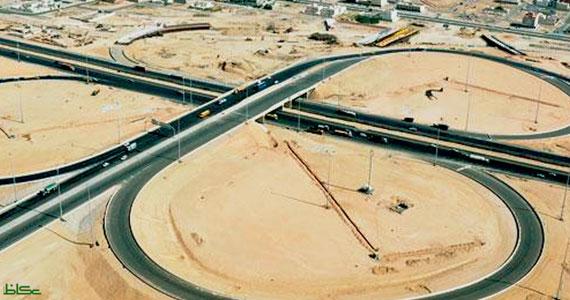
New bridges to the train and connecting the Two Holy King Abdullah Sport City Highway

جسور جديدة لقطار الحرمين وربط مدينة الملك عبدالله الرياضية بالطريق السريع


report post quote code quick quote reply
No post ratings
back to top
Rank Image
abu mohammed's avatar
London
27,587
Brother
9,606
abu mohammed's avatar
#957 [Permalink] Posted on 27th July 2012 10:10
report post quote code quick quote reply
No post ratings
back to top
Rank Image
abu mohammed's avatar
London
27,587
Brother
9,606
abu mohammed's avatar
#958 [Permalink] Posted on 27th July 2012 10:11

Civil Defense helicopters in Makkah

27 July 2012 - 08 Ramadan 1433 H

Civil Defense helicopters at an unknown airfield in Makkah. To support efforts exerted by field teams to protect the safety of pilgrims, helicopters are also participating in implementing the Civil Defense’s general plan to respond to any type of emergency during the month of Ramadan. The helicopters are equipped with state-of-the-art technology including thermal cameras and night vision and climate-sensing systems that allow rescuers to respond to fires, accidents and other emergency situations in record time and rescue persons who are in places that ground teams are unable to reach. Following the success in using helicopters during the Haj, security forces are increasingly relying on them to provide rescue, firefighting and ambulance services in crowded and hard-to-reach areas.

http://www.saudigazette.com.sa/index...20120727131213

report post quote code quick quote reply
No post ratings
back to top
Rank Image
abu mohammed's avatar
London
27,587
Brother
9,606
abu mohammed's avatar
#959 [Permalink] Posted on 28th July 2012 05:16

$26.6bn Makkah plan to be completed in 18 months

The $26.6bn redevelopment of Makkah has been hailed as the 'project of the century'.

The $26.6bn Makkah Development Plan (MDP) initiated by King Abdullah will be completed in 18 months, according to Abdul Mohsen Bin Humaid, director of projects.

The MDP will transform Makkah into a 'smart', according to Crown Prince Salman, Deputy Premier and Minister of Defense, reports Arab News.

Muhammad Al-Khozaim, Vice President of the Presidency, said the project, covering 400,000m2 in the north-west and north-east of the mosque, was the "project of the century".

Prince Salman commended the efforts by King Abdullah for the redevelopment of Makkah. “The Saudi government considers it a great honour to serve the Two Holy Mosques,” he reiterated.

He emphasised the Kingdom’s endeavors to ensure the security and comfort of the millions of pilgrims who come to the holy places every year to perform Haj and Umrah.

According to Haj Minister Bandar Hajjar, a record six million foreign pilgrims are expected to perform Umrah this year. At present there are nearly 500,000 foreign pilgrims from 70 countries in Makkah.

Hajjar commended the various services being extended to pilgrims by the Interior and Foreign Ministries, as well as the various governorates.

Last year King Abdullah launched the largest expansion of the Grand Mosque in history, which will increase the mosque's capacity to more than 2.5 million worshippers and cost $21.3bn.

Saleh Al-Hosain, former head of the Presidency of the Two Holy Mosques, praised experts at Saudi universities for preparing the best environmentally-friendly designs for the expansion, while incorporating high safety standards.

“As King Abdullah wished, the Islamic world as a whole will be proud of the new expansion project,” Al-Hosain said.

The expansion’s main gate would be named after King Abdullah and will have two minarets, bringing the mosque’s total number of minarets to 11.

report post quote code quick quote reply
No post ratings
back to top
Rank Image
abu mohammed's avatar
London
27,587
Brother
9,606
abu mohammed's avatar
#960 [Permalink] Posted on 28th July 2012 05:20
Crescent installation

Video showing a worker risked himself to raise the crescent
of the Grand Mosque expansion in Mecca


بالفيديو/ "عامل " يخاطر بنفسه لرفع هلال منارة الحرم المكي في توسعة الشامية


July 2012

في مشهد مهيب قام "عامل " بالمخاطره بنفسه لرفع هلال منارة الحرم المكي في توسعة الشامية. ويجري العمل حاليا على إنشاء مئذنتين جديدتين للمسجد الحرام بالساحات الشمالية للمسجد الحرام ليرتفع بذلك عدد المآذن في المسجد الحرام الى 11 مئذنة.

http://www.aljouf-news.net/news-acti...w-id-15596.htm


Google translation:

Majestic scenery in the "worker" to risk himself to raise the moon beacon Grand Mosque in Mecca in the expansion of maize. Work is underway to establish two new minarets of the Grand Mosque Balsahat North of the Grand Mosque, bringing the number of minarets in the Grand Mosque minaret to 11.


report post quote code quick quote reply
No post ratings
back to top

Jump to page: