



How Hadith Came to India
By Shaykh Abu’ l-Hasan ʿAli al-Hasani Nadwi رضي الله عنه
ilmgate.org
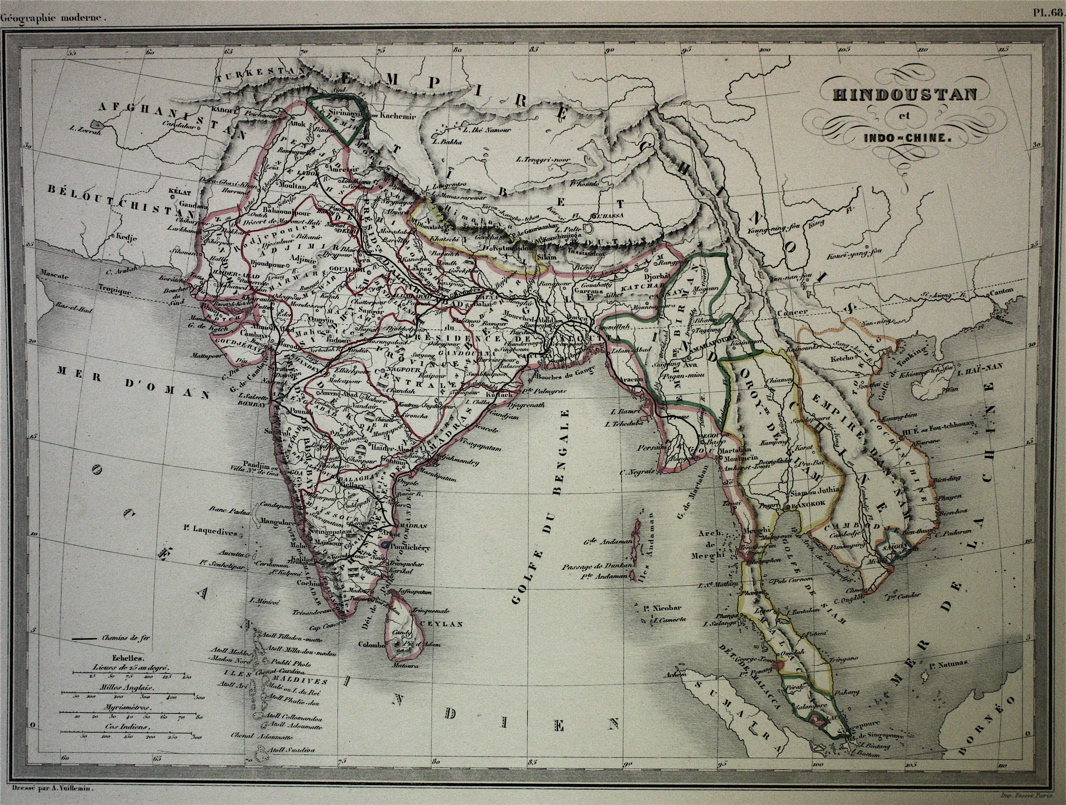
Taken from his foreword to Shaykh al-Hadith Mawlana Muhammad Zakariyya’s Awjaz al-Masalik, the acclaimed multi-voluminous commentary of Mu’watta Imam Malik.
Praise belongs to Allah Lord of the worlds, and blessings and peace on the master of the Messengers and Seal of the Prophets, Muhammad, the leader of the people whose extremities are whitened [from wudu] and on his Companions the guardians of the Book and the Sunnah, and carriers of the standard of the din, and on whoever follows them with ihsan of the firmly established people of knowledge who remove from Islam the alterations of the over-rigorous, and the arrogation of the falsifiers and the false interpretations of the ignorant.
The science of hadith is one of the sciences with which Allah has inspired this Ummah – right at the beginning and immediately after the death of its Prophet (peace and blessings upon him) – He inspired them to be concerned about it, and to struggle in the path of memorising them, recording, transmitting and publishing them, labouring to receive them and gather them together, competing with each other in being exact and precise about them, concerned about all the sciences and arts connected with them. That inspiration was strong and clear and in it there was manifest the wisdom of Allah and His concern for the purity of this din and for bringing it to completion, so much so that that was a psychological impulse whose source the ummah did not recognise and was unable to overcome or repel it, and it was a driving force which apparently drove it towards this goal strongly and violently, so that it was unable to oppose it. Inwardly it was a gracious companion so it did not perceive its heaviness and its pressure, and it found in its being carried towards it and in responding to it an incomparable sweetness, and an incomparable ease and joy, so that because of that tiring matters and hardships seemed little to it, and long distances and journeys seemed short when undertaken on its behalf, and it rushes against its seeker from the places it is expected, and its memorisation and narration from its people and its transmission from place to place floods and armies of people who are of the most intelligent of the nations and peoples.
_______
The science of hadith entered India in the very beginnings of the Islamic opening of it to Islam. Among the Mujahidun who went there travelling in the way of Allah there was al-Rabi ibn al-Subayh as-Saʿdi about whom al-Jalbi said in Kashf al-Zunun. “He was the first to make a compilation in Islam.” There is no doubt that he was one of the first authors in the science of hadith even if he was not absolutely the first of them. He died and was buried in India in 120 AH.
The science of hadith accompanied the Arabs who made military expeditions into these lands, mixed with their flesh and blood, and so they carried this noble science with them. People of knowledge who were narrators of hadith were present on every military expedition. Some of them took up residence in India and died there. The science of hadith spread in the dawlah of the Arabs and under their governance. When the dawlah of the Arabs became extinct in the lands of Sind and the Ghaznavid and Ghawrid kings conquered it, and people came successively from Khurasan and Transoxiana then hadith became as unusual there as red sulphur, and as extinct as the Phoenix of the West, and people were overcome by poetry, astronomy, the mathematical sciences and of the sciences of the din, the fiqh and usul. Many centuries passed like that until the craft of the people of India had become the Greek wisdom and desertion of the sciences of the Sunnah and the Qurʾān except for a little of what we mentioned of fiqh. The limit of their knowledge of hadith was Mashariq al-Anwar by al-Saghani, and then if anyone was raised to Masabih al-Sunnah by al-Baghawi or Mishkat al-Masabih he would think that he had reached the degree of a hadith scholar only because of his ignorance of hadith.
The state continued like that and the situation became desperate so much so that the connection of Indian muslims with this pure and original source of the deen almost ceased, and India was withdrawn from the movement of authorship and the teaching in the Arabic lands and lagged behind the party of Islamic sciences, becoming an independent and separate world. When Shaykh Shams al-Din al-Misri visited these lands at the time of ʿAlaʾ ad-Din al-Khalji in the eighth century hijrah, that pained and scared him, and so he wrote a letter to the Sultan taking the fuqaha of these lands to task for the little concern they had for hadith, however, the ʿulama of the country by trickery managed to keep the letter from reaching the Sultan.
However, Providence took care of India, and Allah made a present to these lands of noble travelling hadith scholars from Hijaz, Hadramawt, Egypt, Iraq and Iran. That was in the tenth century hijrah. However, most of them preferred to reside in Gujarat because of the existence there of Islamic governance which protected the sciences and cared for the people of knowledge. Its kings were distinguished by their attainments in the science of hadith and their infatuation with it. Most of these travellers died and were buried in Ahmadabad, the capital of governance for Gujarat.
Then divine providence drove some of the ʿulama of India, who are too many to mention here, to the noble Haramayn, the source and sanctuary of this knowledge, the most famous of whom was Shaykh Husam ad-Din ʿAli al-Muttaqi the author of Kanz al-ʿUmmal (died in 975 AH), and his pupil Shaykh Muhammad ibn Tahir al-Fatini (Patni) writer of Majma’ al-Bihar (died in 986 AH). These two gave noted service to the science of hadith and composed tremendous works on it. Then it was the turn of Shaykh ʿAllāmah ʿAbd al-Haqq ibn Sayf al-Din al-Bukhari al-Dihlawi (died 1052 AH) who took the science of hadith from the ʿulamaʾ of the Hijaz and transmitted it to India and made the home of the king, Delhi, its centre. He set to work seriously and in earnest spreading the science of hadith and serving it by teaching and writing commentaries; so the ʿulama turned towards the science of hadith and the Sahih spread widely, and the market was brisk with this science after trade had previously been slack because of lack of goods and the abstinence of the ʿulama towards it. His son and his grandchildren succeeded him in it, and they studied and wrote on it, and great ʿulamaʾ arose from every corner of India, and men sprang up among them acknowledged for their merit and their skill in the craft.
Then it was the turn of Shaykh al-Islam, Shaykh Ahmad ibn ʿAbd al-Rahim al-Dihlawi better known as Shah Wali Allah (died in 1176 AH). He travelled to the Hijaz and learnt hadith from Shaykh Abu Tahir Muhammad ibn Ibrahim al-Kurdi al-Madani. He then returned and confined his zeal to the project of spreading hadith, and so the State of hadith was established in India and its gentle breeze blew east and west, north and south, and fell upon its students, the seekers of the science of hadith, from the remotest corners of India. Knowledge of the science of hadith became a precondition for complete knowledge, and the outward sign of the people of right action and correct ʿaqidah so much so that an ʿalim would not be reckoned an ʿalim until he excelled in it. Study of the six Sahih works became established in every circle of study, and its students and their students in turn became widespread the length and breadth of India, just like the tree of Tuba whose branches are found in every place but whose roots and trunk are unknown. There is no isnad, no lecture, no authorship, no reform movement, and no revival movement but that its lineage of scholarship returns to this blessed genealogical tree and its lofty branches. It is true what is said:
Whoever visits Your door then his limbs continue
to narrate hadith as long as You display graces.
For the eye is from Qurrah, the palm from Silah,
the heart is from Jabir and the hearing is from Hasan.
Shah Wali Allah’s intelligent son and righteous pupil Shah ʿAbd al-ʿAziz ibn Wali Allah (died 1239 AH) succeeded him, and Allah blessed his teaching, and notable ʿulama and great scholars of hadith were educated by him, the most famous of whom and the most successful of them in spreading hadith and in educating scholars and teachers was his grandson Shaykh Muhammad Ishaq ibn Muhammad Afdal al-’Umari (died 1262 AH), who succeeded to the leadership in hadith in the last epoch, and who became the authority and the ultimate resort in tuition and training. People made great efforts to travel to him from distant lands. Allah decreed that success and acceptance for him which He did not decree for any of his contemporaries in India, or in most of the Islamic lands. That is the bounty of Allah which He gives to whomever He wishes. From him there originate and at him there meet all of the schools of thought of understanding hadith and explaining and interpreting them. To whatever movement they belong and whatever the disparity of their schools, their scholarly lineage reverts to him and they all wind up in their chain of transmissions with him. He is the support of India, the means of the contract, and the uttermost limit of the people of narration in this later epoch.
One of the most intelligent and well known of his pupils was Shaykh ʿAbd al-Ghani ibn Abi Saʿid al-Mujaddidi al-Dihlawi (died 1296 AH) who emigrated to Madinah Munawwarah. Many people in India and in the two Noble Sanctuaries benefitted from his lessons, and at his hands many sincere people [turned] towards Allah and people of knowledge devoted to Allah were trained, people who gave their lives to teaching the noble hadith, spreading and serving them.
Because of the merit of these sincerely devoted people who gave their lives for spreading hadith and teaching it, composing works on its arts and on its derivative rulings, India became a centre for this science and a refuge for the leaders in this art. After having been an uninvited guest at the table of the Arabic countries for centuries, they after some time were taking this science from them, and rekindling its lamp, after its oil had run out, from one of the lamps of this science in lands of the Arabs, and India was illuminated by the light of this knowledge and the lamps were spread in all its corners like pearly stars, and there arose at one instant in many towns in these lands and in some of its villages circles devoted to study of the knowledge of hadith, and scholars who had completed their studies in the other sciences exerted themselves to travel there and would devote themselves totally to seeking the prophetic hadith for a year or more, and they would devote themselves totally to it, no other aim diverting them and no other knowledge competing with it, and their zeal undivided, their thoughts unconfused. They would confine themselves in the main to one shaykh and to one science and to one goal so that they could emerge from these circles as teaching masters, and guiding instructors. So the intelligent students and those educated in the madrasahs revolved around them whose business was to be with their masters and their shaykhs. The matter continued and the light was transmitted and the circle expanded as much as Allah willed.
These circles which sprang up from a solitary individual and which revolved around him were established in most of the major cities and well-known towns such as Delhi, Lucknow, Saharanpur, Panipat, Deoband, Muradabad, Bhopal, and towns such as Gangoh, Ganj Muradabad and others.
Gangoh was the centre of Shaykh Rashid Ahmad Gangohi (died 1323 AH) the pupil of Shaykh ʿAbd al-Ghani ibn Abi Saʿid al-Mujaddidi. He united the talents of instruction, spiritual guidance, teaching and the issuing of fatwas. He used to teach a variety of sciences and then he turned to teaching the noble hadith and confined himself to it apart from all other sciences. Students and scholars turned in his direction from every direction, and they would stay with him for a year reading the Six Sound Books to him, benefiting by his company and his instruction, taking him as a model in qualities of character and ordinary transactions, in deeds and acts of worship, in following the Sunnah and fleeing from innovations and recently introduced matters. They tasted the science of hadith both in practice and in study, and became strong in love of it, firmly resolved to serve it and spread it, and to prefer it to all other sciences and occupations, because of what they had seen of their shaykh’s self-sacrifice in being occupied with it and that it had mixed with his flesh and blood, and become manifest in his life, his movement and his stillness. The author of Al-Thaqafah al-Islamiyyah fi’l-Hind – Islamic Culture in India – mentioned him and he said, ‘He learnt from the aforementioned shaykh ʿAbd al-Ghani. He studied for thirty years. His teaching the Six Sound books occupied one complete year involving reflection and thoroughness, exactitude and precision. None of his contemporaries equalled him in that.’
One of his leading pupils who was most loyal to his knowledges and his scholarly heritage, and most careful to spread it and transmit it was the shaykh Muhammad Yahya ibn Muhammad Isma’il al-Kandahlawi (died 1334 AH) who had a firmly established scholarly aptitude and whose intelligence and acumen were ignited. His shaykh loved and preferred him a great deal, and had taken him as his personal companion, the narrator of his knowledge, and the writer of his letters and treatises. He recorded his shaykh’s lessons, and his dictation, and then he revised and edited them. He gathered what he had heard from him on the study of the Sunan al-Tirmidhi in a collection which he called al-Kawkab al-Durri – The Pearly Star – and he gathered what he had heard from him on the study of al-Jami’ al-Sahih by al-Bukhari in another book. By that he preserved a great portion of his knowledge and his revisions, thus making them as words which would endure in his posterity.
Translated by Abdussamad Clarke
Courtesy of Hafiz Abu Unaysah



