"We have been seeing you turn your face to heaven. So, We will certainly assign to you a Qiblah that you would like. Now, turn your face in the direction of the Sacred Mosque (Al-Masjid al-Haram). And, wherever you be, turn your faces in its direction. Even those who have been given the Book know well that here is the truth from their Lord. And Allah is not unaware of what they do."(2:144)
The Orientation to Qiblah
This verse begins by speaking of how deeply the Holy Prophet Sallallahu 'Alayhi Wasallam: Peace be upon him wished that the Ka'bah be appointed as the Qiblah of the Muslims. This inclination has been explained in different ways, but there is no real contradiction involved in these different views. For example, it has been said that before prophethood was conferred on him, he used to follow, out of the impulsion of his own nature, the way of Sayyidna Ibrahim (Abraham) (A.S), and that when he began to receive the Revelation, the Holy Qur'an itself designated his Shari'ah as being in total accord with the Abrahamic Way.
Moreover, the Qiblah of Sayyidna Ibrahim (A.S) as well as that of Sayyidna Isma'il (A.S) had been the Ka'bah. So, it was quite in the nature of things for him to wish that the Ka'bah be appointed as the Qiblah of the Muslims. An additional factor was that the Arab tribes, in spite of being associators, at least claimed to be the followers of the Abrahamic Way, and acknowledged the Ka'bah as their Qiblah in contradiction to the Jews. Once the Ka'bah had been made the Qiblah of the Muslims, the Arabs could be expected to find Islam more acceptable. As for the hope that the adoption of the Baytul-Maqdis as the Qiblah would bring the Jews closer to Islam, it had been dashed by the events of the last sixteen orseventeen months, for the hostility of the Jews to Islam, fed by their vanity, had only been growing more intense.
Whatever be the motive, the Holy Prophet Sallallahu 'Alayhi Wasallam: Peace be upon him was very keen to see the Ka'bah appointed as the Qiblah. Now, prophets are as close to Allah as man can ever be, and this exalted station teaches them to observe a very strict spiritual etiquette - they never submit a request before Allah until and unless they have received the permission to do so. This principle leads us to believe that the Holy Prophet Sallallahu 'Alayhi Wasallam: Peace be upon him had already been allowed to pray for his wish to be fulfilled, and that he hoped his prayer would be granted. So, he used to turn his face again and again to the sky, anxiously waiting for an angel to appear and bring the injunction he had been wishing for.
In the present verse, Allah describes this state of the Holy Prophet Sallallahu 'Alayhi Wasallam: Peace be upon him in an appreciative manner, and promises to assign him a Qiblah that he would like. Immediately after the promise, there follows the commandment: "Now turn your face in the direction of the Sacred Mosque." Here we find a manifestation of the subtle workings of divine grace - the Holy Prophet Sallallahu 'Alayhi Wasallam: Peace be upon him, was, to begin with, granted the joy of hearing a promise made, and, immediately after, the greater joy of seeing the promise fulfilled. (Qurtubi Jassas and Mazhari)
Injunctions and Related Considerations
As we have explained earlier, Allah is not confined to any direction or dimension: "Say: the East and the West both belong to Allah." (2:115) But in order to institute a communal unity among the Muslims scattered all over the world, Divine Wisdom thought fit to assign them a particular and definite orientation which could serve as a visible symbol of that unity. Now, this orientation could have as easily been provided by the Baytul-Maqdis. But the Ka'bah was finally chosen as the Qiblah in accordance with the wish of the Holy Prophet Sallallahu 'Alayhi Wasallam: Peace be upon him, and the injunction was announced in the present verse. The situation required that the Holy Qur'an should use the phrase: 'Turn your face toward the Ka'bah, or toward the Baytullah.' But we actually find the Holy Qur'an saying: "Turn your face in the direction of Al-Masjid al-Haram." This particular mode of expression helps to clarify several important questions with regard to the Qiblah.
Although, the Qiblah, to be precise, is the Baytullah, which is known as the Ka'bah, yet it is obvious that one can turn exactly towards the Baytullah only so long as one can see it with one's own eyes, and that for those who live at some distance and cannot see it directly, it would be too rigorous an obligation to fulfil, if they were required to turn exactly towards the Baytullah - in the case of instant towns, an exact orientation would be difficult and uncertain even with the help of the instruments and calculations. But the Islamic Shari'ah always aims at making things easy for people. So, the Holy Qur'an has designated as the Qiblah, not the Baytullah or the Ka'bah, but Al-Masjid al-Haram which covers a much wider area, and in the direction of which it is easy to turn even for those who live in far off places.
Then, a greater facility has been provided by the use of the word Shatr. This Arabic word signifies "the half of a thing", or "the direction in which a thing lies." According to the consensus of the commentators, here the word has been used in the second sense. So, the word itself points to the rule that in the case of places which are far from Makkah it is not even necessary for the prayers to be valid that one should turn exactly towards Al-Masjid al-Haram - for, it is quite sufficient to turn only "in the direction" of the Sacred Mosque, as the Holy Qur'an itself-has indicated. (Al-Bahr al-Muhit).
Let us give an example to make the rule as clear as possible. For countries which lie to the East of Makkah (e.g. Pakistan or India), the direction of Al-Masjid al-Haram means the West. So, if one turns towards the West, one's prayers would be valid enough. Since the point at which the sun sets in the summer is different from that where it sets in the winter, the Fuqaha' (the Muslim jurists) have decided that for the purposes of Salah in such countries, the West (the direction of the Qiblah in this case) lies in between these two points. In mathematical terminology it means that an area covering 48 degrees between these two points is to be taken as being the direction of the Qiblah. That is to say, even if one inclines 24 degrees to the right or to the left of the point at which Al-Masjid al-Haram is situated, one would still be considered to be praying in the right direction, and one's prayers would be quite valid. (For details, see "Sharh al-Chaghmini, ch. IV)
This discussion should be enough to expose the ignorance and muddle-headedness of those who, finding a slight deviation of two or three degrees in the orientation of some mosques in Pakistan and India, have pronounced the prayers offered in these mosques to be null and void. Such baseless opinions only betray the desire on their part to produce confusion and bickering among the Muslims. Let us not forget that the Islamic Shari'ah is meant for all men and for all the countries of the world, and will last till the Day of Judgment. Hence, the injunctions of the Shari'ah pertaining to all the spheres of human life have been made easy to practise, so that Muslims living in farflung hamlets, mountains, forests or islands may act upon them only on the basis of their own observation and experience, without needing the help of scientific instruments or mathematical calculations.
Thus, people living to the East of Makkah may take an area covering 48 degrees as their Qiblah - a deviation of five or ten degrees would not affect the validity of their prayers in any way. This has been made quite clear by a hadith reported by al-Tirmidhi from the blessed Companion Abu Hurayrah Radhi-Allahu Anh: Allah be pleased with him which says: "The Qiblah lies between the East and the West." This hadith is actually addressed to the people of Madinah whose Qiblah lies, to be precise, in the direction of the South somewhere between the East and the West, but, in effect, the hadith provides an explanation of the phrase "in the direction of Al-Masjid al-Haram." This is the general principle; one should, however, make an effort to ensure, in laying down the foundation of a mosque, that the orientation towards the Baytullah is as exact as possible. The successors of the Blessed Companions and the generations following them had adopted a very simple method for determining the correct orientation: If there was a mosque built by the blessed Companions present in a town, the neighbouring mosques were given the same orientation, and these in their turn used to serve as the models for the mosques in the villages or towns in the region concerned, thus setting up a chain which went on prolonging itself.
Consequently, the method of determining the Qiblah in places far off from Makkah has always been this: If an old mosque is present in the vicinity, the new mosques should conform to its orientation, for in so many towns it is the blessed Companions themselves or their successors who have built mosques and determined their orientation which has been followed by later generations.
To conclude, the mosques which have so far been built are quite sufficient for the purpose of determining the orientation, and it is not proper to raise unnecessary objections and doubts in this respect - the Shari'ah actually disapproves of such attempts at leading Muslims into perplexity. For, such a perplexity may sometimes have the consequence of making people suspect that in so far as the blessed Companions, their successors or the generality of Muslims have not been able to determine a mathematically correct orientation, their prayers have not been valid. Such a thought is not only false, but also betrays the insolence of the man who can harbour it. It is in view of this that Ibn Rajab, the famous Hanbali scholar of the 8th century A.H., disapproves of the use of astronomical instruments and complex mathematical calculations for the purpose of fixing the orientation. He writes:
"As for the science of astronomy, it is legitimate, according to the 'Ulama' in general, to acquire it for its being helpful in determining the Qiblah or in finding one's way in a journey or the directions of the roads. A greater knowledge than this is not at all necessary (according to the Shari'ah), for that may lead one to neglect more important things, and an indulgence in complex calculations may sometimes produce vile doubts about the mosques of Muslims in their towns - a weakness to which the amateurs of such sciences are all too prone. It may even lead one to believe that the prayers of the blessed Companions and their successors in certain towns had been invalid - a belief which is totally false. For this reason, Imam Ahmad ibn Hanbal has forbidden the Pole-Star to be taken into consideration for determining the orientation, on the ground that the hadith says no more than that the Qiblah lies between the East and the West."
As for deserted regions, forests or new settlements, etc. where no earlier mosques are to be found, the Shari'ah lays down this rule on the basis of the practice of the blessed Companions and their successors: in such places one should arrive at an approximate determination of the Qiblah with the help of the Sun, the Moon and Pole-Star, these being the phenomena with which everyone is familiar enough; and if one still suspects some slight deviation, one should ignore it. For, according to al-Bada'i', the authoritative work on Islamic jurisprudence, in places far off from Makkah, an approximately correct orientation, chosen on the basis of such general indications, stands for the Ka'bah, and all the injunctions pertaining to the Qiblah apply to the orientation selected in this manner. The Shari'ah provides many illustrations of the basic principle involved here.
For example, sleep is taken to stand for the passing of wind, and invalidates the Wudu (the prescribed ablution); or, a journey is taken to represent hardship, even when an actual journey does not involve it, and a man who is in the course of any kind of a journey is given all the concessions allowed by the Shari'ah to a traveller. The principle requires that an orientation determined on the basis of general and familiar indications should be accepted as the Qiblah. The great scholar known as "Allamah Bahr al-'Ulum" lays down the rule thus in his "Rasa'il al-Arkan":
"The only condition necessary to be fulfilled in turning towards the Qiblah is that the man offering his prayers should be duly convinced that his face is turned in the direction of the Ka'bah. The Shari'ah does not compel us to adopt exactly the orientation which can be obtained only with the help of astronomical instruments. So the 'Ulama in general have come to the conclusion that a deviation invalidates the prayers only when the difference is as great as between the East and the West."
Those interested in a detailed discussion of the subject may consult my book in Urdu, "Simt-e-Qiblah."
"And even if you bring every sign to those who have been given the Book, they would not follow your Qiblah. And you are not to follow their Qiblah, nor are they to follow each other's Qiblah. And if you were to follow their desires after the knowledge that has come to you, you will then certainly be among the unjust."(2:145)
In continuing the discussion on the subject of the Qiblah, or the divinely-ordained orientation, the present verse provides yet another instance of the maliciousness of the People of the Book. It is not that they demand solid and convincing arguments in order to be able to accept the new injunction with regard to the Qiblah: it is sheer stubbornness which does not allow them to give their assent, and no proof in the world, declares the Holy Qur'an, is ever going to satisfy them. In fact, their two groups display an equal malice even towards each other - the Jews have adopted the Baytul-Maqdis as their Qiblah, while the Christians have chosen the East, and each group rejects the Qiblah of the other. On the other hand, the Holy Prophet Sallallahu 'Alayhi Wasallam: Peace be upon him, cannot accept either of these two orientations, for the new Qiblah of the Muslims - the Baytullah - has been instituted by a divine commandment, and is never going to be abrogated.
So, there is no likelihood of an agreement between the People of the Book and the Muslims in this, matter. The Baytul-Maqdis, no doubt, had once been instituted by a di�vine commandment, but that commandment has now been abrogated. Anyone who follows an abrogated injunction, and ignores the new injunction which has replaced the earlier one, is actually disobeying Allah, and acting upon his individual opinion and personal desire. Naturally, it is impossible for the Holy Prophet Sallallahu 'Alayhi Wasallam: Peace be upon him to follow the desires of the People of the Book. But, supposing for the sake of supposition, were he to do so even after having received a definite injunction through the Wahy (Revelation), he would be counted among the unjust - that is, among those who disobey divine commandments. Such a situation, however, can never arise. Being a prophet, he is essentially sinless, and as such cannot possibly be among the unjust. From this principle it logically follows that it is impossible for him to favour the desires of the People of the Book, and to accept their Qiblah as his own.
Let us make it quite clear that this warning is outwardly addressed to the Holy Prophet Sallallahu 'Alayhi Wasallam: Peace be upon him, but is, in fact, intended for his Ummah, which is being asked to realize fully the gravity of the sin of ignoring or disobeying the injunction which has finally established the Baytullah as the Qiblah of the Muslims.
As for the phrase: "You are not to follow their Qiblah", it is meant to declare that the Baytullah shall now stay as the Qiblah upto the end of the world. Thus, the declaration refutes the scoffing allegation of the People of the Book that there was no stability in the Islamic injunctions, and that the Muslims might again adopt the Baytul-Maqdis as their Qiblah. (Al-Bahr al-Muhit)
"Those whom We have given the Book recognize him (The Holy Prophet) as they recognize their own sons. And, in fact, a group of them does conceal the truth while they know. The truth is from your Lord. So, never be among those who doubt." (2:146-147)
Verses 144 and 145 have told us how the People of the Book knew in their hearts that a divine commandment itself had instituted the Baytullah as the Qiblah of the Muslims, and yet denied this fact in public. Now, the two present verses show that their conduct towards the Holy Prophet Sallallahu 'Alayhi Wasallam: Peace be upon him was equally dishonest and malicious.
The Torah and the Evangile had already foretold the coming of the Holy Prophet Sallallahu 'Alayhi Wasallam: Peace be upon him, and set down the signs and indications which should help the people to recognize him. On the basis of the irrefutable evidence provided by their own Sacred Books, the Jews and the Christians knew him to be the promised Last Prophet Sallallahu 'Alayhi Wasallam: Peace be upon him, but many of them refused to acknowledge him as such out of sheer obstinacy.
Let us add a word or two in order to explain the simile employed here by the Holy Qur'an - that of man recognizing his own son without any doubt or ambiguity. As everyone knows, in bringing two terms into comparison with each other, a simile does not involve in this analogy all the aspects of these two terms, but only those which should be relevant to the occasion.
So, in considering the present simile one should not allow one's imagination to roam far afield, and bring under discussion even those cases which happen to be illegitimate. For, the present simile intends to make a very simple and obvious point - since the son grows from infancy to manhood normally under the eyes of his parents, his face or general appearance is quite sufficient for his father to recognize him without any doubt or hesitation. The Jews and the Christians enjoyed the same kind of facility - or even certainty - in being able to recognize the Last Prophet Sallallahu 'Alayhi Wasallam: Peace be upon him. So, to persist in denying him was as dishonest as refusing to recognize one's own son should normally be.
And it was just this kind of gross dishonesty that the People of the Book were indulging in. Some of them, while denying the truth themselves, even tried to keep it concealed from others, although they knew fully well that this particular truth (that is to say, the new injunction with regard to the Qiblah) had been established by Revelation from Allah Himself.
The phrase, "The Truth is from your Lord", can also be interpreted in a general sense as providing a definition of the nature of truth - namely, that alone is truth which comes from Allah. One who has understood this fact can never allow himself to be in doubt with regard to this particular truth or to any other which has been revealed to a prophet by Allah.
"And for everyone there is a direction to which he turns his face. Strive, then, to excel each other in good deeds. Wherever you are, Allah will bring you all together. Allah is certainly powerful over everything. And from wheresoever you set out, turn your face in the direction of the Sacred Mosque (Al-Masjid al-Haram). That, indeed, is the truth from your Lord. And Allah is not unaware of what you do. And from wheresoever you set out, turn your face in the direction of the Sacred Mosque (Al-Masjid al-Haram). And wherever you are, turn your faces in its direction, so that people should have no argument against you, except for those among them who are unjust - do not fear them, but fear Me! -, and so that I should perfect My blessing upon you, and that you may get the right path."(2:148-150)
The Change Of Qiblah
The question of religious orientation being of the highest significance for an Ummah (or a traditional community), these verses continue and enlarge upon the theme of the Qiblah, and lay down further raisons d'etre for the change.
It is, the commentators point out, an observable fact that every traditional community has had a religious orientation of its own, whether appointed by Allah or chosen by itself. This being so, why should anyone object, or wonder that Allah has appointed for the Islamic Ummah a Qiblah peculiar to it? After all, it is a regular and distinct Tradition in its own right - in fact, the last of all Traditions, which makes it all the more necessary that it must have a distinct Qi�blah.
Anyhow, once the divine commandment has been promulgated, the Muslims need not worry about the objections or the ridicule of others, but should, above all, concern themselves with the performance of good deeds (as defined by Allah and His Prophet Sallallahu 'Alayhi Wasallam: Peace be upon him). They should, indeed, give up fruitless controversies and strive to excel in good deeds, for they have to appear before Allah on the Day of Judgment when they will be rewarded or punished according to their deeds.
The raison d'etre laid down in this verse requires that the Muslims should, whether staying at home or travelling, turn their faces in the direction of Al-Masjid al-Haram, for that undoubtedly is the Qiblah appointed for them by divine comsaandment. It is obligatory for them to obey this as well as any other commandment, bearing in mind that Allah is not unaware of what men do.
In repeating this commandment, Verse 150 adds a third raison d'etre. The Torah and the Evangile had indicated that the promised Last Prophet would have the Ka'bah as his Qiblah. If the Muslims continued to pray with the Baytul-Maqdis as their Qiblah, the opponents of Islam would have found an argument to justify their denial of the Holy Prophet Sallallahu 'Alayhi Wasallam: Peace be upon him. But the new commandment with regard to the Qiblah takes away the ground from under their feet, and at least the just ones among them can no longer raise this kind of objection. Of course, the stubborn and malignant ones would still carp - they would start saying that it was the Baytul-Maqdis, and not the Ka'bah, which had been the Qiblah of the earlier prophets, and that the adoption of the Ka'bah constituted an infringement of the established prophetic tradition. But the Muslims need not worry about defending Islam against such baseless objections, for the only thing which can be harmful to them is not the hostility of men but the disobedience to or disregard of divine commandments.
So, in Verse 150, Allah asks the Muslims to fear, not the enemies of Islam, but Him alone. This is the only way to remain true to the divine guidance they have received - namely, Islam. This steadfastness, too, is a blessing from Allah, and the blessing will appear in its perfect glory in the other world when the Muslims shall, as a reward for their faithfulness, be admitted to Paradise.
Let us note that in announcing the commandment with regard to the change in orientation, Verses 144-150 address the listeners three times in the singular number and twice in the plural. In a general way, one can say that this repetition is meant for emphasis. The commandment fixing a new Qiblah not only provided an occasion for the glee of the opponents of Islam, but was also a very conspicuous and sudden change in the religious observances of the Muslims themselves, whose hearts would have remained perturbed without such an emphatic repetition. The reiteration also suggests that this is the final and definite decision with regard to the Qiblah, and that no further change can be expected in this matter.
Imam Al-Qurtubi (rahmatullahi alaih) has, however, explained this mode of expression in such a way that the repetition becomes something more than mere emphasis, and each phrase, in being repeated, acquires a new implication. It goes without saying that the commandments in the singular number are addressed to the Holy Prophet Sallallahu 'Alayhi Wasallam: Peace be upon him himself, and those in the plural to the blessed Companions and to the Muslims in general. Thus, the commandment in Verse 144 pertains to the situation of those who find themselves in Madinah or in their own home-town, whatever that might be, and is intended to make it clear that the injunction is not particular to the mosque of the Holy Prophet Sallallahu 'Alayhi Wasallam: Peace be upon him but applies to every town or village and to every quarter of a town. Verse 149 repeats the commandment with the addition of the phrase "from wheresoever you set out", which shows that the injunction now refers to the state of a journey. Since a journey involves different situations - for example, unbroken travel for several days at a time, or a short or long stay somewhere in the course of the journey -, Verse 150 repeats the injunction in order to cover all these situations.
Let us add that Verse 148 introduces the theme of orientation with the word Wijhatun, which lexically signifies "the thing one turns one's face to", and which has been interpreted by the blessed Companion Ibn 'Abbas as "Qiblah" or religious orientation. In fact, the word Qiblatun itself appears in the reading of the blessed Companion Ubayy ibn Ka'b, which leaves no ambiguity in interpreting the phrases.
[Before we leave the subject, let us remark that nowadays quite a good number of people, especially those with a Western formation, approach the Holy Qur'an as they do a book composed by a human author who pays due regard to what commonly passes as logic and sequential argument, and often do feel embarrassed or confused when they come across the close repetition of words and phrases in the Book of Allah, finding it impossible to explain or justify what is seemingly redundant. And it is not unlikely that this embarrassment may open the way to shame-faced misgivings and doubts even in the minds of those who wish to serve the cause of Islam in the modern world. What these men of good will tend to ignore is the elementary fact that the Word of Allah cannot be subservient to the rules of philosophical or literary composition, and that the reiteration of words and phrases, even of a sequence of sentences, is a regular mode of expression common to all the Sacred Books of the world.
Moreover, the great orthodox (in the sense of unfailing adherence to the Qur'an and Sunnah) commentators of the Holy Qur'an have tried, each in his own way, to suggest the raisons d'etre of this device, and also to explain the possible implications of each particular instance of repetition. Some of the explanations pertaining to the verses we are concerned with here have been summarized by Maularia Muhammad Idris in his own commentary, from which we borrow the following resume:-
1) The first declaration is addressed to those who reside in Makkah, the second to those who live in the Arabian peninsula, and the third to all men living anywhere in the world.
2) The first is intended to cover all the situations and states, the second to cover all the places, and the third to cover all the periods of time.
3) This passage of the Holy Qur'an lays down three raisons d'etre for the change in the religious orientation; hence, the commandment has been affirmed afresh along with each argument.
4) This was the first occasion in the Islamic Shari'ah when a new commandment to abrogate an earlier one came. So, repetition was necessary to impress upon the minds of the people the multiple significance of the occasion and of the commandment.
5) The abrogation of any commandment whatsoever is likely to give rise to all sorts of doubts, and to produce internal or external disorder. The naive cannot, anyhow, understand the why and how of an abrogation occurring in the case of a divine commandment. So, an emphatic reiteration becomes all the more essential.]
Injunctions And Related Considerations
(1) Verse 145 has already indicated to the Muslims that although Allah has now appointed a new and permanent Qiblah for the whole of mankind, yet the Jews and the Christians are not going to give up their respective orientations, nor shall the Muslims ever forsake their own. The People of the Book, anyhow, have no right to object to the Ka'bah being divinely chosen as the Qiblah of the Muslims, for - as Verse 148 reminds us - every traditional community (Ummah) has always had a Qiblah of its own, and so does the Islamic Ummah. Since the Muslims can be sure of their right to a Qiblah peculiar to them, and the People of the Book are not expected to listen to reason, Allah asks the Muslims in this verse not to engage themselves in fruitless discussions and futile disputes, but to "strive, then, to excel in good deeds." The Holy Qur'an discourages unnecessary discussions, for they make one neglect one's real task, which is to prepare oneself for one's death and for the other world. So, the verse ends with the rejoinder that on the Day of Judgment Allah shall bring all men together, and suggests that the desire to be safe from the criticism of others and the anxiety to win over them in disputes only betrays one's attachment to the temporal world, and that wisdom lies in caring more for what is everlasting.
(2) The expression "strive to excel" also indicates that one should hasten to perform a good deed (whether it be Salah (prayers)or Sawm (fasting) or the Hajj (pilgrimage) or Zakah (giving of alms), etc.) as soon as one gets the opportunity to do so. For, the ability to do a good deed is a favour from Allah, and negligence in performing it amounts to ungratefulness and disrespect towards Allah. Hence, it is to be feared that procrastination in this matter may be punished with a withdrawal of the divine favour, and that the culprit may altogether lose the ability to perform good deeds. May Allah protect us from such a fate! The point has been made quite explicit in another verse:
"O believers, respond to Allah and to the Messenger when he calls you to that which will give you life; and know that Allah does (sometimes) stand between a man and his heart, and that to Him you shall be mustered." (8:24)
(3) From this very expression - "strive, then, to excel in good deeds" - some of the fuqaha' (Muslim jurists) have drawn the conclusion that it is more meritorious to offer each of the five daily prayers as soon as the appointed time for it begins, or as early as possible, and have even cited the ahadith of the Holy Prophet Sallallahu 'Alayhi Wasallam: Peace be upon him in support of this view, which is shared by Imam Shafi'i. On the other hand, the great Imam Abu Hanifah and Imam Malik specify that it is more meritorious to offer certain prayers a bit late, as has been indicated by the Holy Prophet Sallallahu 'Alayhi Wasallam: Peace be upon him himself through his speech or action, while the rest of the prayers should, of course, be offered as early as possible within the time prescribed. An example of the former is provided by Al-Bukhari who reports from the blessed Companion Anas the superior merit of offering the 'Isha prayers rather late in the night.
The blessed Companion Abu Hurayrah also reports such a preference on the part of the Holy Prophet Sallallahu 'Alayhi Wasallam: Peace be upon him himself (Qurtubi). Similarly, Al-Bukhari and Al-Tirmidhi report from the blessed Companion Abu Dharr that in the course of a journey once the blessed Companion Bilal Radhi-Allahu Anh: Allah be pleased with him wanted to recite Adhan (call for prayers) as soon as the time for the zuhr prayers began, but the Holy Prophet Sallallahu 'Alayhi Wasallam: Peace be upon him, asked him to wait till it was a bit cooler, and remarked that the heat of the noon-day is a part of the fire of Hell. In other words, the Holy Prophet Sallallahu 'Alayhi Wasallam: Peace be upon him evidently preferred the zuhr prayers to be offered rather late in summer.
On the basis of such ahadith, Imam Abu Hanifah and Imam Malik have come to the conclusion that although in the case of those prayers regarding which we have not been asked to offer them a bit late (for example, the Maghrib prayers), it is better to do so as soon as the appointed time begins, yet in the case of those prayers regarding which a specific indication does exist one should offer them somewhat later within the time prescribed. They add that if one wishes to act upon the commandment, "strive, then, to excel in good deeds", even in the latter case, then the only way to do so is not to delay the prayers when the desirable or commendable (Mustahabb) time has arrived.
In short, Verse 148 has, according to a consensus of all the Fuqaha', established the principle that when the time for offering a prescribed prayer has arrived, one should not delay it without a valid excuse, which may either be a clear-cut specification in the Shari'ah (as we have just defined), or a physical disability, like illness, etc. (Ma'ariful Qur'an)
"As also We have sent in your midst a messenger from among you, who recites to you Our verses, and purifies you, and teaches you the Book and the wisdom, and teaches you what you did not know. Remember Me, then, and I will remember you. And be thankful to Me, and be not ungrateful to Me." (2:151-152)
These verses conclude the discussion on the theme of the Qiblah or religious orientation. So, Verse 151 repeats the second part of the prayer of Sayyidna Ibraheem (A.S) with which the discussion had begun (Verses 127 - 129). He had, as one would recall, prayed Allah to accept his founding of the Ka'bah, and to send among his progeny a Messenger from among themselves. The subsequent discussion on the subject of the Qiblah has already shown that the first prayer has been heard and accepted. Now, Verse 151 declares that similarly the second request has also been granted, suggesting that since the Holy Prophet Sallallahu 'Alayhi Wasallam: Peace be upon him has been sent in answer to the prayer of the founder of the Ka'bah, it is no wonder that it should be appointed as his Qiblah. Verse 151 has specifically mentioned that the new Prophet (Muhammad Sallallahu 'Alayhi Wasallam: Peace be upon him) is sent with the same attributes as specified by Sayyidna Ibrahim (A.S) in his prayer, namely:
(1) He recites to them the verses of the Qur'an;
(2) He teaches them the Book and the wisdom;
(3) He purifies them;
(4) He teaches them things which his listeners did not know of, nor could they be found in the earlier Divine Books or through individual reason.
Since Allah has, in granting the two prayers, sent such great blessings to mankind, Verse 152 asks men to "remember" Him as the Supreme Benefactor, and to render Him thanks by being obedient. As long as they do so, Allah will "remember" them in showering on them His material and spiritual blessings. The verse ends with the reminder that men should not be ungrateful to Allah in denying His blessings or in being disobedient.
In the light of this commentary, one can see that the word "as" (in Arabic, the letter Kaf which denotes a comparison between two terms) provides the link between Verse 151 and Verse 152. But, according to al-Qurtubi, the word Kaf or "as" is connected with the first phrase of Verse 152 - fadhkuruni: "Remember Me, then". Viewed in the line of this syntactical relationship, the two verses, taken together, would mean that the ability to "remember" Allah is as much a blessing for men as the ordination of the new Qiblah and the coming of the Last Prophet Sallallahu 'Alayhi Wasallam: Peace be upon him, and hence it is the duty of men to render thanks to Allah, so that they may continue to receive His favours.
The Merits of 'Dhikr' (Rememberance) Dhikr or "Remembrance" essentially pertains to the heart, but in so far as the tongue is the interpreter of the heart the oral recitation of a Divine Name or a verse of the Holy Qur'an is also described as Dhikr. In other words, oral Dhikr can be worth the name only when it is accompanied by the "remembrance" of the heart. As the great Sufi poet Rumi points out, the recitation of a Divine Name can have no efficacy if one keeps thinking of cows and donkeys while repeating it mechanically with the tongue. One must, however, bear in mind that even a mechanical Dhikr without the heart being engaged in it is not altogether futile. It is related that the great Sufi Abu 'Uthman, hearing a man complain of such a situation, remarked that one should be grateful to Allah even for this favour of having drawn at least one or�gan of the body, the tongue, into His service. (Qurtubi)
The merits of Dhikr are, indeed, innumerable. What greater merit could one wish for than the assurance that when a man "remembers" Allah, He too "remembers" him. Abu 'Uthman once claimed that he knew the time when Allah remembered His servants. The listeners grew curious as to how he could determine this. He replied that, according to the promise made in the Holy Qur'an, when a Muslim remembers Allah, He too remembers him, and thus everyone can know for himself that as soon as he turns to Allah and remembers Him, Allah too remembers him.
Let us add that Verse 152 means to say that if men "remember" Allah by obeying His commandments, He will "remember" them by granting His pardon and His rewards. The commentator Sa'id ibn Jubayr has, in fact, interpreted the Dhikr or "Remembrance" of Allah as obedience and submission to Him. He says:
"He who has not obeyed Him has not remembered Him, even though he has kept himself externally busy in offering (nafl: supererogatory) prayers and reciting His praises."
This explanation is fully supported by a hadith cited by Al-Qurtubi on the authority of "Ahkam al-Qur'an" by Ibn Khuwayz Mandadh. The Holy Prophet Sallallahu 'Alayhi Wasallam: Peace be upon him has said that one who has been obeying Allah - that is, following the injunctions with regard to the lawful (Halal) and the unlawful (Haram) - has truly been remembering Allah, in spite of being deficient in (nafl: supererogatory) prayers and fasting, while one who has been disobeying divine commandments has, in fact, forgotten Allah, in spite of devoting long hours to nafl prayers, fasting and recitation of His praises.
The great Sufi Master Dhu al-Nun al-Misri has said that the man who remembers Allah in the full sense of the term forgets everything else, and that, in reward of such a total absorption, Allah Himself takes care of all his concerns, and grants him something far more valuable for everything he loses. Similarly, the blessed Companion Mu'adh Radhi-Allahu Anh: Allah be pleased with him has remarked that in so far as winning absolution from divine wrath is concerned, no good deed on the part of man can compare with Dhikr. And in a hadith reported by the blessed Companion Abu Hurayrah Radhi-Allahu Anh: Allah be pleased with him, Allah Himself says that so long as the servant keeps remembering Him and his lips keep moving in Dhikr, Allah is with him (for a more elaborate discussion of the subject, see Dhikrullah by the author).
"O you who believe, seek help through patience and prayer. Surely, Allah is with those who are patient." (2:153)
As we have already seen, the enemies of Islam have been objecting to the change in the orientation of Qiblah, wishing to produce in the minds of the people doubts about the validity of Islam as a religion. The earlier verses have, in answering these objections, removed all such misgivings. But some of the enemies simply ignored the answers, and still persisted in their hostility. This situation was likely to dishearten the Muslims. So, the present verse nullifies such a reaction on the part of the Muslims by prescribing the method of overcoming one's grief or anxiety.
The Patience And The Salah And the method consists in turning to patience and prayers; for Allah assures us here that He is with those who are patient. This promise applies, above all, to those who offer prayers, whether fard (obligatory) or nafl (supererogatory), for prayers are the supreme form of worship.
In explaining the context, we have mentioned a specific situation, but the verse, in fact, identifies the elixir for all the ills which are a necessary part of human existence, whether they be wants and needs, or anxiety and suffering. The Holy Qur'an itself has indicated; in a very subtle and eloquent way, the general efficacy of this remedy by employing a generalizing expression - "seek help" - without specifying the situation in which help is to be sought. (Mazhari)
Now, the two ingredients of this remedy are patience and prayers. The Arabic term Sabr (sabr) is much more comprehensive than its usual English equivalent, "patience". Lexically, the word "Sabr" signifies "restraining oneself, or keeping oneself under control." In the terminology of the Holy Qur'an and the Hadith, Sabr has three modes:-
1) Restraining oneself from what the Shari'ah has declared to be illegal or impermissible (Haram).
2) Forcing oneself to be regular in the observance of the different forms of worship and to be steadfast in obeying the commandments of Allah and the Holy Prophet Sallallahu 'Alayhi Wasallam: Peace be upon him.
3) To endure all kinds of trouble and pain - in other words, to understand clearly and to believe that it is the will of Allah to make one suffer, and to hope that one shall receive a reward for this suffering. With regard to this last point, let us add that, on the authority of the commentator Sa'id Ibn Jubayr, Ibn Kathir says that if one cannot help uttering a word of grief or a sigh of pain, it does not go against Sabr, or nullify it.
People generally identify Sabr with the third mode alone, and ignore the first two which are, indeed, more basic and essential. We cannot insist too much on the fact that all the three are equally obligatory, and that every Muslim is required to practice all the three forms of Sabr. In the terminology of Holy Qur'an and the Hadith, Al-Sabirun is the title of those who are steadfast in observing all the three forms with equal rigour. According to the Hadith, people will hear a call on the Day of Judgment, "Where are the Sabirun?"; at this, those who had been constant in observing the three forms of Sabr will stand up, and they will be allowed to enter Paradise without having to present the account of their deeds. In citing this hadith, Ibn Kathir (rahmatullahi alaih) points out that it is corroborated by the Holy Qur'an itself:
Say, "O My servants who have believed, fear your Lord. For those who do good in this world is good, and the earth of Allah is spacious. Indeed, the patient will be given their reward without account." (39:10)
As for the second ingredient of the prescription, it is Salah (Prayer). Although Sabr, as we have just explained it, covers the different forms of worship, including prayers, all of them being its branches. Salah, however, has been mentioned separately, because that is the most perfect model of Sabr. For, in the state of Salah, one binds oneself to obedience and worship, and restrains oneself not only from all that is sinful or reprehensible but even from what is otherwise permissible - e.g., from eating or drinking or talking. Hence, Salah is a visible demonstration of Sabr which signifies keeping oneself under control in shunning everything sinful and in submitting oneself totally to obedience.
A Remedy To All Problems
Moreover, Salah does possess a special efficacy in releasing man from all kinds of trouble and pain, and in fulfilling all his needs. We may not be able to explain it rationally, but the efficacy is present as a characteristic quality in the very nature of prayers - as happens in the case of certain medicines too. But the efficacy shows itself only when prayers are offered in the proper way and according to the physical and spiritual etiquette laid down by the Shari'ah. If our prayers seem to be fruitless, it is because we have been deficient in observing this etiquette, and have not turned to Allah 'azza wa jal in single-minded devotion and total submission. Let us not forget that, according to the Hadith, whenever the Holy Prophet Sallallahu 'Alayhi Wasallam: Peace be upon him was faced with a grave problem of any kind, he always hastened to offer nafl prayers, and through the barakah (benediction) of the prayers Allah came to his aid and resolved the problem satisfactorily.
As to how Sabr can save man from all kinds of trouble and pain and resove all his difficulties, the secret has been revealed in the last phrase of this verse - "Surely, Allah is with those who are patient."
That is to say, as a reward for Sabr man receives the honour of the "company" of Allah. And it goes without saying that when the might of the Lord of the Worlds Himself has come to the aid of a man, what pain or trouble can overcome him, and who can prevent his concerns from prospering? (Ma'ariful Qur'an, Volume 1, Mufti Muhammad Shafi rahmatullahi alaih)
"And do not say of those who are slain in the way of Allah that they are dead. Instead, they are alive, but you perceive not. And surely We will test you with a bit of fear and hunger, and loss in wealth and lives and fruits. And give good tidings to the patient who, when suffering comes to them, say: "We certainly belong to Allah, and to Him we are bound to return." Those are the ones upon whom there are blessings from their Lord, and mercy. And those are the ones who are on the right path." (2:154-157)
Earlier, alluding to an unpleasant incident, patience and steadfastness were inculcated and the excellence of Sabirun (the patient people) was mentioned. The next verses mention, in some detail, other unpleasant incidents and culminate in describing the excellence of patience, and perseverance in it. Those verses give preference to the theme of war with infidels over other themes for two reasons: first, the sacrifice of life is a grand sacrifice; whoever steadfastly endures this loss will, undoubtedly, learn to be patient on losses of lesser magnitude; second, it is relevant to the situation too, as the objectionist on the orientation of Ka'bah had been facing it.
Injunctions And Related Considerations
According to Islamic traditions the dead person is given some kind of a "new life" in Barzakh* which develops in him a sensitivity to punishment and reward. Regardless of whether one is a believer or disbeliever, virtuous or vicious, this taste of life-in-Barzakh is given to everybody. However, the life there has many categories: one of them is for the general lot, while some others are for prophets and virtuous people. The later ones vary in their degree of excellence. A number of scholars have collected relevant facts to assert their points of views about the life-in-Barzakh. All of them cannot be summed up here. I will restrict myself here, to presenting the considered and the very balanced view of my worthy teacher Maulana Ashraf 'Ali of Thana Bhawan; incidentally, his view is in close conformity with the teachings of the Holy Qur'an, as also, those of the Holy Prophet Sallallahu 'Alayhi Wasallam: Peace be upon him.
[*An intermediary stage which begins with death and stretches till the Doomsday]
The Martyrs Are Not Dead
One who dies in the cause of Allah is a Shahid (Martyr) and, although, it is correct and even allowed to call him "dead", yet we are forbidden to regard their death like ordinary deaths. For, though, life in Barzakh is given to everybody which gives him perception of reward and punishment but Shahid in the Barzakh life is qualitatively different from the one given to other persons. The distinction a Shahid has over others in Barzakh is that in effect, for the fullness and sensitivity of life, his perception is, keener and deeper. As, for instance, the life sensation is there in finger tips, as also, it is there in heels, but the sensitivity of finger tips is sharper than that of heels. The effect of the finer life-quality of a Shahid in Barzakh reaches his physical body as well; whereas ordinarily bodies remain unaffected.
Consequently, a Shahid's body does not waste away, decay or mingle with dust. On the contrary it retains it freshness and a semblance of being alive too. This is duly endorsed by Ahadith and observations. They are, therefore, reported as living and we are forbidden to call them dead. However, for all worldly purposes they are treated at par with the dead; their properties are divided and their wives can remarry. Lives of prophets in Barzakh have a further distinction. Their life-sensitivity is even finer and keener than that of Shahids. In Barzakh their bodies retain their life-quality and, in some ways, its manifestation is extended to this life as well; their properties are not divided and their wives cannot again enter into wedlock.
The most strong in the retention of this life-quality are the prophets, then are the Shahids, then the ordinary human beings. Nevertheless, according to some ahadith some of the men of Allah and virtuous people share this excellence with Shahids. Apparently, those who die while exercising stringent discipline against their selves (mujahidatun nafs) are ranked with Shahids. In other words, though this verse specifically refers to Shahids as against the broad humanity, it does not, for that reason, exclude the virtuous and the truthful. If, therefore, the body of a Shahid returns to dust, as bodies of ordinary persons, generally do, the chances are that the person did not, perhaps, die in the cause of Allah which is the only criterion of martyrdom (Shahadah).
In case a person who fulfilled all the prerequisites of martyrdom and, beyond, any doubt, died in the cause of Allah and whose martyrdom (Shahadah) has been unmistakably and repeatedly demonstrated, his body must not, on the authority of a hadith, return to dust. If, in spite of Ahadith, the body mingles with earth (what, in fact, has made the author of Ruh al-Ma'ani doubt is how can, in spite of Ahadith, the body of a Shahid be eaten away by earth) the explanation would be that according to Hadith the body would not return to dust; however, it does not deny the process of decay and decomposition caused by other factors like geo-chemical reaction, body enzymes, and bacteria. Neither does it confute the verse.
Other compound objects like weapons, medicines, food, and the commingling of various natural elements like water, fire and air had, undoubtedly, their effects on the bodies of prophets in this world and, obviously, the life-quality of Shahid in Barzakh is not superior to that of the prophets in this world; if, therefore, the other ingredients register their impact on the bodies of Shahids in Barzakh it does not confute, in any sense, the meanings of Ahadith which say the Shahids bodies are sacred to earth.
Another answer is that the distinction which Shahids have over others is apparent from the fact that, comparatively, their bodies remain unspoiled for a pretty long time, although the liklihood of their disentegration in the longer run does exist. The aim of the hadith should, therefore, be explained by saying that the immunity from decay for such a long time is, in itself, an excess on the customary behaviour of dead bodies. Eternal preservation, and preservation for a considerable long time, both are an "excess on the customary behaviour" of dead bodies.
By the words, "la tash'urun": "you perceive not", the Holy Qur'an asserts the fact that the life in Barzakh transcends all sensory perceptions.
Patience In Hardship: The Way To Make It Easy
The nature and the significance of the severe test man is put to by Allah has been thoroughly discussed while explaining the verse: 'And when his Lord put Ibraheem to a test'.
Whatever their magnitude, accidents are unnerving. But a prior knowledge of such accidents makes it easier to bear them and be patient about them. Since the entire Ummah is addressed here, the Ummah should realize that the world is a place of hardships and labour; it is a place of ordeal. It will not, therefore, amount to impatience if one does regard such accidents as either strange or a remote chance. And as the Ummah, generally, displays the spirit of patience in all its deeds, the reward of Mercy is common to everyone who strives to be patient. But as the quality and degree of patience varies from person to person, everyone will be rewarded individually according to and commensurate with his quality of patience.
A Formula Of Peace In Hardship That the patient people used to recite:"We belong to Allah and to Him we are to return", is, in fact, an inculcation of the principle of virtue. The suggestion is that this is what the patient people should say as it brings excellent reward, relieves from the burden of sorrow and suffering and consoles effectively the grieved heart. (Ma'ariful Qur'an)
"Indeed the Safa and the Marwah are among the marks from Allah. So whoever comes to the House for Hajj or performs the 'Umrah, there is no sin for him if he makes rounds between them; whoever comes up on his own with good, so Allah is Appreciating, All-Knowing."(2:158)
The subject of the Ka'bah, as we would do well to recollect, started all the way back from Verse 124: 'And when his Lord put Ibrahim to a test', later opening with the statement that the Ka'bah was made a place for repeated convergence, a sanctuary, and a centre of divine worship as ordained (125). Then came the famous prayer of Sayyidna Ibrahim (A.S) in which he requested Allah Almighty that he and his people be initiated into the correct method of performing the manasik, the required rites, or acts of worship (126 - 129); which is inclusive of the Hajj and 'Umrah. We can now see that the centrality of the House of Allah as the place of worship has been expressed manifestly when it was declared to be the Qiblah, the direction and orientation of all Salah, no matter where it is performed; while at the same time, the importance of the House of Allah was established when it was made the objective in the performance of the Hajj and 'Umrah.
The present verse opens with the solemn declaration that the two hills, Safa and Marwah adjoining the Ka'bah in Makkah, are tangible signs from Allah. Pilgrims walk briskly between them after they have made the tawaf of the Holy Ka'bah. This act of walking briskly or "making rounds" between them, as the Qur'an elects to call it, is known as Sa'y: Sa'ee, a practice which was there even in the Jahiliyyah and which made Muslims doubt its propriety. It is exactly this doubt Allah Almighty aims to remove here.
So, there it was in the earlier treatment of the subject that Allah Almighty eliminated the objection raised by disbelievers against the instituting of the Ka'bah as the Qiblah of Muslim Salah and here, through a correlated assertion, the doubt of Muslims themselves as to the propriety of Sa'y in the Hajj and 'Umrah, of which the Ka'bah is the desired hub, has been removed.
That the text is closely bound together by this reason is not difficult to see.
Some Terms And Their Meanings
1. The term Sha'a'ir is the plural form of Sha'irah, which means a sign, mark or token. So, the "Sha'a'ir of Allah" signify what He has determined to be the marks of Islamic faith.
2. Lexically, Hajj means to aim, to intend; while, in the terminology of the Qur'an and Hadith, the act of deciding to go solely on a pilgrimage of the House of Allah and performing required rites while there, is called the Hajj.
3. Lexically, 'Umrah means ziyarah or pilgrimage; while, in the terminology of the Shari'ah, the visit to al-Masjid al-Haram and the doing of tawaf and sa'y there is called 'Umrah.
Sa'y Between Safa And Marwah Is Obligatory
Details of the method that governs the performance of the Hajj, 'Umrah and Sa'yare easily available in books of Fiqh. It may be noted that Sa'y is a mustahabb (desirable or commendable) practice of the Holy Prophet Sallallahu 'Alayhi Wasallam: Peace be upon him according to Imam Ahmad; a fard (absolute obligation) according to Imams Malik and Shafi'i; and a wajib (necessity) ac�cording to Imam Abu Hanifah, which means, one who abandons it would have to slaughter a goat in compensation.
It is advisable to guard against a possible doubt that may arise while reading the words used in the verse under study. One may think that the Qur'an simply says that making Sa'y between Safa and Marwah is 'no sin'; at the most, it proves that it is one of the many 'allowed' acts. This approach can be corrected by looking at the leading expression la junah : 'no sin' which has been used here in relation to a question. The question related to all those idols sitting on top of the Safa and Marwah hills and it was to show their devotion to them that the people of the Jdhiliyyah used to do sa'y between Safa and Marwah, and in which case, this practice should be haram (forbidden). It is in answer to this doubt that it was declared, "there is no sin" in it. This being the real and authentic Abrahamic Tradition, there is no reason why it should be considered tainted with 'sin'? The 'malpractice' of a pagan band of people in this intervening period does not end up making a 'sin' of what is 'good' in the sight of Allah. The use of the expression 'no sin', therefore, does not go against its being wajib or necessary.
"Surely, those who conceal what We have revealed of clear signs and guidance - even after We have explained them for people, in the Book, upon them Allah casts damnation, and curse them those who curse. Yet, those who repent and correct and declare, their repentance I accept. And I am the most Relenting, the most Merciful. Indeed, those who disbelieved and died while they were disbelievers; upon them is the curse of Allah, and of angels, and of all human beings together, remaining therein forever. Neither will the punishment be lightened for them, nor will they be given respite." (2:159-162)
As part of the debated issue of Qiblah several verses earlier, the text has pointed out how the people of the Book went about concealing the truth concerning the prophethood of the Holy Prophet Sallallahu 'Alayhi Wasallam: Peace be upon him for whom the Ka'bah was appointed as the Qiblah. It was Verse 146, where it was said:
"Those whom We have given the Book recognize him (The Holy Prophet) as they recognize their own sons. And, in fact, a group of them does conceal the truth while they know." (2:146)
Now the text, in order to conclude the subject, warns those who not only conceal the truth but, going further ahead in obstinacy, persist in their effort. The ultimate fate of this senseless persistence being all too obvious, Allah Almighty still extends the promise of His mercy and forgiveness to those who repent and reflect on what they did, retrace their steps and correct their negative attitude towards divine truth and, in order to demonstrate their positive stand, come forward and state the truth clearly and publicly. The natural consequence of such a reformed attitude would be that they will enter the fold of Islam believing in Allah 'azza wa jal and His prophet, which is the touchstone for any disbeliever's honest change of heart.
The Duty of Spreading the Islamic Knowledge
Verse 159 above stated that concealing from people clear signs and guidance revealed by Allah Almighty is a terrible crime which earns the curse of Allah Almighty Himself, as well as that of His entire creation. Let us point out to some injunctions that issue forth from this verse:
1) It is forbidden to conceal knowledge which must be disclosed and disseminated widely. The Holy Prophet Sallallahu 'Alayhi Wasallam: Peace be upon him said:
"Anyone who is asked about something (of religion) which he knows would, in the event that he conceals it, be brought forth by Allah on the Doomsday harnessed with a rein of fire." (Narrated by Abu Hurayrah and 'Amr ibn al-'As (R.A.) and reported by Ibn Majah رضي الله عنه - Qurtubi)
According to the fuqaha' (Muslim jurists), this warning applies to a person who is the only one available in a given situation. If there are other knowledgeable persons present, he has the option of suggesting that the issue may be discussed with an 'alim who knows. (Qurtubi and Jassas - ra)
2) Another very important rule that emerges from here is that one who himself does not possess the sound knowledge of religious injunctions and rulings should not try to explain them.
3) The third rule we find out is that answers to religious questions which are intricate, deeply involved and way beyond the comprehension level of common people should not be offered before them lest they fall a prey to some misunderstanding. This will not be considered as 'concealment of knowledge' since what is not allowed is the concealment of clear guidance given in the Qur'an and Sunnah which it is rather necessary to disclose and disseminate widely. The expression:"of clear signs and guidance" in this verse releases a strong suggestion to this effect. It was about such questions that the blessed Companion 'Abdullah ibn Mas'ud Radhi-Allahu Anh: Allah be pleased with him had said: 'If you recite ahadith which people do not understand fully, you will be throwing them into a nest of discord.' (Qurtubi)
As reported in Sahih al-Bukhari, Sayyidna 'Ali Radhi-Allahu Anh: Allah be pleased with him has said: 'Disclose to the common people only that much of knowledge as they have the capacity to understand. Do you want them to deny Allah and His Messenger?' For, anything beyond their comprehension would breed doubts in their minds and the possibility is there that they may refuse to accept it. This leads us to the rule that it is the responsibility of an 'alim a religious scholar or a guide, to talk to people after he has assessed their ability to receive what is to be communicated. Such questions should not be brought up before a person who is likely to fall in error or misunderstanding. It is for this reason that Muslim jurists, while discussing such questions in writing, conclude with a standard warning tag of which means that the question under discussion is sensitive, therefore, a scholar should limit it to his comprehension and refrain from broadcasting it in public. It is reported that the Holy Prophet Sallallahu 'Alayhi Wasallam: Peace be upon him has said:
"Do not withhold wisdom from those who deserve it, for if you do so, you will be unjust to them; and do not place it before those who do not deserve it, for if you do so, you will be unjust to it."
In view of these details, Imam al-Qurtubi رضي الله عنه has deduced the ruling that an infidel who appears in polemics against Muslims - or a heresiarch (mubtadi') who, being a combination of the heretic and the schismatic, invites people to his misleading ideas - should not be initiated into the Islamic disciplines unless it is absolutely ascertained that such teaching would correct his thinking.
Similarly, the executive authority of a time should not be given rulings which they could misuse to unleash a reign of terror over their citizens. Similarly again, the 'leaves' (rukhsah) given in religious injunctions and the stratagems (hilah, plural: hiyal) should not be brought forth in public unnecessarily lest people get used to being 'excuse-seekers' while acting upon the injunctions of the faith. (Qurtubi)
The Hadith is Equal to the Qur'an by Implication
The blessed Companion Abu Hurayrah (R.A.), as reported in the Sahih of Al-Bukhari رضي الله عنه, has said: 'If this verse of the Qur'an were not there, I would have not related a single hadith before you.' The verse referred to here is the present verse which carries the warning of curse on concealment of knowledge.
Some other Companions, may Allah be pleased with them, have been reported to have used similar words while narrating Hadith.
These narrations tell us that in the view of the blessed Companions, the Hadith of the Holy Prophet Sallallahu 'Alayhi Wasallam: Peace be upon him enjoys some privileges mentioned in relation to the Qur'an. It may be noted that the verse in question warns those who may conceal what has been revealed in the Holy Qur'an; it does not mention Hadith as such. But, the blessed Companions ruled that the Hadith of the Holy Prophet Sallallahu 'Alayhi Wasallam: Peace be upon him was covered under this reference to the Qur'an and that is why they thought that concealing the Hadith would also put them under this warning.
The Evil Consequences of Some Sins The exact words of the Holy Qur'an in:'And curse them those who curse', as obvious, have not identified those who do that. Commentators Mujahid رضي الله عنه and 'Ikrimah رضي الله عنه have said that this absence of specification suggests that they are cursed by every thing and every living being, so much so, that all animals and insects join in since their misdeeds hurt all created life forms. This is supported by a hadith from the blessed Companion, Bara' ibn 'Azib (R.A.) where the Holy Prophet Sallallahu 'Alayhi Wasallam: Peace be upon him has been reported to have said that the word al-la'inun ('those who curse') refers to all animal life that moves on the earth. (Qurtubi quoting Ibn Majah)
Cursing an Individual is Not Permissible
From the words of the text: 'and died while they were disbelievers', commentators al-Jassas رضي الله عنه, al-Qurtubi رضي الله عنه and some others have formulated the view that it is not permissible to curse an infidel about whom it is not certain that he is to die in a state of infidelity. Now that we have no way of finding out for sure that a person will die in a given state, we are bound to obey the ruling that it is not permissible to curse an infidel by name. That the Holy Prophet Sallallahu 'Alayhi Wasallam: Peace be upon him has cursed some infidels by name is explained by the fact that their death in a state of infidelity was divinely revealed to him. As far as the infidels as a whole are concerned, including the tyrants and the unjust, it is technically correct, if cursed without any particularization.
From this we also find out that the act of cursing is so grave that it has been disallowed even if the target be an infidel about whom it is not certain that he is going to die as one. If so, how can this become permissible if the target is a Muslim or, even if it is directed at an animal? Common people in Muslim societies seem to neglect this aspect of standard Muslim behaviour, specially our Muslim sisters who are prone to use very hard language about those they do not like among the circle of their acquaintances. It should be clearly understood that the act of cursing becomes effective not only by using the word, 'curse' but all synonyms used are subject to the same ruling. The word 'La'nah' (curse) means: 'to remove away from the mercy of Allah Almighty'. Therefore, all damnatory swearing and cursing, whatever the shade, circumstance or language, falls under the purview of "la'nah" or 'curse'. (Ma'aariful Qur'aan)
"And your god is one God: There is no god but He, the All-Merciful, the Very-Merciful. Surely, in the creation of heavens and earth, and the alternation of night and day, and the ships that sail in the sea with what benefits men, and the water Allah sent down from the sky, then revived with it the earth after its being dead, and spread over it of each creature, and in the turning of winds, and in the clouds employed to serve between heaven and earth: there are signs for those who have sense."(2:163-164)
When the mushrikeen, (the associators) of Arabia heard the verse: 'And your god is one God', all against their own belief, they were puzzled thinking how could there be just one single object of worship for the whole wide world. If this was a serious claim, there has to be some proof in support. That proof has been tersely encased in the present two verses.
Understanding Tauheed, the Oneness of Allah, in the Wider Sense
Tauhid, the cardinal principle of Muslim faith as stated in Verse 163 has been proved repeatedly and variously, therefore, we limit ourselves at this point to a summary view of the principle as follows:
1) He is One in the state of His being, that is, there exists in the universe of His creation no entity like Him. He is without any duplicate or replica and without any equal or parallel. Such unshared and pristine is His station that He alone is deserving of being called the Wahid, the One.
2) He is One in claiming the right of being worshipped, that is, in view of the nature of His Being, the comprehensiveness of His most perfect attributes and the great charisma of His creation and its nurture, all human obedience, all 'ibadah, all worship has to be for Him alone.
3) He is One in being free of any conceivable composition, that is, He is free of segments and fragments, units and organs, substances and elements, atoms and particles. There is just no way He can be analyzed or divided or resolved.
4 He is One in being the anterior and the posterior, that is, He existed when nothing did and He will remain existing when nothing will. Who then, if not Him, shall be called the Wahid, the only One? (Jassas)
Now in Verse 164, there is a series of signs and proofs in support of the premise that Allah Almighty is really One. Stated simply, these can be grasped by the learned and the ignorant alike. How can one bypass the wonder of the creation of the heavens and the earth? Who can ignore the constant alternation of the night and the day? The message is simple and clear. Their origination and their perpetuity is the work of His perfect power alone and that there is absolutely no being other than Him who can take that credit.
Similarly, the movement of boats on the surface of waters, is a formidable indicator of Allah's power which gave water, a substance so liquid and fluid, the property of lifting on its back ships which carry tons and tons of weight all the way from the East to the West. Then, there is the movement of winds which Allah harnesses into the service of man, and in His wisdom, keeps changing their direction. These are great signs; they tell us that they were created and operated by a supreme being, the One who is All-Knowing, All-Aware, All-Wise. If the substance of water was not given a state in which the molecules move freely among themselves while remaining in one mass, a functional fluidity in other words, all this maritime activity would not be there. Even if this fluidity of sea-surface was there, help from winds was still needed in order to cover all those thousands of nautical miles across the seas of the world. The Holy Qur'an has summarized the subject by saying:
"If He willed, He could still the wind, and they would remain motionless on its surface. Indeed in that are signs for everyone patient and grateful." (42:33)
The use of the expression: 'with what benefits men' points out to the countless benefits that accrue to human beings when they mutually trade their goods through sea freighters. It is interesting to keep in mind the variations these benefits take from country to country and from age to age.
Then comes the marvel of water descending from the sky, drop by drop, released in a measure and manner that it hurts nothing. If it always came in the form of a flood, nothing would have survived, man or animal or things. Then, the raining of water is not all; it is the storage of water on earth that baffles the human ingenuity. Risking a simplicity, let us imagine if everyone was asked to store for personal use a quota of water for six month, how would everyone manage that? Even if such an impossible storage was somehow done, how could it be made to remain potable and hygienic all this time? Allah Almighty, in His infinite mercy, took care of this too. The Holy Qur'an says:
"And We have sent down rain from the sky in a measured amount and settled it in the earth. And indeed, We are Able to take it away." (23:18)
But, nature did not allow this to happen. For the inhabitants of the earth, human and animal, water was stored in ponds and lakes openly. Then, the same water was lowered into the earth under the mountains and valleys in the form of an unsensed network of hidden pipelines of water accessible to everyone taking the trouble of digging and finding water. Further still, is it not that a huge sea of ice was stored out on top of the mountain ranges which is secure against spoilage and melts out slowly reaching all over the world through nature's own water lines.
To sum up, it can be said that Allah's Oneness has been proved in these verses with the citation of some manifestations of His perfect power. Commentators of the Qur'an have taken up this subject in great details. Those interested may see al-Jassas, al-Qurtubi and others. For more on Tawheed, see:Tawheed -http://www.muftisays.com/blog/Seifeddine-M/506_31-10-2010/tawheed.html
"Among the people there are some who set up, aside from Allah, parallels whom they love as if it be the love of Allah, yet those who believe are most firm in love for Allah. Only if those who have acted unjustly would see - when they see the punishment - that all power belongs to Allah alone and Allah is severe in punishment." (2:165)
In the verses that appeared earlier, there was a strong and positive view of Allah's Oneness. Now the present verse points out to the error made by those who associate others in the divinity of Allah and think that they are caretakers of their needs. Their attachment to them reaches the proportions of love that is due for Allah alone.
In direct contrast to this profile of the polytheists, there are the true believers who love Allah alone, and very staunchly too, for a polytheist may turn away from his self-made god in the event of an impending loss, but a true believer reposes his total confidence in Allah, in gain and loss alike, retaining His love and pleasure as his lasting possession, never leaving his Creator whatever the odds against him be.
Now, returning back to the 'unjust', the Holy Qur'an makes a subtle suggestion that the opportunity to correct their position was there; they could have recognized through their frustrations with their gods that they were helpless and that real power rested with Allah. But, they missed the opportunity and must now learn the hard way. So, the stern warning. (Ma'ariful Qur'an)
"When those who were followed disown those who followed, and they see the punishment and the bonds between them will be cut asunder! And those who followed would say, "We wish there be a return for us, so that we may disown them as they have disowned us." Thus Allah makes them see their deeds as remorse for them. And they are not to come out from the Fire."(2:166-167)
Towards the end of the preceding verse it was said that the punishment of the Hereafter is severe. How severe it will be is now the subject of the present verse.
The severity of the punishment against which the polytheists have been warned will unfold itself when their leaders whom they followed will disown them as their votaries; and they both, the leaders and the led, will witness the punishment, and whatever bonds of leading and following may have existed between them would be snapped apart, very much like it happens in our mortal world when people share in the illegal but wriggle out when apprehended, so much so, that they would even go to the limit of refusing to recognize their accomplices!
When the so-called 'people' of their leaders will see this turnabout of theirs, they will fret and fume but will be unable to do anything about it except wishing that there be a return for them to the mortal world where they could, at least, square up with their greasy leaders -'May be this time they come back to us seeking our allegiance which would be a perfect time to say no to them and to distance ourselves from them and to do to them what they did to us.'
But, what price are these dreams now? They are not going anywhere. They are stuck with 'their deeds which they see as remorse', and they all, the leaders and their followers, 'are not to come out from the Fire', since the punishment for shirk, the grave sin of associating partners with Allah, is to remain in the Fire for ever.
"O people, eat of what is in the earth, permissible and good, and do not follow in the footsteps of Satan; indeed, for you he is an open enemy. He only orders you evil and immodesty, and that you allege about Allah what you do not know."(2:168-169)
[The previous verses refuted beliefs held by the mushrikeen; the present verses take up the ill effects of some of their pagan practices.
One of these was to release animals dedicated to their idols, whom they treated as sacred, refusing to derive any benefit from them. They took it to be unlawful.
Straying further on, they even took this act of theirs as obedience of the divine will, a source of pleasing their Creator through the intercession of their idols.
It is in this background that Allah Almighty has given the right guidance in the present verse. Eating or using what Allah has provided on this earth - all that is good, pure and permissible - is the best rule. Avoiding something permissible on the assumption that doing so will please Allah is a Satanic thought. So, do not follow in the footsteps of Satan' who is an open enemy and what can you hope from an enemy but that he would keep pushing you towards the evil and the immodest, and that you attribute to Allah something for which you have no authority.]
The Meaning Of The Words
The real meaning of the root word (halla) in (halalan tayyiban: permissible and good) is 'to open a knot'. In that sense, what has been made halal means that a knot has been opened and the restriction has been removed. The blessed Companion Sahl ibn 'Abdullah Radhi-Allahu Anh: Allah be pleased with him has said: "Salvation depends on three things - eating halaal, fulfilling (divine) obligations and following the Sunnah of the Holy Prophet Sallallahu 'Alayhi Wasallam: Peace be upon him." The word (tayyib) means 'good' as inclusive of the clean and the pure and covers the twin aspects of being lawful, permissible or halal and being naturally desirable.
The word (khutuwat) is the plural form of (khutwah) which is the distance between the two feet when striding. Here the khutuwat of Shaytaan means Satanic deeds.
The word su' in means something which bothers somebody good and reasonable. The word fahsha' covers what is immodest. Some commentators have said that su' here signifies sin as such, and fahsha' signifies major sins.
The expression (innama ya'murukum: 'he only orders you') means instigating a suggestion in the heart. The meaning can be seen more clearly in a hadith from the blessed Companion 'Abdullah ibn Mas'ud Radhi-Allahu Anh: Allah be pleased with him who said that the Holy Prophet Sallallahu 'Alayhi Wasallam: Peace be upon him has said: "The son of Adam is influenced by a suggestion from the Shaytaan and a suggestion from the angel. The Satanic suggestion has the effect of bringing forth the expedient gains in evil deeds and thereby opening the avenues of negating the truth, while the angelic suggestion promises reward and success for good deeds and leaves the happy effect of a heart in peace at its attestation of the truth." (Ma'aariful Qur'aan)
"And when it is said to them: "Follow what Allah has sent down," they say: "Instead, we would follow what we found our fathers on." Is it so - even though their fathers used to understand nothing, nor had they been on the right path? The parable of those who disbelieve is like the one who hears nothing but a call and cry. They are deaf, dumb and blind, so they sense not."(2:170-171)
When these mushrik people were asked to follow the injunctions revealed by Allah through His Messenger, they refused to do so and insisted that they would rather follow the customary practice they had inherited from their fathers because, as they assumed, their models were divinely appointed to follow the way they adopted. Allah Almighty refutes this position of theirs by asking how could they go on following the ways of their fathers, under all conditions, to the exclusion of all other ways, even if their fathers did not understand much about the true faith, nor were they blessed with guidance given by their Lord?
In their lack of understanding, the verse says that the disbelievers resemble the scenario of a person shouting his call to an animal who hears nothing meaningful or significant except a bland cry. The disbelievers, in that state, do hear but not what is intended to correct them, so they are called 'deaf; and they are tight-lipped when it comes to accepting the truth, therefore, they are 'dumb'; and since they do not see their benefit or loss, they are 'blind'. Consequently, with their vital senses so dulled, they seem to understand nothing.
Comments On The Nature Of Taqleed
No doubt, this verse (170) does censure the blind following of forefathers, but at the same time, it provides a rule and its attending conditions proving that following has its permissible aspect which has been indicated in la ya'qiloon (even though their forefathers used to understand nothing) and la yahtadoon (nor had they been on the right path). It is from here that we find out that following the forefathers mentioned in the text of the Qur'an was censured because they lacked reason and guidance. 'Guidance' or the right path signifies injunctions revealed by Allah Almighty, openly and clearly, while 'aql or reason stands for imperative guidance deduced by the great armed vision of Ijtihad from the recognized sources of Islamic Shari'ah.
Now we can see that following the model of those identified in the text cannot be permitted because they do not have a revealed set of laws from Allah, nor do they have the ability to deduce injunctions from the Word of Allah. There is a subtle hint here which we would do well to note. In case, we are satisfied that a certain 'alim has the perfect knowledge of the Qur'an and Sunnah and in the absence of a clear and direct instruction of the two sacred sources, he has the great expertise of a mujtahid so that he can, by analogical deduction, arrive at rulings from the texts of the Qur'an and Sunnah - then, it is permissible to follow such mujtahid 'alim. It does not mean that one has to obey 'his' injunctions and follow 'his person.' Instead, it means that one has to obey the injunctions of Allah alone to the total exclusion of others. But, since a direct and trustworthy knowledge of the injunctions of Allah (in all their ramifications) is not readily available to us due to our ignorance, we have to follow a mujtahid 'alim in order to act in accordance with the injunctions of Allah Almighty.
From what has been said above, it becomes clear that those who haste to quote verses of this nature against following the great mujtahid imams, are themselves unaware of the proven meaning of these verses.
In his comments on this verse, the great commentator, al-Qurtubi (A.R.) has said that the prohibition of following forefathers mentioned in this verse refers to following them in false beliefs and deeds. The aspect of following correct beliefs and good deeds is not included here as it has been very clearly projected in Surah Yusuf in the words of Sayyidna Yusuf (A.S): "I have disassociated myself from the community of people who do not believe in Allah and who deny the Hereafter and I have chosen to follow the community of my fathers, Ibraheem and Is'haaq and Ya'qoob." (12:37-38)
This is good enough to prove that following forefathers in what is false is forbidden while it is permissible, rather desirable, in what is true.
Imaam Al-Qurtubi (A.R.) has taken up the issue of following the mujtahid imams within his comments on this verse. He says:
"Some people have quoted this verse to support their criticism against Taqlid (following). As far as following the false is concerned, this is correct. But, this has nothing to do with follow�ing what is true which is, in fact, a basic religious principle, and a great means of protecting the religion of Muslims in as much as one who does not have the ability to do Ijtihad must rely on 'following' in matters of religion." (Volume 2, Page 194)
"O those who believe, eat of the good things We have provided you and be grateful to Allah, if (really) you are to worship Him alone. He has only forbidden you: carrion, blood, the flesh of swine and that upon which a name other than 'Allah' has been invoked. So whoever is compelled by necessity, neither seeking pleasure nor transgressing, then there is no sin on him. Verily, Allah is Most-Forgiving, Very-Merciful."(2:172-173)
Earlier, the aim was to correct the error made by the mushrikin when they made unlawful what was good and permissible. Now, in the present Verse (172), the believers are being warned against falling into the same error. As a corollary, they are reminded of Allah's blessings and are taught to be grateful to Him.
Later, in Verse 173 it is said that the prohibited must remain prohibited and should never be treated as lawful, something the mushrikin used to do when they ate carrion or animals slaughtered in a name other than that of Allah. Also implied is the warning that it is an error to declare any animal, other than those specified, as unlawful.
Comments on juristic details follow.
The Effects Of Eating Halaal And Haaram
Verse 172 forbids eating that which is haram and along with it, allows eating that which is halal in all gratefulness to Allah. The reason is that the act of eating haram promotes evil instincts, kills the taste of 'ibadah and makes the prayers ineffective. In contrast, eating halal generates inner light, creates a distaste for evil deeds, leads towards high morals, and creates a state in which the heart welcomes 'ibadah and finds the very thought of sin sickening and of course, prayers are answered. Therefore, Allah Almighty has told all his prophets to eat from what is good and do what is righteous:
"O Messengers, eat of the good things and do the righteous." (23:51)
This shows that eating and using what is halal plays a vital role in doing what is good and virtuous. Similarly, living by the halal helps the chances of a prayer being answered while living by the haram kills those chances. The Holy Prophet Sallallahu 'Alayhi Wasallam: Peace be upon him has said that there are many people, tired and distressed, who stretch their hands in prayer before Allah fervently calling 'O Lord, O Lord, yet haram is what they eat, haram is what they drink and haram is what they wear, how then, under these conditions, could they hope to have their prayers answered?' (The Sahih, Muslim, and Tirmidhi as quoted by Ibn Kathir)
The word (innama harrama) is a restrictive particle, therefore, the sense of the verse is that Allah Almighty has forbidden only those things which have been mentioned later, other than which, nothing else is forbidden. So, in this verse, it is the word, innama which points out to the given sense, while in another verse (6:145): the same thing has been stated more clearly. Here, the Holy Prophet Sallallahu 'Alayhi Wasallam: Peace be upon him has been asked to proclaim that, in what has been revealed to him, there is nothing haram except the few things mentioned later on.
At this stage, we have a problem on our hands. The fact is that the unlawfulness of many things stands proved on the authority of other verses from the Qur'an, and also from ahadith. If so, what would be the meaning of this 'restriction' and how are we to explain the negation of 'there is nothing haram except the few things mentioned later on'?
For an answer, we can say that halal and haram are not being discussed here in the absolute sense. Rather, they are discussed here with reference to those particular animals only which the polytheists of Makkah took as halal or haram on the basis of their pagan beliefs. This has been pointed out in the previous verse where it is said that the polytheists of Makkah were used to declaring some halal animals as haram for them and this practice was censured there. Now, it is in contrast to that situation that they are being told here as to how they do not stay away from certain animals whicn have been declared haram for them, while, at the same time, they ttay away from those that are halal in the sight of Allah. Therefore, the presence of the 'restriction' here should not be taken in the absolute sense as it is relative, specially in opposition to the polytheistic beliefs.
Now, the things that have been made unlawful (haram) in verse 173 are four in number:
1) Dead animal (Maitah)
2) Blood (Dam)
3) The flesh of Swine (Lahm al-khinzir)
4) An animal on which the name of anyone other than Allah has been called (Wa ma uhilla bihi lighayrillah).
These four things have been further explained in other verses of the Holy Qur'an, and in authentic ahadith. Seen as a correlated whole, the following injunctions emerge from them, and they are being taken up in the following articles in some detail.
Injunctions About The Dead Animal
The dead animal is known in English as 'carrion' or carcass. In Islamic terminology, it means an animal not slaughtered in accordance with the requirements of the Shari'ah. If it dies its own death without having been slaughtered or is killed by choking or aggressive hitting, it falls under the category of 'dead' and remains haram. But, in accordance with another verse of the Holy Qur'an: 'Allowed to you is the game of the sea and its eating.' (5:96), slaughtering sea-life is not necessary as a condition; it is permissible even without it. It is on this basis that, in authentic ahadith, fish and locust have been determined as exceptions to the category of maitah (unslaughtered) and thus made halal. The Holy Prophet Sallallahu 'Alayhi Wasallam: Peace be upon him, has said: 'Two things dead have been made lawful for us -the fish and the locust; and two forms of blood have been made lawful for us - the liver and the Spleen.' (Ibn Kathir from Ahmad, Ibn Majah and Darqutni)
So, among animals, the fish and the locust are halal without slaughtering, even if they die their own death or get killed by somebody. However, fish that gets decomposed and starts floating on the surface is haram. (Jassas)
Similarly, an animal not within range for the hunter to slaughter can become halal without having been slaughtered if the hunter, after saying Bismillah, inflicts a wound on it by means of a sharp-edged weapon such as an arrow. Merely being wounded is not enough; it is necessary as a condition that it be wounded with some sharp-edged weapon.
Injunctions And Rulings 1) If an animal wounded by a gun shot dies before it could be slaughtered, it would be taken as an animal that dies from a fatal strike with a baton or rock. This has been called (mawqudhah) in another verse of the Holy Qur'an (5:3) where it has been classed as haram. However, if the animal is slaughtered before it dies, it would become halal.
2) Some 'ulama' are of the opinion that the common bullet with a conical nose-top falls under the category of an arrow, but the view of the majority is that this too is not an arrow-like weapon, instead, it bores the flesh and tears it apart by the force of the explosive mixture inside the bullet, otherwise, the weapon itself has no sharp edge which could inflict a wound on the animal. Therefore, an animal hunted with a bullet of this kind will not be permissible without slaughtering it.
3) In Verse 173, maitah or the dead animal has been declared haram in an absolute sense, therefore, everything about it is haram; eating its flesh, buying it or selling it, all included. The same injunction applies to all impurities (Anjas). Their use, buying and selling, even deriving any benefit from them are all haram, so much so, that it is impermissible to voluntarily feed even an animal with carrion or anything else impure. However, should this be placed somewhere and be eaten by a dog or cat on its own, that would, then be permissible. What is not permissible is to feed them personally. (Jassas, Qurtubi)
4) In this particular verse the injunction declaring maitah or the dead animal as haram appears to be general which includes all parts of maitah. But, this has been clarified in another verse (6:145) by the words: which tells us that the eatable parts of the dead animal are forbidden. Therefore, the bones of the dead animal and the hair, which are not eatables, are clean and their use is permissible. The Holy Qur'an in verse (16:80): has permitted the use of hair of such animals in an absolute sense. The condition of slaughter is not there (Jassas). Since the skin or hide of an animal carries impurities such as blood it is forbidden unless tanned. When tanned, it is permissible. Further clarifications can be seen in authentic ahadith. (Jassas)
5) The fat of the dead animal and everything made with it is forbidden. There is no way they can be used. Even buying and selling them are forbidden.
6) Avoiding the use of soap made from animal fat is good precautionary practice. However, it is not easy to find out for sure that fat from dead animals has been used in a particular product, therefore, some leeway exists. Another reason for its permissibility is that some of the blessed Companions such as, Ibn 'Uraar, Abu Sa'id al-Khudri and Abu Musa al-Ash'ari have ruled that the fat of the dead animal is forbidden as far as eating is concerned, while they have permitted its use externally, and therefore, they have allowed its buying and selling. (Jassas)
7) Cheese made from milk contains an ingredient called infaha in Arabic and 'rennet' in English. It is a mucous membrane lining taken out from the stomachs of suckling lambs or kids. It is used to coagulate or curdle milk. If rennet is taken out of the stomach of an animal slaughtered in the name of Allah, there is no harm in using it. The meat, fat etc. of an Islamically slaughtered animal are permissible. But, in the event they are taken from the stomach of an animal slaughtered un-Islamically, there is difference of views among Muslim jurists. Imams Abu Hanifah and Malik consider it clean while Imams Abu Yusuf, Muhammad and Thawri and others call it unclean and impure. (Jassas, Qurtubi)
There is a strong likelihood that rennet from un-Islamically slaughtered animals is used in cheese made in non-Islamic countries, therefore, relying on the consensus of Muslim jurists, one must avoid using it. Under the juristic position taken by Imam Abu Hanifah and Imam Malik, leeway exists. Some cheeses made in western countries have pork-fat as one of their ingredients which, hopefully, can be seen on the wrapper or tin. All these are absolutely haram and impure.
The Blood
The second thing forbidden in the verse is blood. The word, dam, (pronounced a, 'sum' in English) meaning 'blood' has been used here in the absolute sense, but, in verse (6:145) of Surah al-An'am, it has been subjected to a qualification, that is: (that which flows). Therefore, fuqaha' agree that congealed blood such as, the kidney or spleen, are clean and permissible.
1) Since flowing blood is what is forbidden, the blood that remains on the flesh after slaughtering the animal is clean. The Muslim jurists, the blessed Companions and their successors and the Ummah in general agree on this. On the same analogy, the blood of mosquitoes, flies and bed bugs is not unclean. But, should this be significant, it has to be washed clean. (Jassas)
2) As eating or drinking blood is forbidden, its external use is also forbidden. As the buying and selling and seeking any benefit from impurities is forbidden, the buying and selling of blood is forbidden and all income derived from it is also forbidden. This is because dam or blood in the words of the Holy Qur'an has been forbidden in the absolute sense which includes all possible ways in which it can be used.
Blood Transfusion
Actually, human blood is a part of human body. When taken out of the body, it is rated as najis or 'impure', which would require that transfusion of blood from one human body to another be regarded as haram for two reasons:
1) Since respecting the human body is necessary and this act is contrary to that respect.
2) Blood is heavy impurity (al-najasah al-ghalizah) and the use of things impure is not permissible.
But, looking into the conveniences allowed by the Shari'ah of Islam under conditions of compulsion and in general treatment of diseases, we come to the following conclusions:
To begin with, blood is no doubt a part of the human body but its transfusion into the body of another person requires no surgery. Blood is drawn out by means of a syringe from one human body and transferred to another by the same process. Therefore, it is like milk which forms in the human body and goes on to become the part of another human being. The Shari'ah of Islam, in view of the need of the human child, has made nothing but milk as his or her initial food, making it obligatory on mothers to feed their children as far as they stay married to their respective husbands. After divorce, mothers cannot be forced to feed their children. To provide sustenance to children is the responsibility of the father; it is he who must arrange to have the child suckled by a wet-nurse, or request the mother to continue feeding the baby against payment. The Holy Qur'an is very clear on this subject when it says:
"If they (your divorced wives) suckle (your children) for you, then, pay for their services." (65:6)
In short, milk which is a part of the human body has still been made permissible for children in view of their need. It is even permissible to use it medically for elders as well. It appears in 'Alamgiriah:
"There is no harm if female milk is dropped in the nose of a man to cure him of some disease, or even if it is given orally as medicine." (For further details on this subject see Al-Mughni by ibn Qudamah, Kitab al-Sayd, volume 8, page 602.)
If blood is dealt with on the analogy of milk, the analogy would not be too far-fetched, since milk is also an altered form of blood and shares with it the common factor of being a part of the human person. The only difference between them is that milk is clean while blood is not. So, the first reason of unlawfulness, that is, being a part of human body, is no more operative here. What remains is the aspect of its impurity. In this case too, some fuqaha' have permitted the use of blood on medical grounds.
Therefore, the correct position is that the transfer of human blood to another body does not seem to be permissible in Shari'ah under normal conditions, but doing so under compulsive conditions on medical grounds is doubtlessly permissible. Compulsive conditions mean that the patient faces a life or death situation and no life-saving drug turns out to be effective or is just not available and there is a strong likelihood that the patient's life would be saved through the blood transfusion. If these conditions are met, giving of blood will be permissible under the authority of this Qur'anic text which clearly permits the saving of one's life by eating the flesh of a dead animal, if compelled by necessity. However, in the event that there be no condition of compulsion or other medicines and treatments could work, the problem has been dealt with differently by different jurists; some say that it is permissible while others maintain that it is not. Details are available in books of fiqh. Those interested in the subject may wish to see my Urdu treatise entitled, 'The Transplanting of Human Limbs'.
The Swine Is Forbidden
The third thing forbidden in this verse is the flesh of the swine. It will be noted that it is the 'flesh' of swine which has been mentioned here as unlawful, Al-Qurtubi explains this by saying that the aim here is not to restrict or particularize 'flesh' as such. In fact, all parts of the swine, the bones, the skin, the hair, the ligaments, are forbidden by the consensus of the Muslim community. The introduction of the word (lahm: flesh) is to point out that the swine is not like other prohibited animals which can be purified by slaughtering, even if eating of them stays prohibited. The reason is that the flesh of the swine does not get purified even if the swine is slaughtered, as it is absolutely impure and unlawful. However, the use of its bristles to sow leather has been permitted in Hadith. (Jassas, Qurtubi)
The Consecrated Animals
The fourth thing forbidden in this verse is an animal dedicated to anyone other than Allah. This takes three known forms:
1) The slaughtering of an animal to seek the pleasure of anyone other than Allah and calling the name of that 'anyone' while slaughtering it, is unanimously forbidden with the consensus of the Muslim community. This animal is maitah: dead. It is not permissi�ble to derive any benefit from any of its parts because this is what the verse (173) clearly means without any difference of opinion.
2. The slaughtering of an animal to seek the pleasure of anyone other than Allah, despite the fact that the animal was slaughtered by calling the name of Allah, is also forbidden in the Shari'ah. This is something a large number of ignorant Muslims do when they slaughter goats and sheep, even chicken, to seek the pleasure of elders and leaders, and they do this by calling the name of Allah at the time of slaughter. The fuqaha' agree that all such forms are haram and the animal slaughtered in this manner is a dead animal, a carcass. However, there is some difference of opinion about the reason. Some commentators and jurists maintain that this second situation is also what the verse www.muftisays.com/blog/files/30/2-173.jpg" /> (173) means to cover. It appears in the Hawashi of al-Baydawi:
"Every animal on which a name other than that of Allah was called is haram, even though it was slaughtered in the name of Allah. Therefore, 'ulama' agree that a Muslim, who slaughters an animal and intends to seek the pleasure of anyone other than Allah through it, will become an apostate, and the an�imal he slaughters will be taken as one slaughtered by an apostate."
In addition to this, it is said in Al-Durr al-Mukhtar, Kitab al-dhaba'ih:
"Slaughtering an animal to celebrate the visit of a dignitary is haram because that comes under ma uhilla bihi lighayrillah even though the name of Allah has been mentioned at the time of slaughter." (Volume 5, page 214)
Al-Shami concurs with this view.
There are others who have not gone to the extent of declaring that this situation is what ma uhilla bihi lighayrillah means clearly since it would be a little burdened Arabic-wise to import the phrase for this situation, but it is on the basis of the commonality of cause, that is, because of the intention of seeking the pleasure of anyone other than Allah, that they have tied this too with ma uhilla bihi lighayrillah and have declared it to be haram. In the view of this humble writer, this view is the most sound, cautious and safe.
Nevertheless, there is a regular verse of the Holy Qur'an which supports the unlawfulness of this situation, that is, The word, nusub here means everything worshipped falsely. So, it signifies animals that have been slaughtered for false gods. Since, wa ma uhilla bihi lighayrillah has been mentioned earlier, it tells us that ma uhilla clearly means the animal on which a name other than that of Allah has been recited at the time of its slaughter, and that dhubiha 'ala n'nusub appears in contrast to it where the reciting of a name other than that of Allah has not been mentioned. It simply means the act of slaughtering with the intention of pleasing idols. Included here are animals which have been, in fact, slaughtered to seek the pleasure of somebody other than Allah even though the name of Allah has been recited at the time of slaughtering them. (This special note is from my teacher, Hakim al-ummah Maulana Ashraf Ali Thanavi.)
Imam Al-Qurtubi has taken the same approach in his Tafsir where he has said:
"It was a customary practice of the Arabs that, at the time they were to slaughter, they would call aloud the name of the entity the slaughter was intended for. That was so much in vogue among them, that in this verse, their intention, that is, their seeking of the pleasure of one other than Allah, which is the real cause of forbiddance, was identified as ihlal or call." (Tafsir al-Qurtubi, volume 2, page 307. Imam Al-Qurtubi has based his findings on the fatawa or religious rulings of Sayyidna 'Ali and Sayyidah 'A'ishah, may Allah be pleased with them both)
During the days of Sayyidna 'Ali Radhi-Allahu Anh: Allah be pleased with him, Ghalib, the father of poet Farqzdaq had slaughtered a camel and there is no report to con�firm that the name of someone other than Allah was mentioned on it at the time of its slaughter. But, Sayyidna 'Ali Radhi-Allahu Anh: Allah be pleased with him decided that this too fell under the category of ma uhilla bihi lighayrillah and was haram. The Companions, may Allah bless them all, accepted the verdict.
Similarly, Al-Qurtubi reports a lengthy hadith from Sayyidah 'A'ishah Radhi-Allahu Anha: Allah be pleased with her on the authority of Yahya ibn Yahya, the teacher of Imam Muslim. Towards the end, it says that a certain woman asked her: 'O umm al-mu'minin, some of our foster relatives are non-Arabs and they have one or the other festival going for them all the time. On these festivals, they send us gifts. Should we eat them or should we not?' Thereupon, Sayyidah 'A'ishah Radhi-Allahu Anha: Allah be pleased with her said:
"Do not eat what has been slaughtered for that day, but you can eat (fruits) from their trees." (Qurtubi, volume 2, page 207)
To sum up, it can be said that the second situation in which the intention is to seek the favour of an entity other than Allah even though Allah's name is called at the time of slaughtering the animalcomes under the purview of the prohibition relating to ma uhilla bihi lighayrillah for two reasons:
a. The commonness of cause, that is, because of the intention to seek the favour of an entity other than Allah.
b. It is also covered by the verse (5:3), and therefore, this too is forbidden.
3) There is a third situation also where an animal is released after cutting off its ear lobe or branding it in some other manner and this is done to seek the pleasure of an entity other than Allah and to make it an object of reverence paid to the same entity. The animal in this case was neither used in its normal functions nor intended to be slaughtered. Rather, slaughtering such an animal used to be held as unlawful. Such animals are not covered under the prohibition envisaged in verse 173 (Ma uhilla bihi lighayrillah) or in verse 5:3 (Ma dhubiha 'ala n'nusub), instead, animals of this kind are known as bahirah or sa'ibah and according to the injunction of the Qur'an the practice of releasing them in that manner is haram as it would appear later under the verse:
However, it should be borne in mind that their practice of releasing an animal in this unlawful manner or their false beliefs about it do not render the animal itself unlawful. Rather, if such animals are held to be forbidden, it will amount to supporting their false beliefs. Therefore, this animal is lawful like any other animal.
But, in accordance with the principles of Muslim law, this animal does not go out of the ownership of its owner. It continues to be owned by him, even though, he thinks that it is no more his property and has been dedicated to someone other than Allah. This belief of the owner of the animal is false and, in accordance with the dictate of the Shari'ah, the animal continues to be in his ownership.
Now, if this person sells this animal or gives it as gift to someone, then, this animal will be lawful for the assignee. This is what people in some countries do when they endow goats or cows in the name of their idols or gods and leave them with the management of the temples to do what they like with them. Some of them sell these animals to Muslims as well. Similarly, some ignorant Muslims also do things like that at shrines or graveyards. There they would leave a goat or a full-grown male domestic foul in the hands of the keepers who sell these out. So, those who buy such livestock or poultry from the keepers authorized by owners, for them, it is perfectly lawful if they buy, slaughter, eat or sell them onwards.
Nadhr Lighayrillah: Offering For Anyone Other Than Allah
Here we have a fourth situation on our hands which does not relate to animals but to things other than these. For instance, food or sweets offered against vows in the name of someone other than Allah by Hindus in their temples and by ignorant Muslims in shrines. This kind of nadhr or mannat in the name of someone other than Allah has also been declared haram because of the commonness of cause, that is, because of the intention to seek the favour of one other than Allah and which comes under the same prohibition as contemplated in ma uhilla bihi lighayrillah as a result of which its eating, feeding, buying and selling all become haram. Details can be seen in the books of fiqh such as Al-Bahr al-Ra'iq and others. This injunction is based on the analogy of the animals mentioned expressly in the text of the Holy Qur'an.
Injunctions in Situations of Compulsion In the verse under comment, after four things have been declared unlawful, the fifth injunction comes as an exception. The text says:
which means that the injunction has been relaxed for a person who is extremely compelled by hunger, and is not looking towards enjoying his food, nor is likely to go beyond the level of his need, then he, in that situation, will not incur any sin if he eats what is unlawful. There is no doubt about it that Allah Almighty is Most-Forgiving, Very-Merciful. It will be observed that the burden of sin which accrues from eating the unlawful has been removed from the mudtar: the one who is compelled by necessity and must save his life, if he fulfils two attending conditions. In the terminology of the Shar'iah, the word, mudtar is applied to a person whose life is in danger. Ordinary pain or need cannot qualify a person to be known as mudtar. So, for a person whose hunger has driven him to a point beyond which he must either eat or die, there is an option; he can eat things made unlawful on two conditions. Firstly, the aim should be to save life and not to enjoy eating. Secondly, he must eat only as much as would serve to save his life; eating to fill up one's stomach or eating much more than one needs remain prohibited even at that time.
Special Note
Here, the eating of things forbidden even under a situation of compulsion (idtirar) has not been made lawful as such by the noble Qur'an, instead, the expression used is (there is no sin on him) which means that these things continue to be haram as they are, but the sin of using what is haram has been forgiven because the eater has done so under the compulsion of necessity. There is a world of difference need, a simple exception from the injunction of unlawfulness would have been enough. But, here the text does not rest at between making something lawful and the forgiving of sin. If the objective was to make these things lawful under compulsivethe simple exception, it rather elects to add the statement: By doing so, it makes a point, that is, what is haram remains haram as it is, and using it is nothing but sin, however, the mudtar , the compelled one, has been forgiven this sin.
Using the Forbidden as a Cure, in Necessity
A person whose life is in danger can use what is forbidden as medicine to save his life. This too is proved by the verse under comment, but there seem to be some conditions as well which have been hinted there.
To begin with, there should be a state of compulsion, and a danger of losing life. This injunction does not cover ordinary pain or sickness. Then, there is the situation when no treatment or medicine works, or is just not available - the unlawful thing to be used as life-saving drug is the only option open. This is like the exception made in a state of extreme hunger which is valid only when something lawful is not available or affordable. The third condition is that it should be made certain that by using the unlawful, life will be saved. This is like the eating of a couple of morsels from unlawful meat by one compelled fatally by hunger should be enough to save his life. If there is a medicine which appears to be useful but there is no certainty that it would cure the ailing patient, then, the use of this unlawful medicine will not fall un�der the purview of the exception made in this verse and therefore, it will not be permissible. Along with these three, there are two additional conditions which have been set forth in the verse, that is, one should not aim to enjoy it and use no more than one needs to use.
Given the restrictions and conditions that emerge from clear statements and subtle hints in the verse, every unlawful and impure medicine can be used internally or externally. It is permissible by the consensus of the jurists of the Muslim ummah. In a nutshell, these five conditions are as follows:
1) There be a state of extreme necessity, that is, one's life be in danger.
2) Another lawful medicine does not work, or is not available.
3) It should be normally certain that the disease will be cured by such medicine.
4) Enjoying the use of the medicine should not be the aim.
5) It should not be used any more than it is needed.
Using the Forbidden as a Cure Without Necessity
As far as situations of extreme necessity are concerned, the relevant injunction has been given in the text of the Holy Qur'an and there is total agreement on that. But, about the question of using impure or haram medicine even in common diseases, the jurists differ. Most of them say that, barring compulsion, and all those conditions mentioned above, it is not permissible to use haram medicine, because the Holy Prophet Sallallahu 'Alayhi Wasallam: Peace be upon him as reported in al-Bukhari has said that Allah Almighty has placed no cure for the Muslims in haram.
Some other jurists have used a particular episode reported in, Hadith to declare it as permissible. That episode relates to people of the 'Uraynah tribe and has been reported in all books of Hadith where it is said that some villagers came to the Holy Prophet Sallallahu 'Alayhi Wasallam: Peace be upon him. They suffered from several diseases. He permitted them the use of camel milk, and urine, which cured them.
But, this episode has several possibilities which make the use of prohibited things doubtful. Therefore, the correct original position is: Unless the conditions of extreme necessity exist in common diseases, the use of haram medicine is not permissible.
However, later-day jurists, keeping in view the influx of unlawful and impure medicines in modern times, the general climate of suffering, and the weakness of people against it, have permitted the use of prohibited medicine on the condition that another lawful and pure medicine is not effective, or is not available. It is mentioned in Al-Durr al-Mukhtar, the well-known book of Fiqh:
"There is difference of opinion in medication through the unlawful. Apparent religious ruling forbids it, as is mentioned in Al-Bahr al-Ra'iq, Kitab al-Rida' but the author has, at that point in al-Rida', as well as here, reported from al-Hawi al-Qudsi that some 'ulama' have permitted the use of the prohib�ited on medical grounds, if the cure is certain and there is no alternate available, which is like the permission granted to the critically thirsty to take a sip of liquor."
The Conclusion
The details given above help us find out what we should do about modern medicines that originate mostly from Europe and America, specially those in which the use of alcohol as base or solvent, or the introduction of other impure ingredients, is known and certain. As for medicines in which the presence of unlawful and impure ingredients cannot be ascertained with any degree of certainty, their use would have a little more technical leeway, however, there is nothing like precaution, specially when the need is not that pressing. Allah Almighty knows best.
This cannot be undone and I am sure it will be greatly appreciated.
We apologise but you have been denied access to report posts in this thread. This could be due to excessively reporting posts and not understanding our forum rules. For assistance or information, please use the forum help thread to request more information. Jazakallah





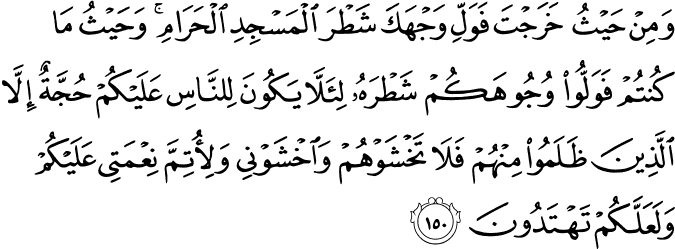

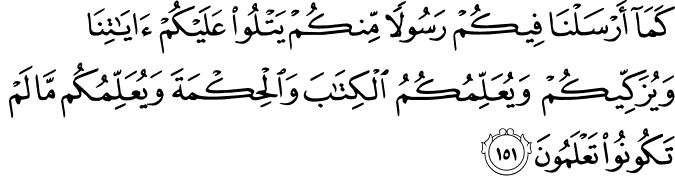


 (halla) in (halalan tayyiban:
  permissible and good) is 'to open a knot'. In that sense, what has been made halal means that a knot has been opened and the restriction has been removed. The blessed Companion Sahl ibn 'Abdullah Radhi-Allahu Anh: Allah be pleased with him has said: "Salvation depends on three things - eating halaal, fulfilling (divine) obligations and following the Sunnah of the Holy Prophet Sallallahu 'Alayhi Wasallam: Peace be upon him." The word
  (tayyib) means 'good' as inclusive of the clean and the pure and covers the twin aspects of being lawful, permissible or halal and being naturally desirable.
 (khutuwat) is the plural form of
  (khutwah) which is the distance between the two feet when striding. Here the khutuwat of Shaytaan means Satanic deeds.
 means something which bothers somebody good and reasonable. The word fahsha' covers what is immodest. Some commentators have said that su' here signifies sin as such, and fahsha' signifies major sins.
 (innama ya'murukum: 'he only orders you') means instigating a suggestion in the heart. The meaning can be seen more clearly in a hadith from the blessed Companion 'Abdullah ibn Mas'ud Radhi-Allahu Anh: Allah be pleased with him who said that the Holy Prophet Sallallahu 'Alayhi Wasallam: Peace be upon him has said: "The son of Adam is influenced by a suggestion from the Shaytaan and a suggestion from the angel. The Satanic suggestion has the effect of bringing forth the expedient gains in evil deeds and thereby opening the avenues of negating the truth, while the angelic suggestion promises reward and success for good deeds and leaves the happy effect of a heart in peace at its attestation of the truth." (Ma'aariful Qur'aan)


 (innama harrama) is a restrictive particle, therefore, the sense of the verse is that Allah Almighty has forbidden only those things which have been mentioned later, other than which, nothing else is forbidden. So, in this verse, it is the word, innama which points out to the given sense, while in another verse (6:145):
  the same thing has been stated more clearly. Here, the Holy Prophet Sallallahu 'Alayhi Wasallam: Peace be upon him has been asked to proclaim that, in what has been revealed to him, there is nothing haram except the few things mentioned later on.
 'Allowed to you is the game of the sea and its eating.' (5:96), slaughtering sea-life is not necessary as a condition; it is permissible even without it. It is on this basis that, in authentic ahadith, fish and locust have been determined as exceptions to the category of maitah (unslaughtered) and thus made halal. The Holy Prophet Sallallahu 'Alayhi Wasallam: Peace be upon him, has said: 'Two things dead have been made lawful for us -the fish and the locust; and two forms of blood have been made lawful for us - the liver and the Spleen.' (Ibn Kathir from Ahmad, Ibn Majah and Darqutni)
 (mawqudhah) in another verse of the Holy Qur'an (5:3) where it has been classed as haram. However, if the animal is slaughtered before it dies, it would become halal.
 which tells us that the eatable parts of the dead animal are forbidden. Therefore, the bones of the dead animal and the hair, which are not eatables, are clean and their use is permissible. The Holy Qur'an in verse (16:80):
  has permitted the use of hair of such animals in an absolute sense. The condition of slaughter is not there (Jassas). Since the skin or hide of an animal carries impurities such as blood it is forbidden unless tanned. When tanned, it is permissible. Further clarifications can be seen in authentic ahadith. (Jassas)
 (that which flows). Therefore, fuqaha' agree that congealed blood such as, the kidney or spleen, are clean and permissible.


 (lahm: flesh) is to point out that the swine is not like other prohibited animals which can be purified by slaughtering, even if eating of them stays prohibited. The reason is that the flesh of the swine does not get purified even if the swine is slaughtered, as it is absolutely impure and unlawful. However, the use of its bristles to sow leather has been permitted in Hadith. (Jassas, Qurtubi)
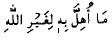 (173) clearly means without any difference of opinion.


 The word, nusub here means everything worshipped falsely. So, it signifies animals that have been slaughtered for false gods. Since, wa ma uhilla bihi lighayrillah has been mentioned earlier, it tells us that ma uhilla clearly means the animal on which a name other than that of Allah has been recited at the time of its slaughter, and that dhubiha 'ala n'nusub appears in contrast to it where the reciting of a name other than that of Allah has not been mentioned. It simply means the act of slaughtering with the intention of pleasing idols. Included here are animals which have been, in fact, slaughtered to seek the pleasure of somebody other than Allah even though the name of Allah has been recited at the time of slaughtering them. (This special note is from my teacher, Hakim al-ummah Maulana Ashraf Ali Thanavi.)


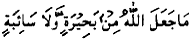

 the one who is compelled by necessity and must save his life, if he fulfils two attending conditions. In the terminology of the Shar'iah, the word, mudtar is applied to a person whose life is in danger. Ordinary pain or need cannot qualify a person to be known as mudtar. So, for a person whose hunger has driven him to a point beyond which he must either eat or die, there is an option; he can eat things made unlawful on two conditions. Firstly, the aim should be to save life and not to enjoy eating. Secondly, he must eat only as much as would serve to save his life; eating to fill up one's stomach or eating much more than one needs remain prohibited even at that time.
 (there is no sin on him) which means that these things continue to be haram as they are, but the sin of using what is haram has been forgiven because the eater has done so under the compulsion of necessity. There is a world of difference need, a simple exception from the injunction of unlawfulness would have been enough. But, here the text does not rest at between making something lawful and the forgiving of sin. If the objective was to make these things lawful under compulsivethe simple exception, it rather elects to add the statement:
