"Verily, We showed him [man] the way, whether he be grateful or very ungrateful." (Soorah al-Insaan, 76:3)
In this verse, the word for ungrateful is in the intensive while that for thankful is not. This was explained as meaning that no matter how grateful a person is to Allaah سبحانه و تعالى, compared with all the blessings that he has received from Allaah سبحانه و تعالى, the most that he could be called is grateful, but not extremely grateful in comparison to the gifts and mercy he has received.
However, with all of the bounties that a person has received, if he is ungrateful to Allaah سبحانه و تعالى, then he is not just being slightly ungrateful but, by definition, he is being extremely ungrateful.
[Shaykh Jamaaluddeen Zarabozo: Commentary on the Forty Hadeeth of Imaam an-Nawawi رحمه الله, vol. 2, p. 828]
The Reality of Shukr (Gratitude) from the example of Dawud عليه الصلاة و السلام
"Do good, O family of Dawud, in thankfulness. And few from My slaves are thankful." [Surah Saba, 34:13]
Shukr (Arabic شكر ), an Arabic term denoting thankfulness, gratitude, or acknowledgment by humans, is a highly esteemed virtue in Islam.
The Qur'an provides narratives of the prophets of God as individuals of gratitude. Their thanksgiving is exemplified by their obedience and faithfulness to God.
According to Al-Qurtubi رحمه الله, the reality of shukr (gratitude) is that one admits that this blessing has been bestowed by such and such giver and then goes on to use it in accordance with the spirit of his pleasure and in obedience to him.
Therefore, using the blessing bestowed by someone counter to his pleasure is ungratefulness and a virtual denial of that blessing.
This tells us that the way gratefulness can be shown in words, it can also be expressed by acts. When expressed by acts, it would mean the use of that blessing in accordance with the pleasure of the giver and in obedience to him.
Abu 'Abdur-Rahman As-Sulami رحمه الله has said that Salah is gratitude, fasting is gratitude, and every good deed is gratitude. And Muhammad Ibn Ka'b al-Qurazi رحمه الله says that gratitude is the name of piety and righteous conduct. (Ibn Kathir)
In the context of the above quoted verse, the Qur'an states that the granting of Sulayman (عليه الصلاة و السلام) with supernatural gifts to accomplish the ends for which God appointed him, was so that he would be grateful.
This injunction was carried out so faithfully by Sayyiduna Dawud عليه الصلاة و السلام and Sulayman (عليه الصلاة و السلام) and their families and children, both in word and deed, that no time passed in their homes when they did not have a member of the family standing exclusively devoted to worship. In fact, specific time was allotted to all family members for this purpose. As a result, the prayer mat of Sayyiduna Dawud (عليه الصلاة و السلام) would not remain unoccupied at any time. (Ibn Kathir)
According to Hadith in al-Bukhari and Muslim, the Holy Prophet (صلى الله عليه وسلم) said that the dearest prayer to Allah is that of Dawud (عليه الصلاة و السلام). He would sleep half of the night, stand in worship for one third of it, and then, sleep during the last one sixth. And the dearest fasts to Allah are the fasts of Dawud (عليه الصلاة و السلام), for he would fast on alternate days. (Ibn Kathir)
It has been reported from Fudayl رحمه الله that following the revelation of this command of gratitude to Sayyidna Dawud (عليه الصلاة و السلام), he submitted before Allah Ta'ala: 'O my Lord, how could I show my gratitude to You fully and sufficiently while my gratitude too, be it oral or practical, is nothing but a blessing bestowed by You? On this too, a separate gratitude becomes due.' Allah Ta'ala said, (Now, O Dawud, you did thank Me ). The reason was that he had realized his inability to thank Him as was His due, and had made a confession to that effect.
Tirmidhi رحمه الله and Abu Bakr al-Jassas رحمه الله report from Sayyidna 'Ata' Ibn Yasar (رضي الله عنه) that when this verse: (Do good, O family of Dawud, in thankfulness) was revealed, the Holy Prophet (صلى الله عليه وسلم) came to the pulpit, recited this verse and then said, "There are three acts whoever accomplishes them would achieve the same excellence as was bestowed on the House of Dawud." The noble Sahabah asked: "Ya Rasulallah صلى الله عليه وسلم, what are those three acts?" He صلى الله عليه وسلم said, "Staying firm on justice in both the states of pleasure and displeasure; and taking the path of moderation in both the states of prosperity and adversity; and fearing Allah both in private and in public." (Tirmidhi, Qurtubi, Ahkam ul-Qur'an, al-Jassas)
In the last sentence of verse 13: "And few from My slaves are thankful," soon after having given the command for gratitude with special emphasis, the reality on ground was also pointed to by saying that 'And few from My slaves are thankful.' which is an admonition for a believer, and an encouragement to observe gratitude.
[Adapted From Maariful Quran of Mufti Shafi رحمه الله]
As regards one whose deeds are great and many, he must busy himself with showing gratitude for them, for the accord to show gratitude is one of the greatest blessings Allaah سبحانه و تعالى bestows upon His servant. It is obligatory upon him to meet these deeds with gratitude and realise his deficiency in displaying due gratitude.
Wahb Ibn al-Ward رحمه الله, when asked about the reward of a particular deed, said, "Ask not about its reward, but ask about the gratitude due upon one who was guided to it." [1]
Abu Sulaymaan رحمه الله would say, "How can an intelligent person be amazed with his deeds? Deeds are one of Allaah's blessings, as such it is upon him to show gratitude and to show humility. It is only the Qadariyyah who are amazed at their deeds!" i.e. those who do not believe that the actions of the servant are created by Allaah, Mighty and Magnificent. [2] [3]
Notes:
[1] Abu Nu'aym رحمه الله, al-Hilyah, vol. 8, p. 155
[2] Ibid., vol.9, p. 276 #13896
[3] Treasure from the Treasures of Paradise, p. 64
The scholars have mentioned many definitions for gratitude [shukr], the most important of them is: "Gratitude: for the heart to cling to love of the One who bestows favours, for the bodily limbs to cling to His obedience, and for the tongue to flow with His remembrance and praise." [1]
Ibn 'Ajeeba رحمه الله said: "It is the delight felt by the heart after obtaining a favour, while employing the bodily limbs in obedience to the One who bestows gifts, and to testify with humility to the bounty of the One who bestows gifts." [2]
As-Sayyid al-Jurjaanee رحمه الله said in his Ta'rifaat: "Gratitude: for the servant to employ all that Allaah سبحانه و تعالى has bestowed him with of hearing, seeing, and other such things for the purpose for which they were created." [3]
Al-'Allaama Ibn 'Allaan as-Siddeeqee رحمه الله said: "Gratitude is admitting to the bounty and establishing service; whoever is frequent in this is called 'grateful'." Regarding this, the Exalted said:
"And few of My servants are grateful." (Soorah as-Saba, 13) [4]
Shaykh 'Abdul Qaadir 'Isa رحمه الله said: "It is not hidden that the bounties of Allaah سبحانه و تعالى are too great to be enumerated and too abundant to be counted. Allaah سبحانه و تعالى said:
"And He gave you from all you asked of Him. And if you should count the favor of Allaah, you could not enumerate them. Indeed, mankind is [generally] most unjust and ungrateful." (Soorah Ibraaheem, 14:34)
It is possible to divide bounties into three main categories:
(1) Worldly bounties such as: health, well being, and lawful wealth.
(2) Religious bounties such as: righteous actions, knowledge, piety, and gnosis of Allaah.
(3) Bounties of the Hereafter such as: being rewarded for ones righteous actions with a generous reward.
The greatest of religious bounties that one must be grateful for are the bounties of Islaam, faith, and gnosis of Allaah سبحانه و تعالى. Gratitude for these things entail that one believes that they are a favour from Allaah سبحانه و تعالى, without any intermediary, independent movement, or strength. Allaah سبحانه و تعالى said:
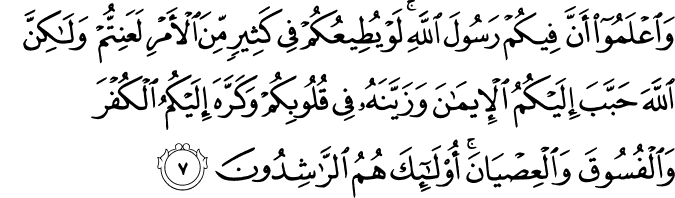
"And know that among you is the Messenger of Allaah (peace be upon him). If he were to obey you in much of the matter, you would be in difficulty, but Allaah has endeared to you the faith and has made it pleasing in your hearts and has made hateful to you disbelief, defiance and disobedience. Those are the [rightly] guided." (Soorah al-Hujuraat, 49:7)
And:
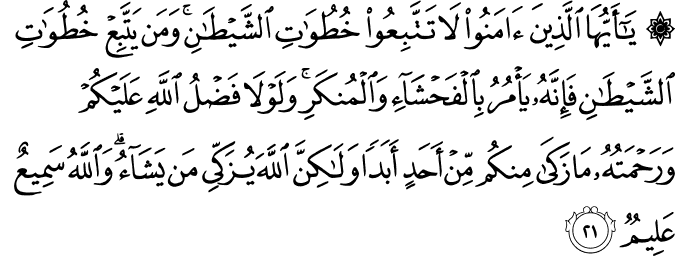
O you who have believed, do not follow the footsteps of Shaytaan. And whoever follows the footsteps of Shaytaan - indeed, he enjoins immorality and wrongdoing. And if not for the favour of Allaah upon you and His mercy, not one of you would have been pure, ever, but Allaah purifies whom He wills, and Allaah is Hearing and Knowing." (Soorah an-Noor, 24:21)
The believing servant who contemplates this amazing universe and the tremendous signs that it contains, increases in his observation of Allaah's bounties upon him, and is more grateful to and loving of Allaah سبحانه و تعالى as a result.
Among the bounties of Allaah سبحانه و تعالى, are the bounties He has placed for the servant the intermediary of other servants - just as Allaah's goodness to us came through the hands of His Messenger عليه الصلاة و السلام, and just as His favours came to us through our parents and gnostic spiritual trainers who know Him, the Exalted. It is upon the believer to be grateful to Allaah سبحانه و تعالى, because, in reality, it is He who bestows bounties, and it is He who has employed other people to bring good to him. The Exalted said:
"And whatever of blessings and good things you have, it is from Allaah. Then, when harm touches you, unto Him you cry aloud for help. " (Soorah an-Nahl, 16:53)
It is also upon the believer to be grateful to those whom Allaah سبحانه و تعالى made as a means for His bounties, and for this reason, the Messenger of Allaah عليه الصلاة و السلام said: 'He who does not thank the people has not thanked Allaah." [5]
Allaah سبحانه و تعالى has summoned us to be thankful to Him as well as out parents whom He made as a means for our existence, and brought many bounties to us through them:
"And We have enjoined upon man [care] for his parents. His mother carried him, [increasing her] in weakness upon weakness, and his weaning is in two years. Be grateful to Me and to your parents; to Me is the [final] destination." (Soorah Luqmaan, 31:14)
The easier of the two forms of gratitude is the gratitude shown towards the people, for he who is remiss in showing gratitude to them is even more remiss in showing gratitude to Allaah." [6]
Notes:
[1] Madaarij as-Saalikeen, 2/136
[2] Mi'raaj at-Tashawwuf, p. 7
[3] Ta'rifaat, p. 87
[4] Daleel al-Faaliheen, 2/57
[5] Narrated by Imaam Abu Dawood رحمه الله. Commenting on this hadeeth, Imaam al-Khattaabee رحمه الله said in Ma'aalim as-Sunan (4/133): "These words are interpreted in two ways:
(a) The one whose nature and disposition is apt to deny the favours of people and go without thanking them for their good, it is also within his nature and disposition to deny Allaah's favours and go without thanking Him, the Exalted.
(b) Allaah سبحانه و تعالى does not accept the gratitude of a servant for His (Allaah's) goodness to him, as long as the servant denies the favours of people and does not show gratitude to their goodness, for both of them are interconnected."
Based on the previous definitions of gratitude, it is possible to state that there are three categories to gratitude:
(1) gratitude of the tongue,
(2) gratitude of the body,
(3) and gratitude of the heart.
Gratitude of the Tongue
Gratitude of the tongue implies speaking about the bounties of Allaah سبحانه و تعالى, in compliance with His words:
"And as for the bounties of your Lord; speak of them." (Soorah ad-Duhaa, 93:11)
and in with the words of the Prophet صلى الله عليه وسلم: "Speaking of Allaah's bounties is gratitude." [1]
It has been said: "He who conceals a bounty has denied it, whereas he who manifests it and makes it plain has shown gratitude for it."
The Messenger of Allaah صلى الله عليه وسلم is the ideal personality and example,who illustrated gratitude and praise. He said: "My Lord offered to turn the hill of Makkah into gold for me, to which I replied, 'No, O Lord! Rather, let me be satiated for one day, and hungry the next.' (this he repeated three times and then said) 'So when I am hungry, I humbly turn to You and remember You, and when I am satiated, I thank and praise You.'" [2]
The Messenger of Allaah صلى الله عليه وسلم encouraged us to offer praise. From Sayyiduna Ibn 'Umar رضي الله عنهما: "The Messenger of Allaah صلى الله عليه وسلم spoke to the people, saying: 'There is a servant among Allaah's servants who said: "O Lord! To You belongs all praise, as is commensurate with the nobility of Your Authority." Upon hearing this, the Angels were puzzled and did not know how to write that down, so they ascended towards the heavens and said: "O Lord! Your servant said a statement that we do not know how to write!" Allaah سبحانه و تعالى asked - even though He knows best what His servant said: "What did my servant say?" The Angels replied: "He said: 'O Lord! To You belongs all praise, as is commensurate with the nobility of Your Authority.'" Allaah سبحانه و تعالى said: "Write it down just as he said, for I shall reward my servant for it when he meets Me."'" [3]
Gratitude of the Body
Gratitude of the body implies doing works for Allaah سبحانه و تعالى. Allaah سبحانه و تعالى indicated that gratitude is action ('amal):
"[We said], 'Work (i'maloo), O family of Daawood [David], in gratitude.' And few of My servants are grateful." (Soorah Saba', 34:13)
The Messenger of Allaah صلى الله عليه وسلم illustrated this in a practical fashion as he would stand in prayer through the night. Ummul Mu'mineen Sayyidah 'Aa'isha as-Siddeeqa bint as-Siddeeq رضي الله عنهما narrated: "The Prophet used to stand in the night, praying until both of his feet would swell. I asked him: 'Why do you do this, O Messenger of Allaah صلى الله عليه وسلم, when all of your past and future sins have been forgiven?' He صلى الله عليه وسلم replied: 'Should I not then be a grateful servant?'" [4]
Gratitude of the Heart
Gratitude of the heart implies that you bear witness and attest that every bounty you or any other servant has is from Allaah سبحانه و تعالى:
"And whatever of blessings and good things you have, it is from Allaah. Then, when harm touches you, unto Him you cry aloud for help." (Soorah an-Nahl, 16:53)
So, do not let your sight of the bounty veil you from seeing the One who bestows the bounty. The Messenger of Allaah صلى الله عليه وسلم brought this reality to attention when he said: "Whoever, upon waking, says: 'O Allaah! Whatever I or any of Your creation wake up to of bounties, it is from You - You are alone and without partners - so to You belongs all praise and gratitude,' then such a person has given thanks for the day. He who says the same in the evening has given his thanks for the night." [5]
In one report, it states that Prophet Moosaa عليه الصلاة و السلام said: "O Lord! You created Aadam عليه الصلاة و السلام with Your Hand and blew into him from Your spirit, You ordered the Angels to prostrate to him, You taught him the names of everything, and You do this and that; how was he able to observe proper gratitude towards You?" Allaah سبحانه و تعالى responded: "He knew that all of that was from Me, hence his knowledge of that was his gratitude." [6]
Based upon this, the servant sees that among the many bounties of Allaah سبحانه و تعالى is that He has enabled him to show gratitude and praise Him. Prophet Daawood عليه الصلاة و السلام said: "O Lord! How can I show proper gratitude towards You, when my gratitude is itself a bounty from You unto me that also calls for gratitude?" Allaah سبحانه و تعالى responded: "Now, O Daawood, you have thanked Me." [7] [8]
Notes:
[1] Ahmad
[2] at-Tirmidhi
[3] Ibn Maajah
[4] Agreed upon
[5] Abu Daawood and an-Nisaa'ee
[6] Madaarijus Saalikeen, 2/137
[7] Ibid
[8] Shaykh 'Abdul Qadir 'Isa رحمه الله, Realities of Sufism, pp. 244-246
People are of various ranks when it comes to gratitude:
(1) The common folk show gratitude to Allaah سبحانه و تعالى on account of His bounties only.
(2) The elite show gratitude to Allaah سبحانه و تعالى for both His bounties and afflictions. They witness His grace and bounty in all their states. The Messenger of Allaah صلى الله عليه وسلم lauded the person who is afflicted with a tribulation, and responds to it with praise upon his tongue and pleasure within his heart, without allowing Shaytaan to throw sorrow in heart or despair from the mercy of Allaah سبحانه و تعالى. In the hadeeth from Sayyiduna Abu Musa al-Ash'ari رضي الله عنه, the Messenger of Allaah صلى الله عليه وسلم said: "When the child of a servant dies, Allaah سبحانه و تعالى calls out to the Angels: 'Have you taken the child of my servant?' The Angels respond: 'Yes.' Allaah سبحانه و تعالى enquires: 'So what did my servant say?' The Angels reply: 'He praised You and said: "To Allaah we belong and certainly to Allaah we shall return."' Allaah سبحانه و تعالى then says: 'Build for My servant a house in Paradise and call it: the House of Praise.'" [1]
He صلى الله عليه وسلم also said: "The first of those to be called to enter Paradise shall be those who would praise Allaah in times of difficulty and ease." [2]
(3) The gratitude of the elite of the elite is their absence within the Bounty Giver and not seeing the bounty or affliction. Concerning this level, Shibli رحمه الله said: "Gratitude is seeing the One who bestows bounties - not seeing the bounty." [3] [4]
Gratitude is one of the greatest of stations, for it involves the tongue, the body, and the heart, and it also involves patience, pleasure with the Divine, praise, and many other types of worship, both from the body and the heart. Allaah سبحانه و تعالى ordered us with it and forbade us from its opposite: namely rejection and denial. He said:
"So remember Me; I will remember you. And be grateful to Me and do not deny Me." (Soorah al-Baqarah, 2:152)
Gratitude is one of the greatest characteristics of the noble Messenger - may peace and blessings be upon them all. Describing His intimate friend Ibraaheem عليه الصلاة و السلام, Allaah سبحانه و تعالى said:
"Verily, Ibrahim (Abraham) was an Ummah (a leader having all the good righteous qualities), or a nation, obedient to Allah, Hanifa (i.e. to worship none but Allah), and he was not one of those who were Al-Mushrikun (polytheists, idolaters, disbelievers in the Oneness of Allah, and those who joined partners with Allah). [He was] grateful for His favours. Allah chose him and guided him to a straight path." (Soorah an-Nahl, 16:120-121)
Regarding Nooh عليه الصلاة و السلام, the Exalted said:
"O descendants of those We carried [in the ship] with Noah. Indeed, he was a grateful servant." (Soorah al-Israa', 17:3)
As for the beloved of Allaah سبحانه و تعالى and His Messenger, our liege lord Muhammad عليه الصلاة و السلام, he would expend efforts in spending the nights awake, standing in front of his Lord with humility and servitude, in realisation of the station of gratitude. When he was asked about his standing in the night until his feet swelled, he replied: "Should I not then be a grateful servant?"
The one who asked him about this thought that the reason for his standing was to ask for forgiveness, whereas Allaah سبحانه و تعالى had already forgiven him. The response of the Messenger of Allaah عليه الصلاة و السلام elevated the spiritual aspiration of the questioner to the station of gratitude which is the highest station of servitude.
Just as the Messenger of Allaah عليه الصلاة و السلام was the best of those to actualise the station of gratitude, he would also call his Companions - may Allaah be pleased with them all - and the rest of the believers to actualise this tremendous station. He would invite them to direct their effort towards Allaah سبحانه و تعالى, in supplication at the conclusion of every prayer, asking Him to bestow His Divine assistance in remembrance and gratitude. He عليه الصلاة و السلام said to Sayyiduna Mu'adh Ibn Jabal رضي الله عنه: "O Mu'adh! I advise you that you do not leave off sating after each prayer: 'O Allaah! Assist me with Your remembrance, gratitude towards You, and worshipping You well.'" [1]
Because of the lofty station and high rank of gratitude, ascending it is difficult. Actualising it calls for spiritual struggle and wayfaring, as well as truthfulness, patience, and uprightness. It is for this reason that the people of gratitude have always been rare, for the people of true nobility are few. Allaah سبحانه و تعالى described them as few when He said:
"And few of My servants are grateful." (Soorah Saba', 34:13)
On the other hand, He described most people as ungrateful, despite His bounties upon them, as well as His expansive grace and generosity. The Exalted said:
"And indeed, your Lord is full of bounty for the people, but most of them do not show gratitude." (Soorah an-Naml, 27:73)
In the Qur'an, Allaah سبحانه و تعالى often reminds people of His great bounties and tremendous favours, and He frequently calls upon them to meditate upon the universe, so they may see what wondrous bounties and great goodness surrounds them - bounties so great that they are unable to count or enumerate - in order that they may show true gratitude to Him, the Exalted:
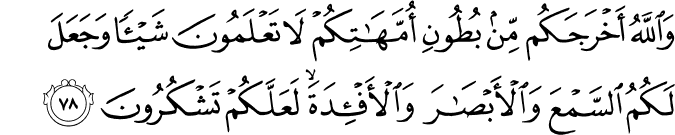
"And Allah has brought you out from the wombs of your mothers while you know nothing. And He gave you hearing, sight, and hearts that you might give thanks (to Allah)." (Soorah an-Nahl, 16:78)
Allaah سبحانه و تعالى described the intelligent person who enjoys mature insight, human completion, and having attained forty years of age, as one who sees the bounties of Allaah سبحانه و تعالى that surround him and attests to His favours upon him, turning to Allaah سبحانه و تعالى as a result and asking Him to grant him the ability to show gratitude:
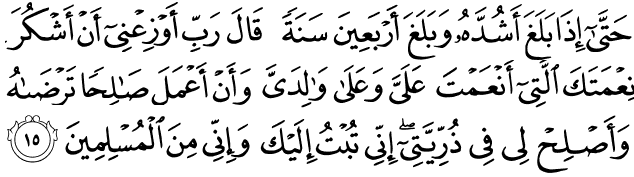
"[He grows] until when he attains full strength and reaches forty years, he says: "My Lord! Grant me the power and ability that I may be grateful for Your Favour which You have bestowed upon me and upon my parents, and that I may do righteous good deeds, such as please You, and make my off-spring good. Truly, I have turned to You in repentance, and truly, I am one of the Muslims (submitting to Your Will)." (Soorah al-Ahqaaf, 46:15)
The Messenger of Allaah عليه الصلاة و السلام explained that the status of he who delights in Allaah's provision and is grateful for it, is like he who endures rigorous worship and is patient with its difficulties: "The one who eats and grateful is in the same rank as he who fasts and is patient." [2]
In addition to this, gratitude is the best means of preserving bounties. It has been said: "The binding cord of bounties is gratitude."
Ibn 'Ata'illah رحمه الله said in his aphorisms: "Whoever is not grateful for bounties runs the risk of losing them, and whoever is grateful fetters them with their own cords."
On the other hand, being ungrateful and receiving bounties with denial and rejection brings about Allaah's anger and punishment and results in the removal of those very bounties. Allaah سبحانه و تعالى said:
"And [remember] when your Lord proclaimed, 'If you are grateful, I will surely increase you [in favour]; but if you deny, indeed, My punishment is severe.' "" (Soorah Ibraaheem, 14:7)
In reality, when the grateful person observes gratitude towards Allaah سبحانه و تعالى, he is only bringing more good to himself, for by his gratitude, he obtains even more bounties and favours from Allaah سبحانه و تعالى, as well as His love and beautiful lauding:
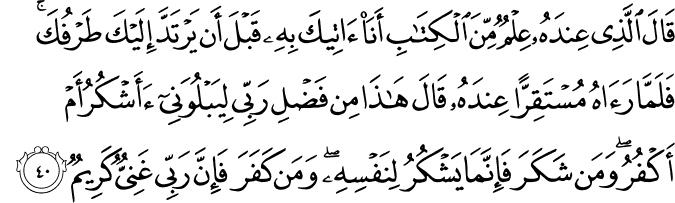
"One with whom was knowledge of the Scripture said: "I will bring it to you within the twinkling of an eye!" then when [Sulaiman (Solomon)] saw it placed before him, he said: "This is by the Grace of my Lord to test me whether I am grateful or ungrateful! And whoever is grateful, truly, his gratitude is for (the good of) his ownself, and whoever is ungrateful, (he is ungrateful only for the loss of his ownself). Certainly! My Lord is Rich (Free of all wants), Bountiful." (Soorah an-Naml, 27:40)
Abu Hamza al-Baghdadi رحمه الله said: "When Allaah سبحانه و تعالى opens up to you a path of goodness, persevere in it and beware of looking at it and being boastful about it. Occupy yourself with being grateful towards the One who facilitated it for you. Looking to it will cause you to fall from your station. Busying yourself with gratitude will guarantee you an increase because Allaah سبحانه و تعالى said:
"And [remember] when your Lord proclaimed, 'If you are grateful, I will surely increase you [in favor].'" (Soorah Ibraaheem, 14:7) [3] [4]
Notes:
[1] Abu Dawood, an-Nisaa'ee, and al-Haakim
[2] at-Tirmidhee
[3] Tabaqaatus Soofiyyah, p. 298
[4] Shaykh 'Abdul Qadir 'Isa رحمه الله: Realities of Sufism, pp. 246-249
Imaam Ibn al-Qayyim رحمه الله said, “Shukr is to display the effects of the blessings of Allah upon the tongue by way of praise and acknowledgement; in the heart by way of witnessing and love; and upon the limbs by way of submission and obedience.” [Madaarij As-Saalikeen, 2/244]
He explained it elsewhere by quoting a dialogue that took place between the famous Taba'ee Abu Hazim رحمه الله and a questioner as follows:
A man said to Abû Hâzim رحمه الله: “What is the gratitude of the eyes?” He said, “If you see good things, you speak about them, and if you see bad things, you keep quiet about it.”
He asked, “What is the gratitude of the ears?” He said, “If you hear something good, you accept it, and if you hear something bad, you reject it.”
Then he asked, “What is the gratitude of the hands?” He said, “Do not take what which does not belong to you, and do not hold back from paying the dues of Allâh (zakât).”
Then he asked, “What is the gratitude of the head?” He said: “To have knowledge in it.”
Then he asked, “What is the gratitude of one’s private parts?” He quoted:
“‘Who guard their private parts, except from those joined to them in the marriage bond, or (the captives) whom their right hands possess – for (in their case) they are free from blame, but those whose desires exceed those limits are transgressors.’” (al-Mu’minûn 23:5-7).
As for those who only pay lip-service to gratitude, and do not give thanks with the rest of their faculties, are concerned, they are like a man who has a garment and all he does with it is touch it, but he does not put it on: it will never protect him from heat, cold, snow or rain.
Hope goes hand in hand with deeds, otherwise it is a wish. [78]
The hope that is genuine is the hope that the saalik entertains when practicing righteousness. Along with this practice of virtue, he hopes for the mercy of Allaah Most High. The farmer that has hope of reaping the fruits of his labours on his farm will expend full effort in ploughing and caring for his fields. Similarly, the saalik who has hope of acquiring Allaah's mercy will diligently involve himself in practicing virtuous deeds. His hope can then be said to be justified and true.
If one acts in conflict with the Sacred Law and refrains from righteous actions, his hope for divine mercy and Paradise will be vain and false. It is false to describe such wishful thinking as rajaa': such a person is like one who does not plough his land, but expects to reap a crop.
If you have not improved your thinking of Him because of His nature, improve it because of His treatment of you. For has He accustomed you to anything but what is good? And has He conferred upon you anything but His favours? [40]
A true believer is he who holds a high opinion of His Lord. He believes that whatever treatment his Creator metes out is for his own benefit and welfare, regardless of it being pleasing or displeasing. Do you not acknowledge His boundless favours upon you? He created you in perfect form. He bestowed a variety of innumerable bounties upon you. You are, in fact, drowned in the abundance of favours. This wonderful relationship that Allaah Most High has with you should be sufficient to induce a good opinion of Him.
Having a good opinion of Allaah is the rank of Allaah's elect servants. Those who lack this rank should reflect on the bounties of Allaah Most High, as a means of cultivating this beautiful perfection.
There are two graces from which no being can be separated and that are inevitable for every creature: the grace of existence, and the grace of sustenance. [97]
The graces of Allaah Most High limitlessly descend on every creature. However, there are two graces are common to everything. The first is the act of creation: everything was non-existent prior to its existence. By the generosity of Allaah Most High, the gift of existence was bestowed. He thus created the object and eliminated non-existence.
Secondly, after coming into existence by way of creation, everything is wholly dependent on the aid of Allaah Most High for its endurance and sustenance. For this need it is dependent on Allaah Most High in every moment of its existence. Should Allaah Most High withhold His aid, everything will again return to the state of non-existence. He has created different ways and means for the existence of different objects; for example, for animals and humans He has created water, food, etc.
He bestowed His grace upon you, first, through giving you being, and, second, through uninterrupted sustenance. [98]
In the previous aphorism mention was made of the bounties of creation and assistance common to all created objects. The Shaykh رحمه الله now addresses man in particular; in fact, the address is directed to the believer, whose attention is drawn to his earlier state of pure non-existence. From which Allaah Most High conferred on him the grace of being existent. The believer should thus understand that he is wholly dependent on Allaah Most High for his existence. Dependence is, therefore, man's natural and inherent attribute which he should never forget.
Secondly, with every breath and moment Allaah Most High ensures that man receives His favours, necessary for his physical and spiritual existence. Food, garments and a variety of preparations have been and are being continuously created for man's physical existence and survival. For man's spiritual existence, Allaah Most High constantly sends His aid in an uninterrupted flow. Without the spiritual aid of Allaah, the believer will go astray. Thus, it has been observed that when Allaah Most High terminates His aid from certain people, they fall headlong into deviation (ḍalaal).
Since it is not possible for one to be independent from his Lord for even a second, why do we feign independence? Why this self-esteem? Why this claim of excellence? How can these claims be correct? You should become a slave, keeping in mind one's origin and refrain from making boastful claims.
Whoever does not draw near to Allaah as a result of the caresses of love is shackled to Him with the chains of misfortune. [63]
Those servants in whom nobility and lofty intelligence are inherent do not become proud and arrogant as a result of the bounties of Allaah that they are awarded. They do not lose themselves in indolence, forgetfulness and worldly love. The bounties serve to increase their love for their True Benefactor. In consequence, they become engrossed in obedience and worship.
Those who consider these bounties to be the goal to pursue do not direct their attention to Allaah Most High. As a result, they are caught up in many trials and hardships. These misfortunes act like chains by means of which these recalcitrant servants are forcibly drawn to Allaah Most High. As such, the trials and hardships are in reality a blessing for them.
Whoever is not thankful for graces runs the risk of losing them, and whoever is thankful fetters them with their own cords. [64]
The one who is ungrateful for the graces of Allaah Most High is in reality pursuing the elimination of them. Thankfulness entails abandonment of transgression and the adoption of obedience. Only the One Being should be acknowledged as the giver of all graces. [1]
Ingratitude leads to the disappearance of graces.
The who is grateful for the bounties and recognises the True Giver has ensured the perpetuation of the graces of Allaah. In fact, the favours will be increased. In this regard, Allaah Most High states in the Qur'aan:
"And [remember] when your Lord proclaimed, 'If you are grateful, I will surely increase you [in favour]; but if you deny, indeed, My punishment is severe.'" [Soorah Ibraaheem, 14:7] [2]
Notes:
[1] Shaykh Ibn Ata'illah رحمه الله said, "If the eye of the heart ('ayn al-qalb) sees that Allaah is One in His blessings the Law (Sharee'ah) requires nevertheless that thanks be given to His creatures."
The Prophet عليه الصلاة و السلام said, "He who does not thank people does not thank Allah." [at-Tirmidhi]
Sometimes darknesses come over you in order that He make you aware of the value of His blessings upon you. [198]
The condition of the servant here on earth is not always the same. Sometimes the light of obedience settles on him, and at other times the darkness of the contamination of desires and forgetfulness settles in his heart. If he only experienced illumination, he would not have known its value.
Furthermore, the reality of light is understood from its opposite: darkness. When there is no appreciation, the servant will not express gratitude to his Master. For this reason, sometimes the darkness of forgetfulness and the dominance of lowly desires dominate the traveller so that he values the light of obedience and all other blessings.
You are here: Forum Index » Literature » VirtuesThe Blessings And Mercy Of Allah, and Showing Thanks and Gratitude to Him
###
Award Rep
Award reps to ... for this post
This cannot be undone and I am sure it will be greatly appreciated.
We apologise but you have been denied access to report posts in this thread. This could be due to excessively reporting posts and not understanding our forum rules. For assistance or information, please use the forum help thread to request more information. Jazakallah