JIP ready to ferry back guests of God

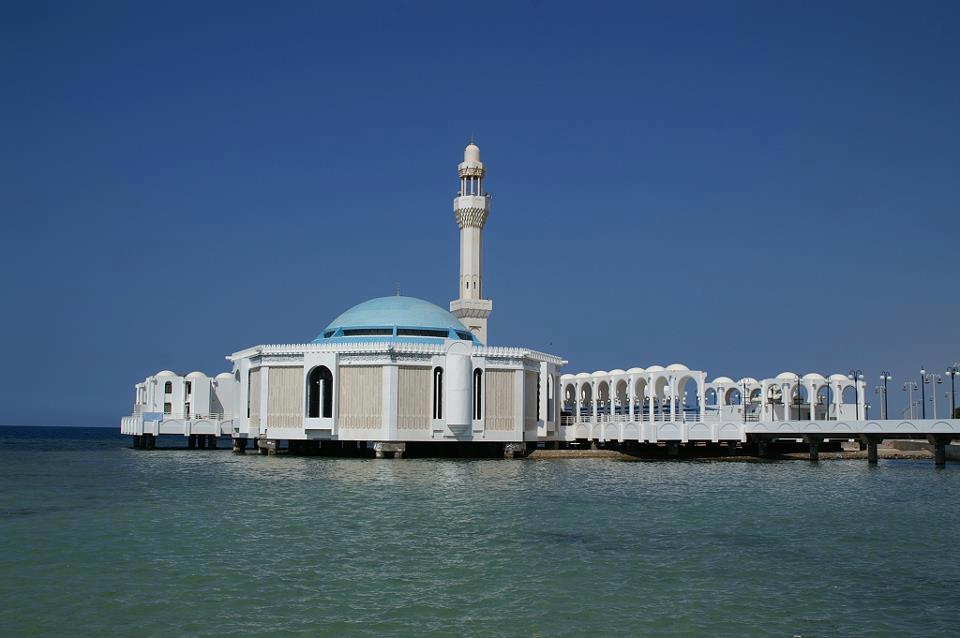
22 October 2013The Jeddah Islamic Port (JIP) is ready to take on the return journey of over 18,000 Haj pilgrims, most of them from Egypt and Sudan.
Capt. Saher Tahlawi, director general of JIP, told Arab News that as of now, two or more daily trips had been scheduled, with the number likely to touch 34 in the coming days.
He said there was perfect coordination between various departments in the port to facilitate ferrying of pilgrims, offer them the best possible services, and help them complete their procedures in record time. Buses have also been readied to transport pilgrims to JIP, he added.
The Ministry of Haj has worked out a comprehensive plan for the departing guests of God, under the leadership of Haj Minister Bandar Hajjar. More than 70 employees have been temporarily deployed to help ease the mounting pressure during this time of year. A number of ministry employees have also been deputed to work in the port in the service of the pilgrims.
He said the ministry was supervising all services offered by the United Agents Office and the General Syndicate of Cars for the Hajis who came by ships from the time they arrived until their departure.
Col. Mohammad Al-Wadi’, director of the Port’s Passport Office, said preparations in the port had been completed. More than 28 computer systems and 10 fingerprint devices had been installed for speedy processing of documents. Besides, fraud detectors had also been installed, which are operated by officers and specialists in the field.
He stressed that there was a coordinated approach between the JIP administration, the Ministry of Haj and travel agents to secure information about arrival dates of various journeys. The aim is to serve pilgrims and offer all possible means for their comfort and safety, he said.
The Saudi Arabian Public Transport Company (SAPTCO), in downtown Jeddah, is packed with domestic pilgrims returning to their hometowns and workplaces, as also foreign pilgrims traveling by land. Hundreds of pilgrims stood in long queues waiting for a seat on the buses.
The yards of the company’s station had large numbers of citizens and residents from Al-Kaddadah, and with traffic congestion on the adjacent road, traffic police had to move in to organize vehicular movement.
The director of Jeddah Traffic Police, Brig. Waslallah Al-Harbi, said his directorate implemented a new traffic plan, which also took into consideration the reopening of schools after Eid Al-Adah holidays. More than 30 patrol cars and 60 officers have been pressed into service to deal with traffic snarls particularly during peak hours.
http://www.arabnews.com/news/468440
Power failure delays pilgrim departure
A power cut in Jeddah Islamic Port has delayed the departure of two passenger ships heading for Sudan with 2,000 pilgrims on board.
The three-hour power failure, beginning at 6 p.m., led to an exchange of accusations between officials of the Port and Saudi Electricity Company on the causes of the failure.
A source at the port said the departure of the pilgrims was delayed because of the recurrent power failure.
However, the director-general of the port, Capt. Saher Tahlawi, was quoted as saying in the local media that the power cut did not last more than 10 minutes. “The emergency electrical generators were switched on immediately. The problem originated from the Saudi Electricity Company, not from the port,” he asserted.
But an official of the Saudi Electricity Company said the power failure lasted more than an hour and a half as a result of a malfunction in the internal electrical network of the port.
The official said the company tried to restore power three times before it became clear that an internal circuit was disrupted. “The maintenance team at the port managed to isolate the malfunction and restore the power later,” he said.
Jeddah Islamic Port is the main point of entry for pilgrims coming by sea every year. The port is to transport this year 14,000 pilgrims via 34 cruise ships, scheduled on two or three trips a day.
http://www.arabnews.com/news/468443
Lounges for pilgrims on King Fahd Causeway

The King Fahd Causeway Authority established two lounges to facilitate the procedures for pilgrims, and provide all means of comfort for them.
Badr Al-Otaishan, director-general of the authority, said the two lounges were designed with enough space to accommodate a large number of pilgrims. He said: “We have redesigned the area to ensure smooth entrance and exit to the lounges.”
The lounges are operational on both the Saudi and Bahraini sides.
Al-Otaishan said this move stems from the keenness and care of the authority to develop a number of projects on the causeway that links Saudi Arabia and Bahrain.
“The organization plays a significant role in facilitating the traffic of passengers between the two countries by providing all the support services needed, and making the necessary improvement to serve pilgrims in particular,” he said.
http://www.arabnews.com/news/468444