
The New Masjid Al-Haram Expansion


You have contributed 0.4% of this topic

The New Masjid Al-Haram Expansion

Makkah in Ramadan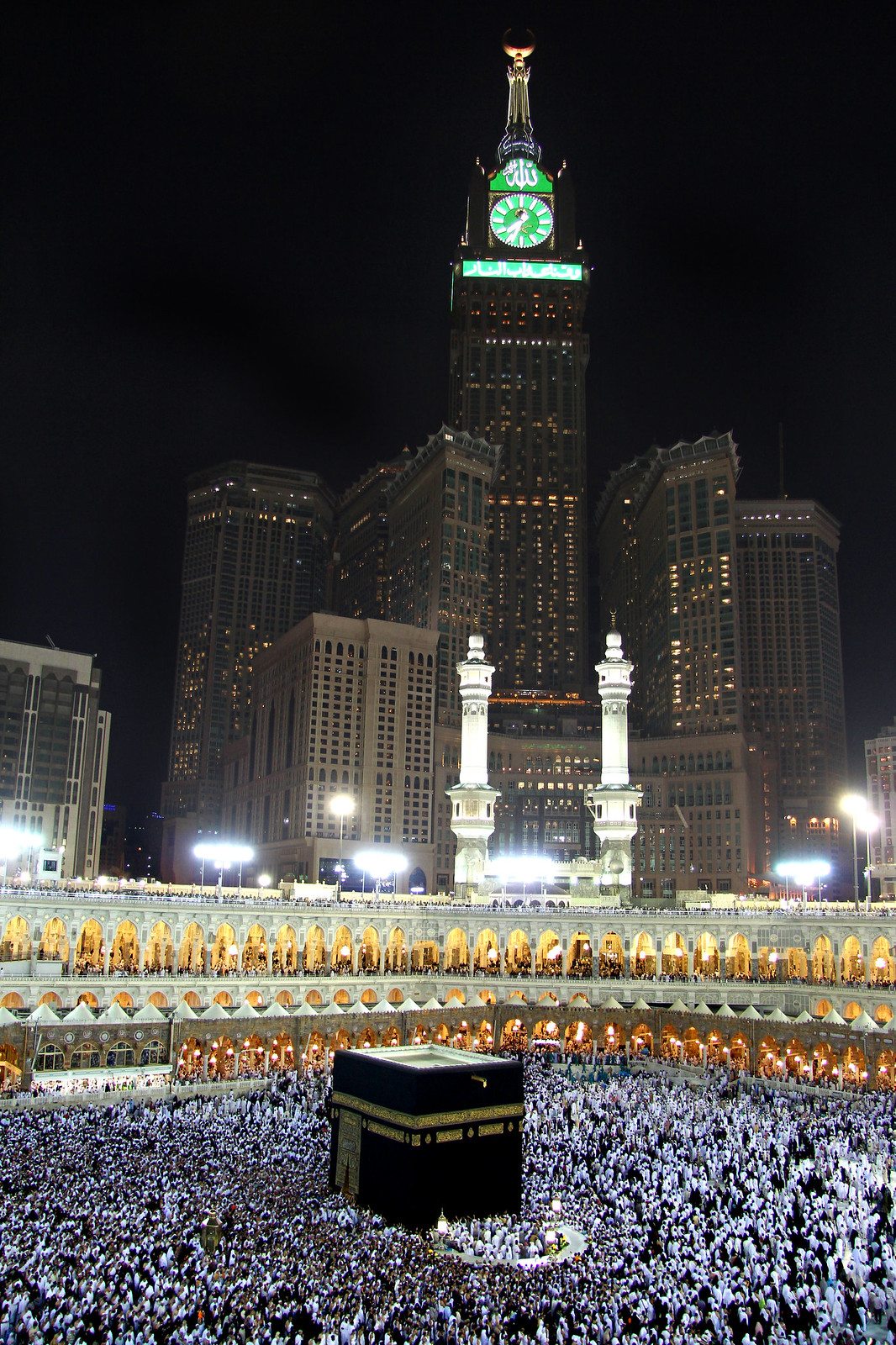
JEDDAH: ARAB NEWS
Friday 3 August 2012
Government approval has been given for the expropriation of 2,000 properties in Makkah for the expansion project of the Grand Mosque’s northern courtyards.
The initial value for the expropriation project is estimated at SR 30 billion, which includes compensations, the building of train stations and parking, and developing the new Grand Mosque endowment.
Abbas Qattan, supervisor of the committee for the Grand Mosque’s northern courtyards’ development, told Al-Eqtisadiya newspaper that the committee is examining the ownerships of the properties, after which a government committee, comprising the Ministry of Finance, the Makkah governorate and mayor’s office, Ministry of Justice and two members from the private sector, will start appraisal procedures. The expropriation includes six areas neighboring the mosque.
He said the areas to be expropriated would stop receiving services and power by January 2013.
Alshareef Mansour Abu Raiysh, chairman of the real estate committee at the Makkah Chamber of Commerce and Industry, said that this will be the second largest expropriation for the expansion project.
He said the government committee will examine each property and determine a just price for each. The price will be based on the property’s market value, he said.
The projects being executed currently within the expansion project will enable people to reach the mosque easily through tunnels that will separate pedestrians and vehicles.
Past compensation appraisals were made in coordination with owners, he said, adding that they considered the property space, proximity to the Grand Mosque and main streets. Some properties were located in mountainous areas.
Raiysh said 97 percent of owners were satisfied with the estimation of their properties’ value. A few had objections and filed cases with the Board of Grievances, though all were dismissed after the court found the assessments of their values were adequate.
He added that the expansion project has created a boom in the real estate market in Makkah and caused a rise in prices due to the large amounts disbursed to owners of expropriated property.
http://www.arabnews.com/acquisition-...nsion-approved
Londoner's will be familiar with the Bendy Buses.

JEDDAH: ARAB NEWS
Friday 3 August 2012
Makkah Gov. Prince Khaled Al-Faisal will open next month a trailer bus service called “To and From Haram” in order to tackle the increasing traffic problem in Makkah during the Haj and Umrah seasons.
The bus service comes under the Social Partnership Charter Project launched by the Makkah governorate, Makkah Chamber of Commerce and Industry (MCCI), and the Makkah District Centers Society (MDCS) with the support of the Saudi Afkar Co.
Saudi Afkar Co. Chief Yusuf Al-Ahmedi, Secretrary-General of the MDCS Yahya Zamzami and MCCI President Talal Mirza participated in the trial run of the buses on Tuesday, Al-Madinah daily reported yesterday.
A SR 1-million trailer bus can carry 200 people.
Saudi Afkar Co. is sponsoring the project with the participation of the Dallah Al-Barakah Co. and the Binladin Group. For the time being, four buses have been allocated for the service. This will be increased to 10 before the beginning of the Haj season. After the experimental stage, a company will be set up to manage the project.
Under the King Abdullah Project, another project for the development of Makkah, four main roads from and to the Grand Mosque will be built to ensure the smooth flow of pilgrims.
The experimental bus service, which is approved by Prince Khaled Al-Faisal, will be available only during Haj and Umrah seasons.
Al-Ahmedi said the system would be extended to other roads in the city if the experiment were found successful. Each bus will have special facilities for physically challenged pilgrims. They will be able to get in and out from the bus in their wheel chairs on the specially designed flat and inclined entrance. The buses are currently under construction in Istanbul, Turkey, and in future some will be imported from China.
He added that the idea was being considered over the past two years. He called on businessmen in Makkah and other provinces to invest in the project, which also includes endowments, as the service is mainly intended for pilgrims. He added that the project already had endowments worth SR 40 million. Another project undertaken as part of endowment is a golf car service for disabled pilgrims.
Zamzami said 30 companies are already participating in service projects.
Mirza said this is the first of the many services of the partnership to follow.
Earlier, it was announced that a mass rail transit system will be introduced in Makkah. The metro system will connect major areas in the city with the Grand Mosque and will also be linked to the Mashair and Haramain railways.
http://www.arabnews.com/trailer-bus-service-makkah


4 August 2012 - 16 Ramadan 1433 H
MADINAH — Muslims around the world cherish the memory of visiting this blessed city and praying at the Prophet’s Mosque, second only to Makkah’s Grand Mosque in sanctity and holiness.
Whether a resident in the Kingdom or a foreign visitor, any pilgrim, as soon as he or she arrives in the holy city, will be all the more eager to enter the sanctuary known as Rawda Al-Shareef and greet the Prophet (peace be upon him) resting in his grave.
“Whoever visits me after I have passed, visits me as if it is during my lifetime,” an authentic Hadith quotes the Prophet as saying.
Rawda Al-Shareef is a small stretch of space inside the sprawling mosque complex between the pulpit of the Prophet and his house. The Prophet and two of his most trusted companions are buried there.
This piece of ground and the entire area that encompasses the resting place of the Prophet is of significant importance: “Between my house and my pulpit lies one of the gardens of Paradise,” the Prophet had once said. Offering voluntary prayers at this place is considered one of the most rewarding acts of worship.
Women are allowed into the area at designated hours. An exhibition of high decorum is expected of people visiting the sanctuary. However, the behavior of some pilgrims at this sacred place is mind-boggling.
Many women coming out of the area are seen scrawling their names and other remarks on the walls of the mosque. The canvas partition that separates women from the men’s area resembles the pages of a diary.
Women of all nationalities and ages can be seen engaging in the practice. Curious about their motives, Saudi Gazette approached a few of the women jotting down their names on the mosque’s walls and learned that they do so in the hope that they could come back to the holy sanctuary once again.
Eman, an Egyptian woman, picked up her pen and started writing the names of her siblings and their children on the canvas wall. She said all of them had asked her to call their names within the mosque and write them down so that they could come to perform Haj and visit the Prophet’s Mosque one day. “This is a tradition in our family; we ask anyone coming here to write our names so we will have the honor of visiting this holy place,” said Eman.
Samia, an Iraqi pilgrim, believes that every person who has written his or her name on any side of the mosque does so in the hope of visiting the place again one day.
“We don’t write the names of our family members and friends alone, we also write expressions greeting the Prophet (peace be upon him). We sign our names to indicate that we have been here and that we wish to be here again and again,” said Samia.
Om Hani, a first-time pilgrim from Pakistan, says her compatriots have a tendency to write their names in spiritually significant places, including mosques.
Om Hani came for the pilgrimage with her husband, who has visited the holy city twice before. She says people also scribble their names on walls and rocks around Makkah and Madinah in the hope that they remember the places when they return.
Regardless what the pilgrims say or believe, many people feel that writing one’s name inside mosques and other places of spiritual importance is tantamount to graffiti. They consider disfiguration of mosque walls a breach of sanctity and an additional headache for maintenance and cleaning crews.
http://www.saudigazette.com.sa/index...20120804132123
Holy Mosque - Ramadan 1433/2012

This cannot be undone and I am sure it will be greatly appreciated.
Please wait...
